But most brands learn this the hard way: sheets arrive too thin and tear, printed colors don’t match the proof, or the unboxing feels “cheap” to retail buyers.
Drawing on 12+ years supplying custom packaging to DTC brands, cosmetic startups, and retailers across the US and Europe, this guide skips the fluff. You’ll learn what tissue paper actually is, which types matter, how to pick GSM and size, your printing options, and how to place a smart bulk order.
What Is Tissue Paper for Packaging and Gift Wrapping?
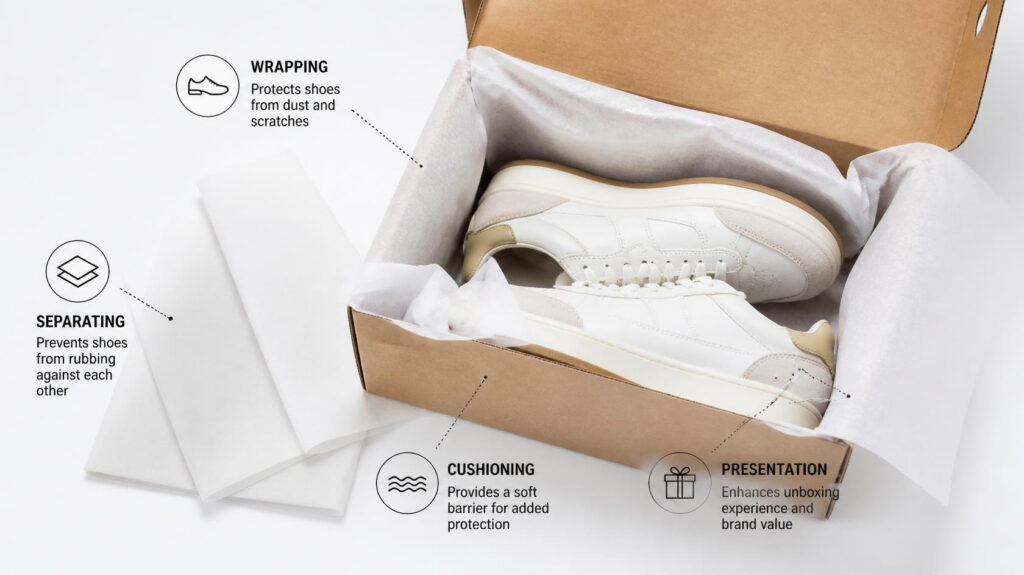
Tissue paper is a lightweight, soft, flexible paper used to wrap, separate, cushion, and present products inside a box. Think of the delicate sheet you find hugging a new pair of shoes or folded over a garment before the lid closes. That’s it.
In real packaging use, it does a few jobs at once:
- Wrapping products so they look intentional, not just dumped in a box
- Protecting surfaces from light scratches and dust
- Filling void space so items don’t slide around
- Elevating presentation, especially for gift and retail packaging
But here’s an honest word of caution I give every new client: tissue paper is a presentation and light-protection layer—not armor. If you’re shipping glass candles, ceramics, or anything heavy and fragile, tissue alone won’t save it. It pairs beautifully with a sturdy box or insert, but it should never be your only line of defense.
That distinction saves a lot of damaged-goods headaches down the road.
Types of Tissue Paper for Packaging
How Is Tissue Paper Classified?
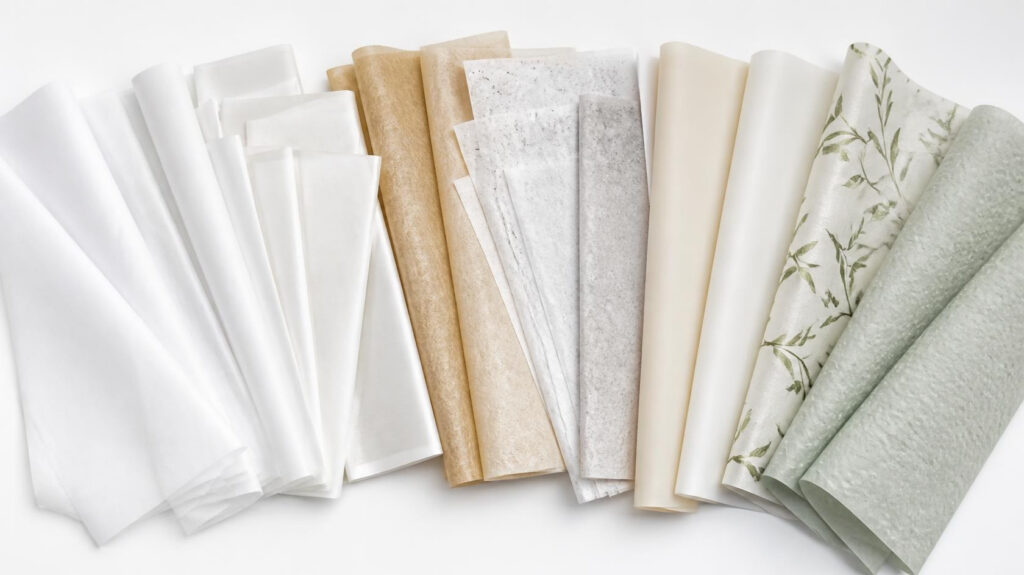
Tissue paper can be classified in several ways depending on its intended use. The main factors include ply, GSM, fiber source, surface finish, printing, and special treatments.
For packaging buyers, tissue paper is commonly compared by:
- Paper construction — ply and GSM, which affect thickness, strength, and feel
- Fiber source — virgin, recycled, bleached, or unbleached fiber
- Surface finish — such as MG (Machine Glazed) or MF (Machine Finished)
- Special treatments — including options designed to improve moisture or grease resistance
- Appearance and decoration — plain, colored, printed, decorated, or patterned tissue
Understanding these differences helps businesses choose tissue paper based on product protection, appearance, sustainability goals, printing requirements, and cost.
Not all tissue paper is the same, and picking the right type matters more than most buyers expect. Here’s a quick reference before we dig in:
Type | Best For | What Makes It Different |
Standard tissue | Apparel, retail, general wrapping | Affordable, soft, everyday workhorse |
Custom printed tissue | Ecommerce, subscription boxes, gifts | Carries your logo, decorative design, or repeat pattern |
Colored tissue | Seasonal & gift packaging | Matches your brand color story |
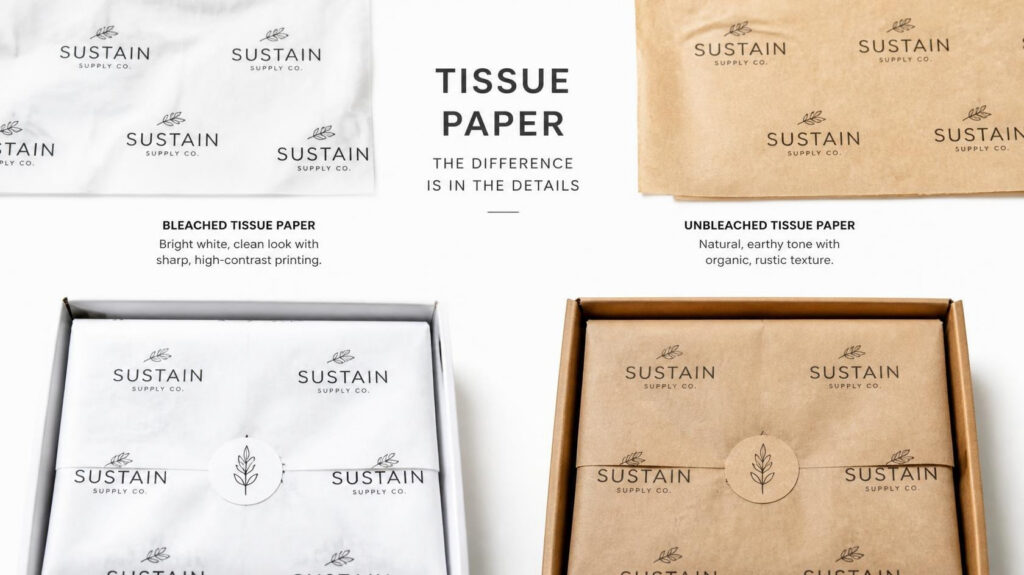
Bleached tissue | Retail, cosmetics, luxury and clean-looking packaging | Bright white, clean appearance that helps printed colors stand out |
Unbleached tissue | Eco-focused, natural and kraft-style packaging | Natural brown or rustic appearance with a more environmentally conscious look |
Acid-free tissue | Jewelry, delicate items | Won't cause discoloration over time |
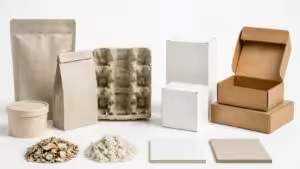
Recycled tissue | Eco-conscious brands | Lower reliance on virgin fiber |
Food-grade tissue | Bakery, chocolate, dry snacks | Made for safe food contact |
Bleached tissue is commonly chosen when brands want a clean, bright white appearance for packaging. The lighter surface can also help logos and printed colors appear clearer.
Unbleached tissue is a good fit for brands looking for a natural or rustic packaging style. It is often used alongside kraft packaging and other sustainability-focused materials.
A few practical notes from the factory floor:
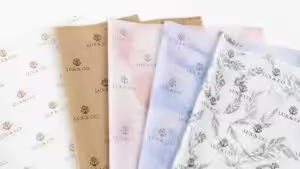
Custom printed, decorated, and patterned tissue paper is a popular choice for DTC brands, ecommerce packaging, subscription boxes, gift wrapping, and retail presentation. A logo, decorative pattern, or repeat design can turn a plain box into a more recognizable branded experience.
Acid-free tissue matters more than people realize. I once had a jewelry client wrap silver pieces in cheap standard tissue for storage. Months later, the surfaces tarnished. Acid-free paper would have prevented it.
Food-grade tissue is not something to guess at. If your paper touches chocolate, baked goods, or snacks, you need material that meets EU food contact or US FDA requirements. Always ask your supplier to confirm compliance before ordering—not after.
When Do You Need Dry Waxed Tissue?
Some food packaging applications may require dry waxed tissue. A dry wax treatment can improve resistance to moisture and grease, making this type of tissue suitable for certain bakery, confectionery, deli, and food service packaging applications.
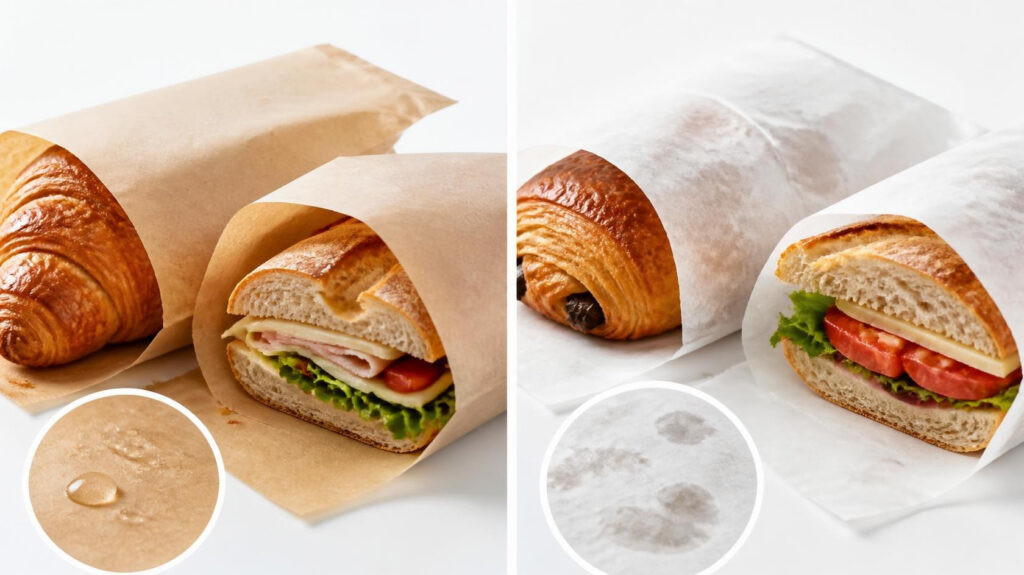
However, grease resistance and food-contact compliance are not the same thing. If the tissue will directly contact food, buyers should confirm the exact material specification and applicable food-contact requirements with the supplier before production.
How to Choose the Right Tissue Paper GSM
GSM simply means grams per square meter—it tells you how heavy and thick the paper is. Higher GSM feels more substantial. Lower GSM feels lighter and costs less.
GSM affects four things you care about: thickness, strength, feel, and price.
Here’s a rough guide:
GSM Range | Best For | Feel |
Lightweight | Apparel, light wrapping | Soft, economical |
Medium | Retail & gift packaging | Balanced strength and premium feel |
Heavier | Premium or bulky products | Durable, substantial |
Don’t treat these numbers as gospel, though. Fiber quality and manufacturing process vary between suppliers, so the same GSM can feel different from two factories. That’s exactly why we send physical samples before production.
A quick rule of thumb by product:
- Apparel → lightweight to medium
- Cosmetics → medium-weight (that premium hand-feel matters)
- Jewelry → lightweight, ideally acid-free
- Gift boxes → medium-weight
- Fragile items → tissue plus proper protective packaging
One honest tip for small startup brands: don’t over-invest in ultra-heavy GSM to look “luxury.” A well-printed medium-weight tissue often reads more premium than a thick, plain one. For large wholesale buyers, consistency across bulk runs matters more—lock in one GSM spec and stick with it.
Common Tissue Paper Sizes for Gift Bags and Custom Options
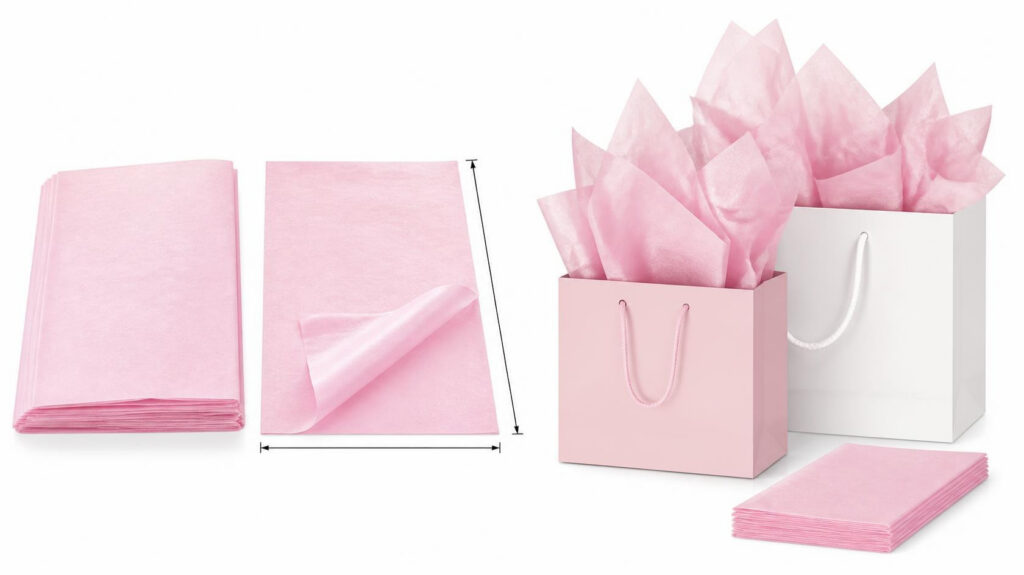
Getting the size right sounds obvious—until sheets arrive too small to wrap your product or so oversized you’re paying for paper you fold up and waste.
Most standard tissue sheets come in familiar rectangular formats used for apparel, gifts, and general retail wrapping. These work fine when your product fits common dimensions.
But here’s the reality for most brands: your product isn’t standard. A candle jar, a folded hoodie, and a skincare bottle all need different wraps. That’s where custom sizing comes in.
When to go custom instead of standard:
- Your product is an unusual shape or size
- You want zero wasted paper per unit (matters at high volume)
- You’re wrapping items that need full, clean coverage
- You want the sheet to fold neatly into a specific box
A simple sizing method I share with clients: lay your product flat, wrap a sample sheet the way you want the final look, then measure. Add a little overlap for a clean fold. That real-world test beats guessing from a spec chart every time.
One cost note for wholesale buyers: even a small oversize on every sheet adds up fast across 50,000 units. Trimming the size to fit your product exactly is one of the easiest ways to cut material cost without touching quality.
Custom Printed Tissue Paper: Design and Printing Options
Custom printed tissue paper is where your packaging stops being a container and starts being part of the brand experience. For DTC and subscription brands, this is often the whole point.
Common printing methods:
- Flexographic printing — cost-effective, great for 1–2 colors and large runs
- Full-color / custom printing — best for detailed logos, patterns, and gradients
What you can customize:
- Logo placement and repeat patterns
- Brand colors (request Pantone matching for accuracy)
- Full-coverage designs, subtle single-logo prints, or repeat patterns for seasonal, retail, and gift packaging
A word on color accuracy, because this is where I see the most disappointment: your screen is backlit and vivid. Printed tissue is not. Colors always look softer on paper, especially light tones and pastels. Always approve a physical printed proof—never sign off on a screen mockup alone. This single step prevents the most common “this isn’t what I ordered” complaint I deal with.
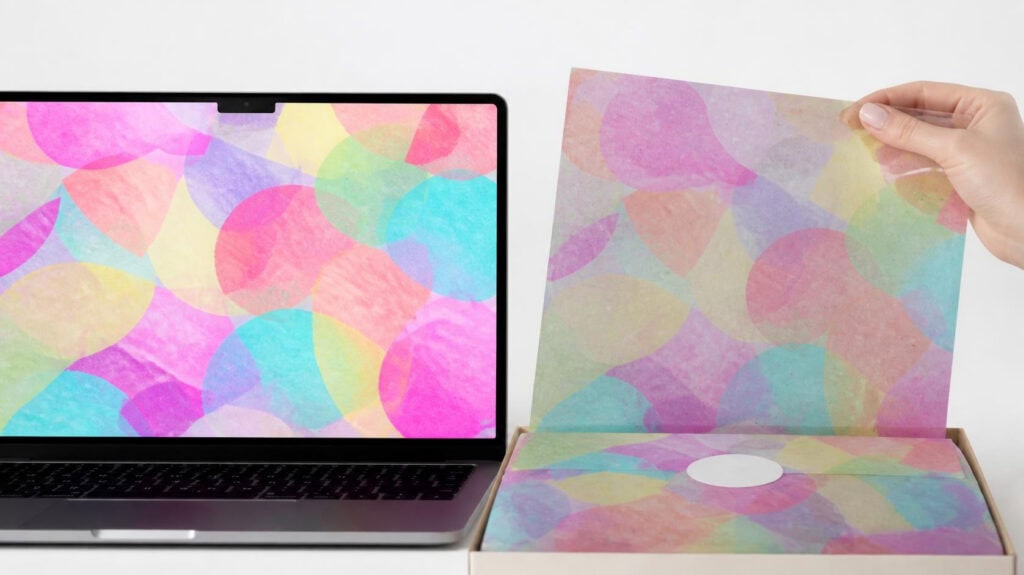
For small brands testing a first print run, a clean one-color logo on quality tissue often looks more polished—and costs far less—than a busy full-color design, though more festive or elegant pattern-led styles can make sense when the occasion calls for them.
Tissue Paper Material Comparison for Paper Flowers
Choosing material comes down to matching the paper to your product and your brand values.
Material | Strength | Look | Eco Level | Eco Level |
Virgin tissue | High | Bright, clean | Standard | Premium retail |
Recycled tissue | Good | Slightly muted | High | Eco-focused brands |
Acid-free tissue | Good | Clean | Standard | Jewelry, delicate items |
Food-grade tissue | Good | Clean | Varies | Bakery, snacks, chocolate |
If sustainability is part of your brand story, recycled tissue can support sustainable packaging initiatives by reducing reliance on virgin fiber. The finish may look slightly less bright or uniform than virgin tissue, but that is usually a material characteristic rather than a defect.
MG vs. MF Tissue Paper
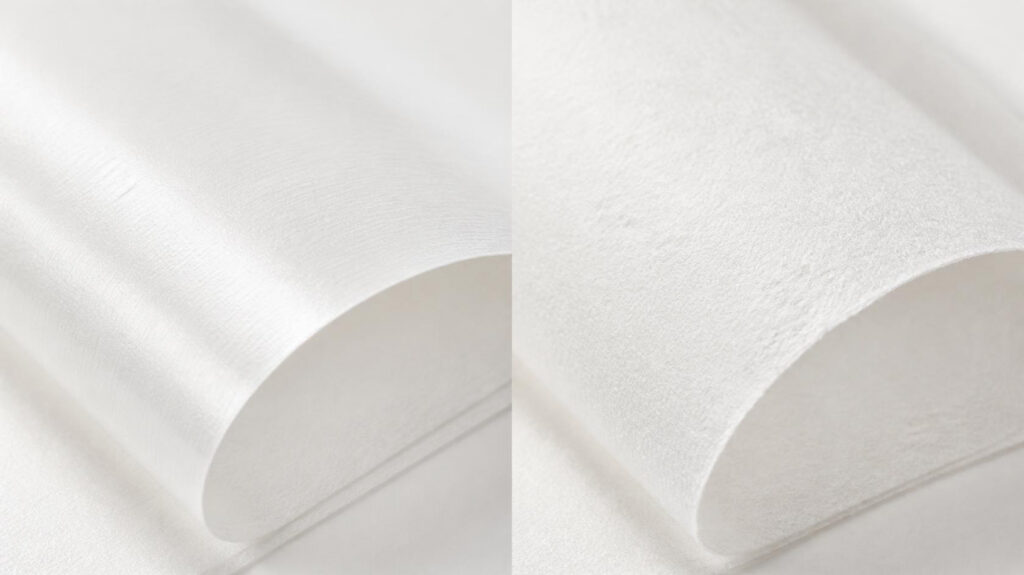
Tissue paper can also be differentiated by its surface finish.
MG (Machine Glazed) tissue has one smoother and slightly shinier side. This type of finish can be useful when a cleaner appearance, smoother surface, or specific print presentation is required.
MF (Machine Finished) tissue has a softer and more natural surface. Depending on the paper grade and manufacturing process, it can offer a softer feel and better absorbency for certain packaging or industrial applications.
For most branded packaging projects, buyers should first focus on GSM, fiber source, color, printing, and sheet size. MG and MF specifications become more important when surface appearance, feel, or converting requirements are part of the product specification.
How to Reduce Tissue Paper Costs (Without Cutting Quality)
You don’t have to choose between cheap and good. Most brands overpay simply because they order the wrong spec—not because quality tissue is expensive.
Here are the levers that actually move your cost:
- Right-size your sheets. Trimming oversize paper is the fastest saving at scale.
- Pick the correct GSM. Heavier isn’t always better. Match weight to the product, not to ego.
- Simplify print design. A clean one- or two-color logo costs far less than full-coverage printing.
- Order in volume tiers. Unit cost drops meaningfully as quantity rises, and buying tissue paper wholesale is often the most cost-effective route for large events or recurring business use.
- Standardize your specs. One GSM, one size, one design across SKUs reduces setup costs.
For small startups: start with a smaller test order in a smart spec, then scale once your packaging proves itself. Don’t lock 100,000 sheets into a design you haven’t held in your hands.
For wholesale buyers: consolidate SKUs onto shared specs where possible, and stock up when demand is predictable. Every extra print setup and size variant adds cost.
How to Order Custom Tissue Paper (Step-by-Step)
Ordering is simple once you know what to prepare. Here’s the process we walk clients through:
- Define your product and use case — what are you wrapping, and where will it be used?
- Choose type and material — standard, custom printed, acid-free, recycled, or food-grade.
- Confirm GSM and size — request a sample if you’re unsure how it should feel.
- Submit your artwork — send logo/design files with Pantone references.
- Approve a physical proof — check color, print, and feel before mass production.
- Confirm quantity and lead time — align volume with your launch schedule.
The single most important step is step 5. Approving a real printed sample prevents almost every costly reorder.
Frequently Asked Questions About Tissue Paper
Q1:What GSM is best for tissue paper?
It depends on your product. Lightweight suits apparel, medium-weight suits gift and retail packaging, and heavier weights suit premium or bulky items. Request samples to compare feel before committing.
Q2:Is tissue paper recyclable?
Most plain tissue paper is recyclable. Recyclability can be affected by heavy inks, coatings, or contamination, so check with your supplier and local guidelines.
Q3:Can I get food-safe tissue paper?
Yes. Food-grade tissue is made for safe food contact and should meet EU food contact or US FDA requirements. Always confirm compliance with your supplier before ordering.
Q4:What’s the minimum order for custom printed tissue?
Minimums vary by supplier and print method. Ask about test-order options if you’re launching a new product and want to validate the design first.
Q5:What does ply mean in tissue paper?
Ply refers to the number of paper layers combined together. A higher ply can increase thickness and strength, although the exact performance also depends on GSM, fiber quality, and the manufacturing process.
Q6:What size tissue paper should I choose?
Choose the sheet size based on your product dimensions and how you want the tissue to fold inside the packaging. Test-wrapping a sample product can help determine the right size and avoid paying for unnecessary oversized sheets.
Conclusion
The right tissue paper does quiet, important work—it protects your product, elevates the unboxing moment, and reflects your brand values.
Match your type, GSM, size, material, and print to your actual product and audience, and you’ll avoid the costly mistakes most brands only learn after their first order.
Get Help Choosing the Right Tissue Paper
If you’re ready to move forward, Packoi can help you choose the right specs, match your brand colors, and send physical samples before production—so you know exactly what you’re getting. Reach out for a quote or request a sample kit to compare options for your product.