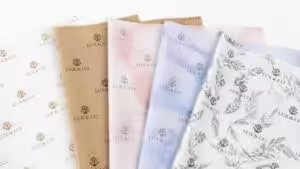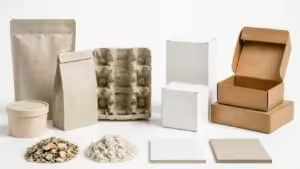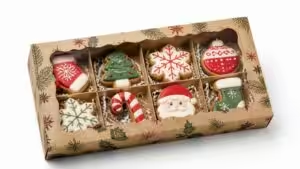
Here’s the short version: butcher paper and parchment paper look alike, but they’re built for completely different jobs. The materials, coatings, heat resistance, and how they behave around moisture are all different — and using the wrong one can leave you with soggy wraps, food sticking to trays, or product that just looks cheap on the shelf.
In this guide, I’ll walk you through the real differences, which paper fits which type of business, whether you can swap one for the other, and — if you’re buying in bulk or planning custom branding — exactly what specs to confirm before you place an order.
Butcher Paper vs Parchment Paper: Quick Comparison Table
If you only have 30 seconds, here’s the fast answer. The details come further down.
Feature | Butcher Paper | Parchment Paper |
Material | Kraft-based paper from wood pulp fibers | Cellulose paper with silicone coating |
Coating | Usually none | Silicone coating |
Best use | BBQ, wrapping, lining | Baking, non-stick lining |
Breathability | High (allows moisture exchange) | Lower (silicone coating reduces moisture transfer) |
Non-stick | No | Yes |
Heat resistance | Medium–high | High |
Keep this in mind as a rule of thumb: butcher paper is for wrapping and letting food breathe; parchment paper is for baking and keeping food from sticking. Everything else is just the reasoning behind those two jobs.
What Is Butcher Paper?
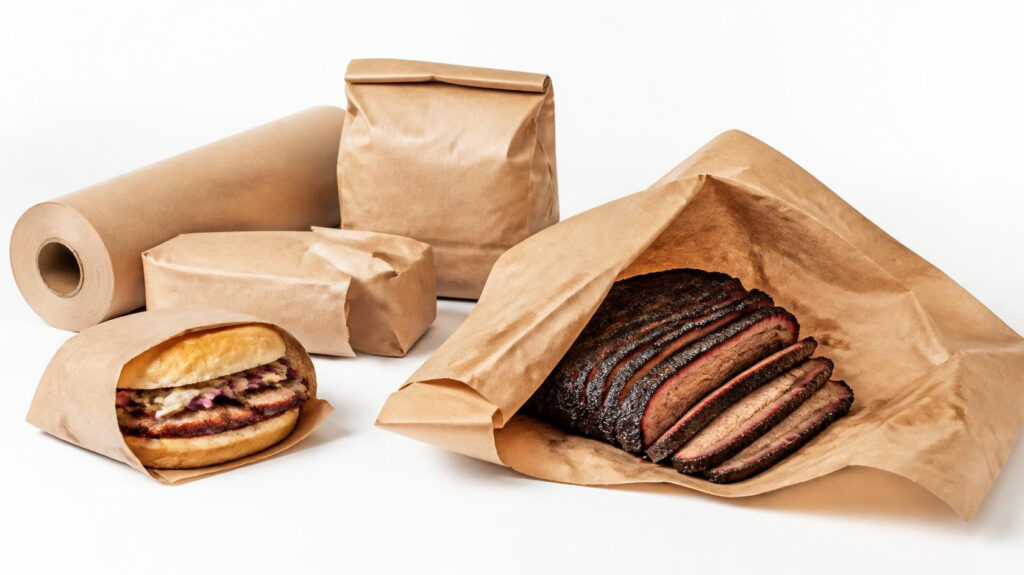
Butcher paper is typically made from kraft-based paper produced from wood pulp fibers. Its strong fiber structure gives it good tear resistance, while the porous surface gives butcher paper’s breathability a real advantage for smoking and low and slow cooking, allowing moisture and steam to escape instead of being trapped against food.
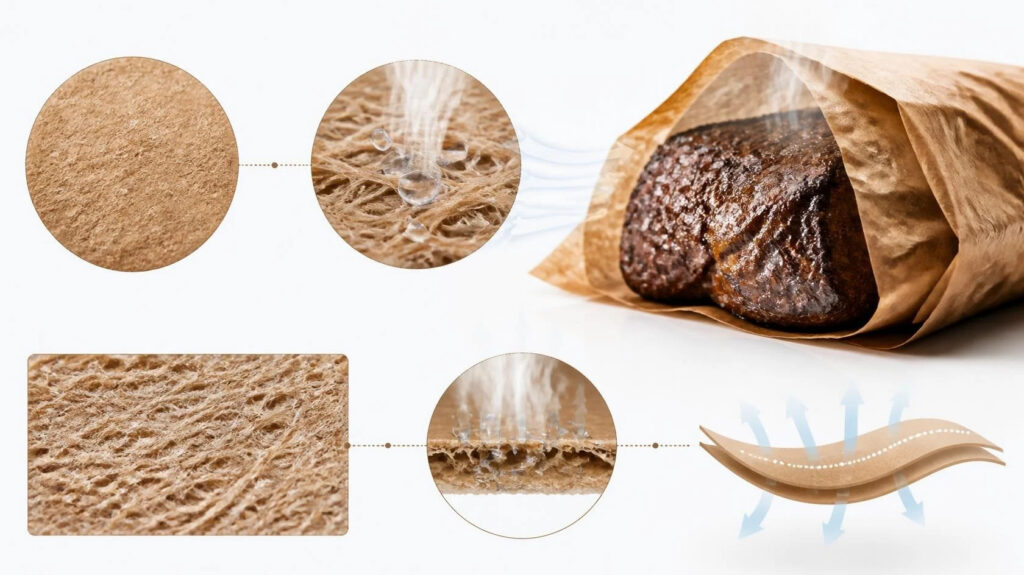
In its natural form it’s uncoated, which is exactly why it works so well for wrapping meat, sandwiches, and deli items, and for wrapping meats and short term storage when storing meats like raw meat and fish in the refrigerator. The paper is breathable, so it lets steam and moisture escape instead of trapping it against the food.
You’ll usually see it in a few versions:
- White butcher paper — clean, neutral look, popular for delis and food display.
- Pink butcher paper — the classic choice for BBQ and wrapping brisket, because it holds up to smoke and moisture for smoking meat, works well with indirect heat up to 300°F, and suits cooking styles up to 300°F.
- Brown/natural kraft — the most economical option, great for wrapping, lining baskets, or a rustic “craft” brand look.
Butcher paper absorbs meat juices while still allowing some airflow, helping with retaining moisture and texture.
Because it breathes, butcher paper is not designed for high-heat baking or non-stick jobs. Its strength is in wrapping, carrying, and presenting food — which is why restaurants, sandwich shops, and BBQ brands go through so much of it.
Packoi Expert Tip (export experience):
One thing international buyers often underestimate is how butcher paper behaves during long ocean shipments. For example, during 30–45 day sea transportation, especially on humid routes, uncoated kraft paper can absorb moisture if inner packaging is not properly sealed.
Uncoated kraft is breathable, which is great for food, but it also absorbs humidity in a container. For clients shipping across the ocean, we usually recommend a slightly higher GSM and proper inner packaging so the rolls arrive flat and dry instead of soft and wavy.
What Is Parchment Paper?
Parchment paper starts as cellulose-based paper pulp, but it goes through additional treatment that changes its performance. During manufacturing, the sheet is treated with sulfuric acid or zinc chloride for moisture resistance before receiving a food-grade silicon layer, creating the heat resistant properties that make parchment ideal for baking.

That thin silicone coating creates a heat resistant surface with strong non stick properties that prevents food from sticking, withstand high temperatures, and stay reliable at high temperatures in oven use.
This is why bakeries and food producers rely on it. You line a tray with parchment for baking cookies, and it lifts off cleanly. No greasing, no scrubbing, no product torn in half because it fused to the pan.
For cooking beyond baking, it is also ideal for roasting vegetables and fish, as well as cooking en papillote, with parchment paper typically rated to withstand high temperatures up to 425°F-450°F.
You’ll typically see two types:
- Bleached parchment (white) — the clean, bright look most people picture. Fine for baking, though some brands prefer to avoid the bleaching process.
- Unbleached parchment (brown/natural) — a more eco-friendly, natural appearance that fits well with “clean label” and organic-positioned brands.
The trade-off is that silicone coating seals the surface. Unlike butcher paper, parchment paper has much lower breathability because its silicone coating creates a moisture-resistant barrier. This makes it excellent for cooking food and broader food preparation, but less suitable for wrapping fresh meat or sandwiches where airflow is important, and it should avoid direct contact with open flames or heating elements.
Quick clarification:
parchment paper and wax paper are not the same thing. Wax paper uses a wax coating that melts under heat, so it should never go in the oven. Parchment’s silicone coating is heat resistant and prevents sticking during roasting vegetables or roasting fish — that’s the whole point.
Butcher Paper vs Parchment Paper: Key Differences
Now let’s break down the five differences that actually affect your buying decision.
Material
Butcher paper is uncoated kraft pulp. Parchment paper is a paper base with a silicone treatment. Same starting material, very different finished product.
Coating
This is the big one. Butcher paper is usually bare — nothing between the paper and your food. Parchment carries a food-grade silicone coating, which is what makes it non-stick.
Heat resistance
Parchment wins here. It’s built for oven temperatures, commonly designed for oven temperatures around 220–230°C (428–446°F), although the exact heat rating depends on the supplier, silicone coating formulation, and product specification. Butcher paper handles moderate heat and warm food, but it’s not a baking paper. Put it in a hot oven and you’re risking scorching.
Moisture resistance
Parchment’s silicone layer resists grease and moisture from soaking through — great for buttery, oily baked goods. Butcher paper absorbs and releases moisture instead of blocking it, which is a feature, not a flaw, depending on the job.
Breathability
Butcher paper breathes; parchment doesn’t. If you’re wrapping something that needs to stay crisp or “rest” without steaming itself soft, breathability matters. If you’re baking, you want the sealed, non-stick surface instead.
Packoi Expert Tip:
Don’t ask “which paper is better?” — ask “which job am I doing?” Wrapping and displaying food → butcher paper. Baking and non-stick lining → parchment. Most food businesses actually need both, just for different stations in the kitchen.
Which Paper Should Your Business Choose?

The honest answer depends on what your product actually goes through — from your kitchen to the customer’s hands. Let me break it down by business type, since a small startup and a large wholesale buyer usually need very different things.
For BBQ, deli, and butcher shops
Go with butcher paper — pink/peach if you’re smoking meat, white or natural kraft for wrapping and display. You want that breathability so the meat doesn’t steam itself soft, and you want strength so a heavy brisket doesn’t tear through the wrap. It’s also practical to line serving trays during service and improve food presentation without sacrificing easy cleanup. Parchment here would trap moisture and work against you.
For bakeries, pastry, and cookie brands
Parchment is your daily workhorse. Non-stick, oven-safe, clean release. It’s also the go-to for roasting when you need a heat-resistant surface that won’t stick. If your brand leans “natural” or “clean label,” unbleached parchment gives you that look without switching function.
For food manufacturers and packaged goods
This is where it gets more strategic. You’re not just lining a tray — the paper often becomes part of the retail package. Here you need to think about food-contact safety compliance (EU food contact regulations, US FDA), grease resistance, and how the paper photographs on a shelf.
For small startup brands (low volume)
Keep it simple. Start with standard sheet sizes or pre-cut sheets rather than committing to fully custom rolls. It keeps your minimum order manageable and your upfront cost low while you test the market. You can add branded printing once volume grows.
For large wholesale retailers (high volume)
This is where custom rolls, printed branding, and optimized sizing pay off. At scale, even small changes — trimming a sheet size to reduce waste, adjusting GSM, or nesting rolls better in a carton — add up to real savings on both material and freight.
Packoi Expert Tip:
A pattern I see constantly with overseas brands: they focus 100% on paper appearance and forget about shipping behavior. For US and EU clients importing by sea, we usually walk through GSM, coating type, and inner packaging before confirming artwork — because a beautiful custom roll that arrives soft, wavy, or moisture-damaged after a 30–45 day ocean shipment can lead to production delays, extra costs, and frustrated customers. Lock down the technical specs first, then make it pretty.
Can You Use Butcher Paper Instead of Parchment Paper?
Short answer: sometimes, but be careful — and never for baking.
Here’s the safe way to think about it:
Where you CAN swap them:
- Lining a serving basket, tray, or box for cold or room-temperature food → either works.
- Wrapping sandwiches, burgers, or deli items → either paper can wrap food for cold service, but butcher paper is usually the better choice for absorbency and presentation.
Where you should NOT swap them:
- Baking in the oven. This is the important one. Standard butcher paper is not coated for high-heat, non-stick baking, and it’s not for high-temperature roasting — only moderate indirect heat. It can scorch, and food will stick. Parchment is engineered for oven use, but direct contact with heating elements or open flame should still be avoided — don’t substitute it.
- Greasy or buttery baked goods. You want parchment’s silicone barrier so oil doesn’t soak straight through.
Packoi Expert Tip:
Before assuming any paper is oven-safe, always check the manufacturer’s stated heat rating — coatings and treatments differ between suppliers. “Looks like parchment” is not the same as “rated for the oven.” When in doubt, confirm the temperature spec in writing with your supplier.
The reason I stress this: I’ve seen buyers try to save a line item by using one paper for everything. It almost always costs more later — in ruined product, complaints, or a batch that sticks to the tray. These two papers are cheap enough that using the right one for each job is simply the smarter play.
Which Is More Cost-Effective: Butcher Paper or Parchment Paper?
Cost is another important factor for restaurants, food brands, and wholesale buyers.
Butcher paper is usually the more economical option because it requires less processing and does not need a silicone coating. It is ideal for high-volume wrapping applications where breathability and strength matter.
Parchment paper generally costs more because the silicone coating adds manufacturing steps and performance benefits. However, the higher cost is justified for baking applications where non-stick performance and heat resistance are essential.
For bulk buyers, the best choice is not always the cheapest paper — it is the paper that reduces product waste, improves efficiency, and matches the actual application.
Buying Guide: What to Confirm Before You Order
Whether you’re ordering a few boxes of pre-cut sheets or committing to custom-printed rolls, these are the specs that decide whether you get exactly what you expected — or an expensive surprise. Run through this checklist before you sign off on any order.
Paper type and coating
Confirm you’re getting the right base: uncoated kraft (butcher) or silicone-coated (parchment). Some buyers also compare deli paper for food packaging, but that’s a separate category better suited to wrapping, basket lining, or presentation than to the same uses as butcher or parchment. If it’s parchment, ask specifically about the coating and whether it’s single- or double-sided.
GSM (weight/thickness)
GSM tells you how heavy and durable the paper is. Too light and it tears or feels cheap; too heavy and you’re paying for material you don’t need. Match the GSM to the job — wrapping heavy meat needs more than lining a cookie tray.
Heat resistance rating
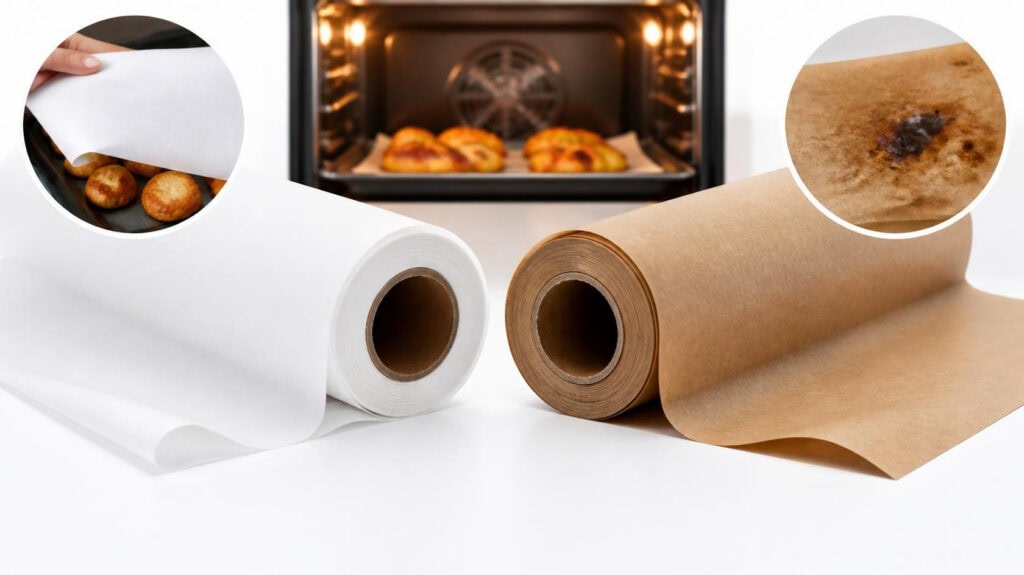
For parchment especially, confirm the oven-safe temperature rating in writing before ordering. Most food-grade parchment papers are designed to withstand temperatures around 220–230°C (428–446°F), but the exact rating may vary depending on the paper weight, silicone coating formulation, and manufacturing specifications. Always verify the supplier’s test data and product specifications before bulk purchasing.
Food-contact safety certification
This is non-negotiable for a food product. Ask for documentation showing compliance with your market’s rules — FDA for the US, EU food contact regulations for Europe. If you sell in multiple regions, confirm coverage for each.
Sizing and format
Rolls, sheets, or pre-cut? Get the dimensions and tolerances confirmed. A sheet that’s a few millimeters off can mean it doesn’t fit your tray or your packaging line.
Bleached vs unbleached
This is both a look and a brand-positioning decision. Unbleached suits “natural/organic” branding; bleached gives a clean, bright white.
Custom printing (if branding)
Confirm print method, number of colors, whether food-safe inks are used, and where the print sits so it doesn’t touch food unnecessarily.
MOQ and lead time
Ask the minimum order quantity and production lead time up front — especially for custom work. This is usually the deciding factor for small brands vs. wholesale buyers.
Packoi Expert Tip:
The single spec buyers most often overlook is coating consistency on printed parchment. If the silicone or the print isn’t applied evenly, you get sticking in some spots and clean release in others — and it usually doesn’t show up until the customer bakes with it.
Always ask whether the supplier does in-line coating checks, and request a physical pre-production sample before a full run. A sample costs you a few days; a bad batch costs you a shipment.
Frequently Asked Questions About Butcher Paper & Parchment Paper
Q1:Can you use butcher paper instead of parchment paper for baking?
No. Standard butcher paper isn’t coated for high-heat, non-stick baking — it can scorch and food will stick. Use parchment for anything that goes in the oven. Butcher paper is fine for wrapping cold or room-temperature food.
Q2: Is parchment paper the same as wax paper?
No. Wax paper has a wax coating that melts under heat, so it should never go in the oven. Parchment uses a heat-stable silicone coating designed for baking.
Q3:Which paper is best for BBQ and smoked meats?
Pink/peach butcher paper. It breathes so the meat doesn’t steam soft, and it’s sturdy enough to hold a heavy brisket without tearing.
Q4:What certification should food paper have?
For food contact, confirm FDA compliance (US) or EU food-contact regulation compliance (Europe). Ask your supplier for documentation covering every market you sell in.
Conclusion
Butcher paper and parchment paper aren’t competitors — they’re two tools for two different jobs. Butcher paper is the breathable, sturdy choice for wrapping and displaying food; parchment is the non-stick, oven-safe choice for baking. Most food businesses need both.
The real difference is in the details: material, coating, GSM, heat resistance, and moisture behavior. Get them right and the paper protects your product and survives the trip to your customer. Get them wrong and you’re dealing with soggy wraps or rolls that arrive wavy after shipping.
Find the Right Food Paper Solution for Your Brand
As a factory offering one-stop custom food paper solutions, Packoi help restaurants, bakeries, and wholesale brands match the right paper to the right job — with FDA and EU food-contact compliance and reliable export packaging.
Planning an order or comparing specs? Send us your use case here, and we’ll recommend the right paper type and GSM, share compliance documentation, and prepare a pre-production sample before your full run.