Here’s the truth most packaging suppliers won’t tell you plainly: recycled and recyclable are not the same thing — and confusing them can wreck your sustainability claims, your compliance, and your budget.
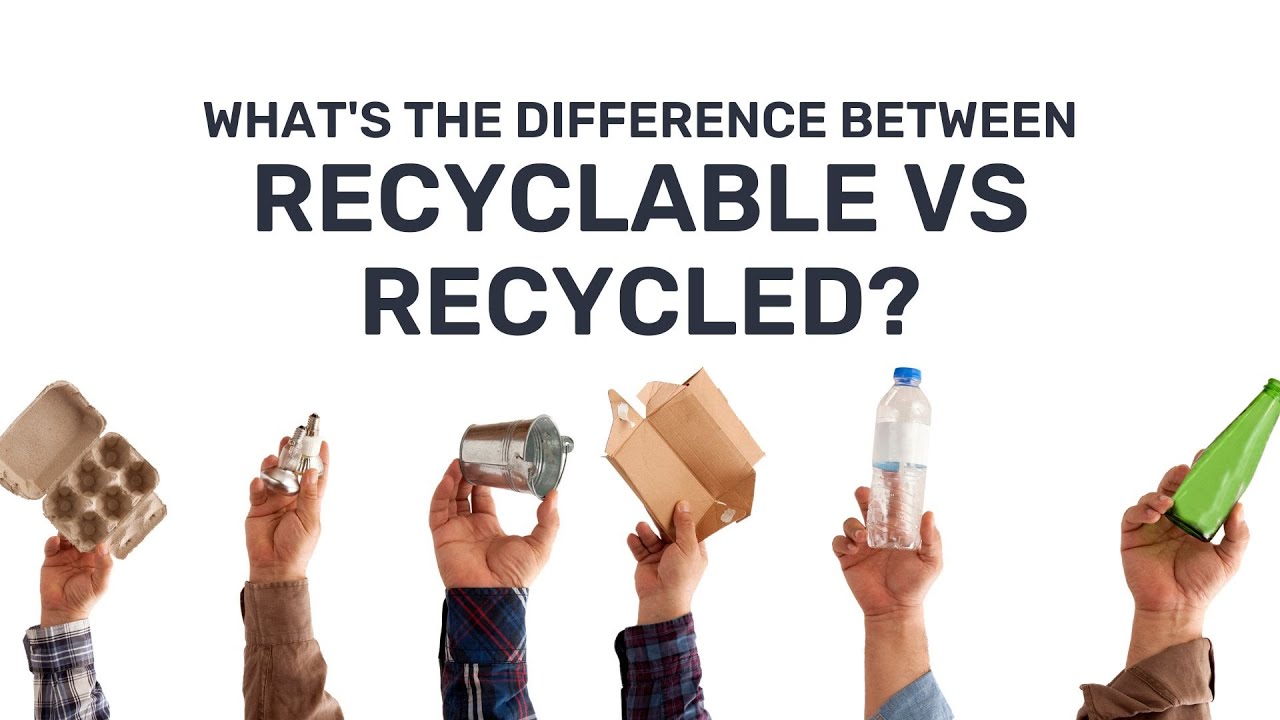
Recycled packaging describes what your box was made from (already-used material that’s been reprocessed). Recyclable packaging describes what can happen to it after use (whether it can realistically be collected, sorted, and turned into new material). Recycled is about the material’s past; recyclable is about its future. A package can be recycled, recyclable, both, or neither — so the word “eco-friendly” means nothing until you know which one you’re actually getting.
In this guide, I’ll show you how to tell recycled vs. recyclable packaging apart, what PCR and PIR really mean for your claims, how packaging design quietly kills recyclability, and exactly what to ask your supplier before you approve a sample or place a bulk order.
Recycled vs. Recyclable: The Quick Answer
If you only have thirty seconds, here it is.
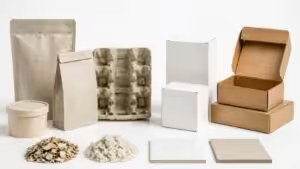
Recycled packaging answers one question: What was this packaging made from? It contains material that has already been used and reprocessed — recovered paper, recycled cardboard, recycled plastic, or industrial offcuts.
Recyclable packaging answers a different question: What can happen to this packaging after it’s used? It’s designed so it can realistically be collected, sorted, and turned back into new material.
Notice these are two separate things — one looks backward at the source, the other looks forward to the end of life.
And here’s the part most suppliers won’t tell you plainly:
A package can be recycled, recyclable, both, or neither.
So when a factory tells you their box is “eco-friendly,” that word alone means nothing until you know which of these you’re actually getting. In the next sections, I’ll show you how to spot the difference — and what to ask before you place a bulk order.
What Does Recycled Packaging Mean?
Most suppliers will tell you recycled packaging is simply “packaging made from recycled materials.” True, but that definition doesn’t help you make a buying decision. What you really need to understand is where that material comes from — because that’s what determines quality, cost, and what you can claim.
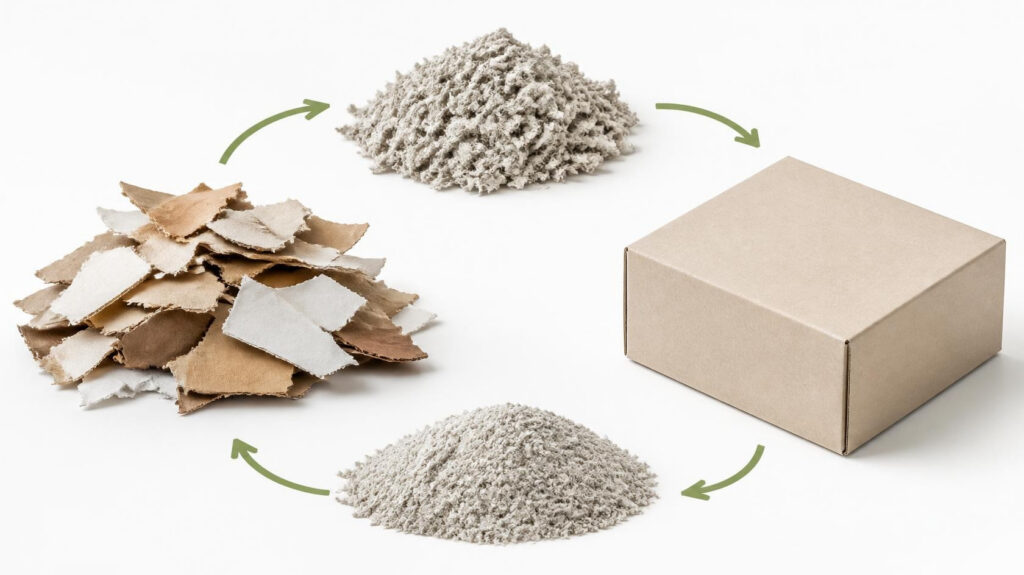
Think of it as a loop. Someone uses a material, it gets collected, it’s cleaned and reprocessed into recovered raw material, and then that material becomes your new packaging. For paper packaging, that recycled content usually comes from recovered paper, recycled cardboard, or industrial fiber left over from other production.
Here’s a practical note from experience: recycled fiber behaves differently from virgin fiber. It’s often a little weaker and less bright. So when a US cosmetic startup asks me for a “100% recycled, pure white, luxury box,” I have to be honest — recycled paperboard rarely gives you that crisp premium white without added coating or bleaching. That’s the kind of trade-off you want to know before you approve a sample, not after your retail launch.
PCR vs. PIR vs. Virgin Materials
This is where a lot of buyers get quietly confused, so let me break it down the way I do on calls.
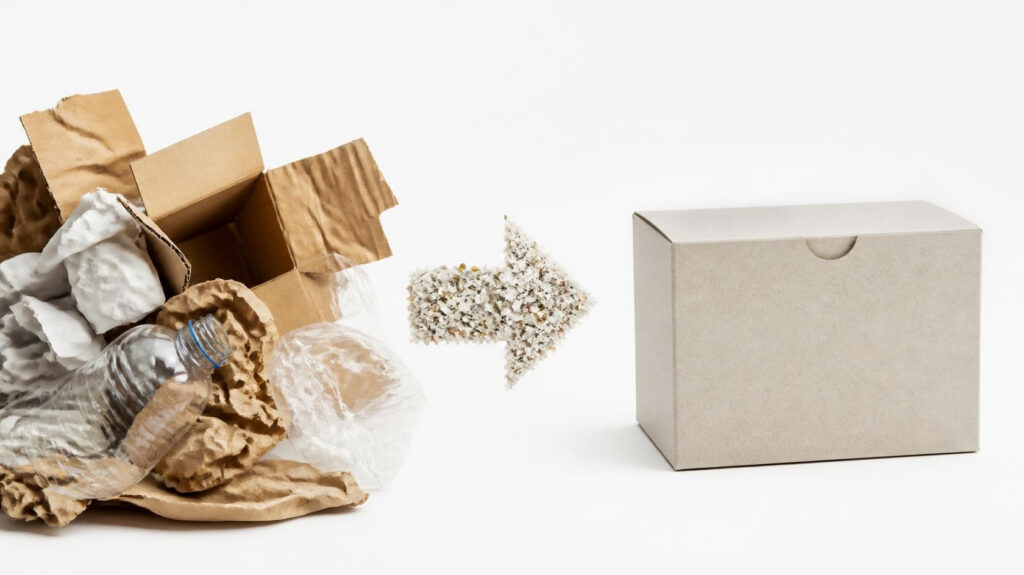
PCR (Post-Consumer Recycled) comes from material that consumers already used and threw into recycling — in other words, post consumer waste from households or consumer discard, such as used paper packaging, old corrugated boxes, and consumer plastic. This is the “hero” recycled content. When a retailer or an EU brand wants a strong sustainability story, they usually want PCR specifically.
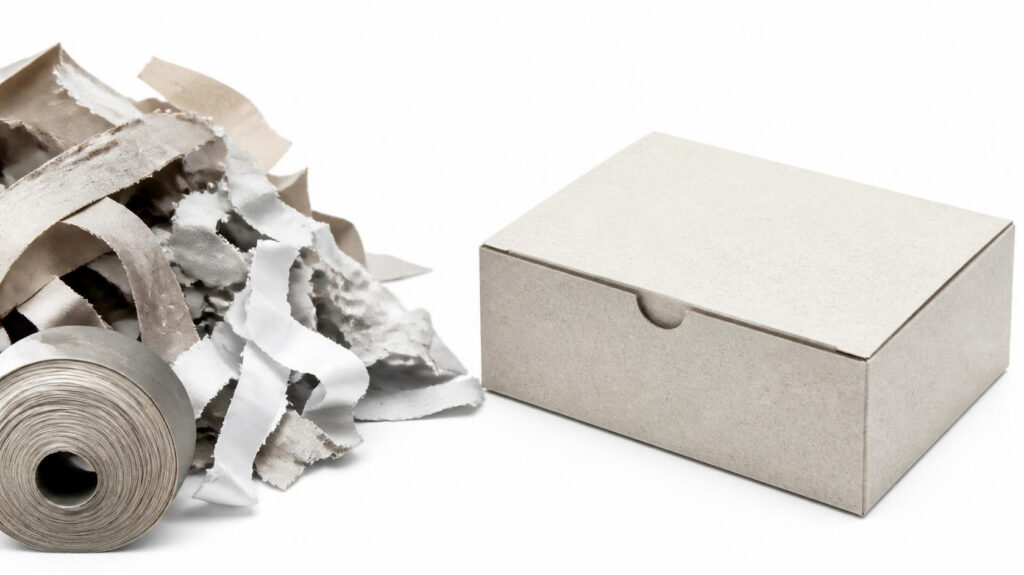
PIR (Post-Industrial Recycled) comes from waste created during manufacturing — paper offcuts, trimmings, production scraps. It’s genuinely recycled, but it never reached a consumer, so its marketing value is lower.
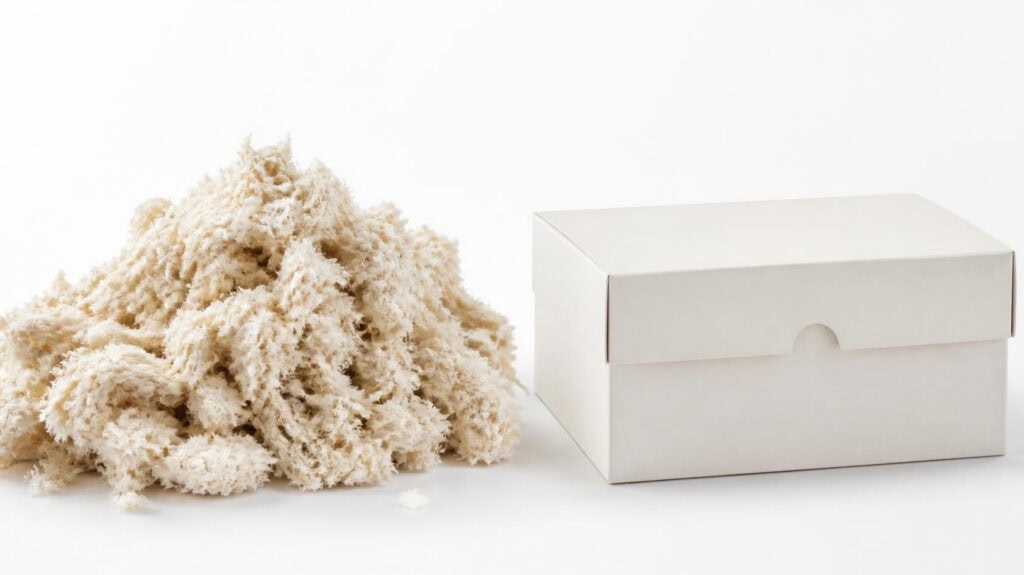
Virgin material is brand-new fiber, made from fresh raw material. Stronger and cleaner-looking, but with the highest environmental footprint.
Category | Source | Sustainability story | Typical strength/appearance |
PCR | After consumer use | Strongest claim | Slightly lower, may look recycled |
PIR | Factory production waste | Moderate claim | Better than PCR |
Virgin | New raw material | Weakest claim | Best strength & finish |
Packoi Expert Tip:
If you’re a small startup building a green brand, ask specifically for PCR content and get it documented, because specifying it is an upstream manufacturer choice that supports circular economy demand for recovered materials — it’s the claim buyers and retailers actually care about. If you’re a large wholesale buyer where cost and durability matter more, a PIR or blended board can be a smart middle ground.
How Is Recycled Content Measured?
Here’s a scenario I see constantly. A supplier says “50% recycled content,” the buyer feels good, and the order moves forward. But 50% of what?
Not all recycled claims are created equal, especially when PCR and PIR are mixed or measured differently.
Before you accept that number, you should be asking:
- Is that 50% PCR or PIR? (Big difference for your claims.)
- Is it 50% of the whole package, or just one part?
- Is it measured by weight?
- Can you provide documentation to prove it?
That last one matters more than people think. A paper box might contain 80% recycled paperboard — but the plastic window, the adhesive, and the coating are separate materials that aren’t recycled at all.
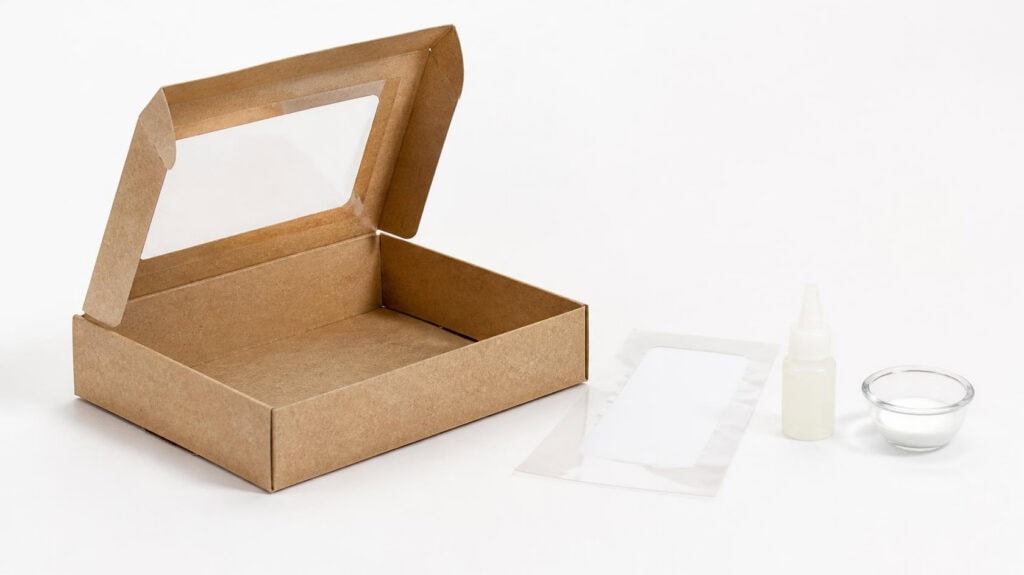
The recycled content of one material doesn’t automatically apply to the whole package.
So when you’re making a claim on your box or in your sustainability report, be precise, support it with verified claims, and remember that this is essential for consumer trust. “Made with 80% recycled paperboard” is honest and defensible. “100% recycled packaging” usually isn’t — and in the EU especially, vague claims are increasingly a compliance risk.
What Does Recyclable Packaging Mean?
Now let’s flip to the other side. “Recyclable” sounds simple — just toss it in the recycling bin, right? I wish it were that easy, and so do most of my clients once they learn how it really works.
For packaging to actually be recycled, it has to survive a whole chain: it gets collected, then sorted, then processed, then recycled, and finally the recovered material has to find an end market that wants to buy it.
Understanding that system helps avoid wishcycling and recycling contamination. In practice, recyclable places the burden on the consumer to dispose of the package correctly and on the system to accept it, because not everything marked for recycling is handled the same way. Clear guidance on recyclable items and honest labeling for recyclable materials matter because better recyclability creates feedstock for future use and prevents waste.
If any link in that chain breaks, your “recyclable” box ends up in a landfill regardless of what the label says.
That’s why I always tell buyers:
A material can be recyclable in theory and still not be recycled in practice.
This one sentence saves a lot of disappointment down the line.
Technically Recyclable vs. Widely Recyclable
This distinction is the single most useful thing in this entire article, so pay attention here.
Technically recyclable means the material can be reprocessed if everything goes right. But that doesn’t mean anyone locally collects it, that the sorting machines can identify it, or that recycling it makes economic sense.
Many plastics are technically recyclable on paper but not accepted in practice, so not everything belongs in a recycling container. Understanding recycling systems helps prevent wishcycling, which contaminates recyclable materials.
Widely recyclable means your target market already has the collection, sorting, and processing systems in place to handle it at scale. Standard corrugated cardboard, for example, is widely recyclable almost everywhere.
A metallized film pouch might be technically recyclable and practically not recycled anywhere near your customer, because factors affect real-world recovery, including market demand and available recycling facilities.
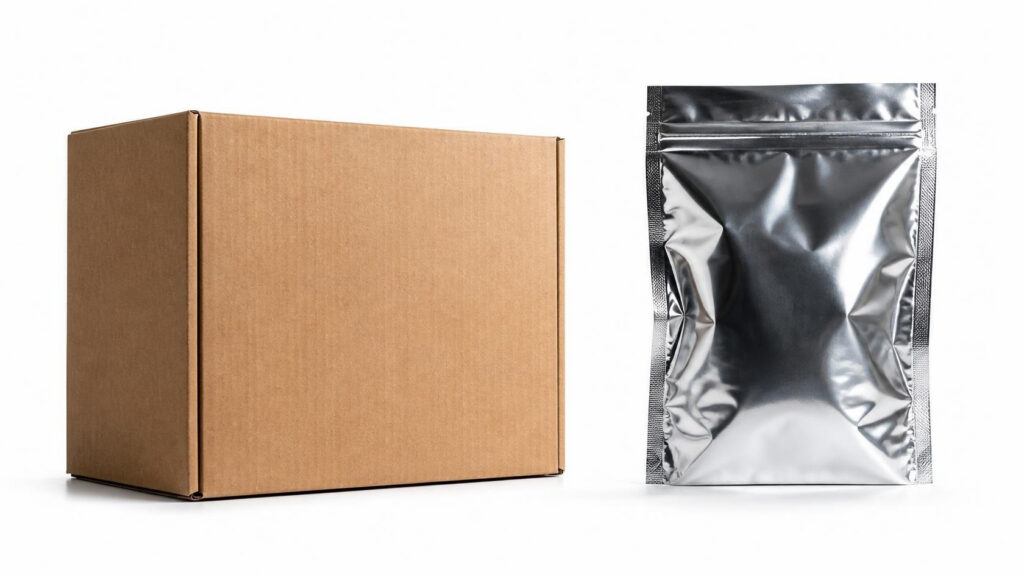
For a brand, “widely recyclable” is the claim that actually holds up.
Why Recyclability Depends on Local Infrastructure
Here’s something that surprises a lot of first-time exporters. The exact same package can be recyclable in one country and not in another. In the US, curbside recycling reaches over 60% of households, but recycling programs varies by community.
I had a UK snack brand and a US brand order almost identical paper pouches. In the UK, the local system handled that structure fine. In parts of the US, the same pouch had no realistic recycling path. Same package, different outcome — purely because of local infrastructure.
So before you commit, ask yourself where this packaging is actually going:
- Target market — US, Europe, Canada, Australia, or multiple?
- Local recycling infrastructure
- Collection system
- Material sorting capability
Laws such as California’s SB343 require recyclability claims to match local capabilities, so brands should check local programs and confirm with the local recycling program before making claims.
Recyclability isn’t only a material question. It’s an infrastructure question too.
If you sell into several markets, design for the most common system your customers use — or keep the structure simple enough that it works almost everywhere.
Can Packaging Be Both Recycled and Recyclable?
Yes — and this is the sweet spot most serious brands are aiming for.
Once you separate “where it came from” (recycled) from “what happens next” (recyclable), you can see there are really four possibilities:
Recyclable | Not easily recyclable | |
Has recycled content | Ideal — recycled and recyclable | Recycled, but hard to recover |
No recycled content | Recyclable, but made from virgin material | Neither |
The best position for most brands is the top-left box: use recycled content where it makes sense, and design the packaging so it can genuinely be recovered after use, supporting a circular economy by pairing recycled inputs with future recovery over its useful life.
That combination is exactly where structure and material selection start working together, improving material circularity. Recycled content creates demand for collected materials, while recyclability creates the raw materials for future use — which brings us to the part that trips up more brands than any other: packaging design.
How Packaging Design Affects Recyclability
Here’s where I have to correct one of the most common assumptions I hear: “It’s paper, so it’s recyclable.” Not necessarily. The material is only half the story — how the package is built often decides whether it can actually be recycled.
I’ve seen beautiful custom boxes that looked completely eco-friendly get rejected by recycling systems because of one small design choice. So before you finalize a structure, it’s worth understanding what helps recyclability and what quietly kills it.
Mono-Material vs. Multi-Material Structures
The simplest rule in packaging design: the fewer material types, the easier it is to recycle.
A mono-material package — for example, a box made entirely of paperboard — is easy for a recycling facility to process because it’s all one thing. A multi-material package that combines paper, plastic, foil, and adhesive is much harder, because those materials have to be separated first, and often they simply aren’t.
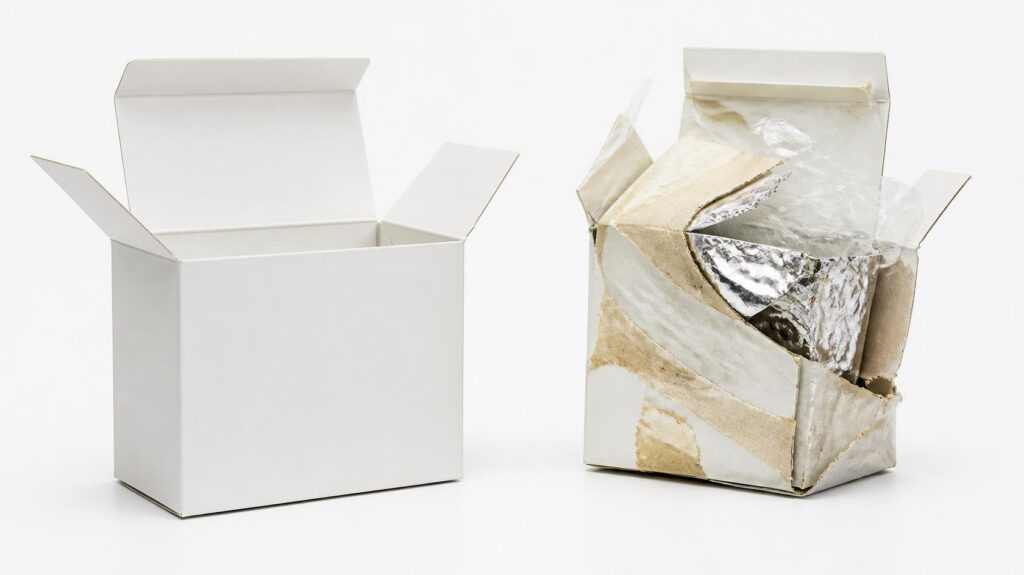
If a customer can’t easily separate the materials, the recycling system usually can’t either.
For most paper packaging projects, staying as close to mono-material as your product allows is the single best decision you can make for recyclability.
Laminations, Coatings, and Windows
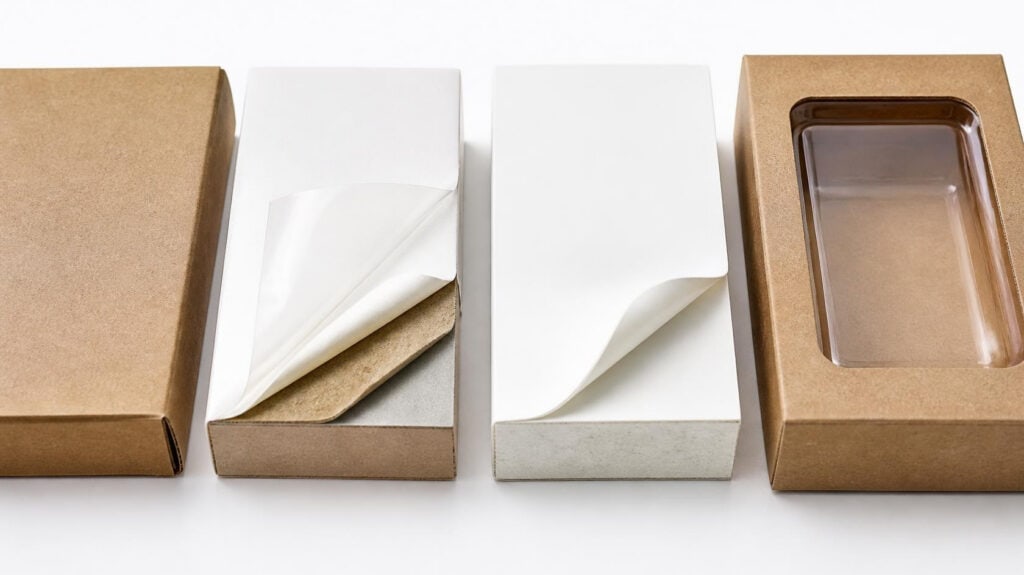
This is where good intentions go wrong. Brands add features for very practical reasons — but each one can affect recyclability, especially in flexible packaging where coatings and layers often make recovery harder:
- Plastic laminations — added for moisture protection or a glossy look, but they can make paper harder to repulp
- Certain coatings — great for durability, but some interfere with recycling
- Plastic windows — lovely for showing the product, but a mixed material the customer must remove
- Non-paper components — magnets, ribbons, metal rivets — all complicate recovery
I’m not saying avoid these. I’m saying choose them knowingly. In many plastic packaging formats, foil or film layers are a common mixed-material issue that limits recycling.
When a UK snack brand came to us with moisture problems after sea freight, the honest fix wasn’t “add more plastic lining” — it was choosing a recyclable-friendly barrier coating that protected the product without wrecking the recyclability story, knowing mono-material formats are usually easier to recycle than layered ones. That’s the kind of trade-off worth engineering at the sample stage.
Printing and Finishing Considerations
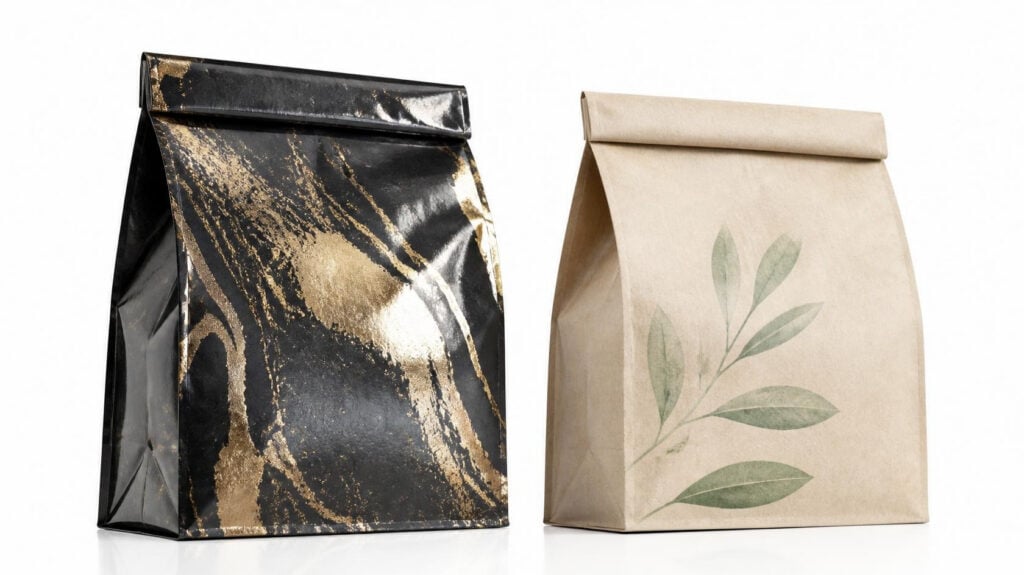
Finishing usually gets less attention here, but it still matters. Heavy inks, thick foil stamping, and full-surface plastic lamination can all reduce how recyclable a package is. Water-based inks and lighter finishes are generally kinder to the recycling stream.
For small startups, my advice is simple: keep the structure clean and put your budget into smart printing, not into features that hurt recyclability. For large wholesale buyers, it’s worth reviewing every add-on against your target market’s recycling reality before you lock in tens of thousands of units.
Which Is More Sustainable: Recycled or Recyclable?
Clients ask me this constantly, and they want a one-word answer. There isn’t one.
Recycled content reduces the demand for new raw material — that’s a real environmental win at the front end. Recyclability keeps material in use and out of landfill — that’s a real win at the back end.
Plastics are a good example of why recyclability alone is not enough: in 2018, only 8.7% of plastics were recycled in the US. They’re solving two different problems, so ranking one above the other misses the point, and not everything labeled recyclable is actually recycled in practice.
The honest answer: the most sustainable packaging usually does both, matched to your real product needs and your customers’ real recycling systems. A package that’s 100% recycled but can never be recycled again isn’t a clean win. Neither is a fully recyclable box made entirely from virgin material, especially when the best outcome is a lower carbon footprint and conserved natural resources.
A Simple Decision Framework
When I help a brand choose, we work through these questions in order:
- Product protection — Will it actually keep the product safe through storage and long sea transport?
- Target market — What can your customers realistically recycle, and have you checked the local recycling program before making a claim?
- Budget — What can you sustain across repeat bulk orders, not just the first run?
- Brand story — What claim do you want to make, and can you back it up with verified claims? Clear labeling is a key aspect of maintaining consumer trust.
- Compliance — Does it meet your market’s rules (EU packaging and plastic regulations, US requirements)?
Sustainable packaging isn’t the greenest option on paper. It’s the option that protects your product, fits your buyers’ recycling reality, and matches a claim you can honestly stand behind.
How to Choose the Right Option for Your Brand
You don’t need to become a packaging engineer. You just need to ask the right questions before you approve a sample. Here’s the short version I give every client:
- Startups building a green brand: Lead with PCR content and a widely recyclable mono-material structure. Keep it simple, get it documented, and put your money into printing rather than risky add-ons, while supporting circular economy goals and reducing reliance on virgin raw materials.
- Wholesale and bulk buyers: Balance cost and durability. A PIR or blended board that survives long sea freight and repeat orders often beats a premium PCR box that fails in transit.
- Brands selling into the EU: Prioritize compliance and precise claims. Vague “eco” wording is a growing regulatory risk, and recyclability claims should match local capabilities, especially in regulated markets.
How to Verify Supplier Claims
This is where buyers get burned, so protect yourself. Before you trust any sustainability claim, ask your supplier for:
- Documentation of recycled content — and whether it’s PCR or PIR
- Recycled percentage by weight, and which part of the package it applies to
- Recyclability confirmation for your specific market — including alignment with the target market’s local recycling program and accepted disposal options
- Relevant certifications (for example FSC for responsibly sourced fiber), because verified claims help support compliance and consumer trust
If a supplier can’t document a claim, treat it as marketing — not a specification.
Common Mistakes to Avoid
- Assuming “paper” automatically means “recyclable”
- Claiming “100% recycled” when only one component qualifies
- Ignoring the target market’s recycling infrastructure, because not everything marked recyclable belongs in the household recycling container
- Adding plastic windows or laminations without checking the impact
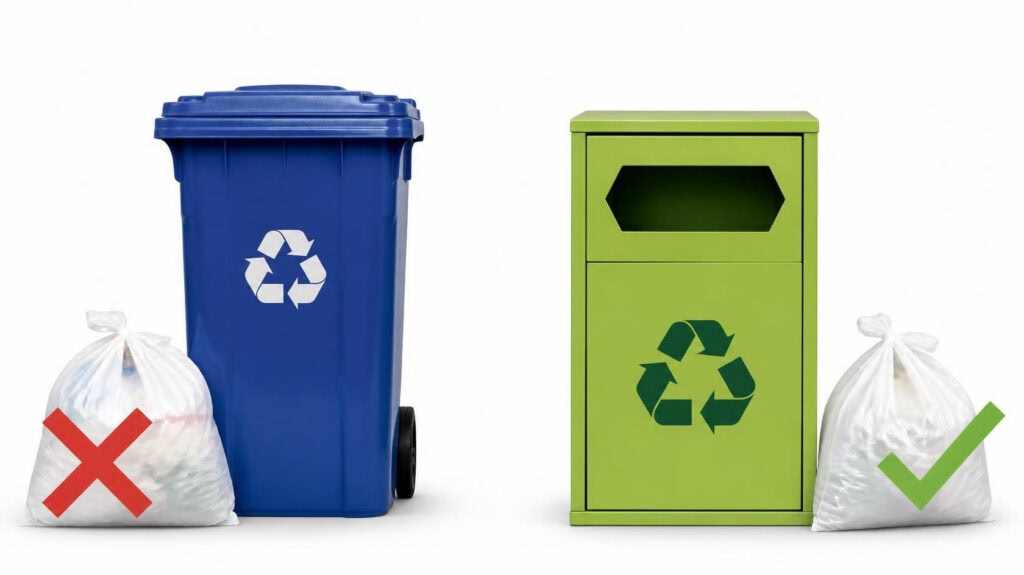
- Remember that plastic bags are not accepted in household recycling bins and usually require store drop off
- Approving a sample based on looks, not on transit and recycling performance
Frequently Asked Questions About Recycled and Recyclable
Q1:Is recycled packaging always recyclable?
No. Recycled describes where the material came from; recyclable describes whether it can be recovered afterward. A package can be one, both, or neither.
Q2:Is PCR better than PIR?
For sustainability claims, yes — PCR comes from consumer-used material and carries the strongest story. PIR is genuine recycled content too, but it comes from factory waste and offers a weaker marketing claim.
Q3:Can I claim my box is “recyclable” in every country?
Not safely. Recyclability depends on local collection and sorting systems. Confirm it for each target market before making the claim.
Q4:Does recycled paper look different from virgin paper?
Often, yes. Recycled fiber can be slightly less bright and less crisp. If you need a premium white finish, discuss it with your supplier before sampling.
Conclusion
Recycled and recyclable are not the same thing — and now you can tell them apart with confidence. Recycled is about the material’s past; recyclable is about its future. The strongest packaging usually does both, matched to your product, your budget, and your customers’ real recycling systems.
Get the definitions right, ask for documentation, and design with recyclability in mind, and you’ll make claims you can stand behind — and choose packaging that actually performs.
Get Recycled and Recyclable Paper Packaging for Your Brand From Packoi
If you’re weighing recycled content, recyclability, and cost for your next order, Packoi can help you compare options that fit your product, your market, and your sustainability goals — and confirm what each claim can actually support. [Request a quote or a sample consultation] to review the right recycled and recyclable paper packaging for your brand.