Unlike stock packaging, custom cookie boxes allow businesses to choose the box size, material, printing, structure, and finishing options based on their products and sales channels.
If you sell cookies, you already know the hard part isn’t baking them — it’s getting them into a customer’s hands looking exactly the way you intended. A box that’s too thin cracks your cookies in transit. A box that’s too generic makes your premium product look like a supermarket own-brand. And a box that’s over-engineered quietly eats into your margins on every single order.
In this guide, I’ll walk you through everything you actually need to decide before ordering custom cookie boxes — box types, materials, sizes, printing, cost drivers, MOQ, and how to choose a supplier who won’t disappoint you at the production stage. Whether you’re a small bakery placing your first order or a retail brand buying in bulk, you’ll find practical direction here.
What Are Custom Cookie Boxes?
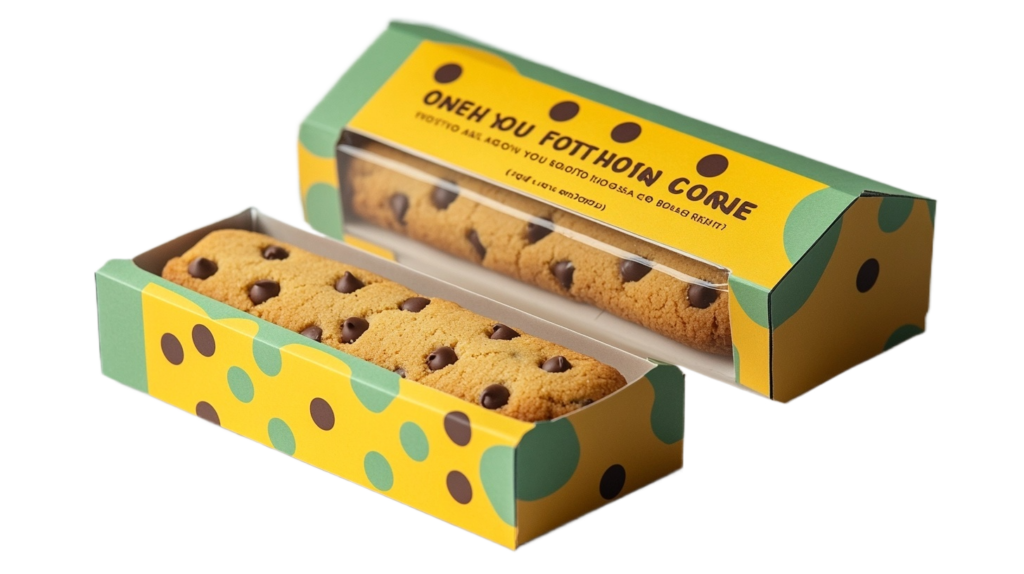
Custom cookie boxes are packaging built specifically around your product and brand, rather than pulled off a shelf of stock sizes. “Custom” usually means you control the:
- Size — sized to your cookie count and dimensions
- Shape and structure — folding, rigid, window, mailer, etc.
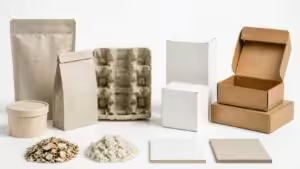
- Material — kraft, coated cardboard, corrugated, rigid board
- Printing and finishing — your logo, colors, and surface effects
- Branding elements — inserts, dividers, and inside-print details
Custom Cookie Boxes at a Glance
Feature | Custom Options |
Box size | Single cookies, cookie sets, gift boxes, wholesale packs |
Materials | Kraft paper, folding carton, corrugated board, rigid board |
Printing | Digital printing, offset printing, flexographic printing |
Design features | Windows, inserts, dividers, sleeves, handles |
Common users | Bakeries, ecommerce brands, cafes, retailers, gift companies |
So why not just buy stock boxes? For a hobby seller at a weekend market, stock is fine. But the moment you’re building a brand — shipping nationally, selling in stores, or gifting corporate clients — stock boxes stop working. They rarely fit your cookies properly, they carry no brand identity, and they don’t protect a fragile product the way a purpose-built box does.
Why Brands Choose Custom Cookie Boxes
Most brands come to us for one of four reasons — and usually a mix of them.
- Brand identity. Before customers taste your cookies, they notice the box first. A custom box carries your logo, brand colors, and a look that feels intentional. For DTC brands especially, that first impression on the doorstep is doing marketing work you can’t buy on ad platforms.
- Product protection. Cookies crack, crumble, and shift. A well-designed box reduces crushing, holds product in place, and keeps everything presentation-ready — which matters enormously if you ship long distances.
- Customer experience. The unboxing moment drives reviews, repeat orders, and social shares. A box that opens cleanly and presents cookies nicely turns a snack into a small gift.
- Sales channel fit. Retail shelves, e-commerce shipping, and the gift market all demand different things from packaging. Custom lets you build for the channel you actually sell through — which is exactly what we’ll break down next.
Types of Custom Cookie Boxes and Dessert Boxes
There’s no single “best” cookie box — only the right structure for how you sell. Here are the five types I recommend most often, and who each one suits.
Folding Carton Cookie Boxes
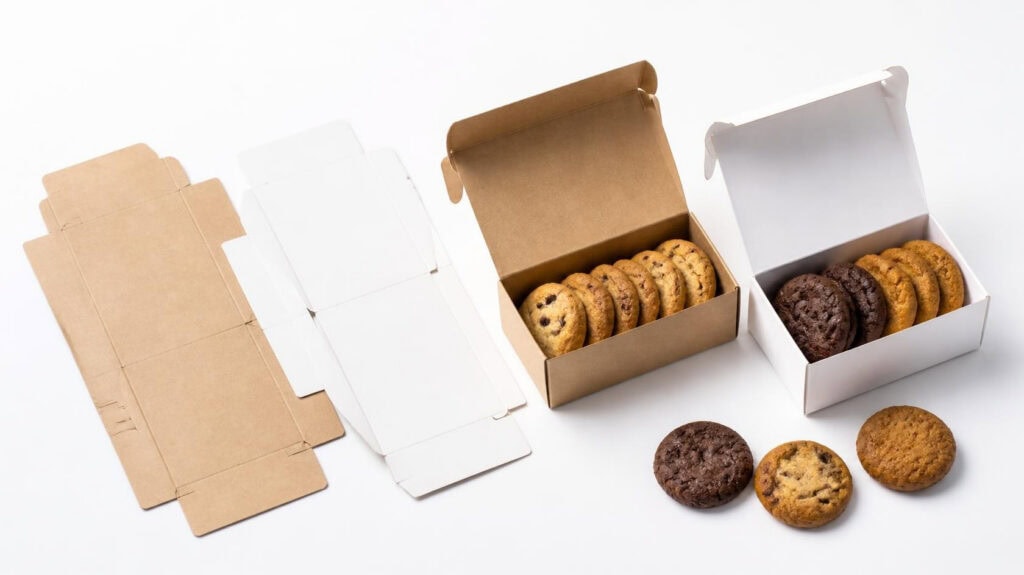
These are your everyday workhorse boxes — flat-packed, glued paperboard that folds into shape. They’re the go-to for retail cookies, bakeries, and daily products.
Why brands like them: they’re cost-effective, ship and store flat (saving you warehouse space and freight), and they print beautifully. If you want sharp full-color branding without a big budget, this is usually where we start.
Kraft Cookie Boxes
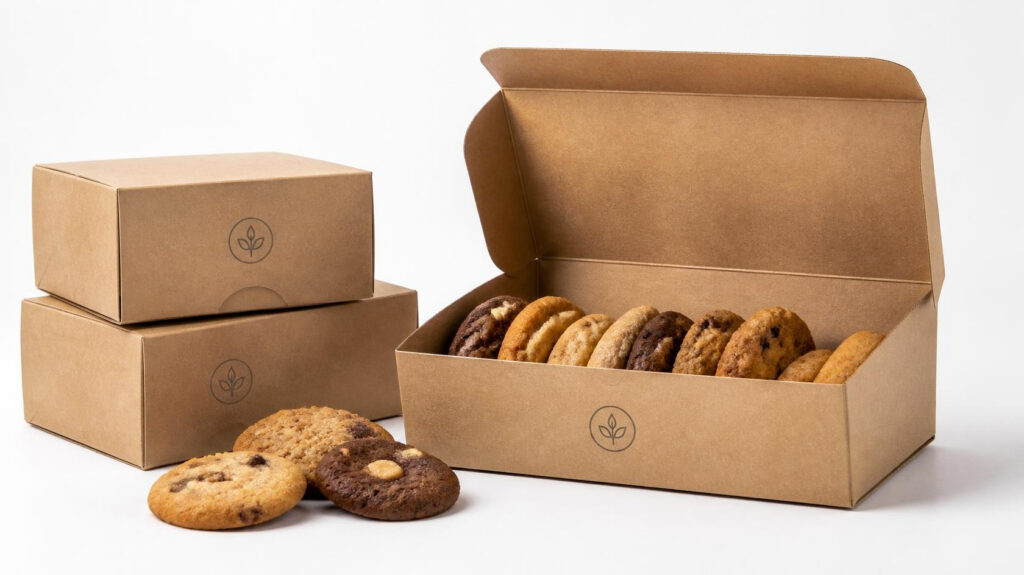
Kraft is that natural, brown, uncoated look. It’s a favorite for organic brands, handmade cookies, and sustainability-focused labels.
Beyond the eco-friendly appearance, kraft signals “honest and handmade” to customers, which fits the story a lot of artisan brands want to tell. Just know that heavy full-color printing doesn’t pop on kraft the way it does on white board — so it’s a look, not a blank canvas.
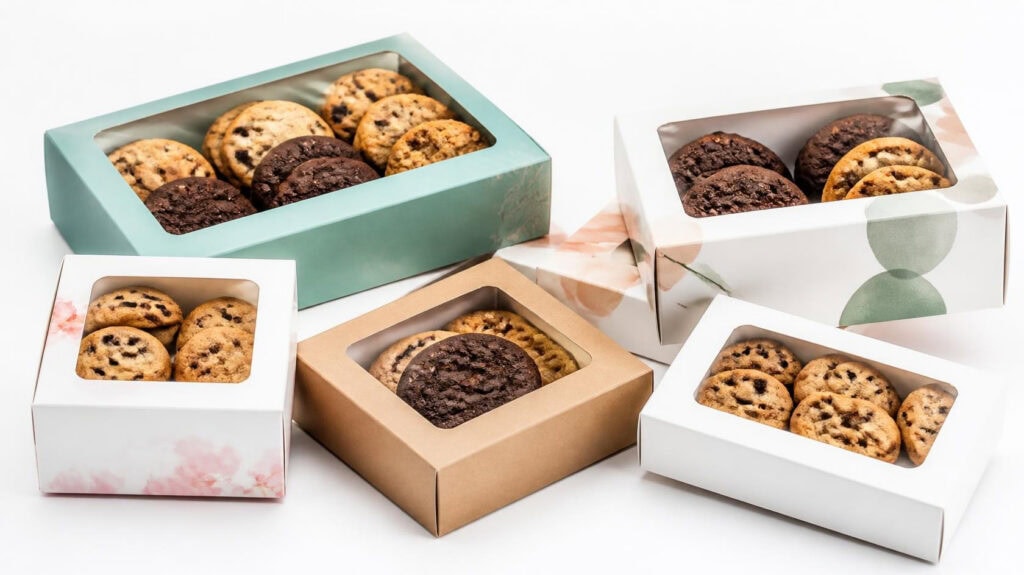
Window Cookie Boxes
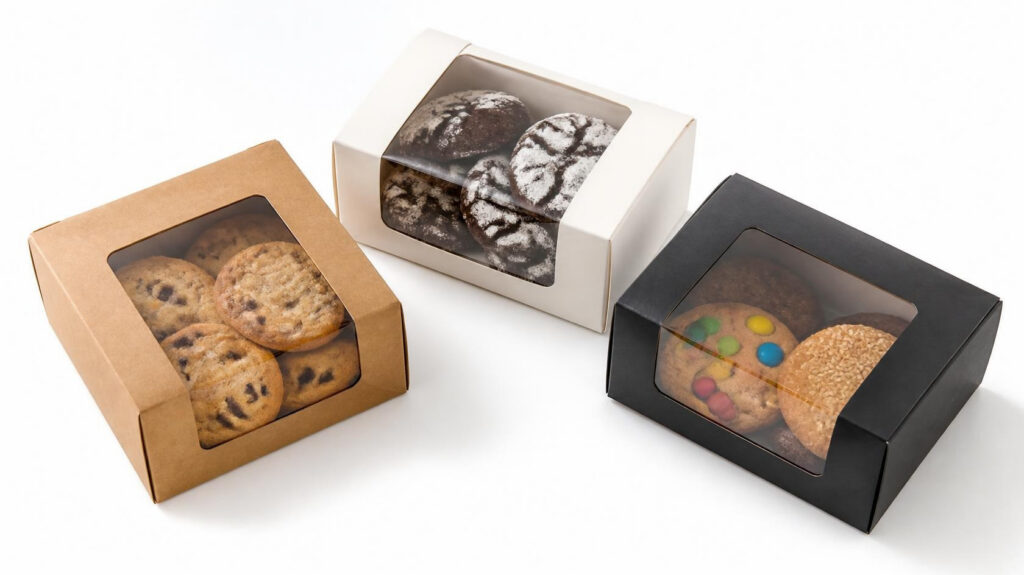
A die-cut window (usually with a clear film) lets customers see the cookies inside. Perfect for retail display and gift cookies.
On a crowded supermarket shelf, letting the product sell itself is powerful — buyers want to see what they’re getting. One note from experience: for products shipped overseas or sold as food, make sure the window film meets food-contact and, where relevant, EU compliance requirements. It’s a small detail that trips up a lot of first-time buyers.
Rigid Cookie Gift Boxes
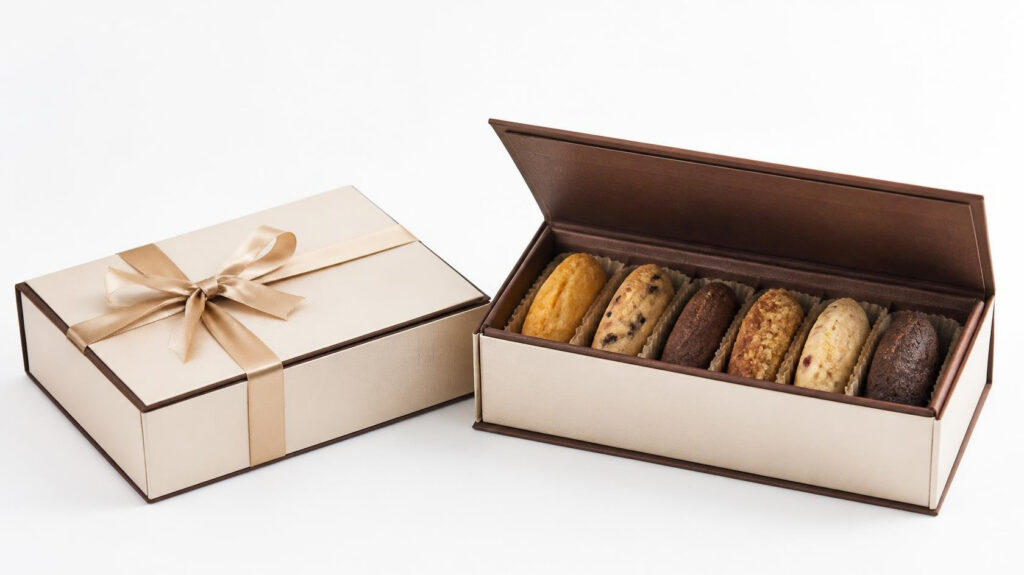
Rigid boxes are the sturdy, non-folding “luxury” boxes you’d expect around premium cookies, holiday gifts, and high-end brands.
They deliver the best unboxing experience by far. The tradeoff is cost and freight — rigid boxes ship assembled, so they take up more space. I’ll come back to that under cost.
Shipping Cookie Boxes
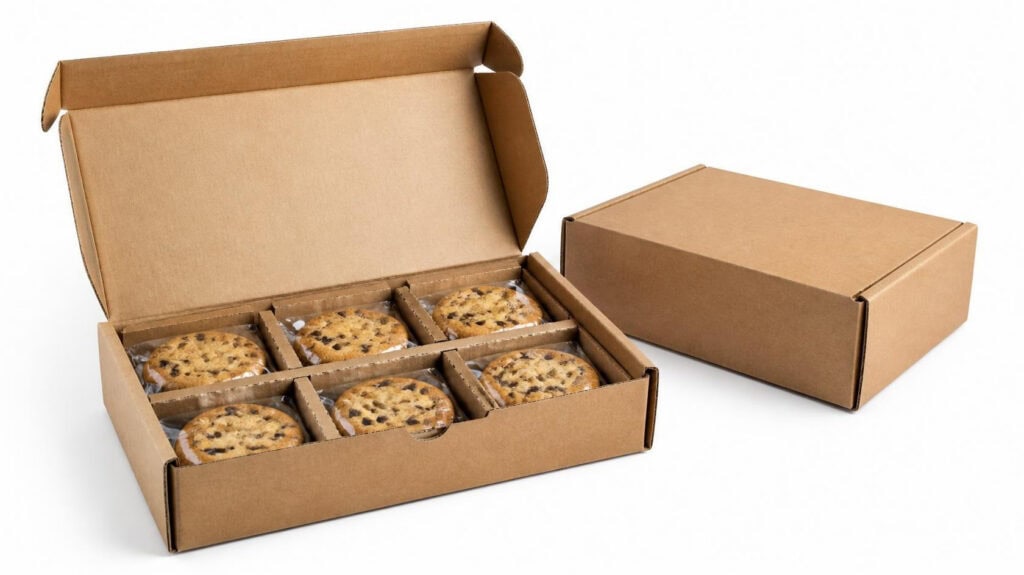
Built for e-commerce brands that mail products directly to customers. The priority here isn’t looks — it’s survival. Stronger structure, better internal protection, and reliable performance through the shipping network.
Custom Cookie Box Design Elements Brands Should Consider
The structure and visual details of a cookie box can influence both product protection and customer perception. Before ordering custom packaging, brands usually consider the following design elements.
Window Design
Window cookie boxes allow customers to see the product before purchase. They are popular for retail shelves, bakeries, and gift packaging because product visibility can improve buying confidence.
Inserts and Dividers
For delicate cookies, inserts and dividers help prevent movement inside the box. They are especially useful for ecommerce brands shipping cookies over long distances.
Closure Styles
Common cookie box closure options include tuck-end boxes, sleeve boxes, magnetic closure boxes, and folding designs. The right structure depends on your product positioning and budget.
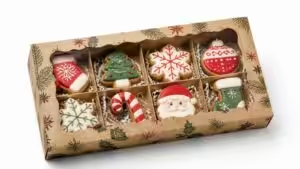
Seasonal and Gift Designs
Many brands create seasonal cookie packaging for holidays, corporate gifts, and special occasions. Colors such as pink, red, and custom printed patterns are often used for themed collections.
How to Choose the Right Cookie Box Material?
Material is where protection, appearance, and cost all collide. Here’s how the main options compare:
Material | Best For | Advantages | Considerations |
Kraft paper | Natural / handmade brands | Sustainable, honest look; eco-friendly | Less "premium"; limited print vibrancy |
Folding carton | Retail cookies | Excellent printing; ships flat | Moderate protection only |
Corrugated board | Shipping / e-commerce | Strong protection for transit | Higher cost; bulkier |
Rigid board | Premium gifts | Luxury feel and unboxing | Higher budget; higher freight |
A quick rule I share with brand founders: match the material to your biggest risk. If your biggest risk is breakage in the mail, protection wins. If it’s blending in on a shelf, printing and shelf appeal win. If it’s brand perception at the gift table, material quality wins.
Field Experience — Why choosing packaging on looks alone can backfire
We once worked with an online handmade cookie brand that had chosen a thin, attractive paper box. On a table it looked great. The problem: nearly all their orders shipped long-distance through e-commerce, and the thin box couldn’t survive the journey — cookies arrived crushed, and refund requests climbed.
We didn’t just upsell them a heavier box. We switched to a sturdier paperboard structure, added internal dividers, and sized the interior so cookies couldn’t shift — while keeping the box compact to avoid oversized shipping charges. Breakage dropped sharply, and their freight cost stayed under control.
The lesson holds for any brand: choose packaging around your product type, shipping method, and real protection needs — not appearance alone.
Applications: Which Cookie Box Fits Your Business?
Two brands can sell the exact same cookie and need completely different packaging. What changes is the context — your sales channel, your customer, and your budget. Here’s how I’d steer each type of business.
Cookie Box Recommendations by Business Type
Business Type | Recommended Box | Main Priority |
Artisan bakery | Kraft or folding carton boxes | Appearance and daily use |
Ecommerce cookie brand | Corrugated shipping boxes | Protection during delivery |
Luxury cookie brand | Rigid gift boxes | Premium unboxing experience |
Cafe and restaurant | Printed folding cartons | Brand consistency |
Retail food brand | Window boxes | Shelf visibility |
Bakery Boxes for Bakeries and Artisan Cookie Shops
If you’re a local bakery or handmade cookie shop, your box is doing three jobs: helping showcase the product, building your name, and staying affordable enough to use every day.
For most artisan shops, I recommend folding carton or kraft cookie boxes, often with a window so customers can see what they’re buying. These are the kind of bakery boxes many shops use every day for cookies and other baked goods. They can also work well for pastries. Add your logo and brand colors, and you’ve got a box that looks intentional without blowing your budget. Start simple — you can always upgrade finishes as the brand grows.
E-commerce Cookie Brands
For Shopify sellers, online bakeries, and subscription cookie businesses, packaging is a shipping problem first and a branding opportunity second.
Your enemy is breakage. I’d point you toward corrugated cookie boxes with inserts or dividers to lock cookies in place. Print your branding on the inside too — that unboxing moment drives the reviews and repeat orders your business runs on. (This is exactly the fix from the field example above.)
Premium and Gift Cookie Brands
Here, customers aren’t just buying cookies — they’re buying a gift experience built around premium treats. Luxury brands, holiday gift companies, and corporate gifting programs all live or die on that moment the box opens.
Go with rigid boxes, elevated with foil stamping or embossing and a clean internal arrangement. Yes, it costs more, but for a $40 gift set, premium packaging isn’t an expense — it’s part of the product.
Cafes and Restaurants
Coffee shops, dessert shops, and restaurants need packaging that matches the in-store brand and is easy to grab-and-go.
Custom-printed folding cartons or kraft boxes work well here. The priority is brand consistency — the box should feel like an extension of your menu and store design — plus easy handling for staff and customers.
Hotels and Catering Businesses
Hotels, caterers, and event suppliers use cookie boxes for welcome gifts, conference giveaways, and dessert service. The needs here are a professional look, reliable bulk supply, and consistent production order after order.
For this crowd I recommend wholesale custom cookie boxes — and honestly, supplier reliability matters more than any single design choice. When you’re ordering thousands of units for a recurring program, a factory that delivers on time and holds print quality across batches is worth more than a fancy finish.
Retail Food Brands
Supermarkets, specialty stores, and grocery brands are fighting for attention on a shelf full of competitors — and they need packaging that survives stacking and storage.
Printed folding cartons and window boxes hit the sweet spot: strong shelf appeal, clear product visibility, and enough structure to stack and store. One tip for retail buyers — confirm your box’s compression strength early. Cartons that look fine on their own can bow or dent under the weight of stacked stock, and that’s what shoppers judge you on.
Custom Cookie Box Sizes and Dimensions
Getting the size right is one of the most underrated decisions you’ll make. Too big, and cookies slide around and break — plus you pay for wasted space in shipping. Too small, and you’re forcing product in and cracking it on the way. The goal is a box sized snugly around your actual cookies.
As a rough starting point:
Cookie Quantity | Recommended Size | Common Use |
1 cookie | Around 3" × 3" × 1" | Samples, promotional gifts |
4 cookies | Around 6" × 6" × 2" | Bakery sales and small gifts |
6–12 cookies | Around 8" × 8" × 2.5" | Online orders and retail packs |
24+ cookies | Custom size | Corporate gifts and wholesale orders |
Treat these as reference points, not rules. Cookie diameter, thickness, and how you stack or lay them out all change the math. This is exactly why I always recommend a pre-production sample — measuring on paper is one thing, but seeing your real cookies sit inside the real box tells you everything. We build custom sizes around your product, so you’re not squeezing your cookies into a size that “almost” fits.
Printing and Finishing Options
Printing is where your box stops being a container and starts being brand marketing. The right method depends mostly on how many boxes you plan to order.
- Digital printing — best for small runs and startups. Low setup cost, fast turnaround, great for testing designs before you commit to volume.
- Offset printing — best for large, consistent runs. Higher setup cost, but the per-unit price drops sharply at scale and color consistency is excellent.
- Flexographic printing — common for kraft and simpler designs at high volume.
On top of the print, finishing adds the premium touch:
- Matte or gloss lamination — protects the surface and sets the mood (matte reads premium and understated; gloss reads vibrant and eye-catching)
- Foil stamping — metallic gold or silver accents for luxury and gift lines
- Embossing / debossing — raised or recessed logos you can feel
- Spot UV — glossy highlights on specific areas against a matte background
Packoi Expert Tip: don’t stack every finish onto one box. Pick one or two effects that reinforce your brand story. A single foil logo on clean board often looks more premium than a box loaded with five competing effects — and it costs less.
Cost Factors and Budget Planning
Cookie box pricing isn’t one number — it’s driven by several factors working together:
- Box type and material — rigid and corrugated cost more than folding cartons
- Size — more material, more cost
- Printing method — digital vs. offset, number of colors
- Finishing — every added effect adds cost
- Order quantity — this is the big one; per-unit price drops significantly as volume rises
Two honest tips from working with brands at both ends:
- Small brands / startups: order smart, not huge. Use digital printing and a lean design to keep upfront costs low while you validate the product. You don’t need foil and rigid board to launch.
- Large brands / wholesale buyers: volume is your best lever. Offset printing plus higher quantities brings your per-unit cost way down — but plan inventory carefully so you’re not tying up cash in boxes you won’t use for a year.
Procurement Note — Where the real savings usually hide
When a bakery or brand tells me their packaging is “too expensive,” the fix is rarely to cut quality. More often, the money is being lost in three quiet places: an oversized box that adds material and freight cost, too many finishing effects that customers never notice, and order quantities sitting in an awkward middle range where you’re paying near-startup prices without startup flexibility.
The practical move is to right-size the box to the actual product, keep one strong branding effect instead of four, and choose a print method that matches your true annual volume.
On more than one occasion, simply trimming box dimensions and consolidating orders cut a client’s landed packaging cost noticeably — without the customer ever seeing a “cheaper” box.
Custom Cookie Box Ordering Checklist
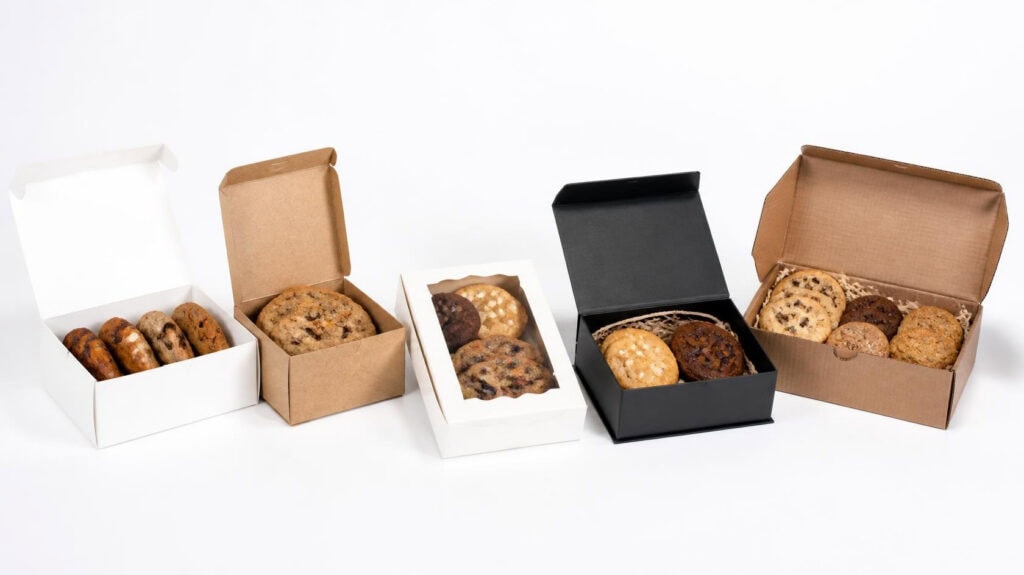
Before placing a bulk order, brands should confirm:
- Cookie dimensions and weight
- Box size and internal space
- Material strength requirements
- Food-contact safety requirements
- Printing method
- Finishing options
- Minimum order quantity (MOQ)
- Shipping and delivery timeline
- Sample approval before production
How to Choose a Custom Cookie Box Supplier
By the time you’ve chosen your box type, size, and finish, the last decision matters just as much: who actually makes it. A great design from an unreliable supplier still lands you with late shipments, off-color batches, or boxes that don’t fit.
Here’s what I’d check before committing:
- Samples before production — always see and handle a physical sample first. Confirm size, print color, and structure with your real cookies inside.
- Consistent quality across batches — anyone can nail one order. Ask how they hold print and dimensions across repeat runs, especially if you’ll reorder.
- Reliable lead times — for retail launches, gifting seasons, and catering programs, on-time delivery isn’t a bonus, it’s the whole job.
- Food-safe, compliant materials — confirm food-contact suitability and any export/EU compliance if you sell or ship internationally.
- Flexible MOQs — a good partner supports you as a startup and scales with you into wholesale volume.
The short version: pick a supplier who protects your product, your timeline, and your brand consistency — not just your lowest quote.
Frequently Asked Questions About Cookie Boxes
Q1:What is the standard size for a custom cookie box?
There isn’t a single standard — sizes range from about 3″ × 3″ × 1″ for a single cookie to 8″ × 8″ × 2.5″ for a 6–12 pack. The best size is built around your actual cookie dimensions and how you arrange them, which is why a pre-production sample is worth requesting.
Q2:Which cookie box is best for shipping?
Corrugated cookie boxes with internal dividers or inserts. They provide the structural strength and internal protection needed to survive e-commerce shipping and prevent breakage.
Q3:Are custom cookie boxes food safe?
They can be, but you should confirm it. Ask your supplier for food-contact-safe materials and, if you sell or ship internationally, verify any relevant export or EU compliance requirements — including window films.
Q4:How can I reduce my cookie box costs without lowering quality?
Right-size the box to your product to cut material and freight, limit yourself to one or two finishing effects, and match your print method and order quantity to your true annual volume. These changes often lower landed cost without the box looking “cheaper.”
Q5:What’s the difference between digital and offset printing for cookie boxes?
Digital printing is ideal for small runs and startups — low setup cost and fast turnaround. Offset printing is better for large, consistent volumes, with a higher setup cost but much lower per-unit pricing at scale.
Q6:What is the best cookie box material for shipping?
Corrugated cookie boxes are usually the best choice for ecommerce shipping because they provide stronger protection against crushing and movement. Adding inserts or dividers can further reduce cookie damage during transportation.
Q7:How many custom cookie boxes should a small bakery order?
Small bakeries should choose order quantities based on sales volume, storage space, and packaging budget. Many brands start with smaller test orders before moving to larger wholesale quantities.
Conclusion
Choosing the right cookie box comes down to three questions: What are you selling, how does it reach the customer, and what should the customer feel when they open it? Answer those, and the box type, material, size, and finish fall into place.
Whether you run a local bakery, an online cookie brand, or a premium gift line, the goal is the same — protect the product, reflect the brand, and stay within budget.
Find the Right Paper Food Packaging Partner with Packoi
If you’re ready to move forward, Packoi can help. We produce custom cookie boxes in every type covered here — folding carton, kraft, window, rigid, and shipping boxes — with custom sizes, printing, and finishing built around your product and channel. Request a free quote or order a sample to see and feel the right box before you commit to a full run.