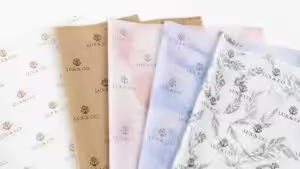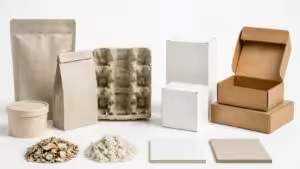
Kraft paper bags are known for their strength, natural texture, and lower cost. Coated paper bags offer smoother surfaces, better moisture resistance, and premium printing options.
However, the best choice depends on your product type, brand positioning, budget, and sustainability goals.
In this guide, we compare kraft vs coated paper bags based on material, durability, printing performance, waterproofing, cost, and real packaging applications. You will learn which option works best for retail stores, bakeries, restaurants, and premium brands.
Kraft vs Coated Paper Bags: Which One Should You Choose?
The right choice depends on what matters most for your business.
Choose kraft paper bags if you need:
- Lower packaging cost for high-volume orders
- Strong carrying performance for groceries, bakery products, and daily retail items
- A natural and sustainable brand image
Choose coated paper bags if you need:
- Premium printing with sharp colors and detailed graphics
- Better moisture resistance
- A luxury appearance for fashion, cosmetics, gifts, or high-end retail products
For most brands, kraft bags work best for practical everyday packaging, while coated bags are better when visual impact and premium presentation are the priority.
Kraft Paper Bags: Material, Strength, Cost & Best Uses
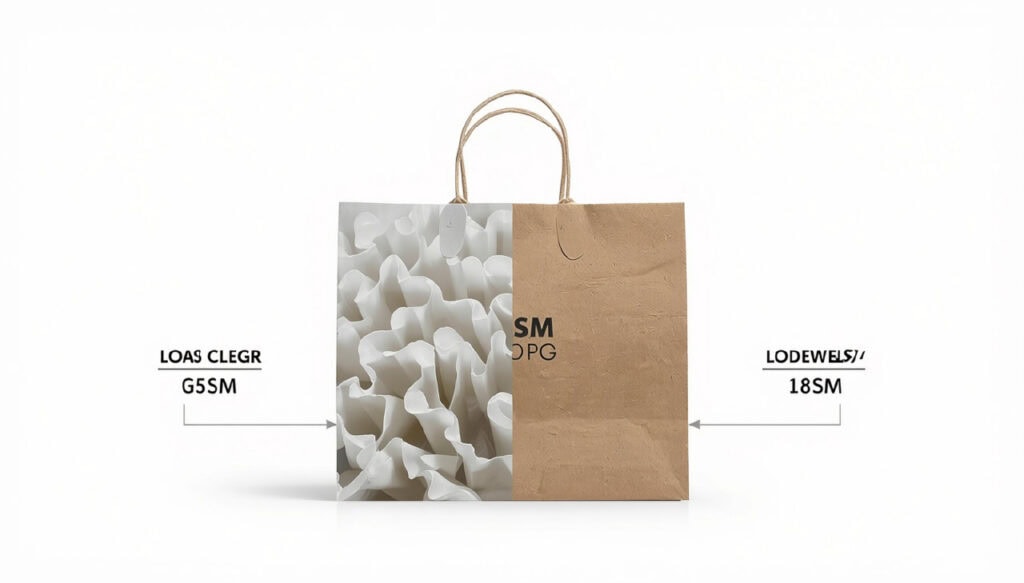
Kraft paper bags are the workhorses of the retail world. They are made from brown kraft paper, which comes from wood pulp with long fibers.
Cost effectiveness is a major advantage: kraft bags typically cost 20–40% less than coated alternatives at the same GSM (grams per square meter).
Kraft Paper Material Details
- Fiber length: Virgin kraft fibers are long (2–3 mm), providing high tear and tensile strength. In the kraft pulping process, the kraft process preserves strong cellulose fibers through a chemical pulping process that removes lignin. Recycled fibers are shorter (1–2 mm), reducing strength by up to 30%. A 100 GSM virgin kraft bag is stronger than a 100 GSM recycled bag because the longer fibers hold together better.
- GSM ranges: Most retail bags use 80–150 GSM. Heavy-duty grocery bags often need 120–200 GSM.
- Recycled vs virgin: 100% recycled pulp saves cost and improves eco-credentials, but risks handle tear and bottom blowouts under heavy loads. A blend of 70% virgin + 30% recycled offers a good balance.
GSM and real‑world strength relationship:
GSM | Typical Load Capacity | Best For |
80‑100 GSM | Up to 2 kg | Light items, bread, small purchases |
120‑150 GSM | 2‑5 kg | Medium weight, general shopping |
180‑250 GSM | 5‑8 kg | Heavy loads, produce, bottles |
Paper weight helps estimate carrying performance, but bag strength also depends on fiber quality and whether the sheet uses virgin or recycled content.
Factory Case Study 01: Wrong Paper Choice Led to Handle Tear & Bottom Open
A food distributor ordered kraft bags using recycled paper to reduce costs. During testing, the bags failed when customers carried heavier produce.
The problem was not the GSM. The recycled paper fibers were not strong enough for the expected load.
After switching to a stronger virgin and recycled paper blend with reinforced bottoms, the bags achieved better durability without significantly increasing cost.
Lesson for buyers: Do not judge paper bags only by thickness. Paper composition and construction quality are equally important.
Pros of Kraft Bags
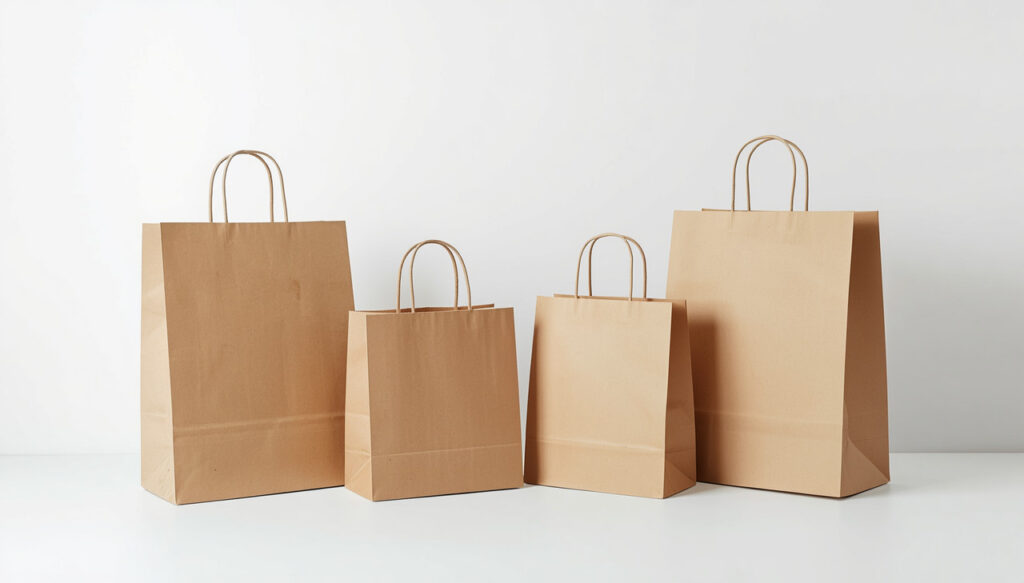
- Durability: Exceptional tear resistance and puncture strength, especially with virgin fibers.
- Eco-friendly: Fully recyclable and compostable. Brown kraft is the preferred choice for eco-conscious brands, and its natural brown color suits minimalistic or single-color branding.
- Cost: Lower material cost per unit, ideal for high-volume orders.
- Design fit: Kraft paper has a natural, rustic texture that works best with simple visual treatment rather than detailed artwork.
Cons of Kraft Bags
- Print fidelity: Textured surface limits sharpness. Fine details and photographic images appear dull. Foil stamping is possible but requires careful surface preparation.
- Moisture resistance: Without coating or liner, kraft absorbs moisture from food or humidity, leading to bag softening and failure.
- The “Ugly”:Choosing low‑cost recycled pulp without checking fiber length leads to bag failure. Customer complaints, returns, and brand damage follow.
Solutions:
- Select screen printing or flexo printing instead of offset. Solid color areas perform well and suit brand logos and simple text.
- For environments with refrigeration or moisture, choose wet-strength treated, wax-coated, or PE-laminated versions.
Coated Paper Bags — Material, Coating Types, Uses
Coated paper bags are paper bags with a chemical coating layer applied to the base paper.
These coated bags are widely used in fashion and premium retail settings, such as boutique clothing stores, cosmetics counters, and jewelry shops. The smooth white surface gives customers a refined first impression.
Types of Coatings
- PE coated (polyethylene): Most common and cost-effective. Provides excellent water resistance and heat-sealability for bag closure. However, PE coating makes the bag non-recyclable in standard paper streams.
- PP coated (polypropylene): Similar to PE but offers higher heat resistance and a more rigid feel. Often used for frozen food packaging.
- Water-based acrylic coating: A newer eco-friendly alternative. Provides good water resistance while allowing the bag to be repulpable (recyclable with paper). Print quality is excellent. Cost is 20–30% higher than PE coating.
GSM and Stiffness Considerations
Coated bags typically use higher GSM than kraft bags to compensate for the paper’s lower natural stiffness. A 180–250 GSM coated paper is equivalent in feel to a 120–150 GSM kraft bag. The coating adds weight but limited strength.
Pros of Coated Paper Bags
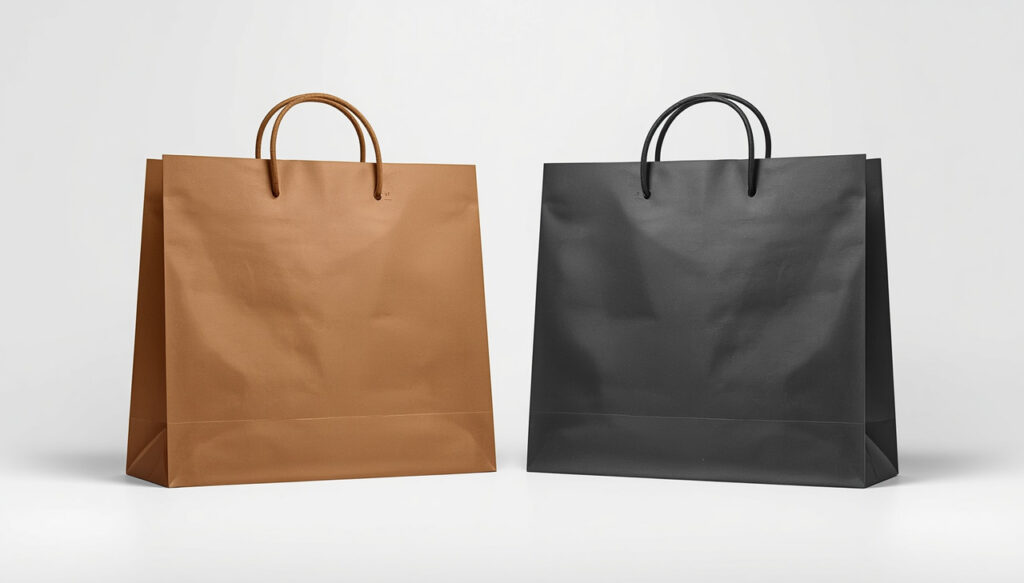
- Superior print quality: Smooth surface enables sharp, vibrant images, gradients, and metallic finishes. Perfect for luxury branding.
- Water resistance: Protection against rain, condensation, and moisture from products like fresh meat or frozen goods.
- Premium feel: Glossy or matte finish gives a high-end tactile experience that justifies higher pricing.
Cons of Coated Paper Bags
- Lower strength per GSM: Paper fibers are shorter in coated grades. The bag’s strength depends more on the base paper than the coating.
- Non-recyclable (PE/PP coated): Most coated bags with plastic lamination cannot go into standard paper recycling bins unless they have a special separating process.
- Higher cost: Coated paper is typically 20–40% more expensive than kraft at comparable stiffness. Also requires specialized printing processes.
- The “Ugly”: Cold‑chain failure. At low temperatures, some coatings become brittle. Bags crack. Or recycling backlash – a well‑known tea brand was boycotted in 2024 for using PE‑lined paper cups classified as mixed materials.
Factory Case Study 02: The Cold‑Chain Disaster – Coating Cracking at -15°C
A luxury cosmetics brand ordered 10,000 coated paper bags for a winter gift campaign. The bags were shipped in December from our factory to New York, where temperatures dropped to -15°C (5°F). Once in the store, customers complained about cracked coating on the bag surface and peeling edges.
Root cause: The standard PE coating formulation had a glass transition temperature (Tg) around -5°C. Below that, the coating became brittle and micro-cracked under normal handling.
Our solution: Replaced with a low-temperature PE formulation (Tg < -20°C) and added a 10-micron PP top layer for extra flexibility. Cost increased by 8%, but zero failures in subsequent winter shipments.
Packoi Expert Tip: Always specify the expected environmental temperature range before ordering coated bags. Request a cold bend test from your supplier.
Printing & Finishes: Foil Stamping vs Water-Based Ink
Choosing between foil stamping and water-based ink depends on your brand image, budget, and order volume. Here’s a comparison:
Ink Type | Properties | Best For |
Water‑based | Low VOCs, biodegradable, softer colors | Eco‑friendly brands, food packaging |
UV inks | Vibrant colors, fast drying, durable | High‑impact branding, glossy finishes |
Technical Tradeoff: Foil Stamping on Coated vs Kraft
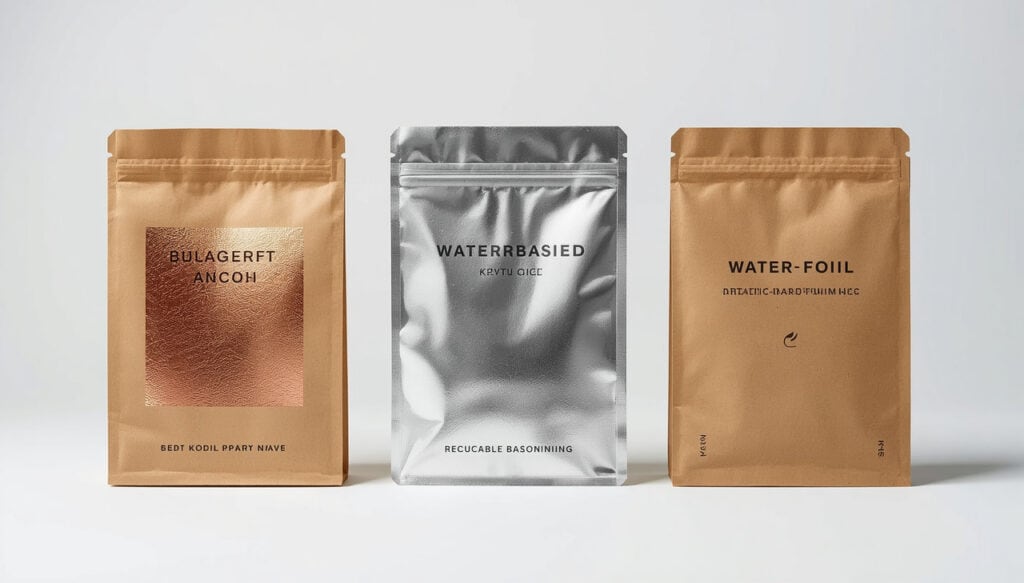
Foil stamping on kraft bags requires a primer layer or higher pressure to avoid the foil tearing on the rough surface. This adds cost and may reduce the “natural” look. On coated paper, foil transfers cleanly and sharply.
Practical suggestion for buyers: If you want a metallic brand logo on kraft bags, consider using a hot stamping with a clear primer or switching to a silver water-based metallic ink (less shiny but 50% cheaper and recyclable).
Paper Selection by Industry
Key principles:
- Load priority: Grocery, bottled goods → choose kraft, GSM 150+.
- Brand image priority: Fashion, cosmetics, jewelry, or gift packaging → choose coated, with foil or lamination.
- Moisture/oil resistance priority: Bread, fried chicken, takeaway, and food service use → choose greaseproof kraft or PE/PLA coated.
- Eco-friendliness priority: All industries can choose uncoated kraft with water-based inks, emphasizing recyclability, and custom kraft bags work well for brands that want a practical, lower-impact option.
- Handle selection: Match the handle style to the use case, since custom paper bags can be made with different handle constructions for load capacity, carrying comfort, and presentation.
Stock Quantity Guide
Stock recommendations:
- New brands: Start with 500 pcs for testing, then reorder after quality confirmation.
- Seasonal brands: Place large orders 2–3 months ahead to avoid peak-season price hikes and extended lead times.
- Stable retail brands: Order 3–6 months of usage at once, roll quarterly.
- Storage note: Store paper bags in a dry, cool, dark environment. Humidity above 70% can soften kraft paper and delaminate coated paper.
Waterproofing & Food-Safe Compliance
Waterproofing is a critical factor for retailers selling fresh produce, frozen goods, or bakery items. Kraft paper is naturally absorbent — a single drop of water can weaken the fibers and cause a bag to fail. Coated paper provides a barrier, but not all coatings are equal.
For maximum water resistance, choose polyethylene (PE) or polypropylene (PP) laminated kraft. These coatings block moisture completely, keeping frozen goods dry and preventing condensation from fresh produce. However, PE and PP are not compostable and can complicate recycling.
Food-Safe Certifications
If your bags will come into direct contact with food (e.g., wrapping bread, lining a gift basket), you must ensure compliance with:
- US FDA 21 CFR (for US market): Requires that all materials and inks are food-grade and do not migrate harmful substances.
- EU 10/2011 & 1935/2004 (for European market): Strict migration limits for coatings and adhesives.
- BfR (German standard): Often required for bakery packaging in Europe.
Important: Not all coatings are microwave or oven safe. Ask explicitly.
Factory Case Study 03: Non-Food-Grade Inks Contaminated Organic Bread — Brand Crisis
A premium organic bakery chain ordered custom printed kraft bags with a water-based ink that claimed to be “food-safe.” After packaging 50,000 loaves, customers reported a chemical odor and taste in the bread. Investigation revealed the ink contained trace levels of a photoinitiator that migrated through the paper into the bread.
Root cause: The ink supplier had listed “food-safe” based on the resin base, but did not test full migration under greasy, warm conditions (fresh bread is warm and oily). The photoinitiator was not approved for direct food contact.
Our solution: We switched to a certified food-grade ink (FDA 21 CFR compliant) and added a Greaseproof Kraft inner liner (50 GSM) as a physical barrier. Migration tests passed with zero detection. The client now requires third-party migration test reports from us for each production batch.
Packoi Expert Tip: Never trust “food-safe” claims without a migration test report. Always specify whether the bag will contact food directly (no liner) or indirectly (with liner). Require a certificate of compliance from your supplier.
Greaseproof Options for Food Bags
- Silicone-coated kraft: Excellent grease resistance, expensive, non-recyclable.
- Vegetable-based coating (e.g., corn starch): Good grease resistance, compostable, cost +15–20%.
- Double-wall kraft (no coating): Two layers of kraft provide natural resistance for dry fatty foods like pastries. No added chemicals.
Final Recommendation Table
Your Use Case | Recommended Bag | Why |
Heavy groceries (5–10 kg) | Brown Kraft, 120–150 GSM, 70% virgin + 30% recycled | Strength, cost, eco-balance |
Luxury boutique, up to 3 kg | White Coated, 200 GSM, offset print + foil, Euro Tote format | High-end look, smooth surface |
Bakery (dry pastries, bread) | Brown Kraft, 100 GSM, greaseproof inner liner | Food-safe, moisture control |
Frozen food / seafood | Coated, 220 GSM, PE/PP coating, low-temp formulation | Waterproof, cold-resistant |
Eco-conscious brand, any product | Brown Kraft (uncoated) with water-based inks, FSC certified; recycled paper for modest loads | Fully recyclable, compostable |
Specify small paper bags or larger formats based on item weight and presentation needs.
Frequently Asked Questions About Kraft & Coated Custom Paper Bags
Q1:Is there a paper bag option that balances natural looks with water resistance?
Yes. A vegetable-based coating (like corn starch) on kraft paper gives moderate moisture protection while keeping a natural appearance and compostability. Another option is double-wall kraft with no coating — two layers add resistance for dry or lightly greasy items. For wet products, a thin PE liner on the inside (hidden from view) retains the outer kraft look while blocking moisture completely.
Q2:What is the typical lead time for custom printed kraft vs coated bags?
Kraft bags with simple flexographic printing usually ship in 3–4 weeks because the process is straightforward. Coated bags with high‑quality offset printing or foil stamping often take 5–7 weeks due to additional coating, drying, and finishing steps. Always confirm current lead times with your supplier, especially during peak seasons.
Q3:Can I use the same artwork design for both kraft and coated paper bags?
Not directly. Colors appear duller and less saturated on rough kraft surfaces, so you may need to increase contrast and simplify fine details. On smooth coated paper, the same design will look sharper and more vibrant. Request a printed proof on your actual paper type before finalizing artwork to avoid surprises.
Q4:I’m opening a boutique bakery – which bag type do you recommend and how can I get started?
It depends on your products. For warm, oily items like croissants, choose greaseproof kraft with a plant-based coating — natural look, safe for food contact, and compostable. For dry pastry boxes or gift bags, uncoated kraft with water-based inks works well and saves cost. Packoi offers free material consultations and sample kits for new businesses. Reach out with your product details, and we’ll recommend the right bag for your brand.
Conclusion
Choosing between kraft and coated paper bags ultimately comes down to your product weight, desired print quality, moisture exposure, and sustainability goals. Kraft bags offer strength and eco-friendliness at a lower cost, while coated bags deliver premium print and water resistance for high-end retail. For help selecting the right material, testing blends, or avoiding common factory pitfalls, Packoi provides tailored recommendations and reliable custom manufacturing.
Bring Your Packaging Vision to Life with Packoi
Choosing between kraft and coated paper bags comes down to strength, print quality, and environmental impact — and the right decision depends on your product and climate. Packoi helps retailers navigate these tradeoffs with expert material testing, custom manufacturing, and real-world case insights. Contact us today for a free consultation and sample kit tailored to your business.