Coffee is more than a daily necessity; it drives a global industry worth over $400 billion. With the UK averaging 2 cups per person daily, and the US 3 cups, the market potential is massive. However, in this crowded landscape, only premium quality stands out.
The real challenge for businesses is keeping coffee fresh from the bean to the cup. You must ensure every sip delivers the same rich experience from the roaster to the customer. This is where your packaging process becomes your most critical quality control tool.
Proper coffee packaging acts as a protective shield against oxygen, moisture, and UV light. By choosing the right structures, you directly extend your product’s shelf life and protect its aroma. This comprehensive guide will help you master coffee packaging and elevate your brand.
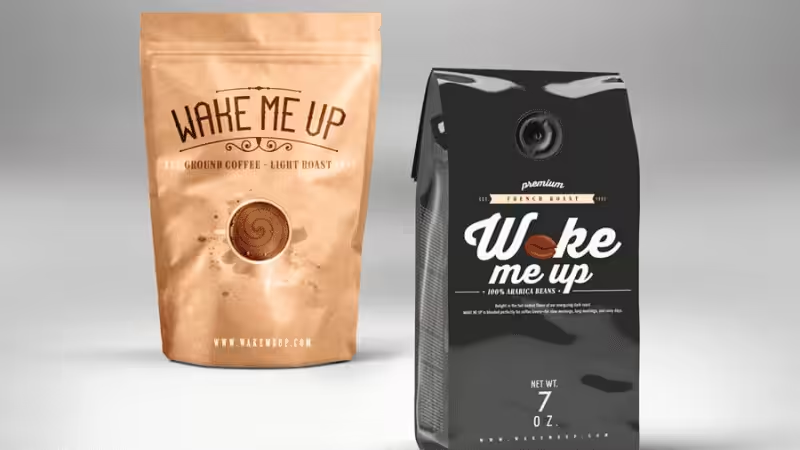
6 Crucial Factors That Define High-Quality Coffee Packaging
Choosing the right product packaging is a strategic business decision that goes far beyond holding your roasted beans or grounds. To succeed in today’s market, your selection must fulfill unique coffee packaging needs, protecting your roast while elevating your market presence.
Your packaging must master the following six elements:
1. Barrier Materials & Freshness Preservation
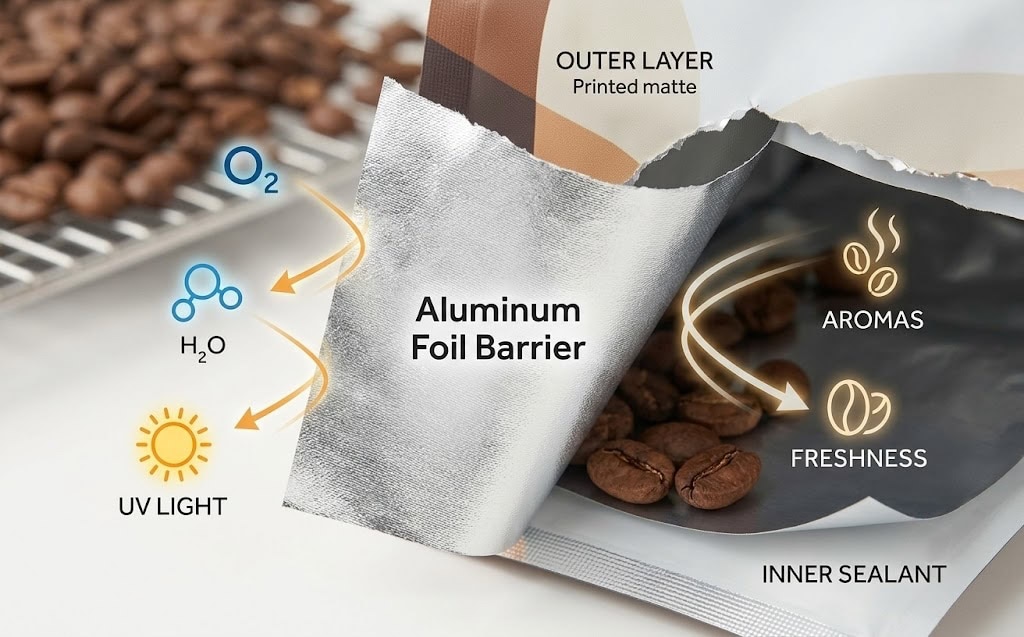
The single most important job of any coffee pouch is to shield your product from oxygen, moisture, and UV light. Investing in the right foundation—the material—ensures your coffee quality stays intact until the very last cup.
To maximize shelf life, you must utilize high-barrier laminates like aluminum foil or advanced protective films. These substrates create a shield that locks in delicate aromas, preserving premium coffee quality from the cooling tray to the consumer.
2. The Degassing Valve Functionality
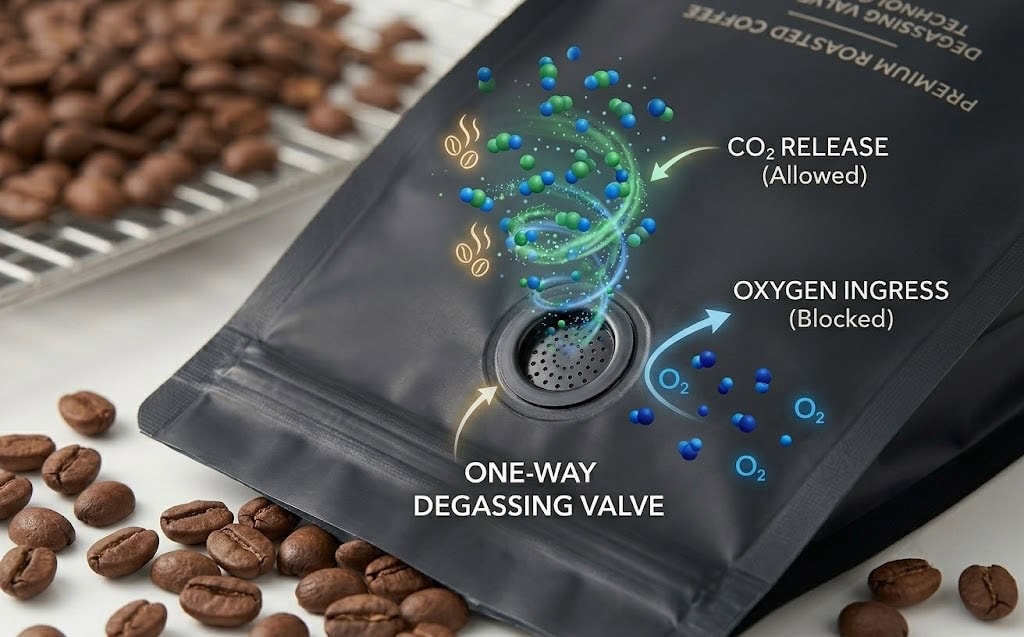
Freshly roasted coffee naturally releases carbon dioxide (CO₂) for days after processing. A one-way degassing valve is crucial as it allows CO₂ to escape without letting oxygen in, thus preserving freshness and flavor.
Without this tiny technological feature, sealed bags would bloat or burst, while leaving bags open would cause rapid oxidation. It is a non-negotiable component of any professional packaging process to maintain roast integrity and prevent pressure buildup or bag bursting.
3. Structural Integrity & Retail Presentation
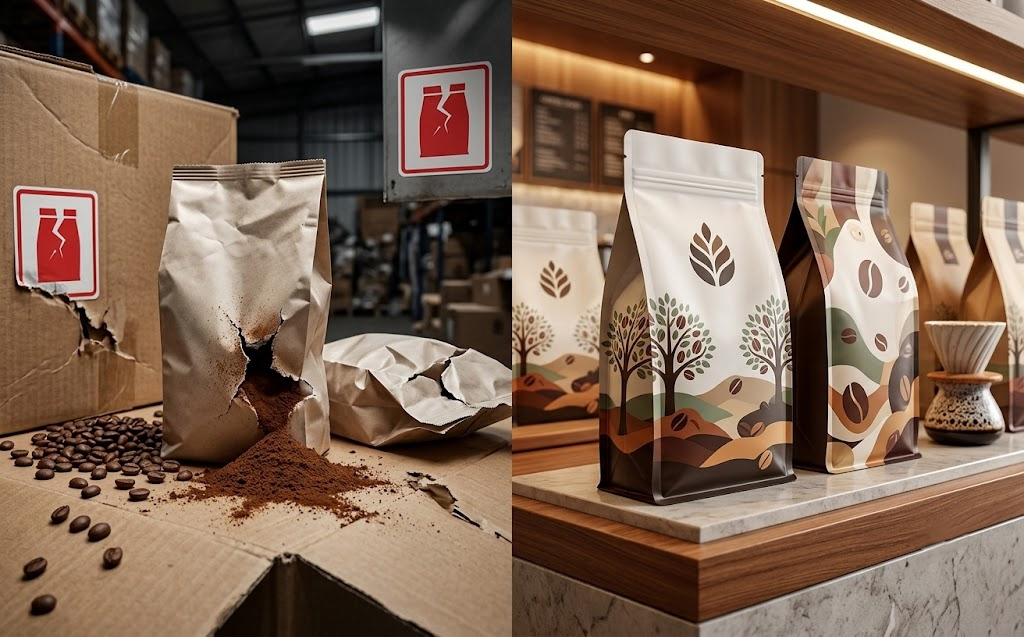
Your chosen packaging style must be durable enough to withstand the entire supply chain, from sealing facilities to customer doorsteps. Weak structures result in punctures, leaks, and compromised freshness during e-commerce transit or handling.
Furthermore, you want your coffee to stand out on crowded shelves. Choosing stable bag structures like flat-bottom or quad-seal bags provides dual benefits—they offer exceptional durability during shipping and create a premium, upright presentation that enhances brand recognition.
4. Visibility vs. Eco-Friendly Materials
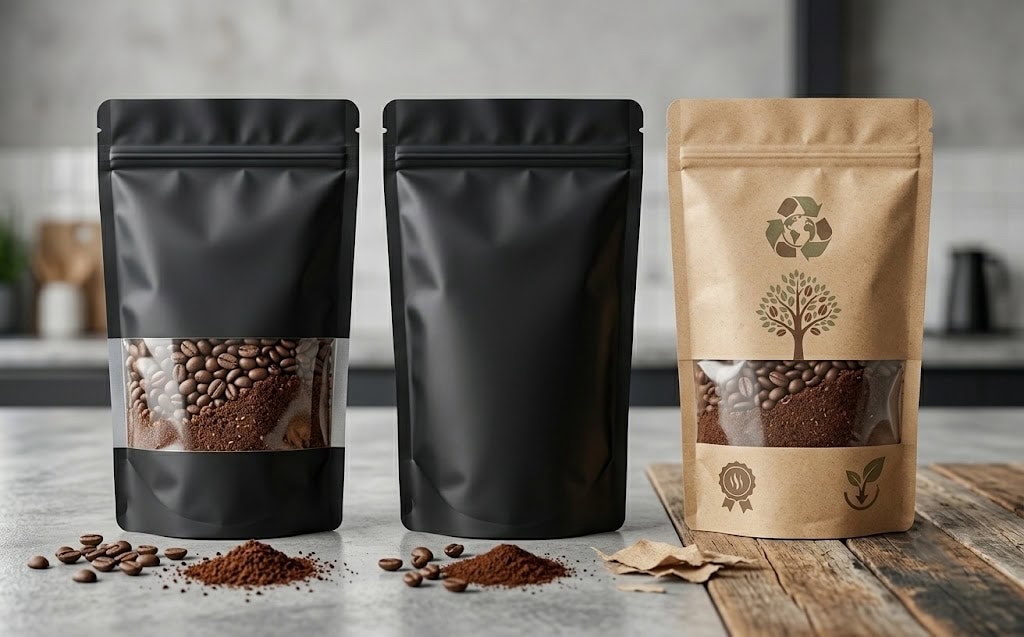
Finding the balance between product visibility and light protection is a key design challenge. While clear windows allow customers to inspect the texture of your coffee, you must also carefully consider the environmental impact of your packaging materials.
Fortunately, modern biodegradable bags appeal heavily to environmentally conscious consumers without sacrificing aroma barriers. When your package communicates well, regarding both product quality and sustainability, customers naturally trust your brand more.
5. Brand Identity & Usability Compliance
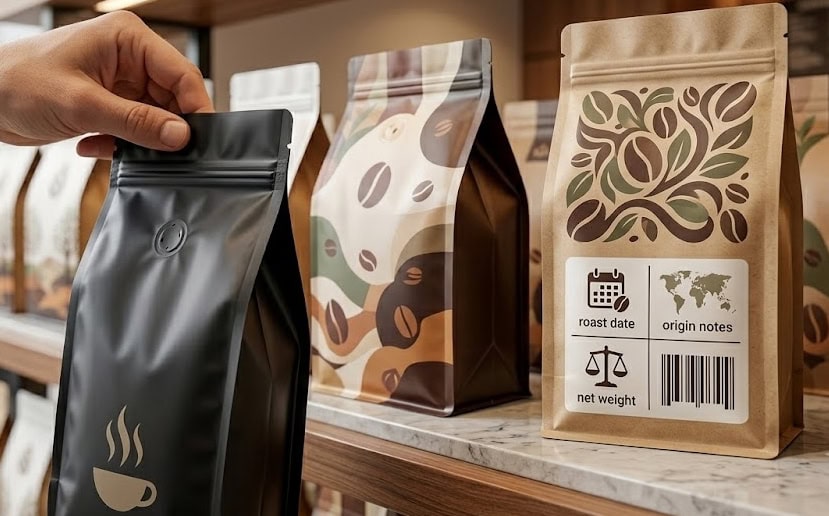
Packaging design must consider customer usability. Features like resealable closures and clear labeling enhance the overall consumer experience. Convenient features like tear notches and zippers keep coffee fresh with minimal effort.
On the retail shelf, eye-catching packaging is your silent salesperson. It must reflect your brand essence and tell your unique story through cohesive typography, while clearly displaying essential info such as:
- Roast dates
- Origin notes
- Net weight
- Barcodes
6. Balancing Customization Costs & Low MOQs
Investing in high-quality packaging requires a careful balance between upfront expenses and long-term business scalability. Many brands struggle to manage custom printing costs while trying to maintain flexible, low-risk inventory levels.
To reduce packaging costs without compromising quality, it is critical to find production efficiencies. Partnering with a specialized manufacturer allows you to access premium custom packaging with low Minimum Order Quantities (MOQs) , helping you cut costs while scaling.
5 Types of Coffee Packaging
Many aspects contribute to the success of your coffee business, and packaging is among the most critical. How you present your roast influences its freshness and heavily impacts brand perception. Understanding the diverse types of coffee packaging helps you capture attention in a crowded market.
1. Flat Bottom Bag
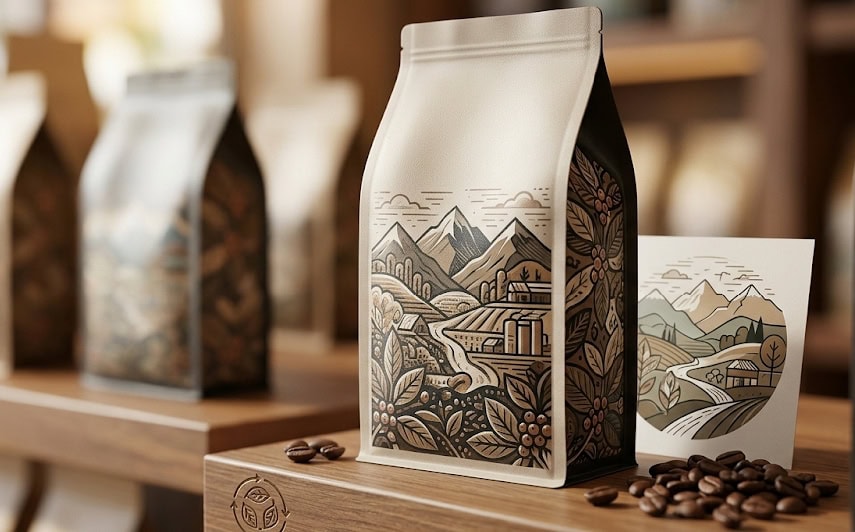
Flat bottom bags are popular in the coffee industry for their ability to stand upright, making them ideal for retail display and providing a stable base for packaging. The box-like structure offers maximum cubic efficiency for storing premium roasted coffee while providing generous panel space for branding and origin storytelling.
Traditional flat bottom bags use multi-material lamination (PET/Al/PE) to achieve high barrier properties. This can present recycling challenges, but not be as environmentally friendly as simpler alternatives. However, emerging mono-material PE versions now offer a recyclable alternative without compromising shelf stability.
For brands prioritizing both premium presentation and circular economy goals, mono-material flat bottom bags are an increasingly viable solution. Packoi can advise on mono-material options based on your target shelf life and sustainability commitments.
2. Quad Seal Bag
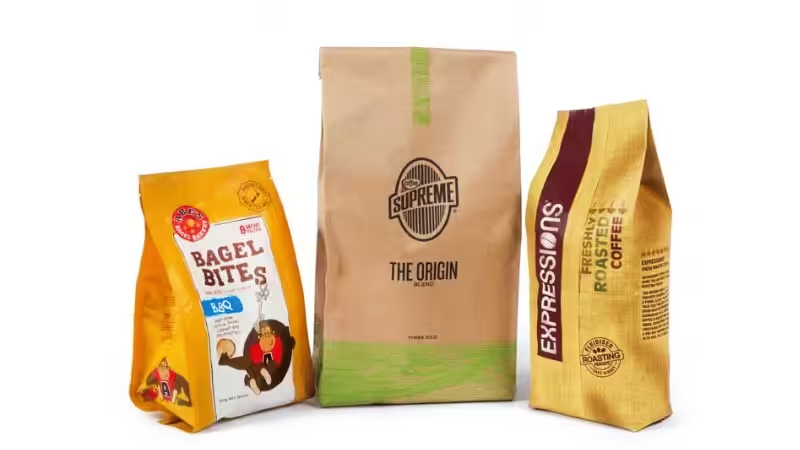
Quad seal bags feature four crisp side-edge seals that provide extra structural stability. Their flat bottom design allows them to stand upright on grocery store shelves while maximizing front-panel branding space.
These bags are particularly suitable for medium to large batch sizes, as their rigid shape stacks efficiently in shipping cartons. For standard 8oz, 12oz, or 1lb roast volumes, quad seal bags perform exceptionally well.
The main limitation is that the reinforced structure can reduce flexibility in packaging certain specialty blends. However, for most commercial roasters, quad seal bags offer an excellent balance of stability and presentation.
3. Doypack (Stand-up Pouch)
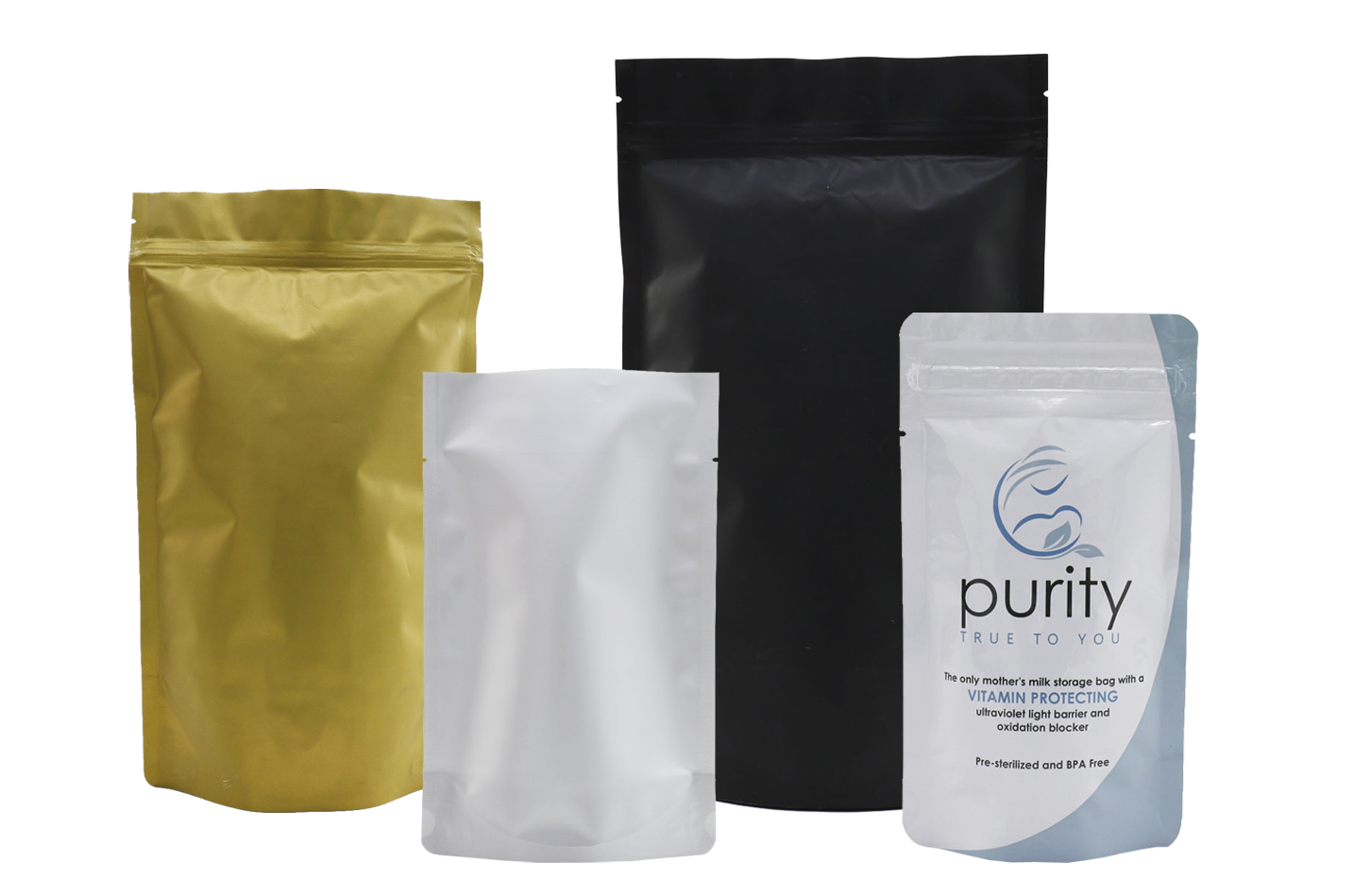
The Doypack is a flexible, gusseted pouch with a unique design that stands upright on its own. Stand-up pouches are a cost-effective packaging option that allows for easy storage and display, featuring resealable closures to maintain coffee freshness.
Doypacks are highly favored by startup roasters for three reasons: low production costs, excellent compatibility with digital printing (no plate fees), and lightweight design that reduces e-commerce shipping weight.
For younger brands testing new blends or launching limited-edition roasts, a stand-up pouch offers a low-risk, high-impact solution. It delivers exceptional visual appeal without requiring large minimum order quantities.
4. Pillow Bags
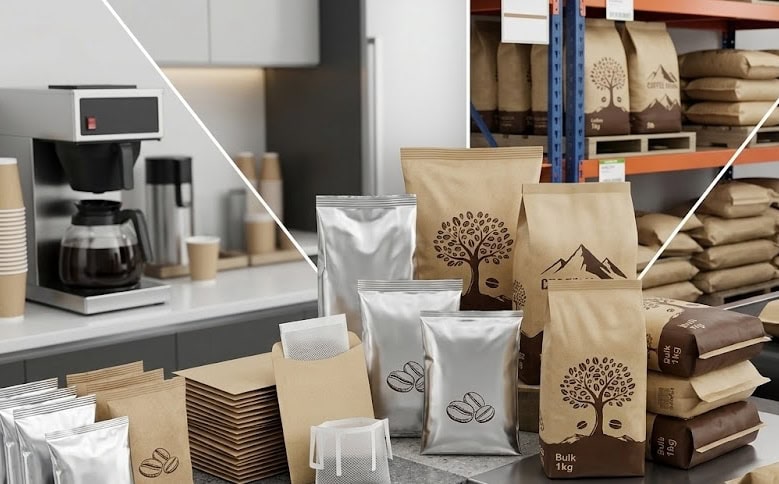
Pillow bags (three-side seal bags) provide a highly durable option at the most economical price point in the industry. They are lightweight and efficient for high-volume production runs.
In commercial operations, pillow bags serve as the industry standard for fractional packs in office coffee systems, large-scale wholesale food service, and protective outer envelopes for individual drip coffee bags.
If you supply offices, hotels, or high-volume accounts, pillow bags deliver the lowest cost per unit. They maintain adequate barrier protection for ground coffee with shorter expected shelf life.
5. Glass Containers
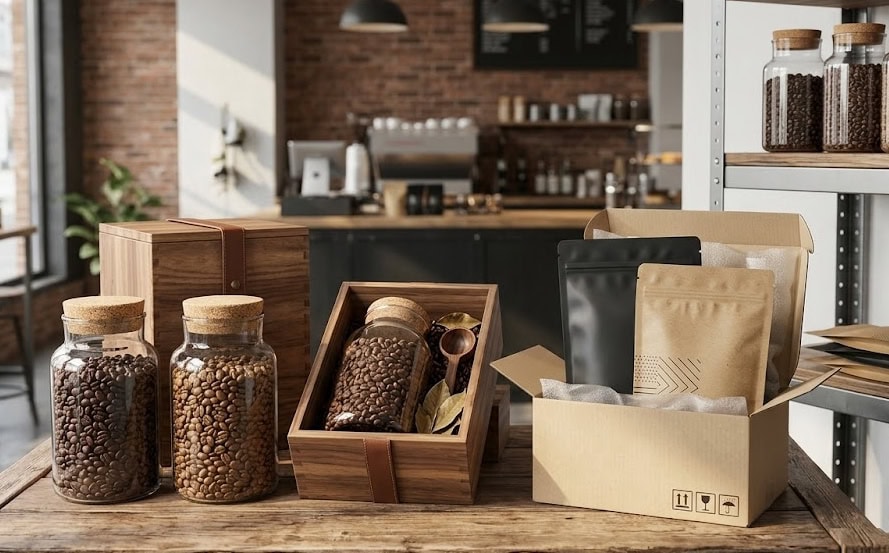
Glass containers offer maximum product transparency, allowing customers to see roast color and bean quality directly. Glass is chemically inert, preventing outside odors from seeping in and keeping coffee fresher for longer.
However, glass comes with trade-offs: higher shipping weight, increased breakage risk, and greater storage space requirements. For local retail or premium gift lines, glass signals craftsmanship.
For national distribution or e-commerce fulfillment, flexible pouches are almost always more practical. Many roasters use glass only for limited-edition releases or in-store retail displays.
What Is the Primary Packaging for Coffee?
Primary packaging is the first layer of protection that directly contacts your coffee beans or grounds. This is the bag, can, or pod that acts as the ultimate barrier against oxygen, moisture, light, and contaminants.
The barrier performance of your primary packaging determines how long your roast stays fresh. Which materials you choose make all the difference in preserving aroma and flavor.
Material Barrier Properties
When designing custom primary packaging, selecting the correct laminate structure is critical. Not all materials perform equally against oxygen, moisture, and light.
| Material | Oxygen Barrier | Best For |
|---|---|---|
| Unlined Kraft Paper | None | Not recommended for coffee |
| Standard Plastic | Low to Medium | Short-shelf-life ground coffee |
| Metallized Film | High | Most specialty coffee bags |
| Aluminum Foil | Highest | Long-term storage, premium whole bean |
Paper packaging looks and feels natural but cannot keep coffee fresh without a barrier. Unlined kraft paper rapidly absorbs volatile coffee oils, leading to rancidity within weeks. If you want a paper aesthetic, the substrate must be laminated with a high-performance barrier film.
For industrial-grade freshness preservation (6–12 months shelf life), aluminum foil and metallized films provide the highest barrier against oxygen, moisture, and light. These materials lock in aromatic compounds and prevent oxygen staling.
Common Examples of Primary Coffee Packaging
1. Custom Coffee Bags
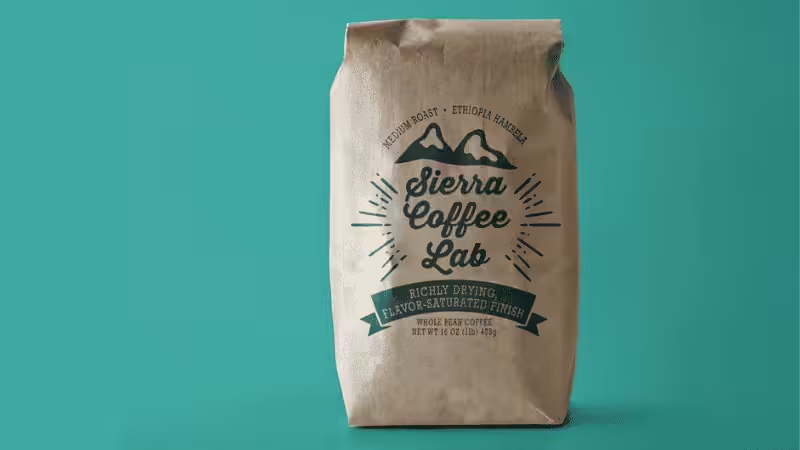
Whether structured as a Doypack, flat bottom bag, or quad seal bag, custom coffee bags use advanced multi-layer laminates. They typically feature resealable zippers and one-way degassing valves.
Resealable zippers maintain post-opening freshness. A one-way degassing valve is crucial for coffee packaging as it allows carbon dioxide released by freshly roasted coffee to escape without letting oxygen in, thus preserving freshness and flavor.
For most specialty roasters — from small batch to regional scale — custom coffee bags offer the best balance of barrier performance, branding flexibility, and cost.
2. Coffee Cans
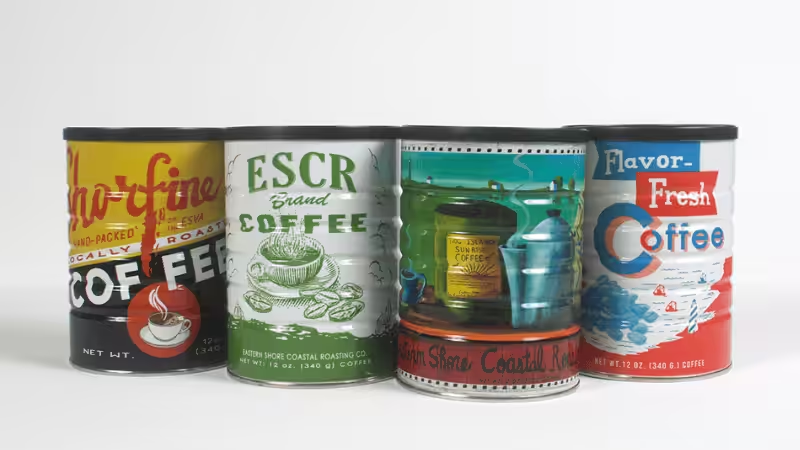
Coffee cans are rigid cylindrical containers made of metal (tinplate or aluminum) or high-barrier plastic. Their airtight seals preserve coffee essence until the moment of brewing.
Cans are conveniently stackable, making them a favorite for premium retail displays and industrial warehousing. However, they are heavier and more expensive to ship than flexible pouches.
Cans are best suited for high-end gift lines, ultra-premium single-origin roasts, or retail environments where shelf presence justifies higher unit cost.
3. Coffee Pods
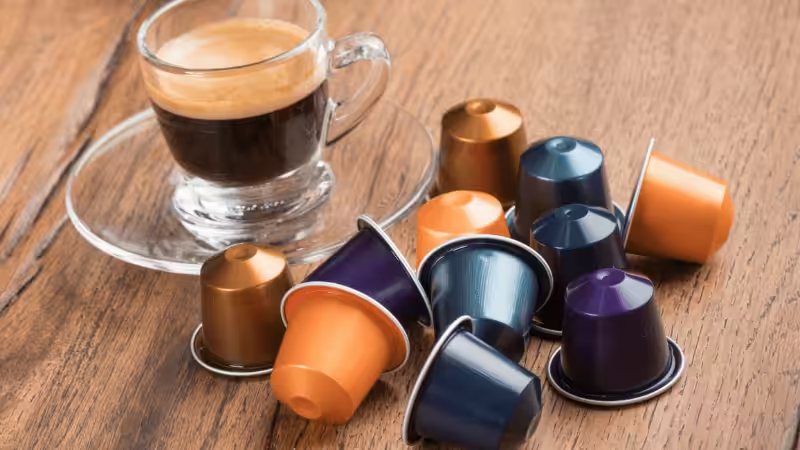
Coffee pods are small, pre-filled capsules containing with pre-measured ground coffee. Because ground coffee oxidizes faster than whole beans, the casing material requires strict oxygen barrier technology.
Standard plastic. pods offer low to medium oxygen barrier, allowing flavor degradation within 3–4 months. Aluminum pods provide an absolute barrier against oxygen, moisture, and light.
Aluminum ensures the with pre-measured ground coffee remains fresh for 9–12 months until brewing. If you are considering a private-label pod line, aluminum capsules deliver superior shelf life and cup quality.
Once your coffee is sealed in primary packaging, secondary packaging provides additional protection and branding opportunities during shipping and retail display. Common options include cartons for multi-packs, shipping boxes, and display-ready cases.
Secondary packaging
Secondary packaging is the outer packaging that surrounds your primary coffee bags, pods, or cans. It does not directly touch the coffee itself. Instead, it focuses on bulk stabilization, shipping protection, and retail shelf impact.
1. Coffee Cartons
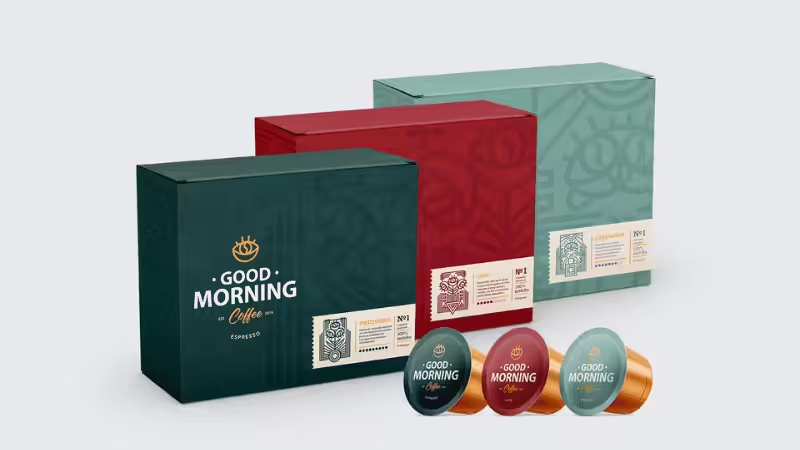
For retail-ready products like drip coffee bags or single-serve pods, lightweight cartons are the ideal secondary packaging choice. These sturdy, eco-friendly containers keep the primary packs inside neatly organized and free from damage.
Paperboard cartons are designed with convenience in mind, allowing retailers to stack and store them easily. They also offer a canvas for brand creativity through high-definition offset printing.
2. Coffee Boxes & Corrugated Mailers
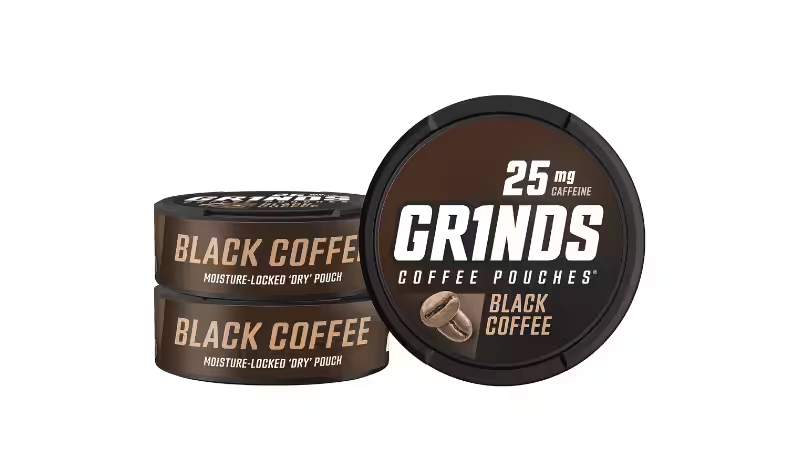
When preparing orders for e-commerce fulfillment or wholesale transit, robust coffee boxes are a highly reliable solution. They protect your coffee products from bumps and crushing forces during shipping.
For premium multi-packs, gift sets, or advent calendars, brands typically choose fine-flute corrugated board. E-flute or B-flute corrugated cardboard delivers strong structural rigidity and a clean exterior finish.
Adding custom dividers or die-cut inserts inside your shipping boxes prevents coffee bags from sliding around. This ensures products arrive in perfect condition, creating a memorable unboxing experience that builds customer loyalty.
How to Create Awesome Coffee Packaging Designs?
It’s time to create coffee packaging designs that truly stand out. And the tips below will help you.
1. Know Your Audience
This is the first step after which everything else smoothly follows. It’s simple but you need to be keen. This is to ensure your packaging design resonates perfectly with your audience.
Consider their:
- Preferences
- Values
- What attracts their attention?
If you know your audience inside and out, you’ll create packaging that speaks directly to them. This is your best bet to forge a connection that lasts.
2. Reflect Brand Identity
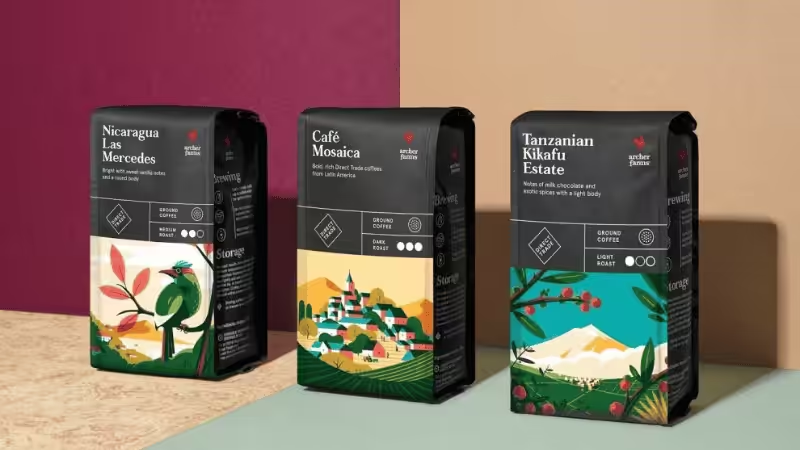
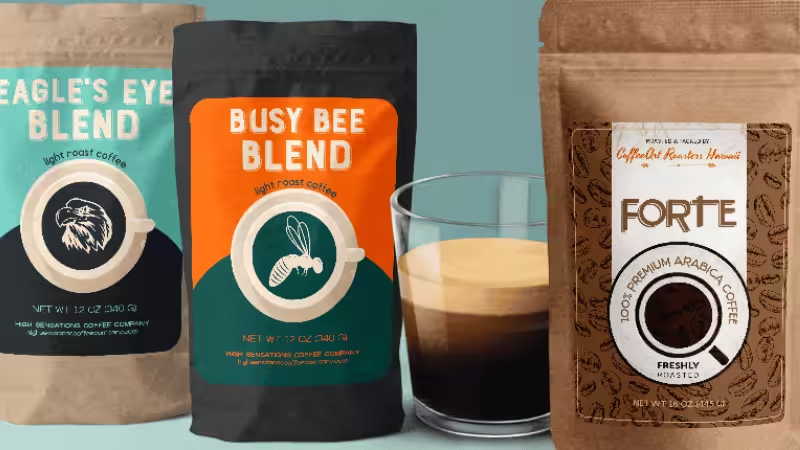
The colors, fonts, and imagery you choose for your coffee packaging should echo your brand’s personality.
Vibrant colors generally signify a lively coffee experience. Earthy tones evoke a sense of tradition or naturalness.
The key thing is to be consistent across all packaging elements. This is to reinforce brand recognition and build trust with customers.
3. Keep it Clear and Concise
No need for overly complicated coffee packaging designs. Just keep it simple enough to convey the message you want your customers to know.
You should note that simplicity doesn’t mean boring. It means effective. So use space wisely and showcase only key information. We are talking about:
- Origin
- Roast level
- Tasting notes.
4. Use Eye-catching Graphics
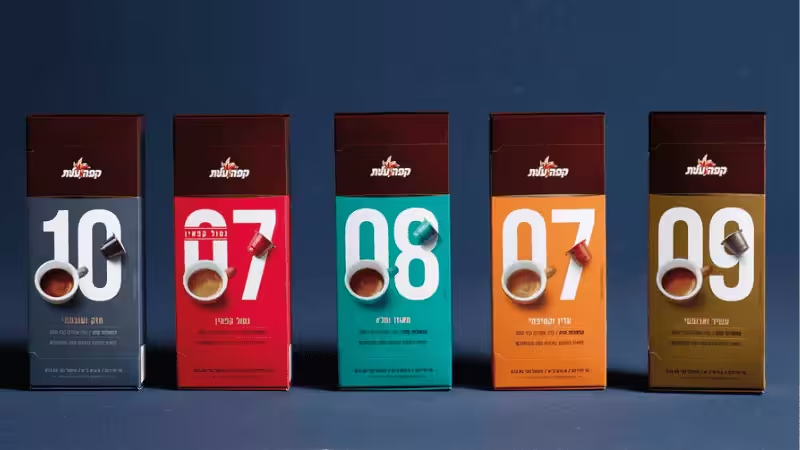
As much as your coffee tastes exceptional, its packaging should stand out, too.
Think about what sets your coffee apart and translate that into visuals.
5. Test and Refine
You’re all set to create captivating coffee packaging designs that’ll turn heads and win hearts. But here’s one final step.
You see that design you have created. Test it. Send it to your trusted customers. Then ask them for feedback.
This feedback will help you to fine-tune every detail until you achieve perfection.
What Should Be Included on a Coffee Label?
A compliant coffee label is your brand’s most effective trust-building tool. It legalizes your product for retail shelves while translating roast quality into value that consumers can perceive.
To ensure compliance and boost sales, your coffee label needs to clearly display two distinct categories of information:
Regulatory Essentials (Required by Law)
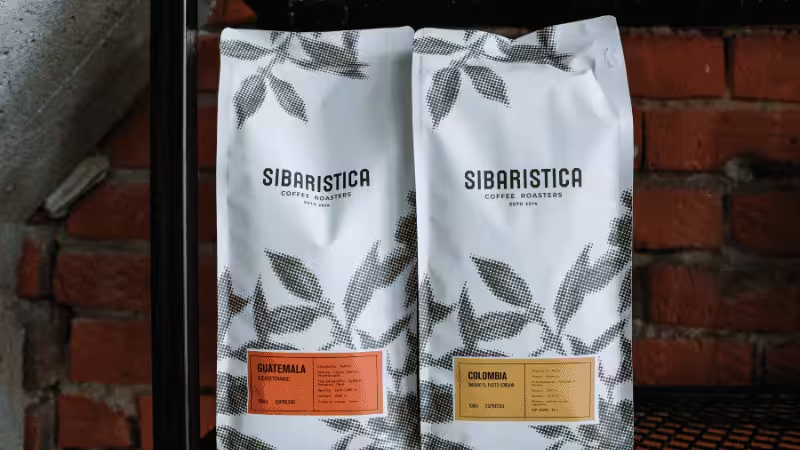
1. Product Name & Brand Identity
Your product name should be catchy and memorable. Place it next to your high-resolution logo to establish immediate shelf recognition.
2. Net Weight
The exact metric weight (e.g., 12oz / 340g) must be clearly visible near the bottom of the front panel. This is a basic requirement of international trade standards.
3. Ingredients & Allergen Disclosures
For pure whole beans, state “100% Arabica Coffee.” For flavored blends, you must explicitly list additives such as vanilla, caramel, or chocolate.
4. Company Information & Traceability
Print your business address, your website, and social media handles. This satisfies consumer transparency laws and makes it easy for customers to reach you.
5. Barcode (UPC/EAN)
A barcode is essential for inventory management, automated logistics, and gaining approval to sell in major supermarket chains. Without it, retail shelves are hard to access.
Specialty Coffee Trust Signals (Market-Driven)
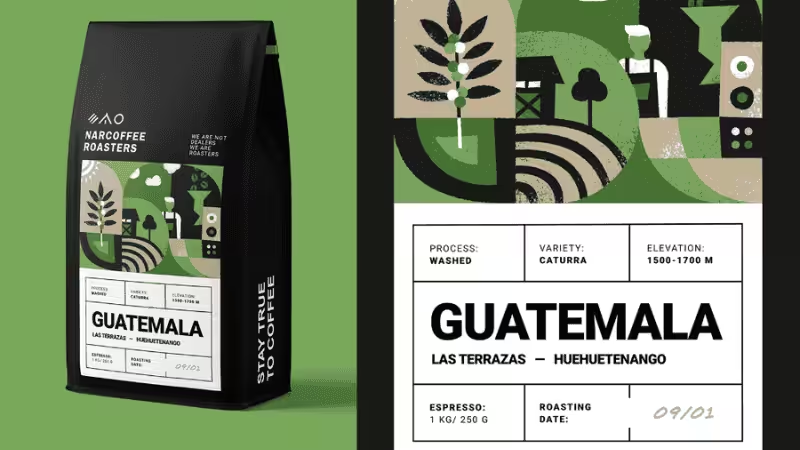
6. Roast Level & Roast Date
Unlike ordinary food products, specialty coffee consumers demand to see the exact roast date (not just an expiration date) and roast profile. This directly determines freshness.
7. Origin & Traceability
Specify the country of origin, regional farm, or processing method (e.g., washed, natural). This information justifies premium pricing and tells your brand story.
8. Flavor Notes
Use sensory descriptors like citrus, nutty, or floral to guide the consumer’s palate. This information is critical at the final moment of purchase decisions.
9. Sustainability & Certification Badges
Display verified third-party seals for Organic, Fair Trade, or Rainforest Alliance compliance. Highlighting sustainability attracts the fastest-growing segment of eco-conscious buyers.
FAQs
Q1: How do I choose the right bag thickness (mil) for whole beans vs. ground coffee?
Whole beans have sharp edges that can easily puncture thin materials during transit, requiring a sturdier thickness of at least 4.5 to 5.4 mil. Ground coffee packs more densely and has no sharp edges, allowing you to safely use a slightly thinner 4.0 mil barrier.
Q2: Can I use digital printing for my coffee bags, or do I need traditional rotogravure?
Digital printing is highly valuable for growing brands because it requires zero cylinder plate fees and supports low minimum orders, making it perfect for seasonal roasts. Traditional rotogravure printing requires a higher upfront investment for plates but delivers the lowest per-unit cost for large-scale, high-volume production runs.
Q3: How do I prevent my coffee bags from bloating or bursting during high-altitude shipping?
When shipping coffee across elevation changes, dropping pressure can burst seals. A one-way degassing valve vents pressure, while quad-seal or flat-bottom structures add mechanical strength.
Q4: How do I transition from standard coffee bags to custom-branded packaging without high financial risk?
The safest way to transition is to partner with a specialized packaging manufacturer that offers low Minimum Order Quantities (MOQs) starting at just a few hundred units. This allows you to test custom-branded designs on retail shelves and gather real customer feedback without tying up your working capital in massive inventory.
Conclusion
Mastering your coffee packaging strategy is a critical growth lever for your brand. It requires a seamless balance between high-barrier protection, market-compliant labeling, and impactful shelf presentation.
As you finalize your designs, prioritizing eco-friendly coffee package options is no longer just a bonus. It is an operational necessity that resonates with conscious consumers and future-proofs your brand.
Upgrade Your Coffee Packaging with Packoi
Transitioning from concepts to a retail-ready production run can be complex. At Packoi, we specialize in simplifying the packaging pipeline. We offer premium, fully custom solutions tailored to your unique coffee packaging needs, providing professional-grade barrier materials and high-definition printing.
Whether you are launching limited-edition roasts with low Minimum Order Quantities (MOQs) or scaling up wholesale distribution, we help you cut production costs without sacrificing quality.
Ready to transform your packaging and protect your roast?