The concept of effective product packaging applies to businesses across various industries.
It’s often the first point of interaction between a product and its potential customer, forming that crucial initial impression. Within this crucial product presentation, the label itself acts as a silent salesperson, a brand ambassador, and an essential source of information.
This article explores key strategies and best practices for designing a product packaging label.
It covers the essential components that effectively communicate a brand’s message, ultimately helping your product stand out and capture consumer attention in a crowded market.
What’s the Impact of Product Packaging Design
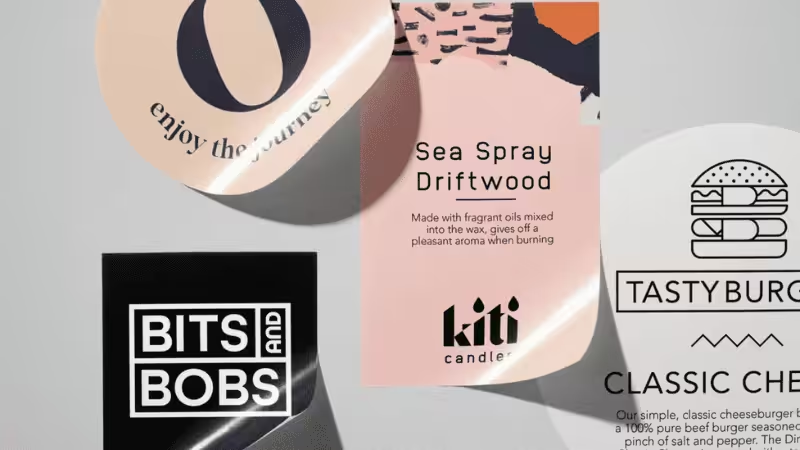
There are several impacts of a product’s packaging design on a brand. Product packaging plays a crucial role in influencing customer perception. It can also affect the purchasing decisions of prospective clients. Below, we have three key ways in which packaging design influences a business:
Influencing Consumer Perception and Purchasing Decisions
An effective packaging design captures attention, creates interest, and evokes emotions. You convey product features, benefits, and quality with a well-designed product packaging.
Visual elements including color schemes, typography, graphics and overall aesthetic style directly guide consumer feelings and first impressions.
Premium, minimalist or eco-focused packaging cues instantly shift audience perception, helping customers judge product grade, safety and credibility without opening the item. These visual and tactile signals strongly sway shopping preferences and drive purchase intent.
These core aspects shape the way consumers perceive a brand and its products.
Reflecting Brand Values
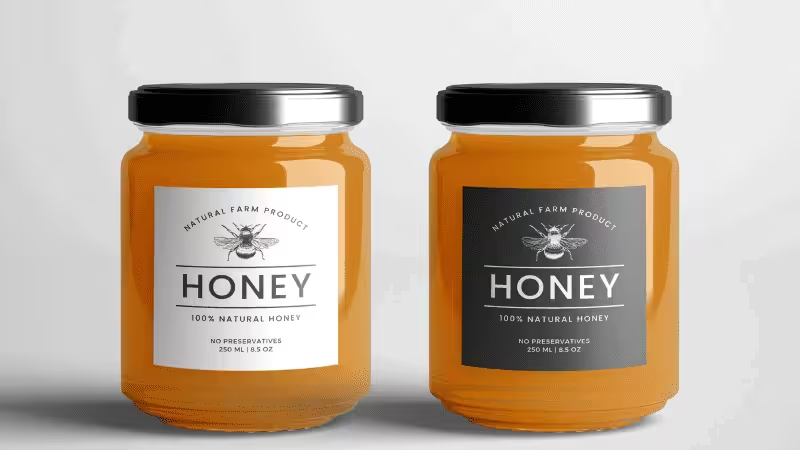
Packaging design lets you showcase your business’s values, personality, and story. It serves as a visual representation of the identity and communicates its positioning.
It can also demonstrate its mission and commitment to sustainability, quality, or innovation. When the package design aligns with the values, you build a strong brand image and foster a connection with consumers who share these values.
Differentiating Products in the Market
Effective packaging design differentiates products in a crowded marketplace, such as grocery stores. You can attract customers’ attention on shelves or online listings. Always utilize unique shapes, distinctive colors, and innovative materials.
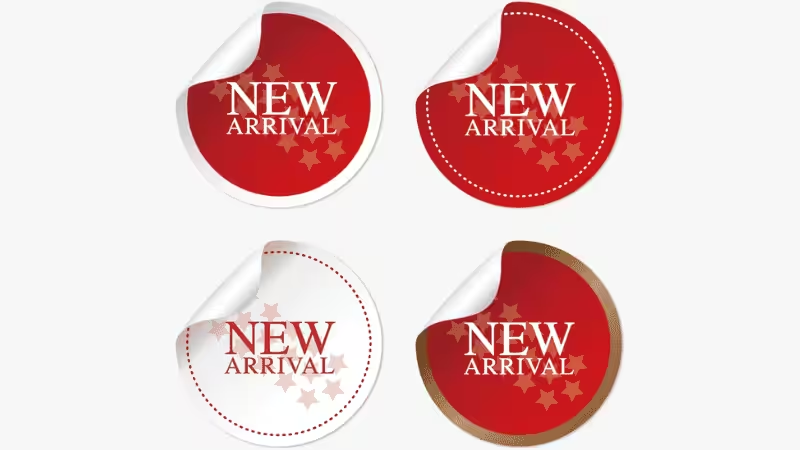
You can also have creative packaging structures and product labels to create a lasting brand impression. Well-executed packaging and product labels capture the product’s essence. It also makes it resonate with the target audience, giving you a competitive edge and giving a lasting first impression.
Packaging design significantly impacts customer perception, purchasing decisions, brand representation, and product differentiation. You must invest in thoughtful and strategic packaging design to enhance visibility, appeal, and market success.
How to Design an Effective Packaging Label
There are several factors involved in designing an effective product packaging label. These factors start with aligning the label design with the business values and identity. Below are some of the critical factors to consider.
Factor 1: Aligning with Brand Identity
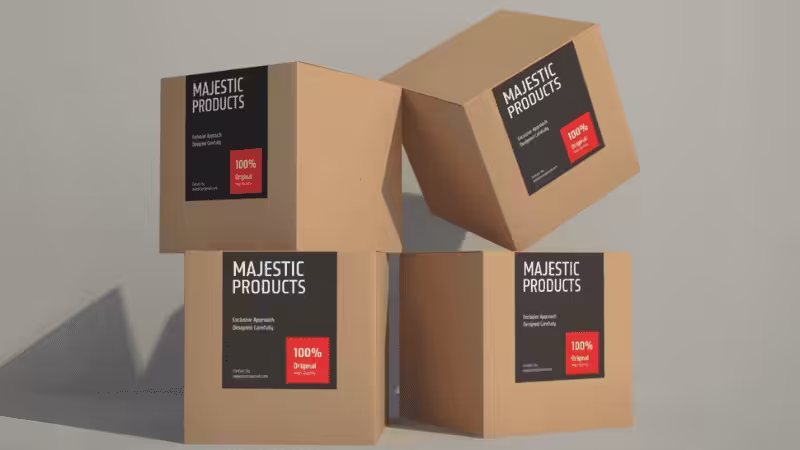
- Deeply Understand Brand Identity and Target Audience:
- Before commencing any label design, thoroughly grasp your business’s core values, mission, and strategic positioning.
- This foundational understanding ensures the label design accurately represents the brand’s identity and effectively resonates with your desired target audience.
- Conduct Market Research and Analyze Consumer Insights:
- Undertake comprehensive market research and analyze consumer insights.
- This research is vital for creating detailed buyer personas, which, in turn, help you understand customers’ preferences, needs, and behavioral patterns.
- Effectively Integrate Brand Elements:
- Once your company’s identity is established, integrate these defined brand elements such as
company logo into the visual design of the packaging label. - Ensure that brand marks, color palettes, typography, and other visual cues are consistently applied to reinforce the brand’s image and identity.
- Once your company’s identity is established, integrate these defined brand elements such as
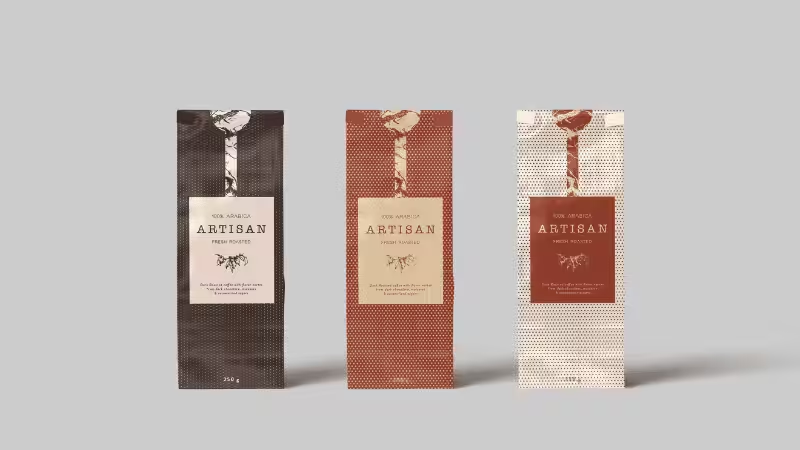
Some of the key aspects to include are the brand logo, color scheme, and typography. It is also vital to note all the differences in distinctive brand elements. Always apply these elements to enhance the brand design, reflecting its true position.
An example is if values like eco-friendliness and sustainability are incorporated into the business. Therefore, the packaging label should incorporate earthy colors and recycled materials. You can also include eco-friendly symbols following current design trends.
Factor 2: Enhancing Shelf Impact
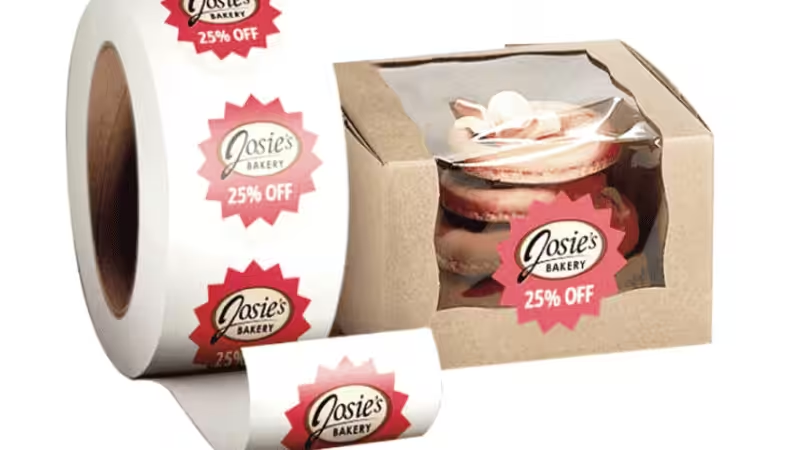
- Eye-catching Design:
- Goal: The packaging label must stand out on shelves and immediately capture the attention of potential customers.
- Tactics: Employ vibrant colors, unique shapes, and compelling imagery to create a visually striking design.
- Principles: Pay close attention to overall aesthetics, balance, and the hierarchy of design elements to achieve an appealing and professional appearance.
- Clear Brand Recognition:
- Prominence: Ensure the brand name or logo is prominently and clearly displayed on the packaging label.
- Functionality: This enables consumers to easily identify the product and immediately connect it with your brand.
- Strategy: Maintain consistency in branding across different products to reinforce brand recognition and build customer trust.
Factor 3: Conveying Product Information Clearly

- Prioritizing and Displaying Key Information:
- Identify Core Information: Always prioritize and clearly identify the most important product information that needs to be communicated to consumers.
- Essential Content: This information should include the product name, key features, ingredients, usage instructions, and any necessary warnings.
- Visual Emphasis: Ensure this critical information is clearly highlighted through the design.
- Color Contrast: Utilize contrasting colors within your design to make the information stand out and be easily readable.
- Effect: By prioritizing and clearly displaying key information, you empower consumers to make informed purchasing decisions quickly and confidently, reducing confusion and fostering trust in your product and brand. It ensures that the most vital details are never missed, even at a glance.
- Ensuring Optimal Typography for Readability:
- Clarity and Legibility: Employ clear and legible typography throughout the label.
- Font Selection: Choose fonts that are easy to read and that align with the product and brand’s identity and personality.
- Font Size: Use a font size that is clearly visible and readable, even from a distance.
- Overall Priority: Always prioritize readability in your typography choices.
- Effect: Optimal typography eliminates consumer frustration and prevents misinterpretation of crucial details like ingredients or instructions. It reflects professionalism, reinforces brand personality subtly, and ensures that your message is absorbed effortlessly by all demographics, including those with varying visual acuity.
- Enhancing Information Accessibility:
- QR Codes: Consider incorporating QR codes that consumers can scan to access additional, more detailed product information.
- Effect: Enhancing information accessibility, particularly through tools like QR codes, allows you to provide a richer, more dynamic experience without cluttering the physical label. It caters to consumers who desire deeper engagement, offers space for extended narratives (e.g., brand story, sustainability efforts, in-depth usage tips, video tutorials), and ultimately saves valuable physical label space for critical, immediate information.
Factor 4: Reflecting Product Quality and Benefits
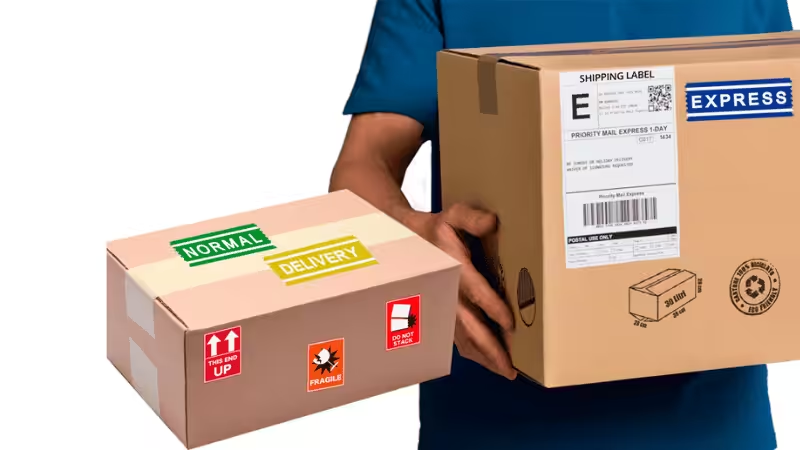
- High-Quality Imagery & Digital Printing:
- Always use high-quality, high-resolution images on labels.
- Utilize digital printing techniques to achieve this.
- Represent the product accurately, potentially showcasing it from different angles, to manage consumer expectations.
- Employ photography and illustrations to effectively convey product quality and benefits.
- Differentiation & Eye-Catching Techniques:
- As a company owner, implement eye-catching techniques to distinguish your brand from competitors.
- Highlight Unique Selling Points (USPs):
- Identify and clearly emphasize the product’s unique features and selling points on the packaging label.
- This helps differentiate the product and attracts consumers specifically looking for those qualities.
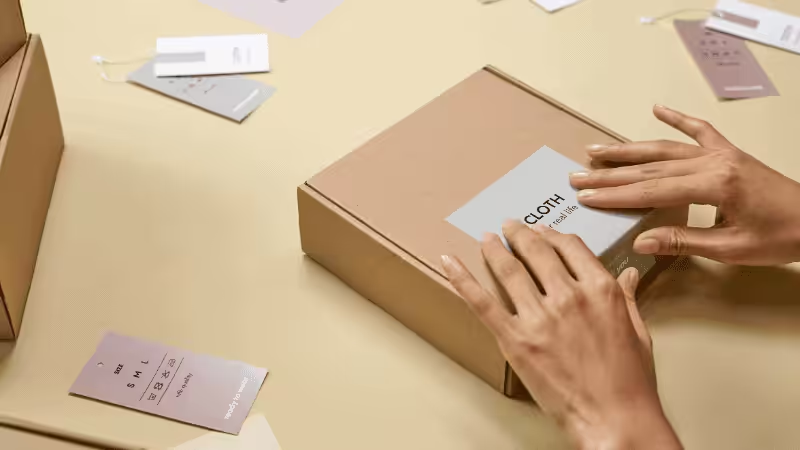
- Overall Design Goals:
- Design a packaging label that aligns with the brand’s identity.
- Ensure the outlook enhances shelf impact.
- Convey product information clearly and concisely.
- Reflect the product’s quality and benefits visually.
- Continuous Evaluation:
- Regularly evaluate and test the packaging design.
- This ensures it remains effective and continues to resonate with the target audience.
Factor 5: Promoting Environmental Awareness
- Build Trust and Transparency
- Display clear eco-certifications (e.g., FSC, Organic). These third-party marks prove your commitment.
- List label and packaging material types. Show if they are recycled or compostable. This helps buyers choose wisely.
- Display carbon footprint data. Share emission cuts. Quantify your eco-impact.
- Use QR codes for more info. Link to sustainable sourcing or eco-initiatives. This shows accountability.
- Educate Consumers for Green Choices
- Offer clear disposal instructions. Show how to recycle or compost. This cuts waste.
- Explain product eco-benefits. Show how it saves energy or water. Highlight its long-term value.
- Encourage reuse or upcycling. Give ideas for old packaging. This boosts the circular economy.
- Lead Industry and Market
- Lead with innovative eco-materials. Use labels to show new designs. Inspire industry peers to follow.
- Show involvement in eco-initiatives. Highlight partnerships with non-profits. Prove broader commitment.
- Attract eco-conscious consumers. Create loyal advocates. Align with their values.
- Eco-labels show your Corporate Social Responsibility (CSR). They boost your public image. Enhance brand value beyond sales.
Consistency Across Packaging Elements
If you are operating the entity, understand that consistency across packaging elements creates a professional brand image. Below are some of the strategies to consider to make consistent, effective labels.
Aligning Label Design with Other Package Elements
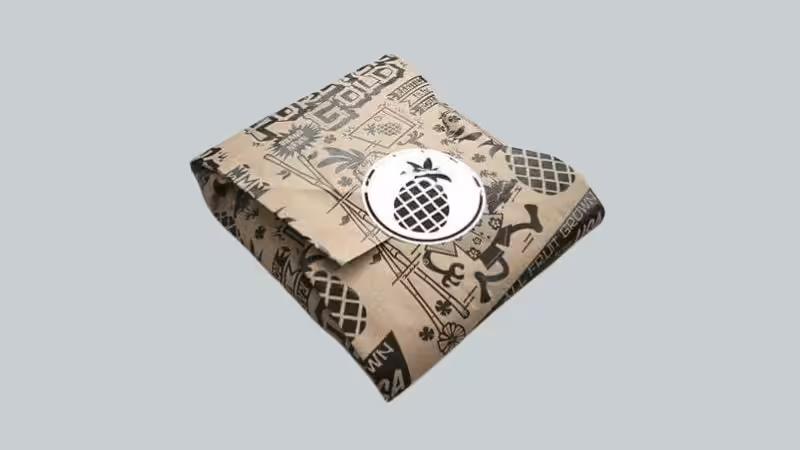
If you want to create consistency in the packaging elements, ensure that you align the labels with other packaging components. The packaging label must harmonize with other packaging elements, like the box, container, or bottle shape.
You must consider the package structure and size to ensure it fits seamlessly and complements the packaging. Always ensure that you avoid design elements that create visual dissonance.
Ensuring Consistency in Color Schemes, Typography, and Visual Style
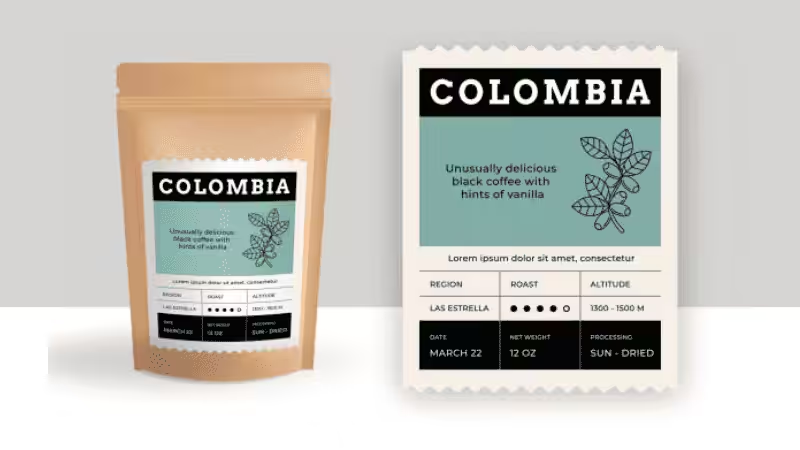
Another important aspect is using consistent colors, typography, and visual styles across packaging elements. This is vital in reinforcing brand recognition and identity. As the owner, use a similar color scheme or complementary colors in the label and packaging.
Make sure that you maintain consistent typography. This includes font choices, sizes, and styles, components vital in creating a unified look. Another vital aspect is establishing a cohesive visual style, such as similar graphic elements in the packages.
Integrating the Label Design Seamlessly with the Package Structure
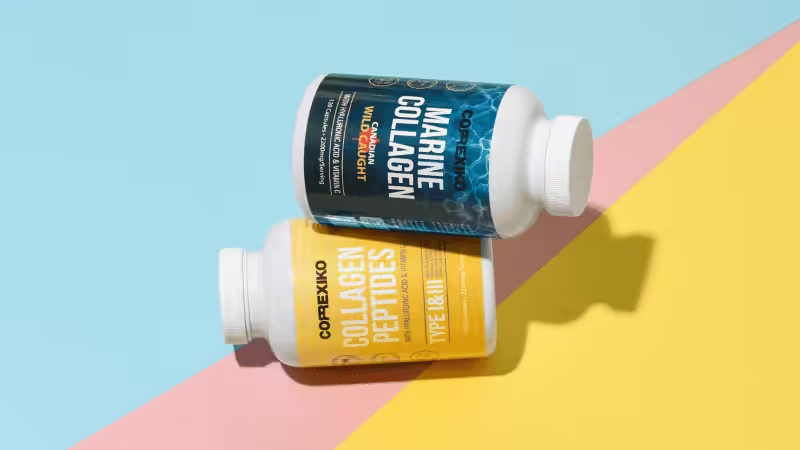
Another aspect of the label design is ensuring it integrates seamlessly with the package structure. This is important in enhancing its visual appeal and functionality. When making the labels, consider the shape and contours of the package.
In this way, you will ensure that important design elements align with the edges or curves. Ensure that you pay attention to how the label wraps around the package to give a proper visual flow.
When you ensure consistency across packaging elements, you create a unified brand experience. This instills trust and recognition in consumers. Moreover, a cohesive and well-integrated design in labels and packages reinforces brand identity.
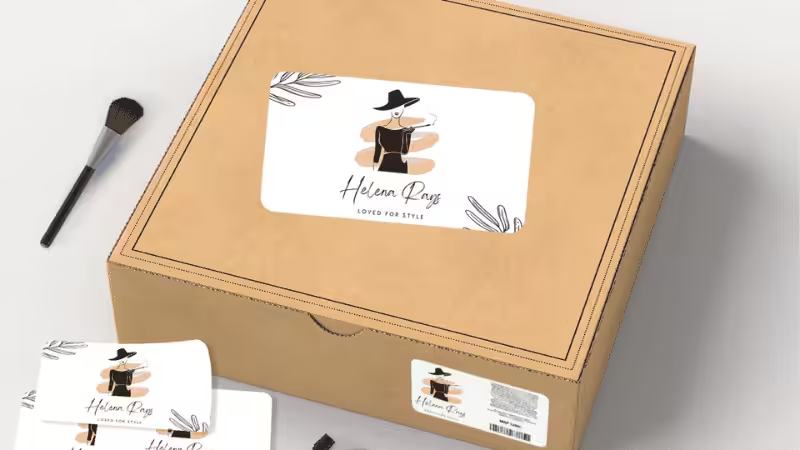
It further enhances visual appeal and communicates professionalism. As the brand owner, regularly review and update the packaging design to maintain consistency.
Common Label Design Mistakes
Overlooking key details during the design process often leads to common label design mistakes. These mistakes can harm brand perception and consumer trust, but they are easily avoidable with careful planning.
Neglecting the Use of White Space
Underutilizing white space creates cluttered labels. White space improves readability and guides attention—leave margins, avoid overcrowding, and use it to separate label sections for better navigation.
Greenwashing & Misleading Claims
Using vague, unverified terms like “All-Natural” or “Eco-Friendly Choice” without specific certifications or clear evidence. This erodes consumer trust and damages brand credibility, as modern consumers are increasingly wary of unsupported claims.
Failure to Comply with Local/International Regulations
Not adhering to specific regional or national laws regarding environmental claims, material declarations, or symbols. Non-compliance may lead to legal risks and market access barriers, for example, using a “compostable” claim in a country where industrial composting facilities are not widely available or legally defined for consumer packaging, or omitting a mandatory ingredient list in a specific language.
FAQ
What factors influence the cost of packaging label design?
The cost of packaging label design varies significantly based on design complexity, the designer’s experience, the number of revisions, and any licensing fees for fonts or images. Whether you work with a freelancer or a full-service agency will also impact the overall budget. Additionally, the chosen label material and printing method contribute to the final production cost.
What mandatory information must be included on a product packaging label?
Mandatory information typically includes the product name, net quantity (weight, volume, or count), ingredient list (for food and cosmetics), nutritional facts (for food), and the manufacturer’s or distributor’s name and address. Specific requirements can vary widely by product type and regional regulations, so always research the applicable laws for your market.
How do I choose the right material for my product label?
When selecting label material, consider the product’s environment (e.g., moisture, temperature, abrasion), the surface it will adhere to, and your brand’s sustainability goals. Options range from durable synthetic films for demanding conditions to various paper stocks, including recycled or biodegradable choices. The material choice impacts the label’s appearance, longevity, and its overall contribution to the package’s recyclability.
When is it best to use custom packaging label services instead of generic options?
Custom packaging label services are ideal when you need a unique design that perfectly embodies your brand, requires specific material choices for durability or sustainability, or involves complex printing techniques. They ensure your label stands out effectively, meets all regulatory standards, and integrates seamlessly with your overall packaging strategy, providing a professional and impactful finish that generic solutions cannot match.
Conclusion
As discussed, designing an effective packaging label is crucial for any brand. The designs need to be aligned with the brand identity, enhancing shelf impact. It also conveys product information clearly, reflecting its quality and benefits. Ensuring consistency across packaging elements creates a label that captures attention, engages consumers, and reinforces the brand’s message.
The packaging label communicates with your target audience and differentiates your products. Therefore, it should reflect the brand’s values, appeal to customers, and convey key information. Investing in a thoughtful and strategic packaging design creates a lasting impression and builds strong customer-brand connections.
Create Compelling Packaging Labels With Packoi
Are you looking for amazing packaging ideas, packaging labels or designs that elevate your brand? Look no further. Contact our design experts today for a demo or quote. We can help you create captivating and effective packaging labels that drive consumer engagement.
At Packoi, we are always committed to making your brand shine with fresh packaging ideas and professional label solutions. Contact us now!