Do you know that the packaging market is growing at a rate of 3.16 percent between 2023 and 2032? This surprising figure is driven by the booming e-commerce industry, which relies heavily on efficient packaging solutions.
Packaging boxes have become a cornerstone for economic growth. However, many businesses still underestimate how directly packaging boxes impact customer experience, logistics and shipping, and even sustainability metrics.
This guide will walk you through the different types, materials, and selection strategies for packaging boxes. It may be a bit long, but please bear with us — you’ll gain valuable insights you might not expect.
Let’s get started!
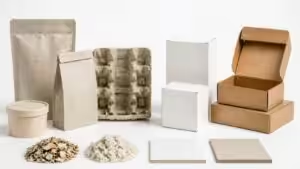
3 Core Packaging Materials You Need to Know
The material you choose directly impacts durability, cost, branding, and sustainability. A well-selected material improves customer satisfaction, leaving a lasting impression.
These are the three most widely used in the industry:
Paperboard (Folding Cartons)
Paperboard is a lightweight, stiff paper-based material ideal for retail and consumer goods.
- Used for folding cartons, pillow boxes, and small retail packaging
- Made from renewable wood pulp; available in food-grade and medical-grade versions
- Eco-friendly option: kraft paperboard (recycled content)
- Best for: light products, shelf display, cosmetics, food, and small gifts
Corrugated Material
Corrugated cardboard is the strongest standard packaging material, made with fluted layers between paper liners.
- Excellent shock absorption and stacking strength
- Perfect for shipping, e-commerce, and heavy items
- Widely recycled and cost-effective
- Common structure: RSC (Regular Slotted Container)—the most popular shipping box style
- Best for: mailer boxes, subscription boxes, pallet shipping, bulk orders
Rigid Board
Rigid board (thick greyboard) is non-collapsible, heavy, and premium-looking.
- Does not fold flat; used for high-end set-up boxes
- Supports luxury finishes: foil stamping, embossing, spot UV, lamination
- Made from recycled fibers for eco-friendly options
- Best for: luxury jewelry, cosmetics, electronics, gourmet gifts, high-end retail
Box Type Comparison at a Glance
Selecting the right packaging box for your products involves considering several factors: durability, cost, material, branding, and sustainability. Understanding these elements can help you make the best choice for your business.
To make this process easier, we’ve provided a Cheat Sheet Table below. This table quickly summarizes the most commonly used packaging types, giving you an overview of the different options available and their key characteristics. Whether you’re looking for a box for e-commerce shipping or luxury products, this guide will help you find the best match for your needs.
Box Type | Best For | Material | Weight Capacity | Customization Options | Environmental Impact |
Mailer Box | E-commerce shipping | Corrugated | Medium | Custom printing, shape customization | Recyclable |
Subscription Box | Subscription services, gifts | Corrugated | Medium | Custom printing | Custom printing |
Folding Carton | Retail shelf display | Paperboard | Low | Custom printing | Recyclable |
Pillow Box | Small gifts, jewelry | Paperboard | Low | Limited customization | Recyclable |
Die-Cut Box | Custom retail, shaped products | Paperboard / Corrugated | Medium | High customization | Recyclable |
Lock Bottom Box | Heavy items, fragile goods | Corrugated | High | Limited customization | Recycled material available |
Rigid Box | Luxury, premium products | Rigid Board | High | High customization | High recyclability |
Telescoping Box | Large, heavy, odd-shaped items | Corrugated / Rigid | Very High | Custom design options | Recyclable |
Pallet Box | Industrial, bulk, pallet shipping | Corrugated | Very High | Custom design options | High recyclability |
Storage Box | Warehouse storage, organizing | Corrugated | High | Limited customization | Recyclable |
The table above is compiled based on common custom packaging requests from most customers and is for reference only. Please choose the packaging that best fits your specific product needs.
Which Packaging Option is Right for You?
As you can see from the table, different packaging types are suited for various needs and industries. When choosing your packaging solution, consider the following:
- Product Type and Size: Lighter products typically require less durable materials like paperboard, while heavier or fragile items may need sturdier options like rigid boxes or corrugated cardboard.
- Customization Needs: Customization allows you to elevate your branding and create a memorable unboxing experience. The more customization you need, the more likely it will be that you’ll opt for high-end finishes such as foil stamping or embossed logos.
- Environmental Responsibility: Many businesses today are committed to sustainability. By choosing recyclable materials like corrugated cardboard or FSC-certified paperboard, you can reduce your environmental footprint and appeal to eco-conscious consumers.
By referring to the table above, you can see key information such as the use case, material, and weight capacity for each type of packaging box.
Next, we will discuss in detail how to make the best choice based on factors such as product type, shipping requirements, and brand positioning.
Once you understand these differences, you can easily find the perfect solution for your needs.
Types of Packaging Boxes by Business Use Case
Packaging cardboard boxes are available in a variety of forms, sizes, and styles to fulfill the needs of different industries. Whether for shipping, storage, or retail, choosing the proper sort of box can have a considerable impact on product protection, cost-effectiveness, and branding.
That’s why we’ve organized all box styles by real business scenarios below — to help you match your needs instantly.
E‑commerce & Shipping Boxes
Built for safe delivery, easy assembly, and brandable unboxing.
Mailer Boxes
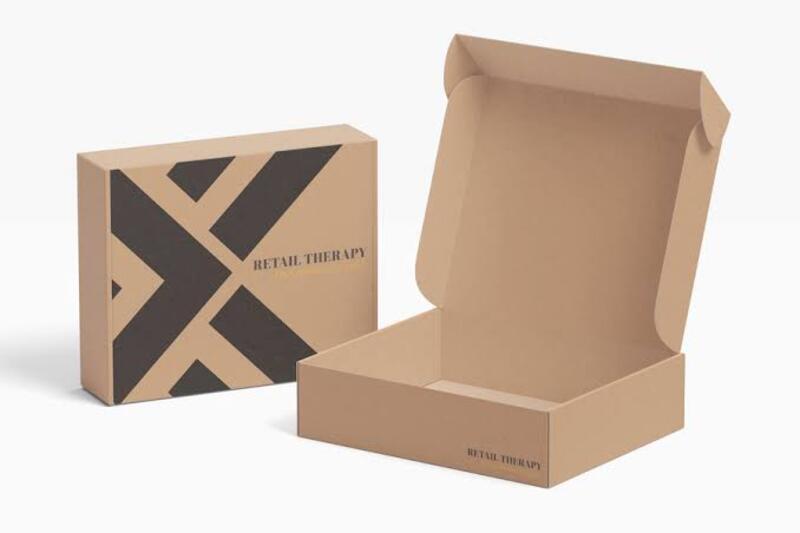
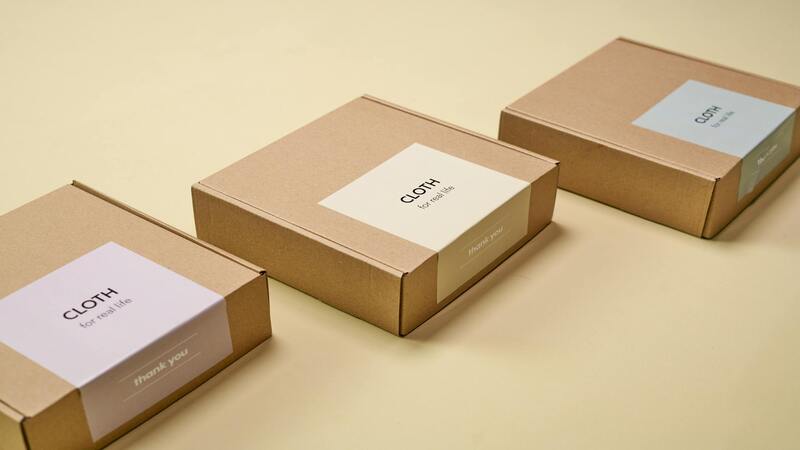
Mailer boxes are popular for shipping e-commerce orders and can also be used as gift boxes or for sending promotional materials. They are easy to assemble and offer excellent protection for products.
These boxes have gained popularity due to the growth of the subscription box market, which has become a major part of e-commerce.
The subscription market is valued at $12 billion to $15 billion, and many of these services use mailboxes to ship their products.
Mailer boxes are versatile and can hold a wide range of items, from makeup and razors to video game accessories and dog treats. These boxes provide a great way to display products. However, they aren’t just for subscription services. Many businesses use mailers to ship everything from books to jackets.
One of the biggest advantages of mailer boxes is their customization options. Companies, whether large or small, can design mailer boxes to promote their brand using logos, slogans, and brand colors. Common types include corrugated, paperboard, custom, shipping, and mailing boxes.
Subscription Boxes
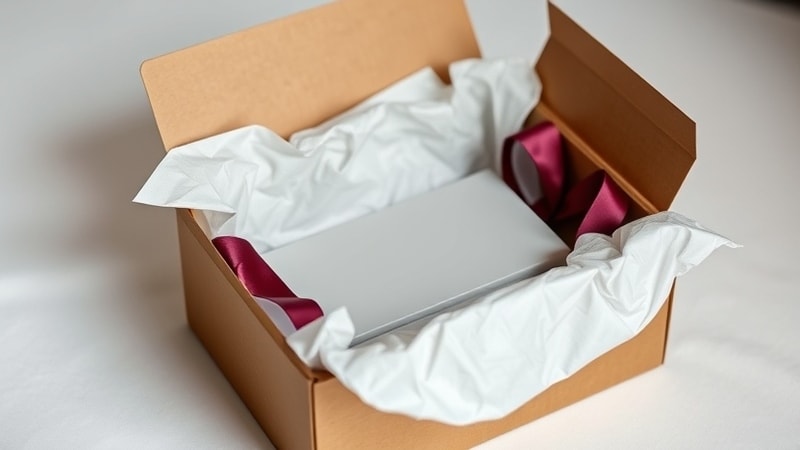
Subscription boxes are meant to give customers that luxury feel every time they unbox. These are recycled through corrugated cardboard or paperboard and are well-suited for a range of subscription purposes, such as beauty products, snacks, clothing, etc. The corrugated material used also protects the products both inside the box and during shipment.
This seems to be a critical factor that helps make the subscriptions different from one another. Aside from the fact that the boxes come in all sizes and shapes, these boxes guarantee that everything is packed in the right size and shape.
Extra features and a combination of three layers of graphic designs and finishes must be included to improve the brand’s image and the unboxing process. This kind of attention not only increases customer satisfaction but also adds to creating customer loyalty.
Nowadays, you can find many types of subscription boxes to subscribe to, including beauty subscription boxes, snack subscription boxes, clothing subscriptions, and other custom boxes.
It is, therefore, possible to design specialized subscription boxes depending on any particular requirement, provided that the essence of the brand is to be in touch with its clients.
These boxes are perfect for organizations that intend to provide an experience of a kind with every package that is delivered.
Lock Bottom Boxes and Crash Bottom Boxes
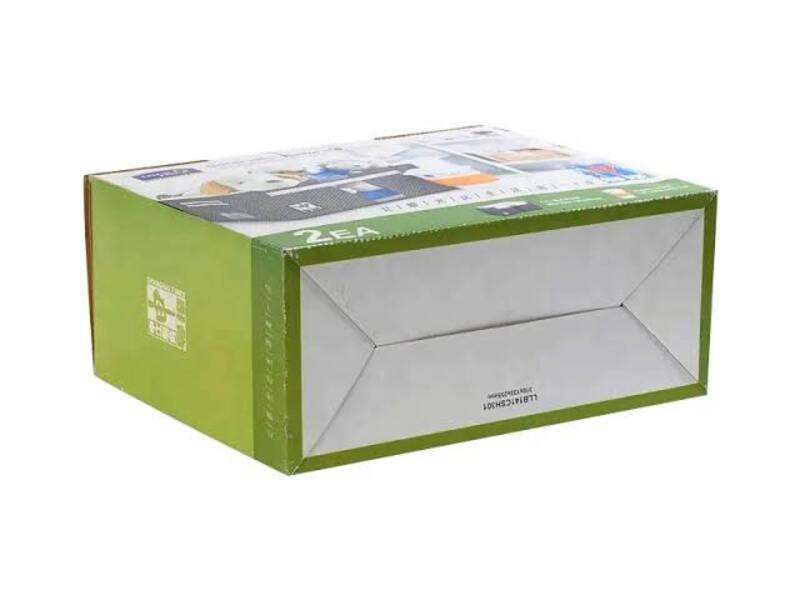
Crash-bottom boxes and auto-lock bottom boxes are excellent choices for packaging heavier products that need extra support. Both feature a secure base design, with crash-bottom boxes offering a self-locking bottom that pops open easily without assembly. Lock-bottom boxes are similar but may require minor folding to secure both ends.
Both crash-bottom and lock-bottom boxes are sturdy, customizable, and suitable for a wide range of product sizes and weights. They are compatible with coatings, add-ons, and printing options for logos, visuals, and product details, making them a cost-effective, easy-to-assemble solution that also enhances the unboxing experience.
These types of boxes are commonly used for packaging candles, creams, lotions, hair products, decorations, and gifts. Their strong, reliable construction makes them a popular choice for brands looking to protect fragile or heavy items while delivering an attractive presentation.
Pallet Boxes
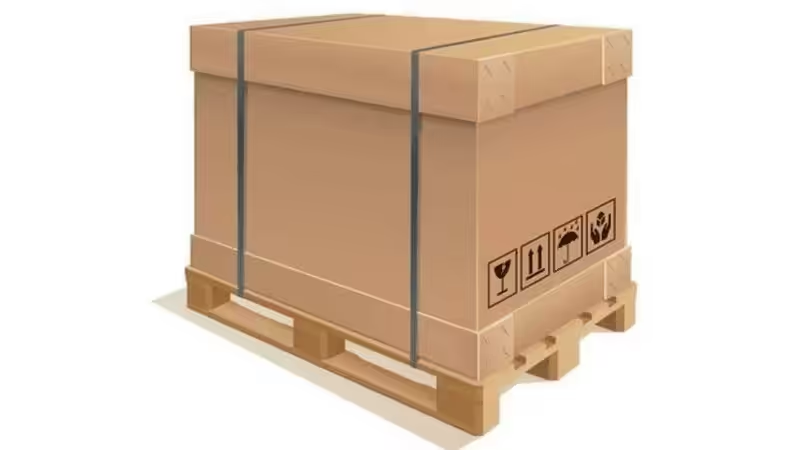
Pallet boxes are made to meet the requirements of storing a large number of products. Using materials such as corrugated cardboard or paperboard to make these boxes provides great protection for your items during transport. Industrial packaging is one of the best areas of application because it is very strong and reliable.
Another advantage of pallet boxes is that they can be made to order. It can be matched accordingly to the product size and form, meaning that all parts fit well together. Moreover, the enhancements of graphics and finishes can further improve a brand’s image.
Due to their ability to hold large quantities of products and their overall durability, these boxes are an affordable option when dealing with large product distribution.
Common types of pallet boxes include corrugated pallet boxes, paperboard pallet boxes, and custom pallet boxes. These boxes are also used in industrial packaging and for shipping large volumes of goods.
Their ability to hold heavy products while maintaining strength and security makes them an essential choice for businesses looking to transport goods safely and efficiently.
Retail & Product Display Boxes
Made for shelf visibility, light weight, and attractive printing.
Folding Cartons
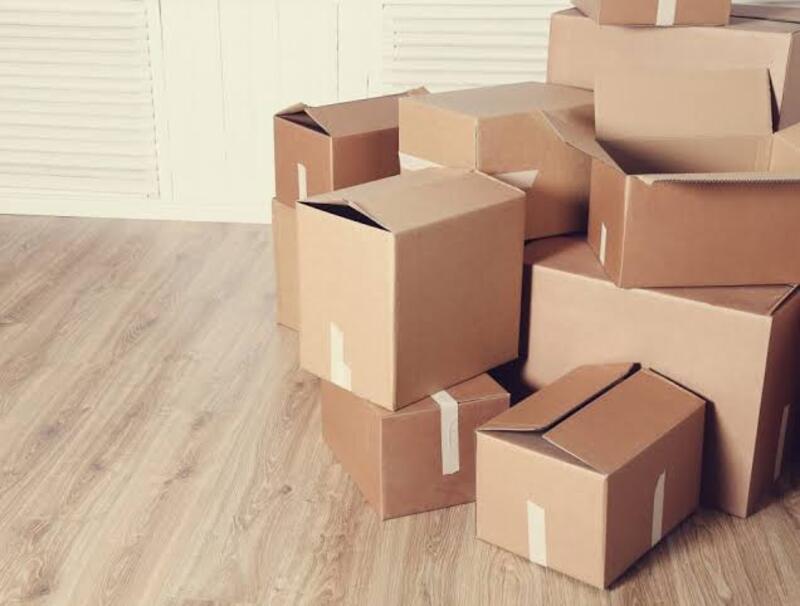
Folding cartons are among the most commonly used consumer product packaging materials because they are lightweight and flexible. These paperboard boxes can be created from simple flat structures and folded into a three-dimensional box shape. It makes them economical and highly versatile.
They are mostly used as the outer covering for a variety of products that already have their primary packaging.
The largest fold cart is paperboard, which is made from renewable raw materials such as wood pulp. If one requires a paperboard with higher quality, there is the possibility to order one with food or medical grade.
One of the ways of expanding the folding carton with an eco-friendly factor is the use of kraft paperboard, which is made out of recycled material and kraft paper.
Basically, folding cartons are of different forms. These include the double wall straight tuck boxes, the reverse tuck boxes, the lock bottom, the crash bottom, and the single wall one-piece tuck top.
These options provide great versatility as packaging options for businesses while at the same time guaranteeing that the products are adequately protected and attractively presented.
Pillow Boxes
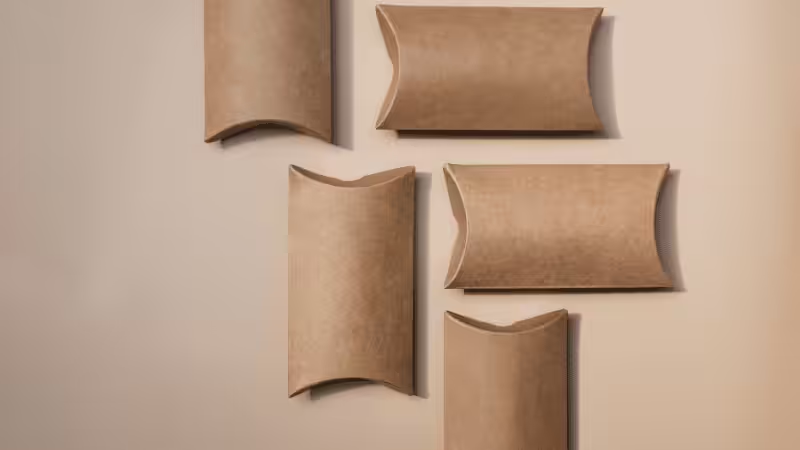
Pillow boxes are made from a single sheet of cardboard or paperboard folded into a curved, pillow-like shape. They are compact and lightweight, making them ideal for small and delicate items.
Their unique shape has made them a popular option for gift packaging. Pillow boxes are the most common box style used for packaging jewelry, cosmetics, or small accessories.
Pillow boxes can be printed with branding elements, such as logos or designs, to enhance their visual appeal. With increasing eco-consciousness, the demand for recyclable packaging has drawn the industry to make pillow boxes from recyclable or biodegradable materials. Such pillow boxes are ideal for environmentally friendly businesses.
Die-Cut Boxes
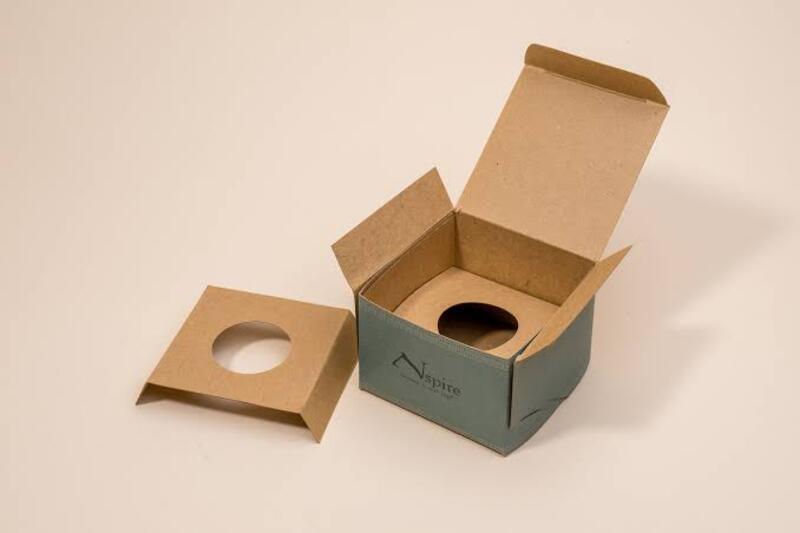
Die-cut boxes are popular for creating personalized packaging that contours to a product’s shape, making them ideal for items like soaps, candles, and electronics. Their lightweight yet strong structure protects fragile goods, while their compact design saves space during assembly and shipping.
Highly customizable, die-cut packaging can feature printed logos, colors, and designs, making it an eye-catching choice for retail displays. Their eco-friendly materials, such as cardboard and corrugated paper, offer a durable and cost-effective solution for packaging products of various sizes, from everyday items to luxury goods like jewelry and watches.
Simple to assemble and reliable for shipping, die-cut boxes enhance both product protection and brand presentation. Their creative designs help businesses stand out from competitors, delivering both practicality and visual appeal.
Luxury & Premium Product Boxes
For high perceived value and unforgettable unboxing.
Rigid Boxes
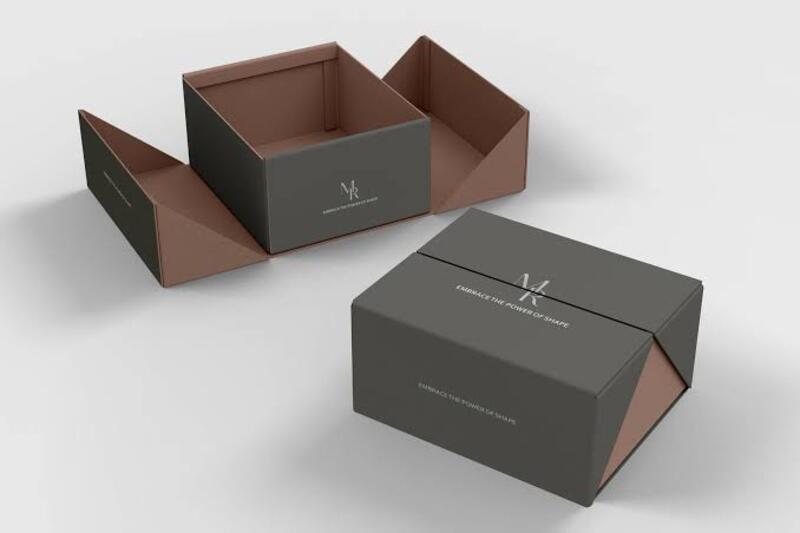
Set-up or rigid boxes are heavier and stiffer than normal collapsible or folding cartons. What’s more? They do not collapse or fold, making them ideal for heavy articles or products that may need support. These boxes are also perfect for products with high perceived value.
These are made from greyboard or wood. The greyboard, which is made of recycled fibers, offers a stable ground. These boxes with highly efficient designs can be further personalized with numerous styles, shapes, and closures as per the requirement for style and elegance.
The most common types of finishes for rigid boxes are lamination, varnish, spot UV, or foil stamping. Other choices, such as embossing and debossing, make it even more special. It is popular in the gift item industry, electronics, beauty products, and gourmet foods industries.
These boxes are also made from renewable, recyclable materials, thereby ushering in environmentally friendly products. They are ideal for high-end product packaging that requires being distinctive.
Telescoping Boxes
A telescoping box is an excellent choice for packaging and shipping bulky or oddly shaped items. These boxes consist of a top that slides onto a bottom, making them perfect for heavy products like pipes, machinery, and appliances. They are highly customizable, reducing fill voids and cutting shipping costs.
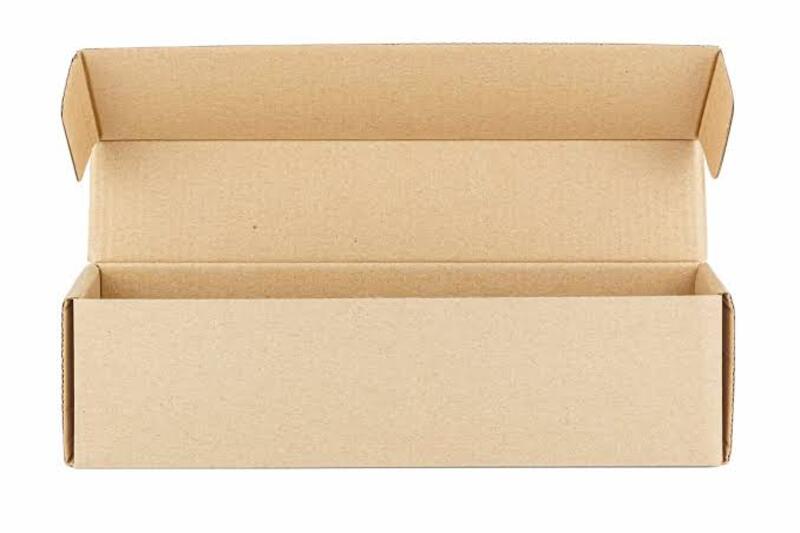
Telescoping boxes can expand up to three times their size and offer extra support with reinforced sides. This makes them ideal for heavy, long, or fragile items. There are different types of telescoping boxes to suit various needs.
For quick assembly, the full telescope box is perfect for fresh produce. The double cover box works well for large equipment, while the interlocking version adds extra security with flanges.
For items that need repeated opening and closing, the design-style box is a great option. No matter the item, there’s a telescoping box or half-slotted container that fits your needs and ensures safe delivery.
Heavy‑Duty & Storage Boxes
For long‑term storage, warehouse use, and heavy loads.
Storage Boxes
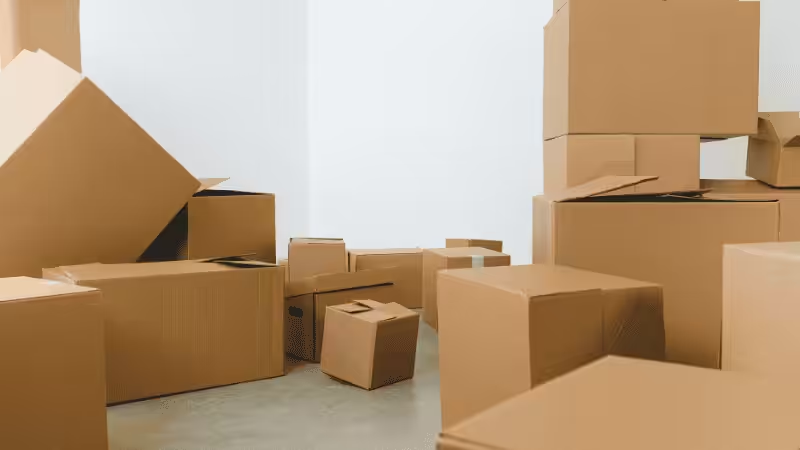
Storage boxes are designed for durability and practicality, making them essential for both personal and industrial use. They are typically made from corrugated boards, so they are able to withstand heavy loads.
The full overlap slotted container features lids, thus providing closed space for storage, making it ideal for personal use.
Storage boxes are widely used in warehouses and factories for organizing tools, parts, or products. Moreover, they serve as household storage solutions for documents, seasonal items, or clothing.
The most common use of storage boxes is in e-commerce. Storage boxes are often the most common box style for shipping bulk items.
Customizable Packaging Options
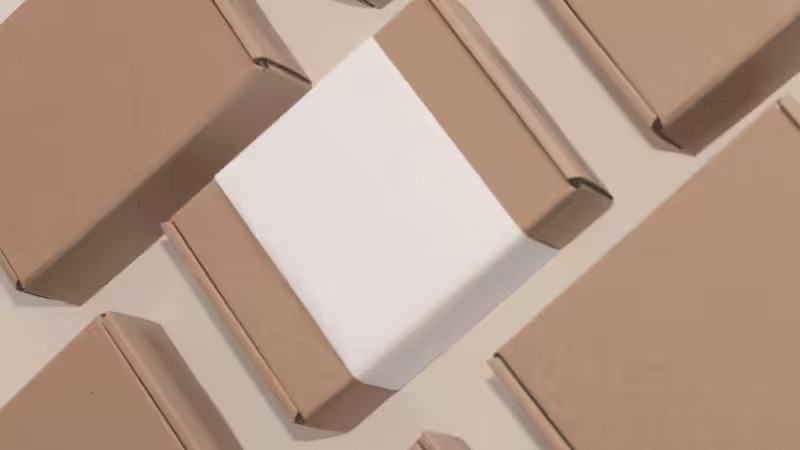
Designing Custom Packaging
Custom packaging involves designing custom boxes that perfectly fit the product. For example, you can use corrugated cardboard due to its strength and flexibility. You can select your desired size, material, shape, and other options, such as custom printing, where you can print your brand logo or product name.
Additional processes, such as the embossing process, foil stamping process, and die cuts, give a finishing touch to your packaging.
The effective personalization process of a single piece of packaging ensures that the consumer has a great initial experience and reaffirms the company’s brand image. Not only is it safeguarding your product, but every time it is opened, it is advertising your brand.
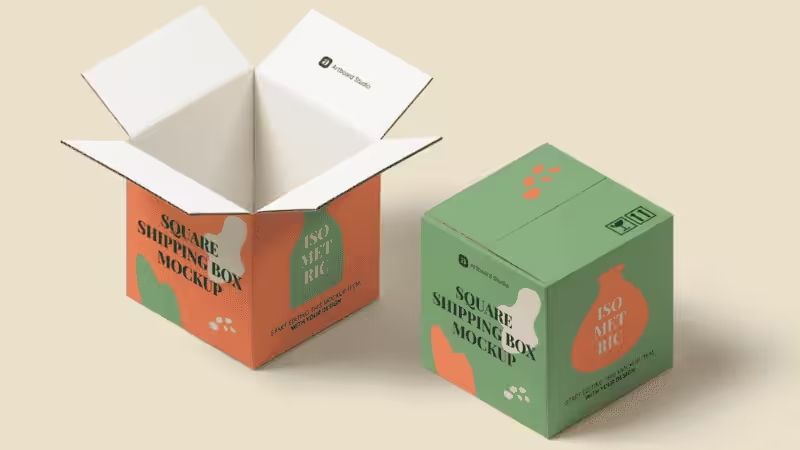
Sustainable Packaging Options
The United Nations warns that if the world’s population reaches 9.6 billion by 2050, we will need nearly three planets to sustain current lifestyles. Since we only have one Earth, everyone must take responsibility for protecting the environment.
If you have an e-commerce store, adopting sustainable packaging is a great step toward being eco-friendly. You likely use many materials to pack and ship your products. Switching to eco-friendly packaging can help reduce waste and lessen your environmental impact.
Consider using recycled corrugated cardboard or biodegradable paperboard. You can also opt for reusable packaging or materials sourced from sustainable resources. Not only does this protect the planet, but it also boosts your brand’s reputation. Many consumers care about the environment and appreciate businesses that do, too.
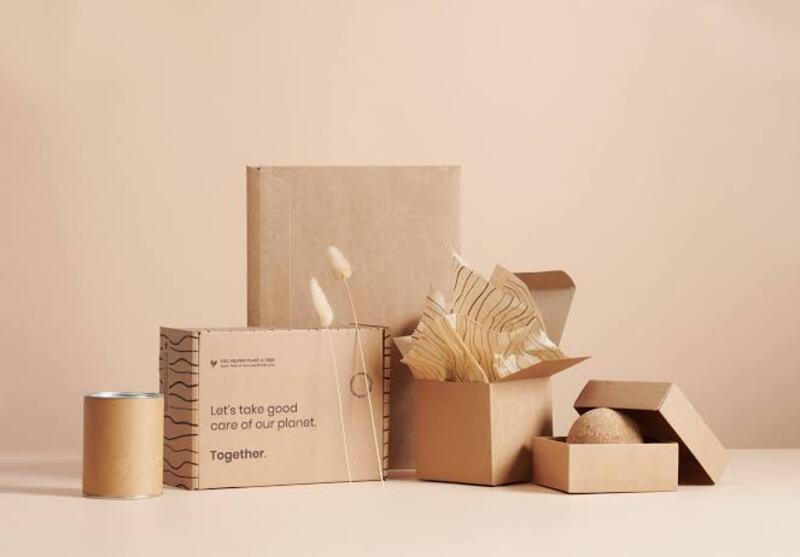
Printing and Finishing Options
Printing and finishing techniques add elegance and utility to packaging. For instance, the regular slotted container (RSC) is used for shipping because of its simple and functional design.
You can choose Custom printing to showcase your logo or your product information. Foil stamping gives a shiny, premium appearance, and die-cutting helps create the ability to cut out shapes.
All these options not only enhance the outlook of the packaging but also create an impact on the customers. They make the experience of unboxing exciting and elevate your brand.
How to Choose the Right Box for Your Business (A 4-Step Checklist)
Follow this simple and logical framework to ensure you choose the perfect packaging for your products and avoid common mistakes.
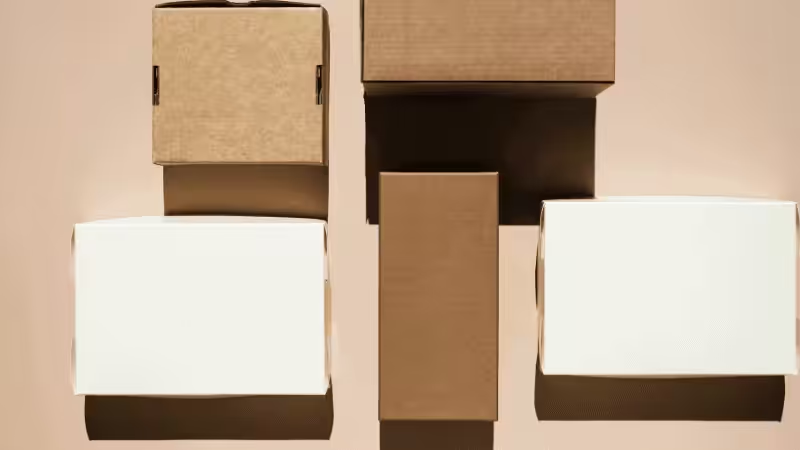
Step 1: Measure Product Size, Weight, and Fragility
- Accurately measure length × width × height.
- Consider cushioning (bubble wrap, foam inserts) to ensure safe transit.
- Take weight into account when selecting the right material.
- For fragile items, choose sturdier boxes with extra protection.
Step 2: Determine Shipping Method and Destination
- Review carrier size and weight limits for specific shipping methods.
- International shipping may have additional restrictions or requirements.
- Keep in mind that larger boxes often lead to higher shipping costs.
- Right-sized boxes help avoid extra charges by reducing dimensional weight fees.
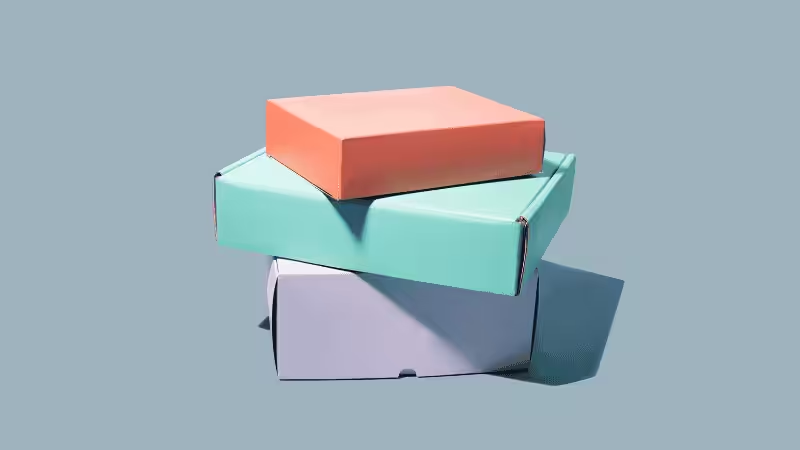
Step 3: Evaluate Stacking & Protective Features
- Ensure that boxes can stack safely without crushing the contents.
- For high stacking, use corrugated or rigid materials for added strength.
- Add inserts, dividers, or padding for fragile items.
- Test compression strength to ensure durability during warehouse storage.
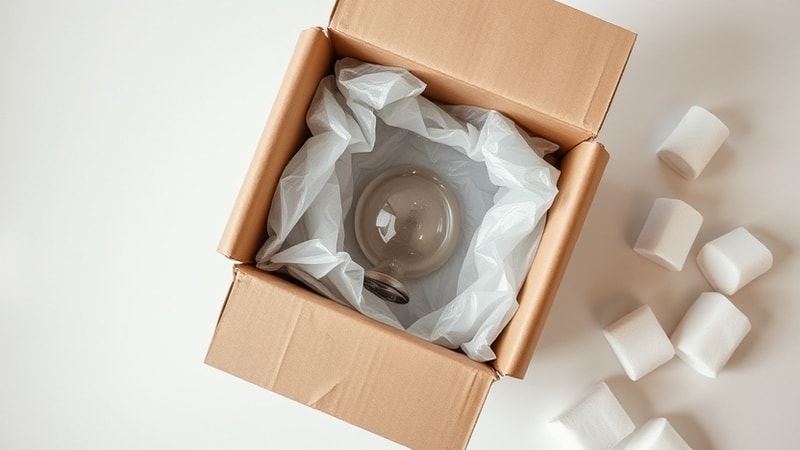
Step 4: Add Branding and Unboxing Experience
- Print logos, slogans, and brand colors to create a personalized feel.
- Use premium finishes like foil stamping or embossing for a luxurious touch.
- Design packaging that creates an exciting unboxing experience—perfect for sharing on social media.
- Make sure the packaging quality aligns with the perceived value of your product
FAQs
Q1: What is the cheapest box for e-commerce shipping?
Mailer boxes and standard RSC corrugated boxes offer the best balance of low cost and durability. For shipping flat items or lightweight retail items, these options provide solid support without adding unnecessary weight.
Q2: What’s the difference between folding cartons and rigid boxes?
Folding cartons ship flat and fold into shape — ideal for small consumer goods and food containers. Rigid boxes are pre‑assembled, thick, and non‑collapsible, often used for high end product displays or glass bottles that need maximum protection and a premium feel.
Q3: Can rigid boxes be shipped flat to save cost?
Standard rigid boxes cannot fold flat, but some hybrid options with two layers or hidden magnets ship more efficiently. Ask your supplier about easy to open option designs or unique features like snap lock closures that still provide strong bottom support after assembly.
Q4: Are all paper boxes eco-friendly?
Most paper and corrugated cardboard boxes are recyclable. For better sustainability, look for biodegradable materials, recycled content, and FSC certification. These unique features make corrugated packaging a responsible choice for food containers, glass bottles, and lightweight retail items alike.
Conclusion
Choosing the right packaging solution is key to protecting your product and promoting your brand. Consider factors like product type, material, and your branding needs. You can choose from options like corrugated boxes, specialty packaging, or custom solutions.
The right choice enhances the unboxing experience, making it more memorable for your customers. It also increases brand visibility and leaves a lasting impression. Additionally, well-selected packaging can reduce waste and improve sustainability. By taking the time to choose carefully, businesses can boost customer satisfaction and brand loyalty.
Find Your Perfect Box at Packoi
Now that you know the difference, you can find the perfect solution. At Packoi, we’re experts in all three categories.
- Need a lightweight retail box? Shop Custom Folding Cartons
- Need a durable e-commerce box? Shop Custom Mailer Boxes
- Need a premium luxury box? Shop Custom Rigid Boxes
Contact us today for a free quote, and let our experts help you get started.