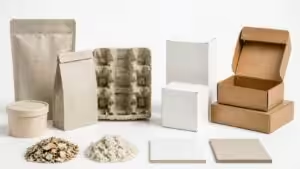
Brands across industries are now customizing e-commerce shipping boxes to stand out in a competitive market. E-commerce packaging plays a vital role in strengthening brand image and boosting long-term customer loyalty.
E-commerce packaging covers multiple key functions that online businesses need to evaluate carefully. Product protection during transit is the top priority for every online order. Beyond safety, custom shipping packaging also serves as a powerful branding tool to deepen customer impressions.
Curious about the core value and essential benefits of high-quality e-commerce packaging? Read on to explore more.
What is E-Commerce Packaging, and Why is It Essential?
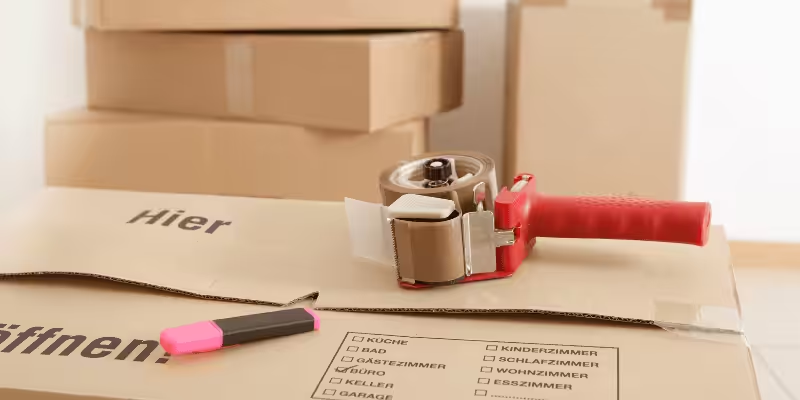
E-commerce packaging refers to the specialized packaging solutions designed exclusively for online retail order fulfillment, last-mile delivery and cross-border shipping. Unlike traditional retail packaging that focuses only on shelf display, it balances product protection, shipping efficiency, cost control and brand presentation.
Distinctive e-commerce packaging plays a key role in online retail sales and brand building. Poor packaging choices can result in damaged products, weakened brand trust and customer loss. Amazon’s frustration-free packaging sets a leading standard for online packaging design, focusing on low waste, easy opening, reliable protection and cost efficiency.
The core purpose of e-commerce packaging is to protect products throughout transit, ensuring items arrive intact, reducing returns and improving customer satisfaction. Well-designed packaging also reflects a brand’s commitment to quality and customer experience.
Beyond protection, thoughtful packing details—such as sufficient fillers (such as bubble wrap, packing peanuts, kraft paper, and so forth) , complete documents and secure sealing—further elevate the unboxing experience. Additionally, e-commerce packaging acts as a mobile brand billboard. Reusable and well-branded shipping materials extend brand exposure long after delivery.
To better optimize shipping solutions for your business, it is critical to explore common e-commerce packaging styles and their unique advantages.
The Different Types of Packaging and Their Benefits
Now, let’s move on to the different packaging material and their benefits.
Paperboard Boxes:
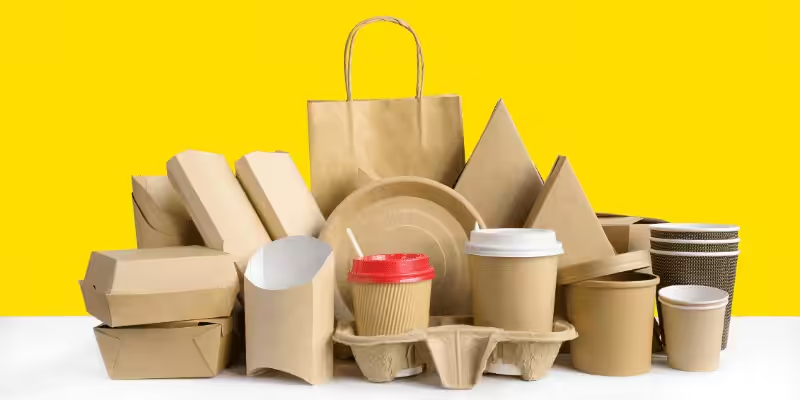
Paperboard is a lightweight and sturdy paper-based material. It’s very malleable and can be sliced and molded into any form. Due to its qualities, it may be utilized effectively in customized packaging.
Its inherent material affordability, combined with efficient manufacturing processes and lighter shipping weight, makes it exceptionally cost-effective. In e-commerce, it’s ideal for custom-branded product boxes for cosmetics, jewelry, or small electronics. It also serves as attractive internal packaging within larger shipments.
Wood or recycled paper fibers are converted into pulp before being bleached to create this. There is a wide range of paperboard packaging grades available to meet various needs.
Corrugated Boxes:
Digital printed corrugated boxes relate to what is widely known as cardboard. Many people’s minds automatically go to corrugated packaging boxes when they hear the word “cardboard” since this material is used to make the enormous boxes used for shipping, shoes, and storage.
Few buyers know corrugated boxes come in multiple structural grades, each with tailored protective benefits.
Single-wall styles offer lightweight defense for lightweight goods against minor bumps. Double-wall options add rigid compression resistance for heavy or fragile items during long transit. Heavy-duty triple-wall designs shield high-value goods from harsh handling, stacking pressure and rough delivery conditions.
Their affordable, fully recyclable and highly customizable, corrugated styles fit nearly all e-commerce shipping needs.
Plastic Packaging:
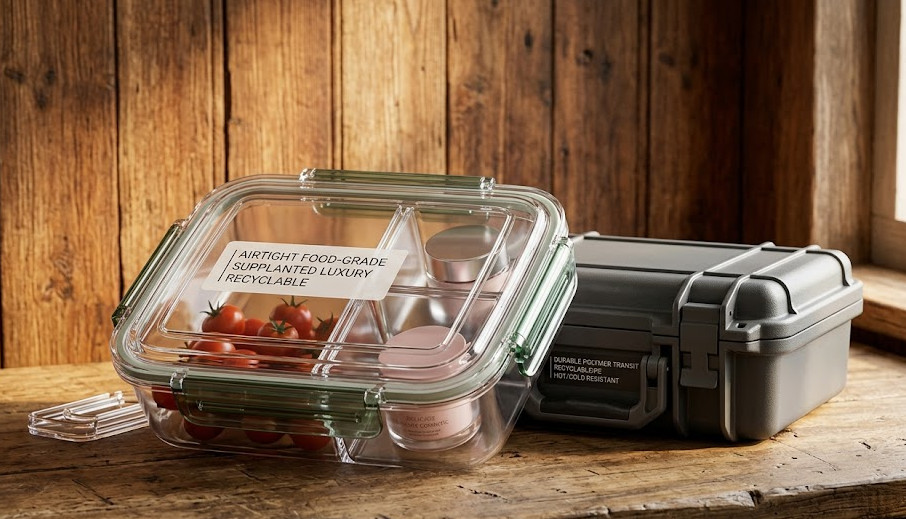
From spacecraft to paper clips, plastic is everywhere. Traditional materials like wood, leather, glass, porcelain, and so on have all been supplanted by plastic. Plastic box packaging has numerous benefits in which.
They may be recycled and are typically significantly more durable than paperboard boxes. To avoid spoilage and infection, it’s best to store food in airtight plastic containers. As a bonus, plastic containers won’t leak or spoil in the cold or heat.
Rigid Boxes:
Rigid boxes are fabricated using heavily compressed paperboard, making them four times thicker than the paperboard fabricating regular folding cartons. Rigid boxes are more costly than other packaging materials, like paperboard, corrugated boxes, or cardboard.
Rigid packaging is commonly created by hand and does not need the use of costly or large equipment such as dies. These are very cost-effective. Its most prominent advantage is the luxurious feel it provides. This elevates brand perception and product value.
Chipboard Boxes:
Electronics, medicine, food and cosmetics, and beverages are just some of the many other products that benefit from chipboard packaging. Recycled paper is used to create a paperboard called a chipboard. It’s simple to shape, fold, and cut. An economical packaging choice for your goods.
Compared to corrugated, chipboard is lighter and less bulky. This makes it ideal for retail display or inner product protection. Its recycled content also offers a significant sustainable advantage.
Poly Bag Packaging:
You may think of a poly bag as a pouch made of thin and flexible plastic film fabric. It’s a typical packing that may transport many things, including food, flowers, trash, chemicals, periodicals, and more.
Poly bags are incredibly versatile and cost-effective. They are lightweight, reducing shipping costs. Their flexibility allows them to conform to various product shapes. They also offer excellent moisture resistance, protecting contents from spills or dampness.
Aluminum Foil Packaging:
Common custom packaging for coffee and tea is foil-sealed packaging. Why? As a result, the density of the items is maintained, the taste is preserved, and the product’s shelf life is extended.
Foil-sealed bags are used to store and transport food as well as clothes and bedding.
How to Choose the Right Type of Packaging for Your Business

Below are key factors to consider as you plot out your e-commerce packaging design. You should consider all these factors as you work to create the best possible typical shipping box or custom packaging for your product.
Budget:
The first step in every package design project is to establish a budget. This will limit your ability to employ pricier or more exotic materials to create an eye-catching design. Be sure to check out your competitor’s packaging.
Balancing Aesthetics with Practicality:
After settling on the product’s look, you must prioritize its practicality and protective capabilities.
The most beautiful custom packaging in the world is useless if the contents don’t arrive in perfect condition. When making your choice, consider the methods of transport your product will undergo, the level of protection required, and ease of handling.
Ensuring your product reaches the customer intact is paramount for achieving customer satisfaction and building a strong brand relationship, helping you reach your target market effectively.
Materials and Long-Term Viability:
You should pick packaging materials for your goods with the same care you would use for yourself. The correct amount of storage for the right product is crucial, just as you wouldn’t want to live in a house that’s too large or too small.
Size:
Being thrifty with package dimensions and design can reduce costs; for example, if your product is available in four different sizes, you may only need to create two distinct custom e-commerce packaging sizes.
Designing for Your Target Audience:
Costs, logistics, and materials are important for e-commerce packaging. The design itself also matters. But always focus on your target customers. Keep their needs in mind at every step. This leads to successful package design. It helps you reach your market.
Tips for Packing and Shipping Your Products
Now, you must have had a fair idea of e-commerce packaging. Let’s look for some additional tips:
Pack the Item in a Sturdy Custom Box
When sending items that qualify as parcels, a cardboard box is preferable to a plastic or cloth bag since it provides more excellent protection for the item during transit. One that isn’t worn out, ripped, or bent is preferable, but a brand-new one is best.
Stuff the Custom Boxes with Padding
If you’re using packing peanuts, styrofoam, bubble wrap, or paper to cushion your goods during transport, leave a space of two to three inches around all sides of the box when you set it inside.
These insulate the product from harsh knocks and keep it from shifting around in transit. Before you cushion electrical items with foam, bubble wrap, or crumpled paper, cover them with anti-static packaging material.
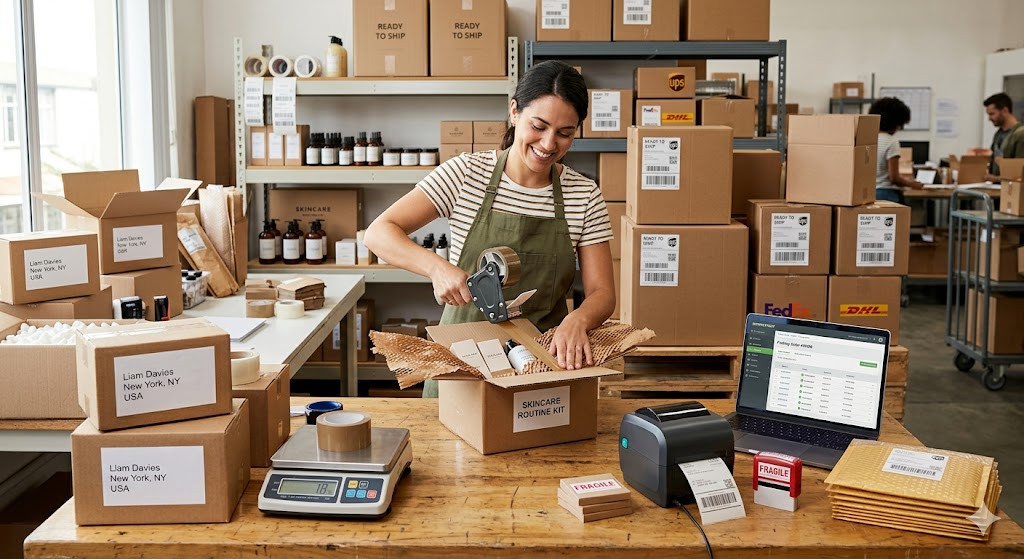
Seam Tape the Edges
Use custom packing tape or self-seal adhesive strips to seal the seams once you’ve packed everything inside to ensure your package doesn’t fall out of the box in transit. Duct or other packaging tape is adhesive and robust enough to seal your package through delivery.
If you need to make changes or add to the contents, keep the top lid open and tape it shut at the very end. Please ensure that you have added all the labels and information. You need to provide several labels and explanations with your shipment. The self-seal adhesive strip will help you out here.
Weigh the Package
After you’ve finished custom packing and labeling the cargo, you may weigh the box to verify whether the reported weight and actual weight match. The carrier may charge you more if the package weighs more than expected.
Special Considerations for International Shipping
International shipping adds layers of complexity. Your packages will endure diverse climates and handling conditions. Therefore, robust moisture and theft prevention measures are crucial.
Use desiccant packs inside containers to combat humidity. Wrap items in waterproof barriers to protect against condensation or spills. For security, employ tamper-evident seals and choose discreet, unmarked packaging. Stronger boxes and secure strapping also deter pilfering during transit.
Also, strict adherence to customs declaration requirements and labeling is non-negotiable. Provide precise product descriptions and accurate declared values for all goods. Incorrect or incomplete documentation can cause severe delays, fines, or even seizure of your shipment.
Ensure all labels are clearly printed and legible. They must include all necessary sender and receiver information, along with any required Harmonized System (HS) codes.
Furthermore, be keenly aware of varying packaging regulations across different countries and regions. Some nations prohibit specific packaging materials, such as certain foams or plastics. Wood packaging often requires special treatment and certification (e.g., ISPM 15) to prevent pest infestations.
Food products, pharmaceuticals, and medical devices have particularly stringent material and hygiene requirements. Failing to comply with these local regulations can lead to costly rejections, returns, or significant penalties at the destination port.
Common Mistakes Made When Packing and Shipping Products

Following are the top 5 mistakes you need to avoid while packaging and shipping products:
- One of the most common and long-lasting blunders is not including your packaging firm until later in the process. Early involvement prevents costly redesigns. It ensures optimal material and process choices.
- It could make sense to purchase boxes online. However, if you don’t have access to professional counsel and a structural designer, you may waste money on blunders.
- Incorrectly estimating current lead and turnaround times.
- Better prospects may pass you by if you stick with antiquated packing methods. Time and money might be saved, for instance, by using modern materials.
- Having to work with a packaging staff that lacks expertise. Inexperienced staff makes packing inefficient. It can lead to product damage and material waste.
Avoid these mistakes to make your production and shipping process easier.
FAQ
How Can I Make My E-Commerce Packaging More Sustainable?
To enhance sustainability, prioritize materials made from recycled content and those that are easily recyclable or compostable to make sustainable packaging. Optimize package size to minimize void fill, reducing overall material use and shipping weight. Encourage customers to reuse or properly dispose of packaging by including clear instructions. Choosing local suppliers can also reduce your packaging’s carbon footprint.
What are the Key Elements of a Memorable E-Commerce Unboxing Experience?
A memorable unboxing experience often involves sensory details and personalized touches. Focus on consistent branding, easy-to-open packaging, and a thoughtful presentation of the product inside. Adding a handwritten note, a small freebie, or unique tissue paper can significantly elevate the customer’s interaction. This helps build brand loyalty and encourages repeat purchases.
How Can E-Commerce Businesses Reduce Packaging and Shipping Costs?
To reduce costs, optimize your packaging dimensions to fit products snugly, minimizing void fill and lowering shipping surcharges based on dimensional weight. Negotiate bulk discounts with suppliers for materials you use frequently. Also, consider lightweight yet protective materials to decrease overall shipping weight. Streamlining your packing process can save labor costs.
When Should an E-Commerce Business Invest in Custom-Designed Packaging?
Consider custom-designed packaging when your brand identity is a key differentiator or your products have unique shapes requiring specific protection. It’s also beneficial when you aim to create a premium, cohesive unboxing experience that stands out from competitors. Custom packaging can improve product safety in transit and reinforce brand recognition, justifying the initial investment.
Conclusion
Since online shoppers can only engage with your items via static product photos, it’s harder to establish your brand’s unique selling proposition.
Because of this, consider how your flexible e-commerce packaging will affect your consumers from when it arrives in their mailboxes until they unbox your product. These are very cost-effective as they also give an idea about your brand identity.
The unpacking process is a meaningful part of your business and the goods’ initial impression of potential buyers.
In online sales, “e-commerce packaging” often refers to the containers they deliver to buyers. Several companies are now wholly personalizing their delivery boxes to differentiate themselves from the competition. It will help you reach your target market effectively.
Looking For The Best E-commerce Ready Packaging Solutions?
We at Packoi Printing solutions are here to offer you the best e-commerce-ready packaging. Get in touch with us today and try out your own flexible packaging project!