The pros and cons of paper bags, let 15 kinds of paper bags to tell you, help you choose the perfect paper bag, hurry to learn more!
Paper bags are one of the most common types of packaging used by businesses. After all, it’s a better alternative to plastic bags. It’s more eco-friendly and versatile.
A paper bag can be designed any way you want. Admittedly, there are times when it’s more costly than plastic. But paper bags’ benefits to the environment will make up for that.
If you want to know more about paper bags, this is the article that you should be reading.
Here, you’ll read a more profound definition, its pros and cons, and 15 different types you can use for your small businesses.
What Are Paper Bags?
A paper bag is a type of packaging deemed less harmful. As the name suggests, it’s made of paper material—something that’s more eco-friendly than a plastic bag. Some types use paper boards, while others use something thinner than actual paper.
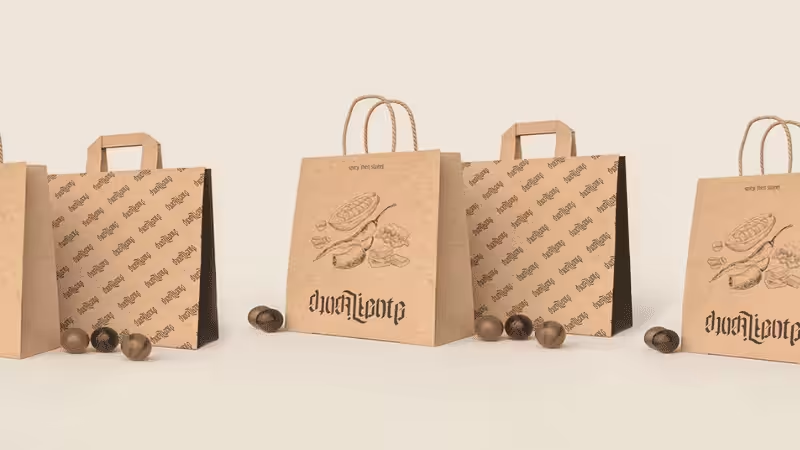
The thickness of the paper will define the weight a paper bag can carry. The thicker it is, the heavier the items it can carry.
- Standard-duty bags: Have a basis weight ranging from 30 to 49 lbs.
- Heavy-duty bags: Feature a basis weight of 50 lbs or higher.
So you may want to choose the right size for a paper bag.
Most paper bags have a gusset—a fold either at the side or bottom. This allows the bags to expand and accommodate more items.
At first, paper bags were meant to replace several older items used to carry goods around:
- Jute
- Sacks
- Burlap bags
Although they were durable and reusable, sacks and similar bags took a long time to create. Not to mention the fact that it’s more expensive.
Paper packaging, on the other hand, offers three key advantages:
- Easier to produce
- More cost-efficient
- Quite versatile
The increasing demand led Francis Wolle to design a machine to mass-produce.
Soon, all businesses will be using it, from bakeries to retail stores and even luxury brands. They all have their own versions of paper bags, from paper-thin to being as thick as a board. Some are printed, while others are left in a plain brown color.
Advantages of Using Paper Bags
Brand Reputation: The fact that a paper bag is more sustainable means your brand reputation will be deemed more eco-friendly. This will help you attract eco-friendly customers.
Environmental Benefit & Renewable Resource: One of the main reasons you should start using paper bags is the environmental benefit. As you know, paper comes from trees. It’s a natural resource that’s also renewable. When managed correctly, trees can provide us with a never-ending supply of paper.
Recycled & Reused: But that’s not all. Paper bags are more eco-friendly. It can be recycled and reused. Paper composition is more vital than plastic, allowing it to carry more weight and withstand greater pressure before breaking. That means you can reuse it several times. Once it can no ()longer be reused, you can send it to the recycling facility so it can be broken down and made into something new.
Disadvantages of Using Paper Bags
As awesome as it may be to use paper bags, it also comes with a couple of disadvantages.
Product Needs First: Of course, most people would think that the environmental benefits that paper bags bring make up for all these disadvantages. But you also have to remember that your packaging should, first and foremost, meet the needs of your product.
Heavier & Not Waterproof: First, paper bags are thicker in composition, which means they’re heavier than lightweight plastic carrier bags. A significant limitation is that standard paper bags are not inherently waterproof. They cannot safely hold liquids or wet things. So they do not work well for some grocery and retail items — especially wet, cold, or leak-prone products. This requires careful consideration of which products are suitable for this type of packaging.
Storage Space & Cost: Since they’re bulkier, they’ll take up more space in storage. They are also more costly compared to single-use plastic. Make sure you consider that as you choose your packaging solution.
Types of Paper Bags: A Complete Classification Guide
Paper bags are mostly used as shopping bags and can be easily personalized. This is why paper bag manufacturers have come up with a lot of versions that everyone can use.
Paper bags can be categorized based on their Style,material,the shape of the bottom, the handle, and even the material.
To help you choose the right paper bag for your small businesses, here are some of your popular options:
A. Based on Purpose
The most important thing is the loading. The paper bag’s shape, size, and form will depend on its intended use. Here are some of the options that you can choose from.
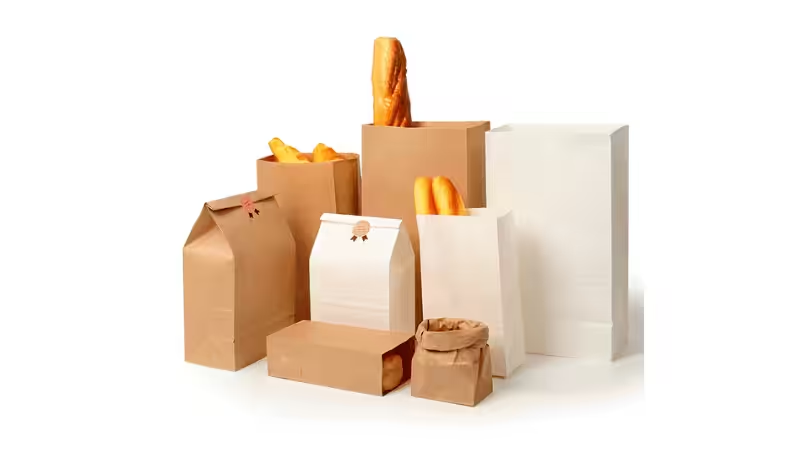
- SOS Paper Bags: The name means Stand-on-Shelf. These are paper carrier bags made of kraft paper and are commonly used for takeaways. They have a square bottom and open on their own once filled with items like pastries, clothing, etc. Unlike flat paper bags or thin plastic bags, these bags are strong and stand on their own. They are more stable and make packing faster and easier.
They are available in three colors:
- White
- Black
- Brown
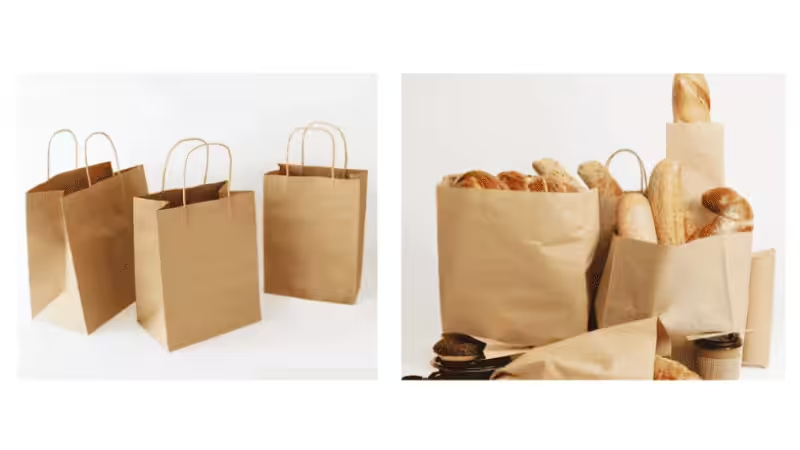
- Paper Shopping Bags: These are also paper carrier bags that are handed out in retail stores every time a customer purchases. Paper shopping bags vary in thickness. It’s designed to carry more than one item, so paper shopping bag durability is significant. It’s usually branded, so it’s like a walking advertisement.
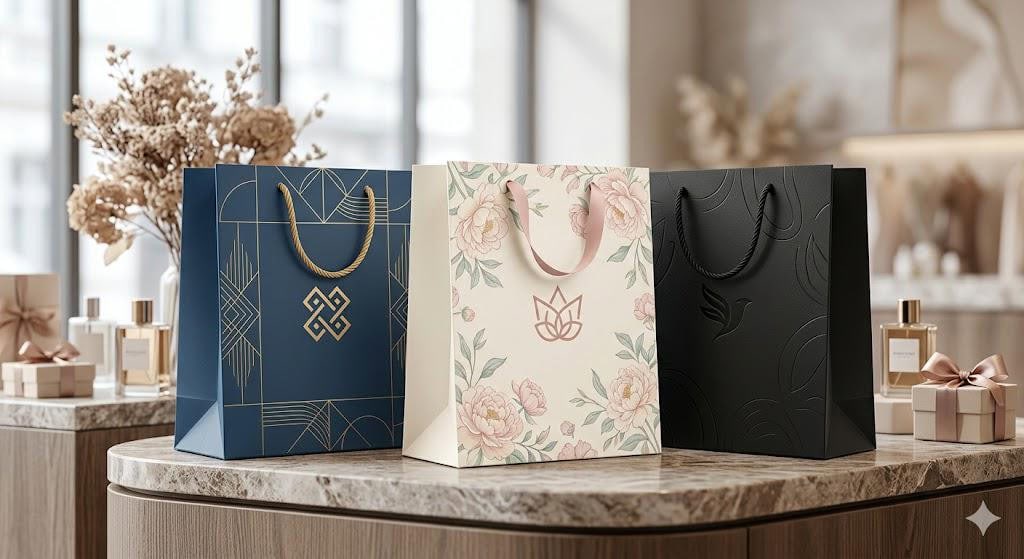
- Euro Tote Paper Bags: This is considered to be the sophisticated version of the SOS paper bags. These bags have high-quality handles and stronger structure than regular bags. They are more durable and look premium, making your products feel more valuable. They come in different colors and printed designs. These are usually best for giving gifts and can be customized to carry a brand’s logo.
These brown bags are commonly used for:
- Bread
- Pastries
- Other dry goods
These bags come in different sizes to fit the various baked goods. They are sometimes designed to have seals so they won’t spill. The physical nature of the paper material allows the bread and cookies to stay fresh, compared to plastic bags.
- Mailing Bags: These look more like envelopes than bags. But they’re meant to protect documents or small items that must be delivered or carried.
- Party Bags: Think of these as party favor bags. It’s designed to look fun and creative. Unlike normal shopping bags, they aren’t just for carrying things—they act as exciting little gifts themselves.
It’s filled with goodies such as:
- Small toys
- Other small items
- Candies
B. Based on Material
In addition, you can choose the type of paper bag based on the material. These are all paper, but they still come in four different types.
- Kraft Paper Bags: As the name suggests, these are made of brown kraft paper. It comes in its natural color when the paper is processed from wood pulp fibers. Unlike plastic or bright white bags, these do not use chemical bleaching and are fully natural. These brown kraft paper bags look very sustainable, so some people choose to use this color over others. Brown kraft paper bags are often used as grocery bags and are very convenient.
- White Paper Bag: These are bleached versions of the kraft paper. It’s still eco-friendly but might not look as sustainable as the brown paper bags. This looks cleaner, though. Because of this crisp appearance, you will often find them used in bakeries, pharmacies, or modern boutiques.So, if that’s the look that you’re after, then this is the eco-friendly material for you.
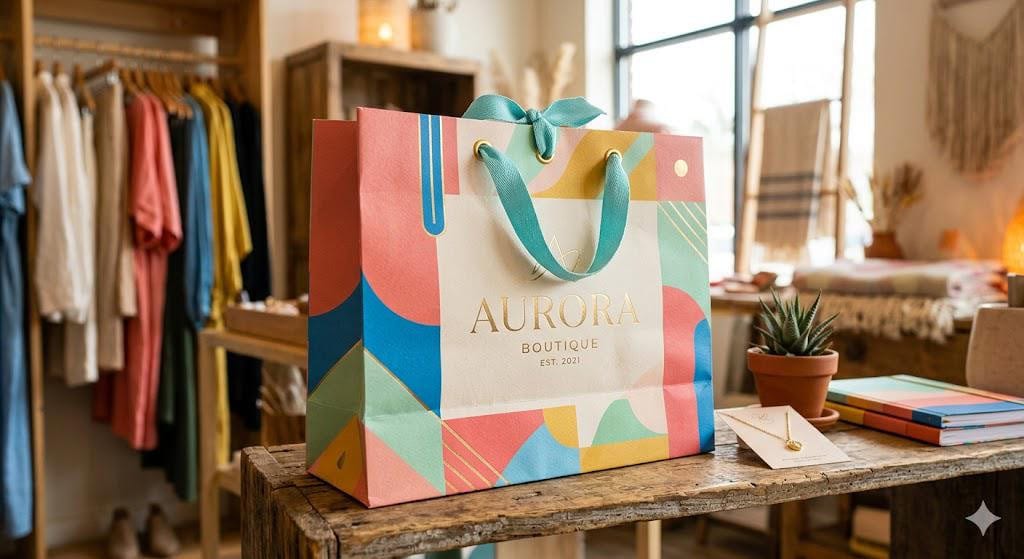
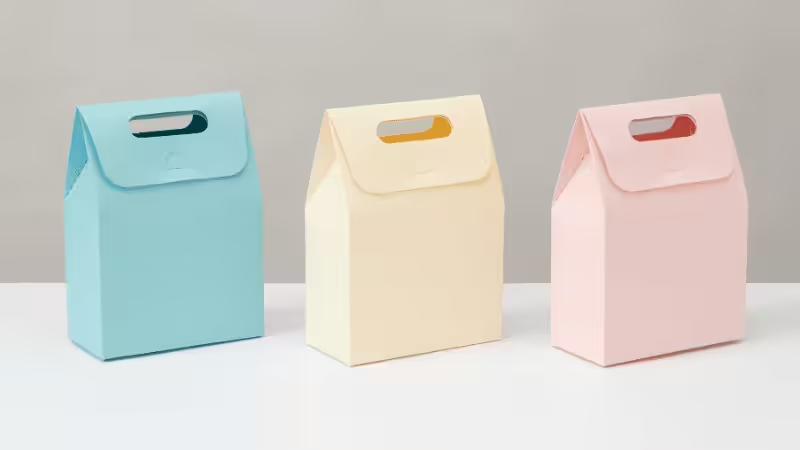
- Colored Paper Bag: Paper is easily dyed. That means you can have these in any color that you want. These bright, attractive colors help your brand get noticed. They work great for clothing stores, holiday sales and special events. But if you’re doing this, make sure you use eco-friendly dyes to maintain the sustainability of the bags.
- Recycled Paper Bag: This is for bags that have gone through the recycling process. Instead of being made from brand-new tree materials like ordinary bags, these reuse old paper waste. They’re ideal for farmers’ markets, organic stores, and environmentally friendly brands.Using recycled kraft paper is a great way to save the environment while meeting your packaging needs.
C. Based on the Shape of the Bottom
Another way to categorize paper bags is to look at the shape of the bottom. The bottom of the shopping bag needs attention; in order to hold things, the bottom must be strong. It has two structures.
- Flat Bottom Bag: These bags are also known as block bottom bags. These have side gussets and a tail that can stand on its own.
These are used to package:
- Shoes
- Clothing
- Toys
- Other bulky items
You can also use this to carry around food. Since it’s meant to carry heavier and bulkier items, you can expect these bags to use a thicker material.
- Pinch Bottom Bag: These are brown bags that have side gussets but a pinched bottom. It can still hold bulky items because of the side gussets, but not as big as the flat-bottom bags can accommodate.They fold flat to save lots of storage space, so they’re perfect for bakeries, sandwich shops and pharmacies.
D. Based on the Handle
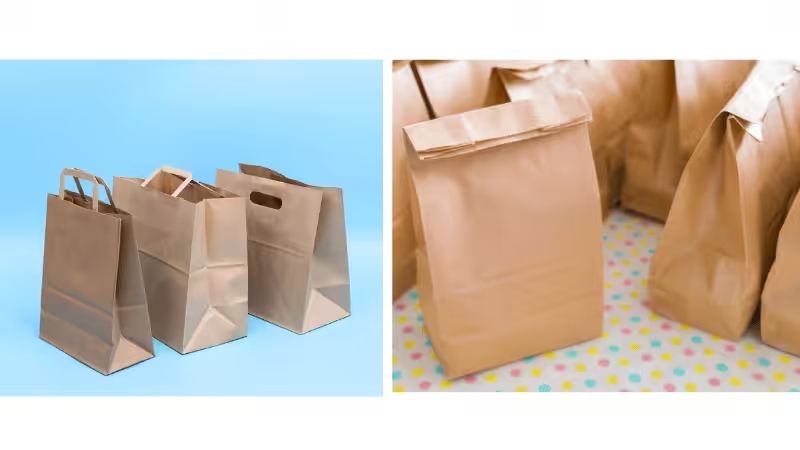
Paper bags also vary in terms of the handle. Consider what you will put inside it to decide how the paper bag will look. Here are three options:
- Die-CuttingHandle: These bags have the handle cut out from the top of the bag. It’s usually a couple of inches from the top of the bag, allowing the carrier to grip it comfortably. This part is also reinforced so it doesn’t tear when the bag is filled with items.This simple design has no string, making it ideal for clothing shops, bakeries and bookstores. It’s perfect for customers who want to pick up their items and leave quickly.
- Rope Handle: These bags can also have rope handles. Sometimes, it’s made of twisted paper or the same material as the bag. It can also be a long piece of paper that’s the same material as the bag.These handles are very strong. They make carrying heavy items comfortable. You will often see them in grocery stores. They are also perfect for restaurant takeouts.
- No Handles: These bags are usually flat at the top and just folded to close. They are held from the top by the carrier.Unlike bags with handles, this simple, cost-effective design is meant to be clutched directly in your hand. Because of this, they are the classic choice for school lunches, fast-food orders, or pharmacy items.
5 Facts about Paper Bags that You Should Know
There are many options when it comes to choosing the suitable packaging solution for your brand. Why should you choose paper bags over all of them?
Well, if you want to build a reputation for being a sustainable brand, you can create paper bags for your brand.
Here are some incredible facts proving that using a paper bag is better than other alternatives.
1. From a Renewable Source
Paper bags come from wood. It’s the primary source of natural kraft paper. Even if that paper is bleached or dyed into a different color, it still comes from trees, which is a renewable resource.
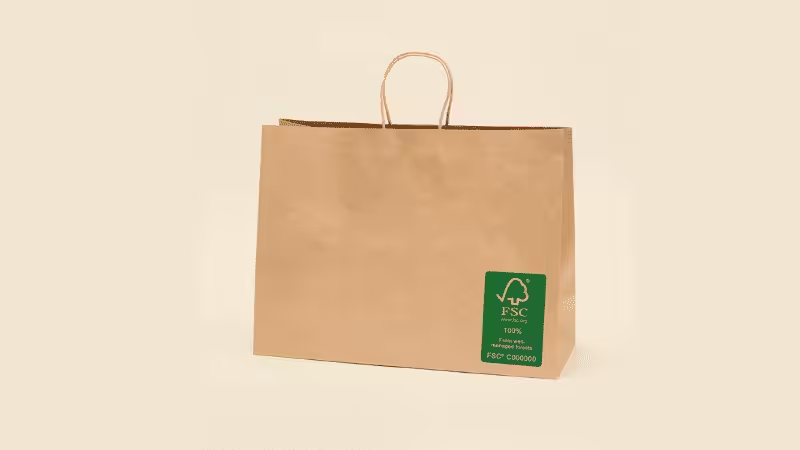
That means trees can be cut, and new ones can be planted in their place. Of course, this requires proper management. You have to get your paper bags from a company that gets raw materials of FSC-certified packaging from responsibly managed forests.
2. Low Environmental Impact
Unlike plastic bags, creating paper bags results in a lower environmental impact.
Remember, trees absorb carbon dioxide (CO2). But this is only for new trees. The older they get, the more they lose this ability. They leak CO2 back into the atmosphere when they start decaying. That means you have to cut down the old trees so they have a positive impact on the environment.
Cutting the old trees to create a paper bag will keep the CO2 from circulating in the atmosphere once more.
A plastic bag, on the other hand, will only pile up in landfills. They litter the earth and stay there for a very long time without decomposing.
3. Highly Recyclable for a Circular Economy
Paper bags can be recycled because their raw material is recyclable five to seven times. This means you get to keep them in landfills for a very long time.
Kraft paper, in particular, is easy to recycle because it’s usually not contaminated by other materials. Of course, you’ll have to be very careful with what you print on the paper to ensure that it remains 100% recyclable. Choose eco-friendly ink and adhesives if you want to stick anything on it.
4. Highly Reusable for Everyday Needs
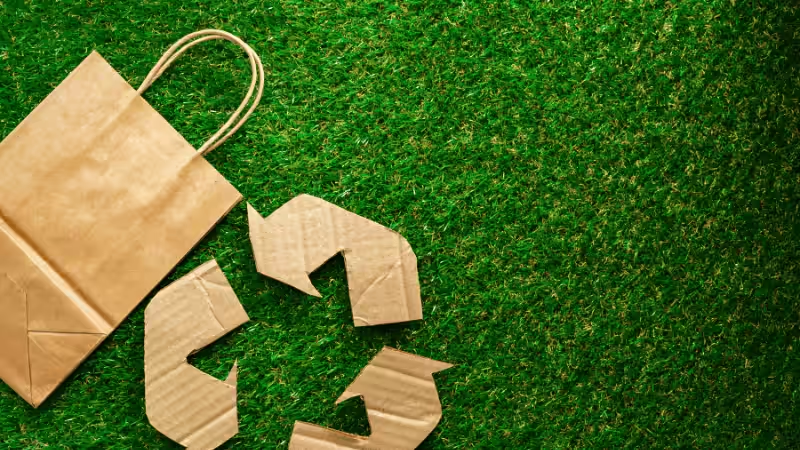
Single-use plastic carrier bags are usually thrown away. But paper bags can be reused for something else.
If it’s clean, the customer can always use it as packaging. It can even be used for storage if the paper used is thick enough.
But there are other uses for it. If it’s already broken, it can be creatively upcycled into vintage-looking DIY wrapping paper, or shredded to line a home compost bin.
y. Or it can be used as an art material.
The more it can be reused, the less it’ll become an environmental problem.
5. Naturally Compostable for Zero Waste
Another benefit of using brown bags is that they can be made to be compostable, at least if you don’t put any lining or plastic film on them. This is usually common for brown bags that might get moisture, so the layer is necessary to keep the bags sturdy.
There are uses for brown bags that don’t require these films, so it should make the bag compostable.
To easily compost your paper bag at home, first make sure to remove any plastic tape, stickers, or receipts. Then, simply tear the bag into smaller pieces and toss them into your compost bin. Tearing it up helps the paper break down much faster, naturally turning into nutrient-rich soil in just a few weeks!
FAQ
Q1: What special design effects, like foil stamping or embossing, can I add to my bags?
A: Absolutely! We love making bags pop. We can add a variety of beautiful finishes, from elegant foil stamping that adds a metallic shine, to embossing that gives your logo a 3D feel. Let’s create a bag that feels as premium as your products.
Q2: What is the Minimum Order Quantity (MOQ)?
A: Our MOQ is flexible and depends on your bag’s design and complexity, but it generally starts around 500-1000 units. The best way to get an exact number is to tell us a bit about your project, and we can give you a precise quote.
Q3: What factors influence the final price of the paper bags?
A: The final price is a mix of a few key things: the bag’s size, the type and thickness of the paper, the number of colors in your design, and any special finishes you add. Of course, the quantity you order plays a big role too!
Q4: Are these bags food-safe or oil-proof for products like baked goods?
A: That’s an excellent question! While standard paper bags are often food-safe, they can get greasy from delicious baked goods. For oily products, we can customize your bags with a special food-grade, grease-resistant lining to keep them looking sharp and your treats fresh.
Conclusion
Paper bags offer an eco-friendly and versatile packaging solution for businesses. They provide a sustainable alternative to plastic, helping you reduce your environmental impact while offering durability and customization.
Using paper bags in your business is a great way to be eco-friendly with your packaging solution. But you have to choose the right bag to use.
Let’s Get Started on Creating Your Paper Bag with Packoi
Ideally, you should use an FSC-certified paper bag to ensure it’s sourced responsibly.
Choosing the right paper bag is a crucial step in showcasing your brand’s quality. At Packoi Printing,we specialize in crafting custom packaging solutions that align with your product needs and vision.
Contact our team to get a personalized quote and start your project today. We can discuss the different paper bag options that you can get. We have a lot of samples to show you.