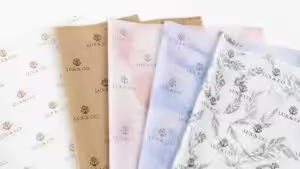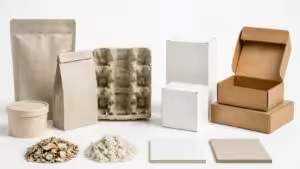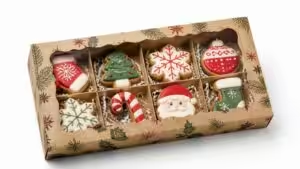
You’re likely spending too much time assembling boxes and using messy void-fill, only for your package to arrive looking generic. This isn’t just inefficient—it’s a missed opportunity to create a memorable unboxing experience that turns first-time buyers into loyal fans.
It’s time to switch to a smarter solution. Poly mailer bags are the lightweight, durable, and cost-effective alternative designed for modern e-commerce. This guide cuts through the noise and gives you the exact data, size charts, and expert tips you need to decide if poly mailers are right for your business, helping you ship smarter, save money, and build your brand with every order.
Key Takeaways: Why Poly Mailers are a Smart Switch
- Slash Shipping Costs: Reduce postage fees by up to 40% on lightweight items compared to boxes due to lower dimensional weight.
- Boost Efficiency: Pack orders faster with the simple peel-and-seal adhesive strip. No tape gun needed.
- Save Space: A stack of 100 poly mailers takes up a fraction of the space of 100 flat-packed boxes.
- Brandable & Professional: Fully customizable to create a memorable first impression for your customers.
- Durable & Weather-Resistant: Protects non-fragile goods from moisture, dirt, and punctures during transit.
Poly Mailers vs. Cardboard Boxes: A Head-to-Head Cost and Feature Comparison
For many online sellers, the big question is: “Are poly mailers really cheaper than boxes?” The answer is almost always yes for non-fragile items. Let’s break it down.
Feature | Poly Mailer Bag | Cardboard Box | The Winner Is... |
Shipping Cost | Lower. Significantly lighter, avoiding higher weight-based shipping tiers. Example: A 12oz T-shirt in a poly mailer ships cheaper via USPS Ground Advantage than the same shirt in a box that pushes the weight over 1 lb. | Higher . Heavier material and dimensional weight pricing can increase costs substantially. | Poly Mailer |
Storage Space | Minimal. 1,000 mailers can fit in a small drawer. | Significant. Even when flat-packed, boxes consume valuable warehouse or office space. | Poly Mailer |
Protection Level | Good for non-fragiles. Puncture and water-resistant. Protects against dirt and moisture. | Excellent for fragiles. Offers structural rigidity and crush protection. | Poly Mailer |
Packing Speed | Fast. Simply insert the item and seal the adhesive strip. | Slower. Requires assembly, taping, and often void fill. | Poly Mailer |
Customization | Excellent. Full-color printing offers a great canvas for branding. | Good. Can be printed, but often at a higher cost and with fewer design options than mailers. | Poly Mailer |
Eco-Friendliness | Varies. Options include 100% recycled, biodegradable, and compostable materials. Less material usage overall. | Good. Often made from recycled content and is widely recyclable. However, they use more raw materials. | It's a Tie |
What Are Poly Mailer Bags, Exactly?
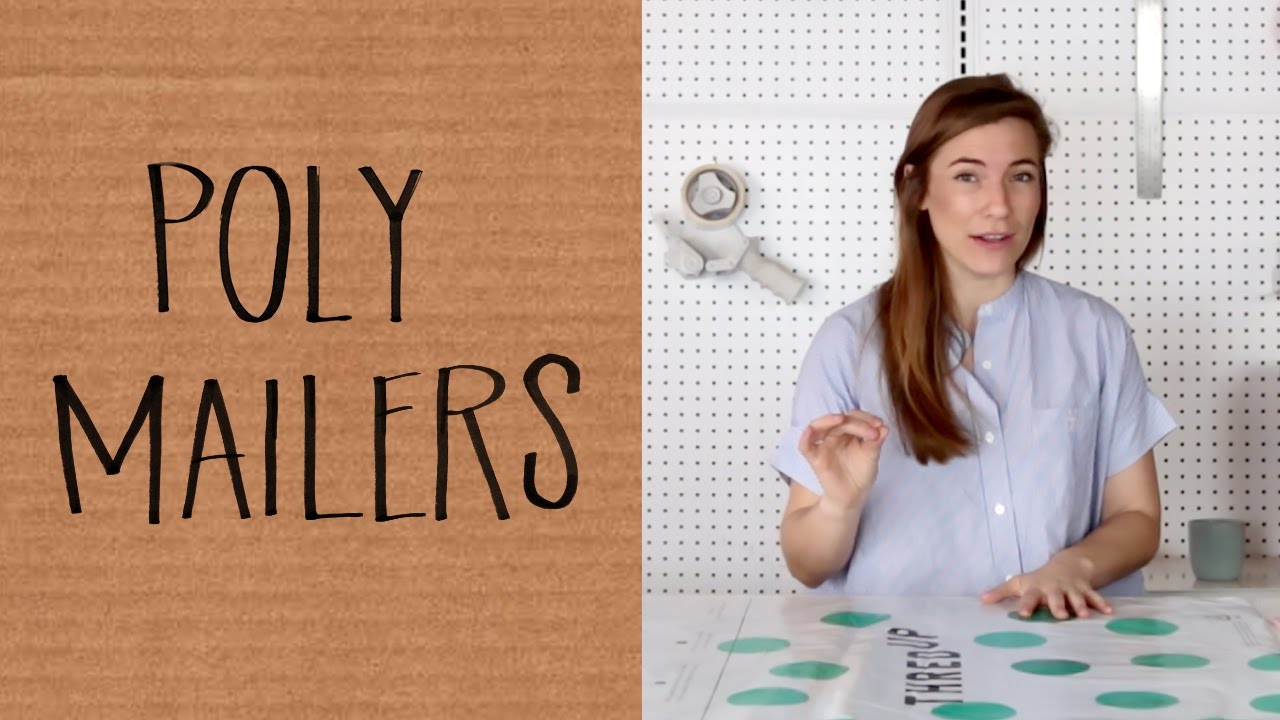
Poly mailer bags are lightweight shipping envelopes made from polyethylene, a durable and versatile plastic. They are designed to be tear-resistant, puncture-resistant, and waterproof, making them a reliable choice for protecting goods from the elements during transit.
Key features include:
- Self-Sealing Adhesive Strip: A simple peel-and-press strip creates a secure, tamper-evident seal. No extra tape is needed.
- Durable Polyethylene Film: Withstands the rigors of automated sorting and handling in shipping networks.
- Lightweight Construction: Keeps package weight to a minimum, directly saving you money on postage.
They are widely used by e-commerce businesses, online sellers, bookstores, and apparel companies to ship non-fragile items efficiently.
Advantages and Disadvantages of Poly Mailer Bags
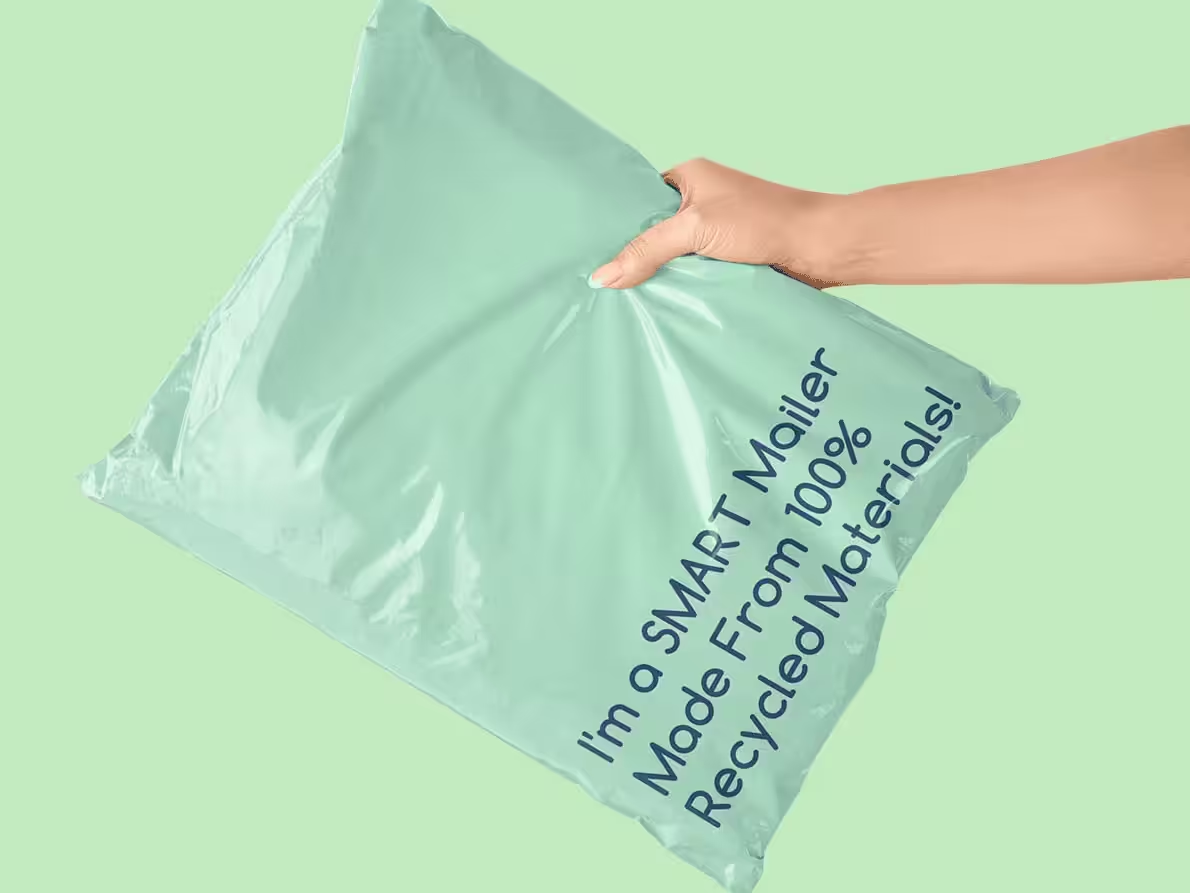
Poly mailer bag is a sustainable, recyclable, and environmentally friendly plastic bag option that provides security for your cargo. It is a very advantageous option for shipping products, but it also has some limitations.
The Advantages: Why E-commerce Brands Love Poly Mailers
- Significant Cost Savings: This is the primary advantage. Poly mailers are not only cheaper to purchase in bulk than boxes, but their lightweight nature also drastically cuts down on shipping costs, often saving up to 40% on postage for items under 1 lb.
- Space and Time Efficiency: Poly mailers are huge time and space savers. They arrive flat and take up minimal warehouse or storage space compared to bulky boxes. The packing process is also much faster—simply insert the product, peel the strip, and seal it. No time is wasted on assembling boxes or using a tape gun.
- Excellent Durability and Protection (for Non-Fragiles): Made from resilient polyethylene, they are waterproof, tear-resistant, and puncture-resistant. This protects your goods from moisture, dirt, and tampering during transit, ensuring they arrive clean and dry.
- Powerful Branding Tool: A poly mailer is a blank canvas for your brand. Custom, full-color printing turns a simple package into a mobile billboard, creating a memorable unboxing experience and boosting brand recognition from the moment it arrives at your customer’s doorstep.
The Disadvantages: When to Reconsider Using a Poly Mailer
- Fragility: Poly mailer bags, although relatively strong, can still be damaged during transportation, which is not suitable for businesses that transport fragile items such as glassware or ceramics.
- Limited Protection: Poly mailer bags are not suitable for businesses that require heavy transportation or large-scale storage. This can be a problem for businesses that need to ship or store heavier items or larger quantities.
We treat the advantages and limitations of the ploy mail bag correctly and use it flexibly according to its characteristics of sturdy packaging, and the lightweight and small size of products, which can maximize its advantages in the transportation of product packaging class mail out.
What Are the Best Products to Ship in Poly Mailers? (And What to Avoid)
Poly mailers are incredibly versatile, but they aren’t suitable for everything. Knowing what works and what doesn’t is key to preventing damaged products and unhappy customers.
✅ Ideal for Shipping in Poly Mailers:
- Apparel: T-shirts, jeans, sweaters, socks, and other soft goods.
- Books & Magazines: Hardcover or softcover books that aren’t rare or highly valuable.
- Fabric & Yarn: Items that are soft and can’t be easily damaged.
- Shoes in a Box: The shoebox provides the structure, and the mailer protects it from weather.
- Soft Toys: Plushies and stuffed animals.
- Cosmetics: Non-breakable items like makeup palettes, brushes, or sealed powders.
❌ Avoid Shipping in Poly Mailers:
- Glassware & Ceramics: Mugs, jars, and pottery will likely break.
- Electronics: Laptops, phones, or hard drives require rigid, padded protection.
- Liquids in fragile containers: Glass bottles of perfume or oils.
- Artwork & Prints: Items that can be easily bent or creased.
- Highly Fragile or Collectible Items: Anything that cannot withstand being dropped or having other packages stacked on it.
A Practical Guide: Choosing, Packing, and Shipping with Poly Mailers
Using poly mailers effectively comes down to three things: choosing the right one, packing it correctly, and sealing it securely.
How to Choose the Right Size and Thickness (Mil)?
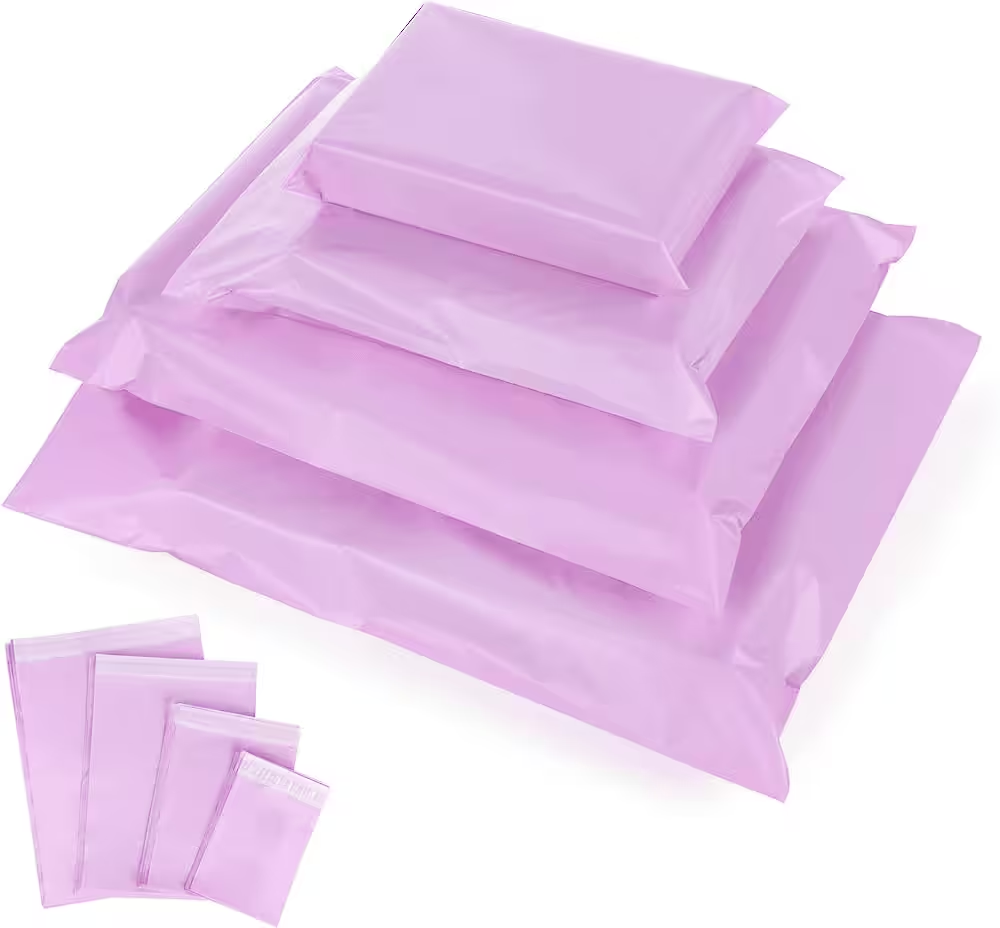
- Measure Your Product: Lay your item flat and measure its Length (L), Width (W), and Height/Thickness (H).
- Calculate the Right Width: The mailer width should be your item’s Width + Height + about 1 inch for clearance. (Mailer W ≥ Item W + Item H + 1″)
- Calculate the Right Length: The mailer length should be your item’s Length + Height + about 2 inches for clearance and sealing. (Mailer L ≥ Item L + Item H + 2″)
- When in Doubt, Size Up: A slightly larger bag is better than one that is too tight, which can burst under pressure.Understanding Mil Thickness: Don’t Make This Common Mistake
Mil is a unit of measurement equal to one-thousandth of an inch, used to describe the thickness of the plastic film. Choosing the wrong mil is a frequent error that can lead to damaged products.
- 2.0 Mil (Standard): Good for lightweight, non-abrasive items like T-shirts or fabric. Most common and cost-effective.
- 2.5 Mil (Standard Plus): The industry workhorse. Offers a good balance of durability and cost for items like jeans, books, or multiple pieces of clothing.
- 3.0+ Mil (Heavy-Duty): Use for heavier items, products with moderate edges (like shoeboxes), or for extra peace of mind. Offers superior puncture resistance.
What are the Different Varieties of Poly Mailers?
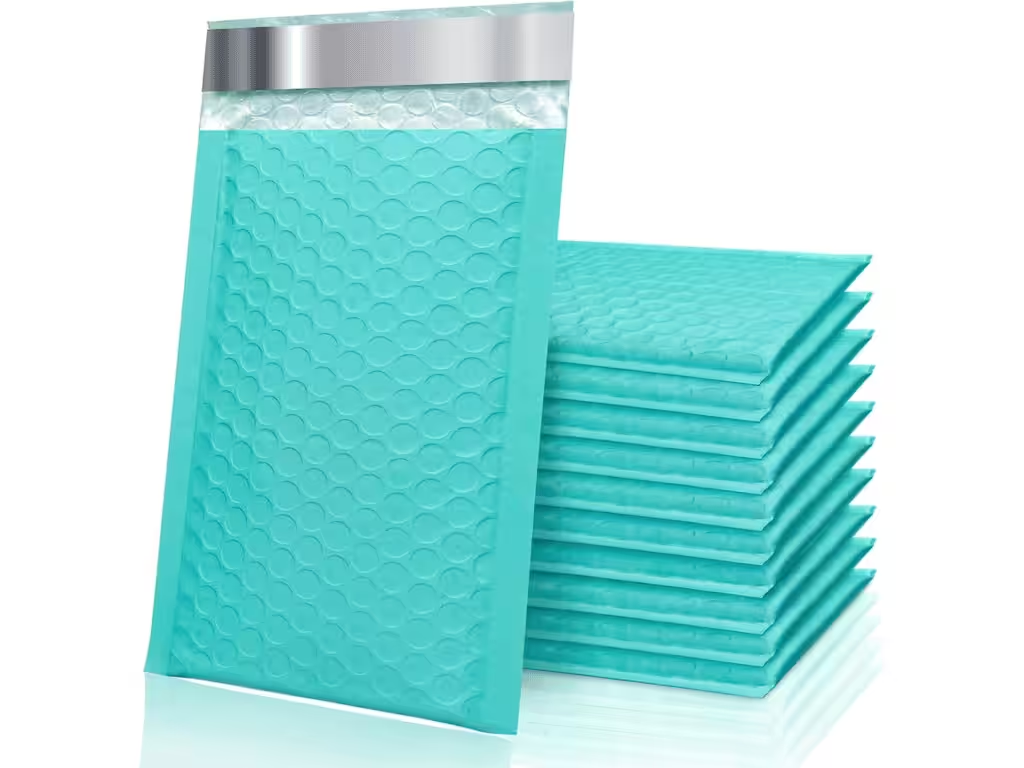
Beyond standard white or gray mailers, several types serve specific needs:
- Bubble-Lined Mailers: These have an interior layer of bubble padding, providing extra cushioning for semi-fragile items like jewelry, cosmetics, or books you want to protect from corner dings.
- Co-Extruded Poly Mailers: Made from multiple layers of film, often with a white exterior and a gray or black interior. This construction provides superior strength and opacity, ensuring contents are not visible.
- Expansion Gusseted Poly Mailers: These mailers have expandable sides (gussets) that allow them to accommodate bulkier items like binders, jackets, or multiple large products.
Poly Mailers vs. Bubble Mailers: When Do You Need the Padding?
The choice is simple:
- Use a Poly Mailer for: Anything soft and durable (e.g., a sweater).
- Use a Bubble Mailer for: Anything with a bit of fragility that needs cushioning from bumps and drops (e.g., a hardcover book, a makeup palette).
How to Pack and Seal Your Mailers for Maximum Security
- Fold Items Neatly: Fold clothing or other soft goods flat to create an even surface. This prevents lumps that could get snagged.
- Insert the Product: Slide the item into the mailer, pushing it to the bottom.
- Remove Air: Gently press down on the bag to remove excess air before sealing. This creates a snug fit and a smaller package.
- Peel and Seal: Peel the protective strip from the adhesive and fold the flap over. Press firmly along the entire length of the strip to ensure a strong bond.
- Apply Shipping Label: Place the shipping label on the largest, flattest surface of the mailer. Make sure all barcodes are flat and scannable. Avoid placing it over seams or the sealed flap.
- Avoid Overstuffing:While it may be tempting to maximize space, overstuffing a poly mailer bag can lead to problems during transit. Overfilled heavy-duty poly mailer bags are also more prone to tearing or bursting open, with less space, and potentially damaging the contents. It’s best to leave some room for movement within the regular white poly mailer bag anyway.
Go Green: A Clear Guide to Eco-Friendly Poly Mailer Options
Using plastic doesn’t have to mean harming the planet. The packaging industry has developed several eco-friendly alternatives to virgin plastic.
Recycled vs. Biodegradable vs. Compostable: What’s the Real Difference?
These terms are often used interchangeably, but they mean very different things.
- 100% Recycled Mailers: Made from post-consumer and post-industrial plastic waste. This reduces the need for new plastic production and diverts waste from landfills. This is often the most practical and widely understood eco-friendly choice.
- Biodegradable Mailers: Made with additives that help the plastic break down more quickly than standard plastic, but often only in specific landfill conditions. This term can sometimes be misleading.
- Compostable Mailers: Typically made from plant-based materials (like cornstarch – PLA) and are designed to break down into natural elements in a commercial composting facility. They should not be placed in regular recycling bins.
For most businesses, 100% recycled poly mailers offer the clearest environmental benefit and are easiest for customers to handle correctly.
How to Properly Recycle and Dispose of Poly Mailers
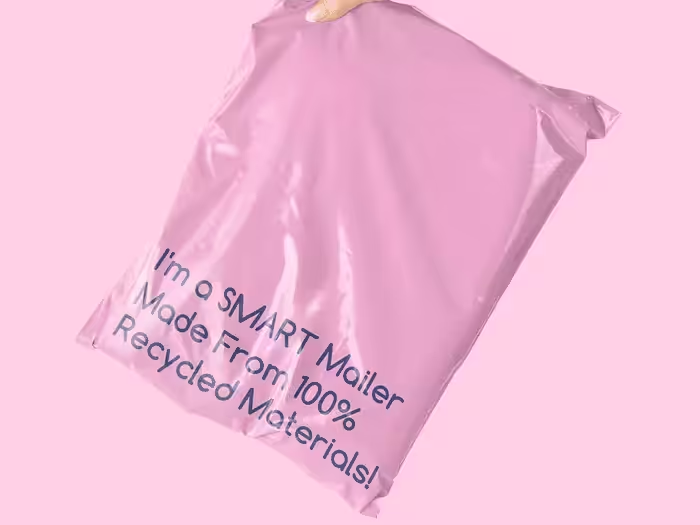
Standard poly mailers (LDPE #4) are not typically accepted in curbside recycling bins. However, they are recyclable through store drop-off programs. Encourage your customers to:
- Remove all shipping labels.
- Take the empty mailer to a local grocery or retail store that collects plastic film for recycling (like Target or Walmart).
Beyond the Logo: How Custom Poly Mailers Boost Your Brand
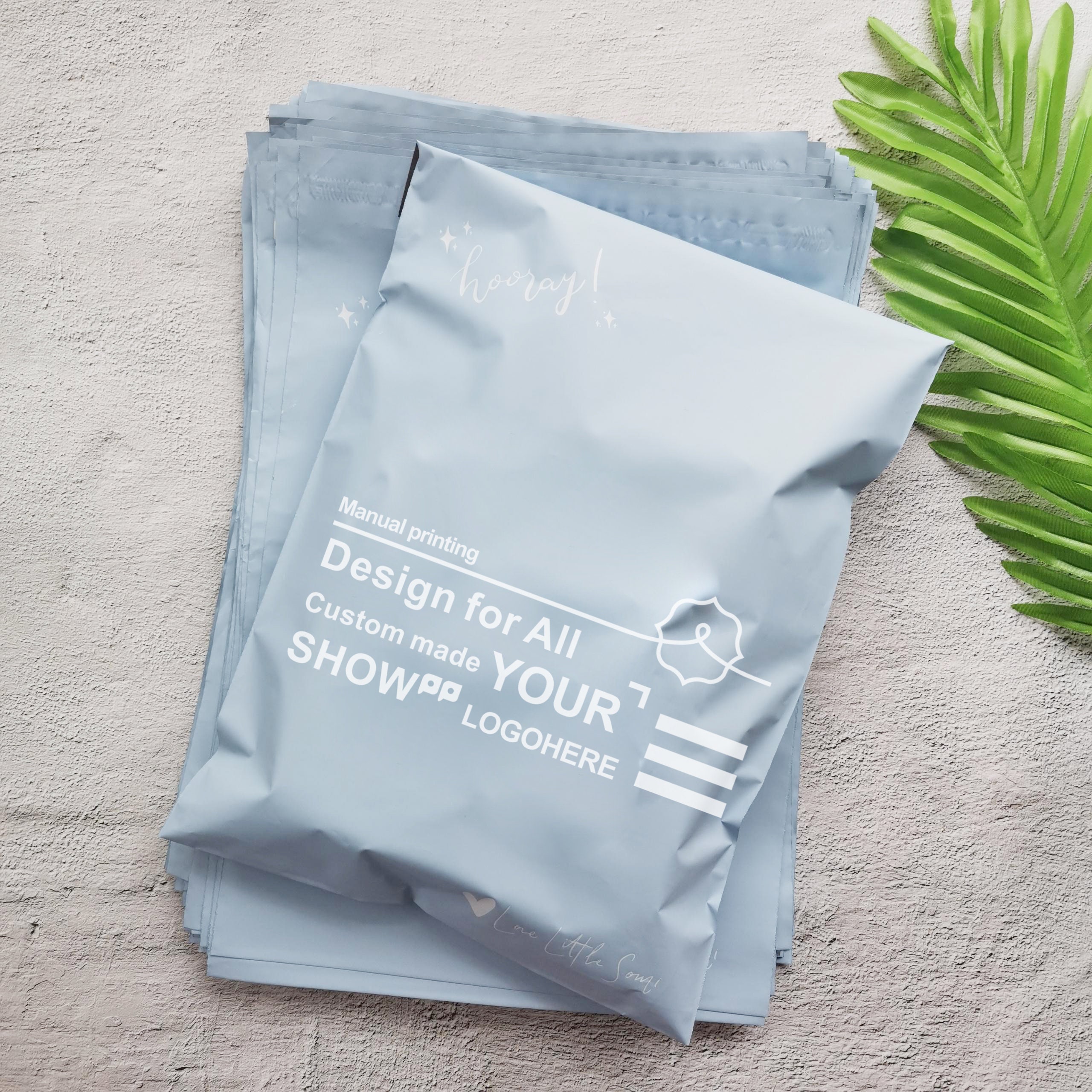
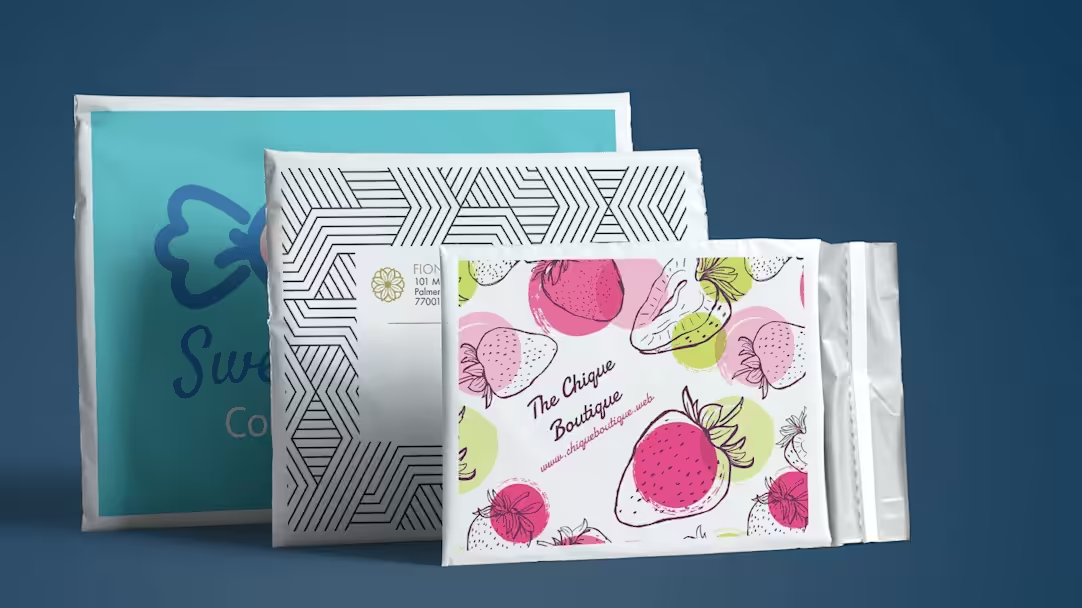
A plain mailer gets the job done. A custom-printed mailer builds your brand. It’s the first physical interaction a customer has with your company, turning a simple delivery into a memorable unboxing experience.
- Increase Brand Recognition: Your logo and brand colors are seen by everyone who handles the package.
- Enhance Customer Experience: A beautiful package feels more valuable and professional, increasing customer satisfaction.
- Encourage Social Sharing: Unique and attractive packaging is more likely to be featured in customers’ “unboxing” posts on social media, providing free marketing.
Case in Point: A boutique apparel brand, “Urban Nomad,” switched from plain mailers to custom-printed recycled mailers. They reported a 20% increase in social media tags from customers and a noticeable uptick in repeat purchases, attributing it to the enhanced, premium feel of their packaging.
Shipping Carrier Compliance: Are Poly Mailers Accepted by USPS, UPS & FedEx?
Yes, all major carriers accept poly mailers. They are a standard part of the e-commerce shipping landscape. However, follow these simple best practices:
- USPS: The package must be flexible and less than 3/4″ thick to qualify for letter/flat rates. For packages, standard rates apply. Ensure the label is secure.
- UPS & FedEx: These carriers have robust sorting systems. Use a durable mailer (2.5 Mil or higher is recommended) and make sure the adhesive on your shipping label is strong enough to stick securely to the plastic surface.
Frequently Asked Questions for E-commerce Sellers
Q1: What is the minimum order quantity (MOQ) for custom-printed poly mailers?
MOQs vary by supplier but can start as low as 1,000 units for simple designs. More complex printing may require higher volumes. At Packoi, we work with you to find a solution that fits your budget.
Q2: How much more do custom mailers cost than plain ones?
The cost per unit for custom mailers decreases significantly with volume. While there’s an initial setup cost, for larger orders, the price difference can be just a few cents per bag—a small price for a large branding impact.
Q3: I’m worried about products getting damaged. How durable are poly mailers?
For non-fragile items, they are very durable. A standard 2.5 mil mailer is resistant to tearing, punctures, and water. For items with sharper corners like books, consider wrapping them in a single layer of bubble wrap first or using a heavy-duty 3.0 mil mailer.
Q4: Can I get insurance for items shipped in poly mailers?
Yes. Shipping insurance is based on the declared value of the item, not the packaging type. All carriers offer insurance options for items shipped in poly mailers, just as they do for boxes.
Q5: Are poly mailers slippery to stack in a warehouse?
The plastic film has a smooth surface, but when stacked in their original cartons, they are stable. For individual mailers, they are no more difficult to handle than other types of packaging.
Q6: Where can I buy high-quality custom poly mailers for my business?
You can source them directly from packaging manufacturers like Packoi. Working directly with a supplier gives you more control over customization, quality, and pricing compared to buying from a reseller.
Conclusion: Are Poly Mailers Right for Your Business?
If you ship non-fragile items like apparel, books, or accessories, the answer is a resounding yes. Poly mailer bags offer a powerful combination of cost savings, operational efficiency, and branding potential that is hard to beat. By choosing the right size, thickness, and material, you can protect your products, delight your customers, and improve your bottom line.
Customize Your Shipping Packaging with Packoi to Protect Your Product!
Ready to make the switch to a smarter shipping solution? Packoi offers high-quality, fully customizable poly mailer bags, including 100% recycled options. We help you create packaging that not only protects your product but also tells your brand’s story.
Upload Your Logo for a Free Mockup & Get Your Sample Kit Today!