
Are you trying to decide which tote bag material—canvas or cotton—best reflects your brand’s eco-friendly values and style? If you’re looking for insights on canvas vs. cotton tote bags, what’s the difference, and how to navigate this choice and enhance your brand’s sustainability, this blog is for you.
Explore the unique traits of canvas and cotton tote bags, and see how your material choice can reinforce your brand’s environmental commitment while elevating its overall aesthetic.
What Is a Canvas Tote Bag?

A canvas tote bag stands out for its resilience and adaptability. It is crafted from a densely woven fabric that blends cotton and sometimes polyester. Known for its sturdiness, canvas is particularly suited for heavier items, making it a popular choice for businesses and consumers alike.
Canvas’s robust nature allows for repeated use without significant wear and tear, aligning with sustainable practices by reducing the need for disposable bags.
The textured surface of canvas also excels at displaying custom prints and logos. Companies can create sharp, professional designs that maintain their appearance even after multiple washes. This transforms each bag into a mobile advertisement that travels with customers.
Moreover, choosing canvas tote bags over plastic bag alternatives underscores a company’s commitment to environmental sustainability, bolstering its eco-conscious image.
What Is a Cotton Tote Bag?

A cotton tote bag is defined as a reusable and eco-conscious carryall made solely from the natural fibers of the cotton plant. Renowned for its biodegradability and renewable sources, a cotton bag epitomizes a brand’s alignment with sustainability.
Initially, the defining features of a cotton tote bag—its lightweight feel and environmental friendliness—make it an exemplary eco-friendly bag of choice for various purposes.
Delving deeper, cotton bags’ inherent softness and malleability render them ideal for various applications, spanning promotional events to daily errands. Their naturally smooth cotton fabric and surface excel at showcasing detailed, vivid designs, thus significantly enhancing brand exposure.
Opting for cotton tote bags melds utility with eco-responsibility, presenting a significant opportunity for brand promotion.
Whether you aim to craft promotional merchandise, eco-friendly gift options, or unique retail products, cotton tote bags marry functionality with a commitment to the planet and brand visibility.
Canvas vs. Cotton Tote Bags: How to Distinguish?
When deciding between canvas and cotton tote bags for your brand, it’s crucial to recognize their distinct characteristics to ensure your choice aligns with your business objectives and values. Here are several vital points to consider:
| Feature | Canvas Tote Bags | Cotton Tote Bags |
|---|---|---|
| Material | Heavier, plain, or twill weave cotton/cotton blend | Lighter weight, soft cotton |
| Weaving & Thickness | Thicker, more durable, less likely to stretch | Thinner, softer,but lose shape faster |
| Usage | Heavy-duty tasks (grocery, books) | Lighter uses (promotions, fashion) |
| Durability | High (suitable for carrying heavier items) | Moderate (best for lighter items) |
| Print Suitability | Ideal for bold logos and designs | Best for detailed, colorful prints |
| Eco-Friendliness | Reusable and sturdy, reducing the need for replacements | Biodegradable, made from natural materials |
| Feel | Rugged texture | Soft and smooth texture |
1. Materials
The canvas bag’s primary distinction from cotton lies in the fabric’s weave and weight. Canvas is a durable, heavyweight woven fabric made from cotton or a cotton blend, often featuring a plain weave or a twill weave. This quality makes canvas bags exceptionally sturdy.
In contrast, cotton tote bags are made from a lighter-weight cotton fabric, which is softer and more flexible, providing a smooth surface ideal for detailed printing.
2. Weaving & Thickness
Canvas tote bags are thicker than cotton alternatives thanks to heavyweight canvas. Its tight weave makes the fabric sturdy and resistant to stretching. This thickness of great material contributes to their durability and ability to carry heavier items without tearing.
Cotton tote bags feature a looser weave. Thinner by nature, they tend to lose shape over time and work best for daily use where heavy-duty strength is not required.
3. Usage
Due to their robustness, canvas tote bags are preferred for more demanding tasks, such as grocery shopping, carrying books, or sturdy beach bags. They can withstand daily wear and tear, making them suitable for purposes that require a bag to hold up under strain.

On the other hand, cotton totes, bags, and canvas are ideal for lighter uses, such as promotional giveaways, fashion accessories, or casual carryalls for daily essentials. Their softness makes them less suitable for heavy-duty applications but perfect for custom designs and branding.
4. Printability and Customization
When it comes to branding and customization, the canvas material offers a slightly more versatile canvas for screen printing and heat transfer designs thanks to its thicker and more rugged texture. This makes canvas tote bags an excellent choice for businesses looking to showcase their logo or designs in great detail.
Cotton tote bags, with their smoother and lighter fabric, are ideal for detailed and colorful prints, providing a clean and crisp background for their designs, although they may not handle heavy or textured prints of cotton or canvas.
5. Cost Effectiveness
Generally, cotton tote bags are more cost-effective to produce than canvas tote bags due to the lightweight nature of cotton fabric. This makes cotton canvas totes more popular for bulkier items or promotional giveaways where budget constraints are considered.
Given their durable construction and material, canvas tote bags may come with a higher price tag but offer longevity that can prove more economical over time for repeated use.
Understanding these distinctions can help businesses select the most appropriate tote bag type to align with their branding needs and customers’ intended use. Whether prioritizing durability, sustainability, or printing quality, choosing the suitable material significantly affects how the tote bags serve and represent a brand.
Beyond Canvas & Cotton: Other Common Tote Bag Materials
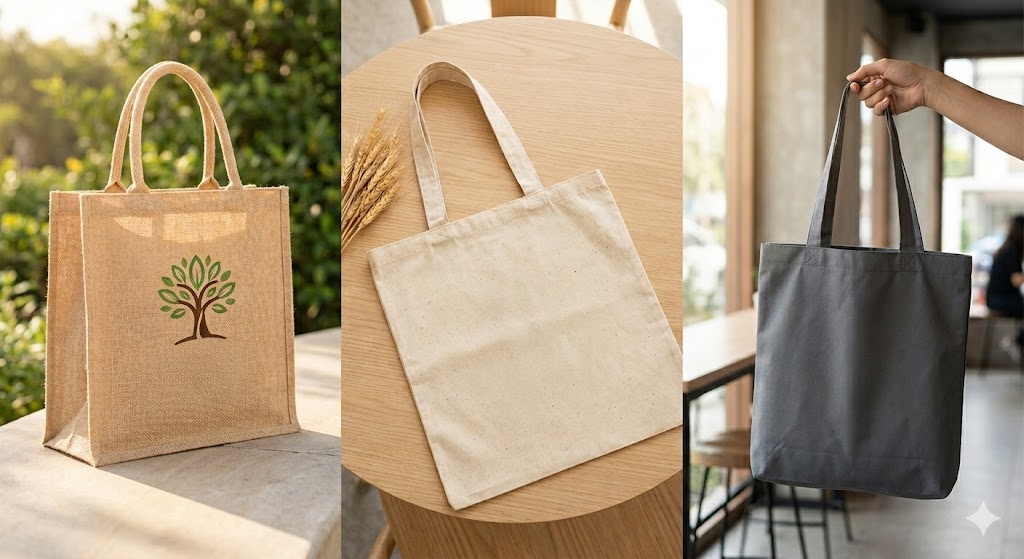
While canvas and cotton are the most popular picks for branded tote bags, several other fabric options work well for niche business needs. These alternatives include jute, polyester, and recycled fabric totes, each with its own clear benefits.
Jute delivers a natural, rustic look ideal for earthy and eco-focused brand styling.
Polyester stands out with water resistance and low cost, perfect for basic promotional giveaways.
Recycled fabric aligns perfectly with circular sustainability missions for eco-conscious brands.
Even so, canvas and pure cotton material still offer the best overall balance of quality, print clarity, and broad customer appeal for standard B2B branding projects.
How to Choose a Canvas or Cotton Tote Bag?
Selecting the right tote bag for your business requires carefully considering several factors. Your choice between using canvas tote bags and cotton tote bags will significantly impact the environmental message you send and how your audience perceives and interacts with your brand.
Here are steps to guide you in making the best decision:
1. Identify Your Purpose
Begin by defining the primary use of excellent material in the tote bags. If you aim for durability and a tote bag that can carry heavier items without wear, a canvas tote bag might be your best bet. For lighter, everyday use with a strong eco-friendly message, cotton tote bags are ideal.

2. Consider Your Audience
Consider who will receive or purchase these cheap tote bags. An audience that values sustainability and environmental responsibility may appreciate cotton tote bags’ natural, biodegradable qualities. Meanwhile, a canvas tote bag might appeal more to those looking for a sturdy bag for daily use or heavier loads.
3. Assess Printability Needs
If your tote bags will feature detailed logos, artwork, or marketing messages printed on them, consider the printability of each material. Canvas provides a textured backdrop that can enhance the dimensionality of prints, whereas cotton offers a sleek surface, perfect for bold and detailed print and logo imagery.
4. Evaluate Environmental Impact
Both materials surpass traditional plastic bags’ eco-friendliness, yet each leaves a distinct environmental mark. Tote bags made from organic cotton, derived from natural sources, could appeal more strongly to brands focused on reducing their environmental impact.
In contrast, canvas bags offer durability, leading to more prolonged use and fewer frequent replacements, of reusable bags.
5. Budget Considerations

Cost is always a factor in business decisions. Cotton tote bags can be more durable and cost-effective than fabric ones, especially when ordered in bulk for promotional events. However, the longevity of fabric and canvas-printed tote bags might offer a better long-term investment for your brand.
6. Maintenance and Care
Ease of care could influence your choice. If the cotton bags used are likely subject to heavy use and need frequent cleaning, the canvas bag’s durability and ease of cleaning might be more appealing. For lighter use, the ease of washing and maintaining cotton bags might be more suitable.
Common Misconceptions When Choosing Canvas & Cotton Tote Bags
Myth 1: A higher GSM always means better quality for bulk orders.
Fact: For B2B orders, consistency of weaving, yarn quality, and color fastness matter far more than thickness. Low-quality canvas with high GSM can still have loose threads, uneven dye, or fail durability tests.
Myth 2: Cotton tote bags have lower MOQs and faster lead times than canvas.
Fact: MOQ and production speed depend on supplier capacity, fabric stock, and customization, not material. Many cotton styles require custom dyeing, which can take longer than ready-made canvas.
Myth 3: Printing costs are the same for canvas and cotton tote bags.
Fact: Canvas’s rough surface often requires more ink or extra pre-treatment, increasing unit printing cost. Cotton’s smooth surface can lower setup fees for fine designs.
Myth 4: Any cotton or canvas bag can pass eco-label requirements (organic, FSC, etc.).
Fact: Real eco-certifications require full-chain of custody documentation. Regular cotton or canvas cannot be marketed as organic, recycled, or FSC-certified without certified raw materials.
Myth 5: For corporate gifting, more durable = better brand experience.
Fact: High-end brands often choose soft, lightweight cotton for premium perception. Overly heavy canvas can feel industrial and cheapen gift value in luxury, beauty, or lifestyle sectors.

Myth 6: If my design works on cotton, it will look identical on canvas.
Fact: Canvas absorbs ink differently, making colors appear darker or matte. Cotton shows brighter, sharper prints. A design approved on cotton may need adjustment on canvas to avoid brand inconsistency.
FAQ
Are there specific quality control standards I should require for canvas vs cotton tote bag manufacturing?
Canvas bags should meet minimum tear strength of 150N and pass 500+ cycle handle stress tests due to their heavy-duty positioning. Cotton bags require colorfastness grade 4+ and seam strength testing at 80N minimum. Additionally, both materials need consistent GSM tolerance (±5%) and thread count verification. Establishing clear quality benchmarks in your supplier agreement prevents batch inconsistencies and protects your brand reputation.
Do canvas and cotton tote bags require different storage conditions before distribution?
Canvas bags are less sensitive to storage conditions and can handle temperature fluctuations and moderate humidity without issues. Cotton bags require climate-controlled storage (humidity below 60%) to prevent mildew and should be kept away from direct sunlight to avoid premature fading. Proper storage significantly impacts the bags’ shelf life and print quality when distributed months later.
What safety certifications do I need for canvas and cotton tote bags in different markets?
Both materials need CPSIA compliance for US markets if targeting children, REACH certification for EU distribution, and food-grade testing if used for groceries. However, canvas bags often require additional flammability testing due to their thickness, while cotton bags may need formaldehyde testing for certain regions. Certification requirements vary by intended use and target demographics.
How can I ensure my custom tote bag design translates perfectly across different fabric textures and weights?
Material selection directly impacts color vibrancy, print durability, and overall brand representation. Our design team creates fabric-specific mockups and provides pre-production samples to ensure your logo and artwork achieve optimal results on your chosen material. We also offer color matching services and recommend printing techniques based on your design complexity, helping you maintain consistent brand standards across all marketing materials.
Conclusion
We’ve broken down the key differences between canvas and cotton tote bags to help you match the right material to your brand and business needs. Canvas offers durability for heavy use, while cotton delivers soft, eco-friendly appeal for daily promotions.
Your choice reflects more than just material — it shows your brand’s focus on quality, sustainability, and customer values.
Make the right choice for your branded tote bags, and turn everyday carry items into powerful, eco-friendly brand assets.
Discover the Perfect Canvas Bag for Your Business with Packoi
Ready to transform your brand’s message into a tangible, impactful statement? At Packoi, we specialize in custom packaging and marketing materials that resonate with your audience and amplify your brand’s voice.
Don’t let your brand blend into the background. Stand out with bespoke solutions that capture the essence of your business and speak directly to your customers’ values. Contact us today for a consultation or explore our products to find the perfect fit for your branding needs. Let Packoi be your partner in crafting a memorable, sustainable, and compelling brand presence.