Retail is competitive. Hundreds of products fight for customer attention on every shelf. Display boxes separate your brand from the noise. They highlight new items, promote seasonal campaigns, and give older products a fresh spotlight.
Used correctly, they make shoppers stop, notice, and interact with your brand. This article explains what display boxes are, why they matter, their types, benefits, and the five rules that make them effective. By the end, you’ll know how to design display boxes that turn browsers into buyers.
What Is a Display Box?
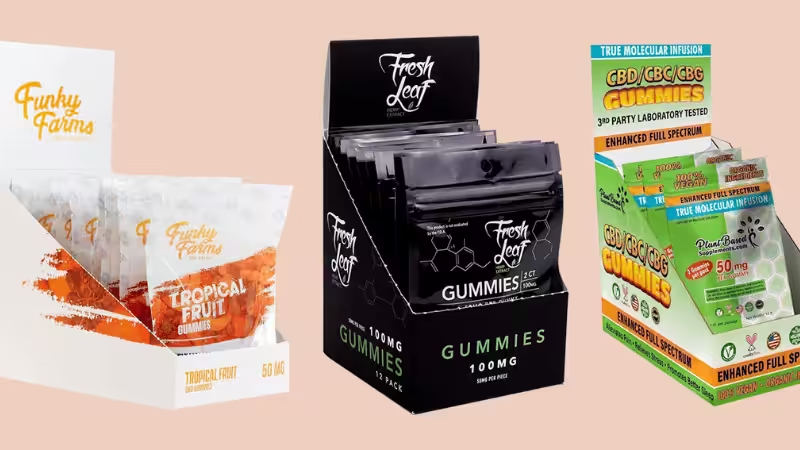
A display box is a form of retail packaging that goes beyond protection. Unlike ordinary packaging, its main job is visibility. Imagine a silent, 24/7 salesperson dedicated to your product right at the point of purchase. That’s a display box.
They are placed in strategic retail areas, such as checkout counters, entrances, or aisle ends.
They work by separating your product from competing items. This separation sparks curiosity among customers, drawing them closer. Once they notice, the likelihood of purchase rises significantly. It speaks through its design, placement, and message, encouraging customers to engage with your product.
Why Use Display Boxes? 3 Benefits Backed by Data
If you believe display boxes are unnecessary because you already have product packaging, think again. According to studies by POPAI (Point of Purchase Advertising International), a large portion of purchasing decisions are made in-store. A display box is your best tool to influence those decisions.
1. To Promote Products and Campaigns
The first reason is for promotion, specifically for new products. How will customers know about your new offer without a dedicated display? You might miss out on sales because customers remain unaware. This isn’t just for new products; they are perfect for seasonal marketing campaigns, discounts, or special offers.
Don’t forget to put your brand on that box. Make it visible, so people will know that the new product is from you.
2. To Secure Strategic Positioning
Another benefit is that you can position them strategically. Typical products in a box will just be put on a shelf with other items. It’ll be harder to get the attention of your target customers.
Imagine if your product is displayed separately in a counter display box by the cash register, or in a floor display at the end of an aisle. The chances that people will notice it will be much higher.
3. To Enhance Perceived Value
Finally, putting your products in well-designed display boxes can increase their perceived value. The design gives you space to highlight the product’s important features and benefits.
Use the display box to tell a quick story. Put your brand logo and name prominently. By highlighting the best parts of the product, you’re increasing its value in the eyes of your customers.
The 3 Main Types of Display Boxes
Display boxes come in many styles, but three dominate retail spaces. Each type serves a unique role.
1. Cardboard Display Boxes
If you’re looking for versatility in terms of the display box design, this is the right option for you. Cardboard display boxes are the most versatile. They can be made in almost any shape or style. Since they use paperboard materials, the surface is easy to print on, which means you can add bold graphics, patterns, or promotional messages.
- Key benefits: Low cost, eco-friendly, flexible design options, and easy to recycle.
- Best use: Promoting seasonal products, discounts, or short-term campaigns where cost-effectiveness is important.
2. Counter Display Boxes (POP Displays)
Regarding positioning, counter display boxes are the best option to promote your products. As the name suggests, a counter display box sits on the checkout counters of retail stores. It’s sometimes called the POP (point of purchase) display. The idea is to entice customers into an impulse buy before they pay.
While counter display boxes are commonly placed near cash registers, they could also be placed in any high-traffic area of a store.
Make these boxes eye-catching and convincing. You only have a few seconds to win over the customer as they wait in line or for their change. Make every design element count, so they’ll decide to add your product to their purchase.
- Best for: Small, lightweight items like cosmetics, lip balms, candy, snacks, batteries, and gift cards.
- Design Tip: Make these boxes eye-catching and convincing. You only have a few seconds to win over the customer. Make every design element count.
3. Floor Display Boxes
Unlike counter displays, these are larger, freestanding floor displays. They could be near the cash register, the entrance, or positioned at the end of aisles.
These are great for big-box stores, supermarkets, or even trade shows. Since the box is big, it’s highly visible and works well for creating a “store-within-a-store” experience. When you’re designing these display boxes, make sure you consider the floor space that they’ll occupy.
- Best for: New product launches, seasonal promotions, larger or heavier items, and selling products in bulk.
- Design Tip: Consider the floor space they’ll occupy. The design should be eye-catching but not an obstruction. Retailers won’t use a display if it creates a tripping hazard.
Counter vs. Floor Displays: Which Is Right for Your Product?
Choosing between a counter and a floor display depends entirely on your product, goals, and budget. Here’s a simple comparison to help you decide:
Feature | Counter Display Box | Floor Display Box |
Placement | Checkout counters, service desks | High-traffic areas, aisle ends, store entrances |
Best For | Small, light, impulse-buy items | New launches, larger products, high-volume sales |
Visual Impact | Small and direct, targets waiting customers | Large and immersive, grabs attention from a distance |
Typical Cost | Lower per-unit cost | Higher per-unit cost due to size and material |
Beyond Cardboard: A Quick Guide to Materials
While cardboard is common, the right material reinforces your brand image and ensures durability.
Corrugated Cardboard
This is the industry standard for floor displays and shipper displays. It’s strong, lightweight, and cost-effective. Different thicknesses (flutes) are available depending on the weight of your products.
Paperboard (SBS)
Solid Bleached Sulfate (SBS), or paperboard, is a premium paper-based material. It’s thinner than corrugated board but offers a super smooth surface for high-quality printing. It’s ideal for counter displays holding lightweight cosmetic or pharmaceutical products.
Acrylic or Rigid Plastics
For a more permanent, high-end look, materials like acrylic are an option. They are more expensive and often used for luxury goods like watches, jewelry, or premium cosmetics where the display is meant to be reused for a long time.
5 Actionable Rules for an Effective Display Box Design
You have to put together the correct box, from the material to the design. To design display boxes that work, follow these five tips.
Rule 1: Design for the Location
The placement of your box dictates its design. Counter displays can be more informative, as customers waiting in line have time to read. Floor displays in high-traffic aisles need to be visually bold and simple, grabbing attention in a split second. Your brand logo should be prominent so loyal customers can spot you instantly.
Rule 2: Tell a Story, Don’t Just Push for a Sale
Retail display boxes aren’t just for impulse buys. They should encourage repeat purchases. How? By ensuring the design accurately represents the product’s quality and promise. When the product meets the expectations set by the packaging, you build trust and loyalty.
Rule 3: Keep Your Message Clear and Concise
Once you’ve gotten their attention, educate them quickly. Use a strong headline, 2-3 key benefit bullet points, and high-quality product imagery. Don’t clutter the design. Our lead designer at Packoi always advises clients: “If a customer can’t understand what you’re selling in three seconds, you’ve lost them.”
Rule 4: Select Materials That Match Your Brand and Needs
The material you choose says a lot about your brand. If you are a sustainable brand, use eco-friendly materials like recycled cardboard and soy-based inks. If you sell a heavy product, use sturdy corrugated board. The material must be strong enough to last in a busy retail environment.
Rule 5: Focus on Structural Integrity and Easy Assembly
Your display box must be durable enough to withstand shipping and store traffic. It also needs to be easy for store employees to assemble. If it’s too complicated to set up, there’s a chance it will never make it to the sales floor. Always ask your supplier for an assembly instruction sheet or video.
What Do Custom Display Boxes Cost?
The cost of a custom display box depends on several factors. There’s no one-size-fits-all price, but understanding these drivers will help you budget.
- Material: Corrugated cardboard is generally more affordable than premium paperboard or acrylic.
- Size & Complexity: Larger and more complex structural designs require more material and tooling, increasing the cost.
- Order Quantity: The price per unit drops significantly as the order quantity increases due to setup costs.
- Printing & Finishes: Full-color printing is standard, but special finishes like spot UV, foil stamping, or lamination will add to the cost.
- Custom Inserts: If you need custom inserts to hold your products securely, this will also affect the final price.
Our Custom Design & Production Process Explained
Wondering how a display box goes from idea to reality? Here’s a typical workflow:
- Consultation & Quoting: You share your product details, goals, and ideas with us. We provide a detailed quote.
- Structural Design: Our engineers create a dieline (a flat template) for the box structure to ensure it’s stable and fits your product perfectly.
- Graphic Design: Your team (or ours) applies artwork, branding, and messaging to the dieline.
- Prototyping: We create a physical sample for you to test with your product. This is a vital step to check fit and function before mass production.
- Mass Production: Once the sample is approved, we proceed with printing, die-cutting, and finishing your full order.
- Shipping & Fulfillment: We can ship the displays flat-packed (for you to assemble) or fully assembled, depending on your needs.
Frequently Asked Questions About Display Boxes
Q1: What is the typical lead time for custom display boxes?
Generally, production takes 10-15 business days after the final design and samples are approved. This can vary based on order complexity and quantity.
Q2: Can you help with the design if I don’t have a designer?
Yes, most full-service packaging suppliers, including Packoi, offer design services. We can help with both structural design and graphic design for a fee.
Q3: How are display boxes shipped? Are they hard to assemble?
Most display boxes are shipped flat to save on costs and prevent damage. We design them for easy assembly and can provide instruction sheets or videos to guide store staff.
Q4: Can you add custom inserts to hold my products in place?
Absolutely. We can design and produce custom inserts from cardboard, foam, or molded pulp to ensure your products are secure and presented beautifully.
Q5: What is the minimum order quantity (MOQ)?
The MOQ varies by supplier, but for custom printed boxes, it’s often around 250 to 500 units to be cost-effective.
Q6: How do I ensure the printed colors will match my brand colors?
We use the Pantone Matching System (PMS) to ensure color accuracy. For precise matches, we recommend requesting a printed proof during the prototyping stage.
Conclusion
Display boxes are more than packaging. They are marketing tools that increase visibility, strengthen branding, and enhance sales. Whether you use cardboard, counter, or floor displays, the key lies in thoughtful design and placement. By following best practices, you ensure your products not only catch attention but also encourage lasting customer relationships.
Find the Best Display Box Design for Your Products with Packoi
Are you ready to make your products stand out? At Packoi Printing, we design display boxes that balance creativity, sustainability, and function. Our team helps you create eco-friendly and eye-catching designs tailored to your goals.
Contact us today to discuss your project and get a fair quote. Let’s build packaging that attracts customers and strengthens your brand.