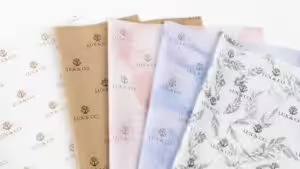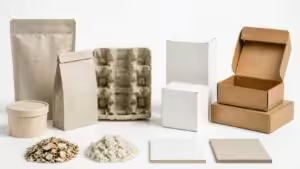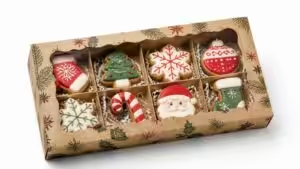
Retailers are paying closer attention to packaging that goes beyond looks. They want solutions that simplify restocking, reduce labor time, and still represent the brand with clarity and confidence. As retail formats shift and supply chains grow more complex, the demand for shelf-ready packaging that balances structural efficiency with visual consistency is rising.
What is Shelf-Ready Packaging (SRP) & Benefits for Retailers and Brands
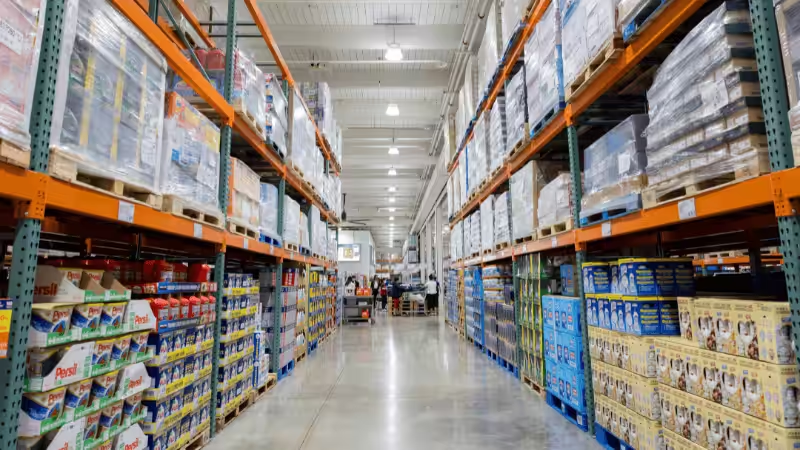
From Stockroom to Shopping Cart: The Core Function of SRP
Shelf-ready packaging (SRP), also known as retail-ready packaging, is designed to move products from the warehouse to the store shelf with minimal handling. It allows staff to stock products quickly without unpacking individual items.
This packaging serves two jobs at once: logistics and merchandising. While standard packaging focuses only on protection during transit, SRP is designed to perform in the store. It often includes features like tear-away sections and printed branding, turning a shipping carton into a sales display.
The Bottom-Line Benefits: How SRP Drives Efficiency and Sales
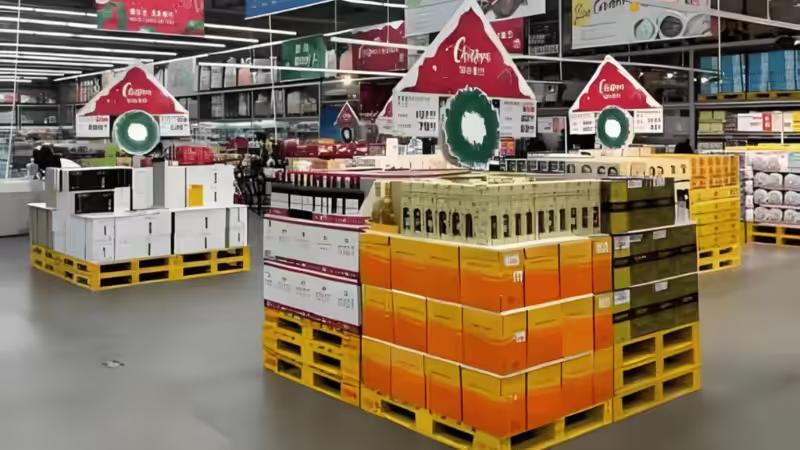
Large retailers like Walmart and Tesco rely on SRP because it delivers tangible results. For brands, adopting this packaging approach offers clear advantages.
Speeds Up Shelf Stocking and Restocking by up to 75%
One of the most valuable benefits of shelf-ready packaging is speed. With perforated openings or lift-off lids, products can be stocked directly onto the store shelves. Staff don’t have to open individual boxes or arrange items manually. This speeds up shelf replenishment, especially in busy retail stores.
Retailers like Walmart, Tesco, and Costco rely on ready packaging to move items from the backroom to the sales floor without delay. In high-volume environments, time savings at the shelf translate into fewer stockouts and better availability for customers.
Reduce Labor Costs & Packaging Waste
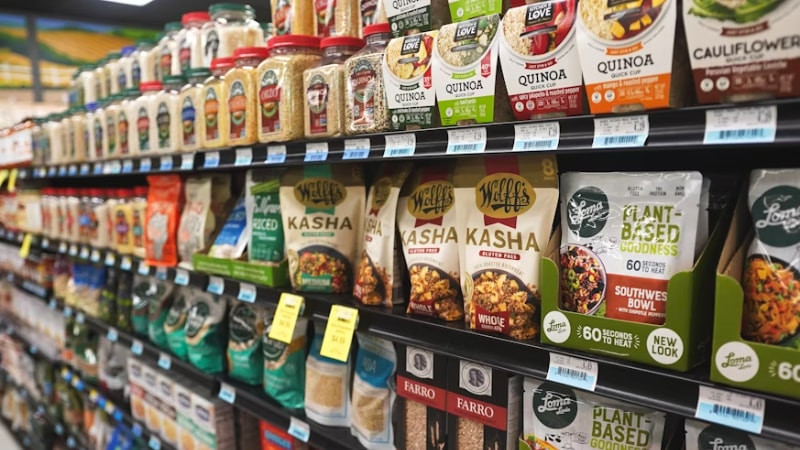
Shelf-ready packaging reduces the workload for store personnel. It minimizes handling, cuts down on time spent opening boxes, and makes disposal easier. There’s less need for box cutters or cleanup.
Many retail-ready packaging solutions also use recyclable materials, helping lower packaging waste and reduce the carbon footprint of store operations. Brands benefit too. Less repacking means fewer damaged goods and fewer returns. This keeps products moving efficiently across the entire supply chain.
Enhance On-Shelf Availability & Brand Visibility
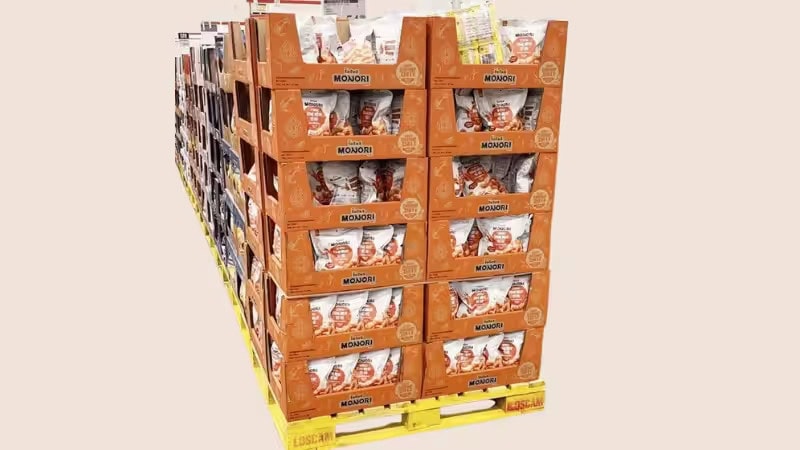
Well-designed SRP keeps your products neat and organized. This consistent presentation reinforces your brand’s visual identity, even in crowded aisles. Clear displays help shoppers find your products faster and can encourage impulse buys.
Improve the Customer Shopping Experience
Consumers may not notice shelf-ready packaging directly, but they feel its effect. Products are easier to reach and displays are cleaner. Plus, restocks happen without disrupting the aisle.
All of this contributes to a better in-store experience. And when customers shop more comfortably, brands have more opportunity to increase sales. It’s a packaging approach that benefits everyone involved, from the warehouse to the checkout.
Common Types of Shelf-Ready Packaging
Shelf-ready packaging comes in many forms, but all serve the same purpose: to simplify the path from pallet to store shelves while supporting brand visibility. Different retail stores and large retailers choose formats that suit their shelving systems, stocking practices, and consumer experience goals.
This table helps you compare these options at a glance to see what might work best for your brand.
| Type | Best For | Key Features | Use Case Highlights | |
|---|---|---|---|---|
| Corrugated Display Trays | Grocery stores, high-turnover items | Open-faced, corrugated board, recyclable materials | Fast stocking, low labor effort, clean shelf appearance | |
| Die-Cut Cartons | Snacks, personal care, small electronics | Tear-away panels, custom die-lines, printed branding | Strong shelf appeal, visible logos, ideal for promotions | |
| Wraparound Trays | Varying SKUs, club stores, seasonal products | One-piece wrap, multi-size fit, easy-opening design | Flexible sizing, reduced SKUs, efficient for large-volume stores | |
| Top-Opening Boxes with Removable Lids | Bulk items, grouped sets, retail stores | Perforated lids, stackable, rigid board | Quick access, shelf-ready on opening, supports bulk and display in one unit |
Below are some of the most widely used styles:
Corrugated Display Trays
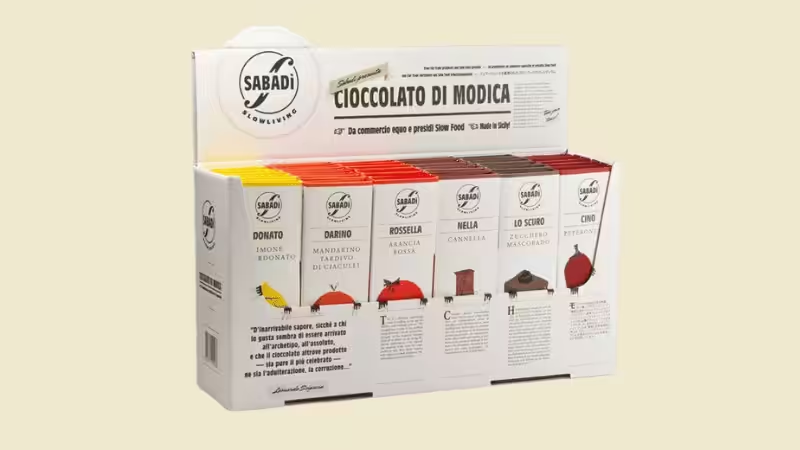
These are among the most common shelf-ready packaging solutions in grocery stores. Made from durable corrugated board, these open-faced trays hold multiple units and can go straight onto the shelf.
Their structure supports fast shelf replenishment and allows for immediate display with minimal adjustments. They also reduce labor costs and simplify sorting for store personnel. Corrugated trays are often made from recyclable materials, helping brands manage packaging waste and reduce their carbon footprint.
Best For: Grocery items, snack bags, and other high-turnover products where fast restocking is needed.
Die-Cut Cartons
Die-cut cartons are custom-shaped packaging units with tear-away panels that expose the product face once opened. These are popular in both retail-ready and shelf-ready packaging boxes, especially for snacks, personal care, and small electronics.
Their sharp design helps products stand out and supports impulse purchases at eye level. While they use slightly more packaging materials, the tradeoff is a more tailored packaging design that supports better customer perception.
Best For: Snacks, personal care items, and small electronics that benefit from strong shelf appeal.
Wraparound Trays
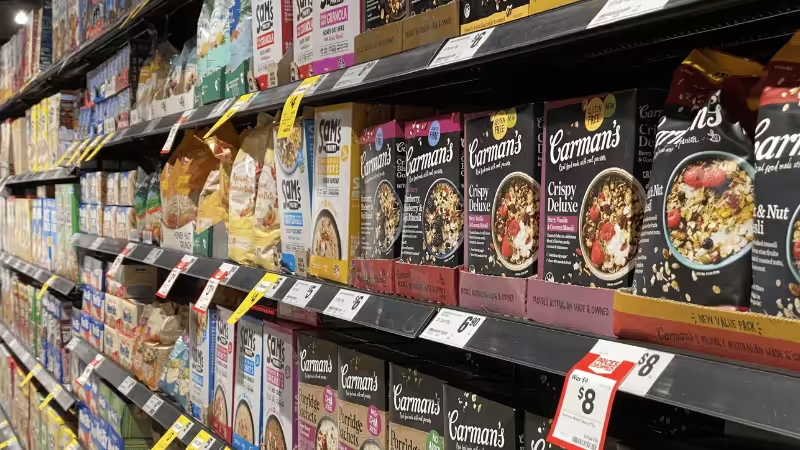
Used often by brands looking to manage transport costs across the supply chain, wraparound trays are formed from a single sheet wrapped around the product.
Once opened, the tray becomes shelf-ready without the need to repackage. These designs allow shelf-ready packaging to function across multiple product sizes, reducing the number of formats needed. They are especially effective in high-turnover environments where retail-ready formats must accommodate rapid stocking.
Best For:Beverage units, varying SKUs, and products sold in club stores where bulk presentation is common.
Top-Opening Boxes with Removable Lids
This format uses a box structure with a perforated lid that peels away cleanly, allowing fast access to the contents. It’s especially useful for items sold in bulk or grouped sets.
The ready packaging keeps products protected during transit but presents them neatly on the shelf once opened. These boxes often serve retail stores that value shelf-ready options with clean lines and stackability. They also support new packaging ideas focused on space use and visibility.
Best For: Bulk items or product sets that need to be both protected and displayed as a single unit.
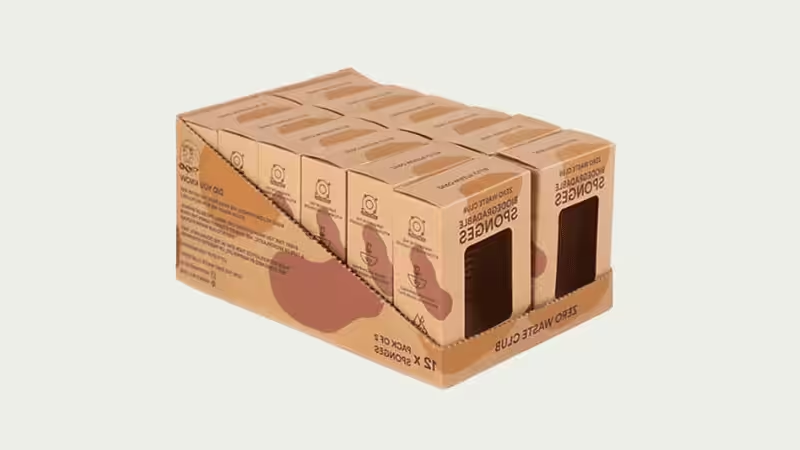
Key Design Elements of Effective Retail-Ready Packaging
Effective shelf-ready packaging considers how products move through the supply chain and how they appear on store shelves. These key design elements make the difference.
Easy-Open Features
Shelf-ready packaging should open without tools. Tear strips, perforated lines, or zip cuts help store personnel open cartons quickly. These features reduce labor costs and allow minimal handling. For example, a tray with a perforated front panel can be opened and stocked in seconds. Such packaging is critical in high-traffic retail stores, where speed matters.
Shelf Appeal and Visibility
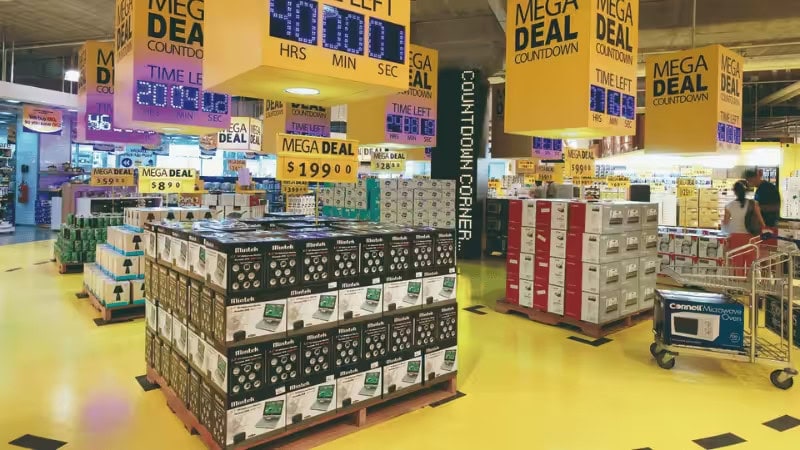
Good packaging draws attention. That’s why strong visual design is essential. Color, structure, and branding elements work together to create shelf appeal.
Shelf-ready packaging helps maintain visual consistency across locations. Brands can print logos, product details, and graphics directly on shelf-ready packaging boxes. When done right, this encourages impulse purchases and improves customer perception.
A well-designed box also uses contrast and layout to highlight key messages. This strengthens brand recognition and improves shelf navigation for shoppers.
Strength and Stability
Shelf-ready designs must survive shipping, stacking, and handling. That means selecting durable packaging materials and testing for strength. If a box collapses, it risks damaging products and hurting sales. Sturdy retail-ready units offer stability during transit and while on display. This reduces breakage, lowers return rates, and supports the entire supply chain.
Barcode Placement and Compliance
Retailers like Walmart and Tesco have strict barcode placement rules. A visible, scannable barcode speeds up receiving and tracking. Retail-ready packaging should position barcodes where staff can scan without opening the box. This supports faster stock checks and inventory updates.
Stackability and Space Efficiency
Stacking is key to maximizing shelf space. Boxes should be uniform, stable, and designed to stack securely. This helps with storage, pallet arrangement, and shelf presentation.
Space-efficient shelf-ready designs reduce transport costs and allow better use of displays. They also support new packaging ideas that reduce waste and increase efficiency without losing impact.
From Concept to Shelf: Your 4-Step Technical Project Plan
Bringing an SRP design to life involves a few technical steps. Planning for them early saves time and money.
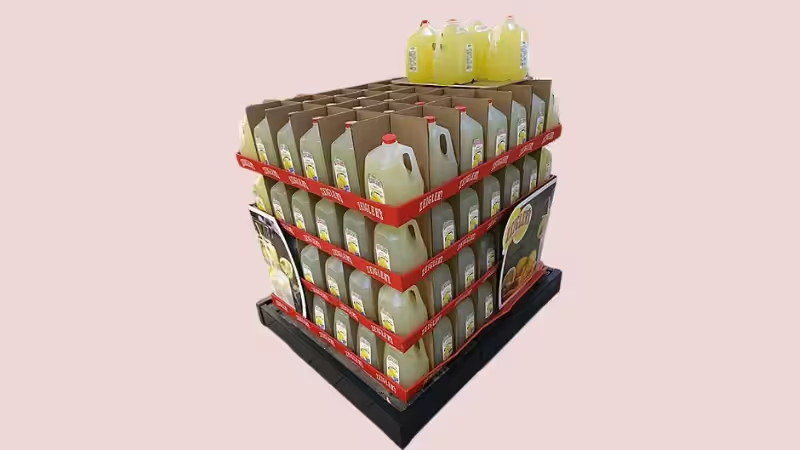
Step 1: Budgeting & Key Cost Drivers
Your budget is influenced by materials, order volume, and complexity. More colors or special finishes will increase the cost per unit, but larger orders often reduce it.
Step 2: Choosing Printing, Coating & Finishing Options
The right finish elevates your brand. Common options include lithography for high-quality graphics and flexography for simpler designs. Coatings like matte or gloss lamination protect the print and change the look and feel.
Step 3: Creating Dielines & Preparing Artwork
A dieline is the technical template that shows all the cut and fold lines for your box. Your designer will create this first. Then, your graphic artist will place artwork, logos, and typography onto the dieline.
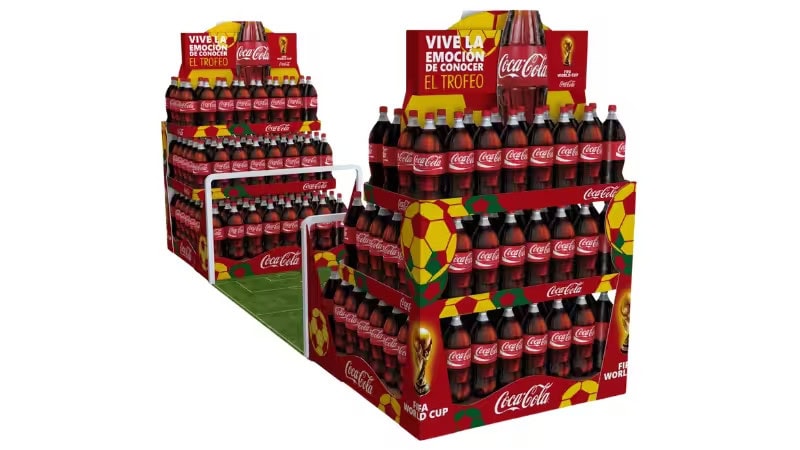
Step 4: Prototyping & Real-World Testing
Always get a physical prototype before full production. This allows you to test the structure, check the print quality, and ensure it opens correctly.
From the Shelves: Real-World SRP Success Stories
Branded shelf-ready packaging acts as a visual ambassador for the company behind it. In competitive retail environments, the strength of brand presentation often shapes both perception and sales.
Consistency across every touchpoint builds trust. When a product moves from the warehouse to the shelf, the ready packaging it comes in should match the brand’s visual identity. Logos, colors, fonts, and layout must all align with the core brand message.
Seeing how other brands use SRP can provide great inspiration for your own design.
How Top Brands Like Nestlé & PepsiCo Win with SRP
- Nestlé Cereals: Uses brightly printed SRP with clear branding. The perforated front panels open cleanly, keeping the display attractive while meeting retailer stocking needs.
- PepsiCo for Club Stores: Tailors its SRP for wholesale. Bulk beverage units come in large, durable wraparound trays with easy-carry features and space-saving designs.
[Packoi Case Study] How We Helped a Snack Brand Increase Sales by 15%
A snack food client needed to improve their presence in a major grocery chain. Their old packaging was slow to stock and looked messy on the shelf. We designed a custom die-cut display carton with bold branding elements. The new SRP reduced stocking time by 60% and created a clean, eye-catching brand block. The result was a 15% increase in in-store sales within three months.
Quick Tips for Standing Out in Crowded Aisles
- Keep your logo and product name visible from multiple angles.
- Test how your colors look under harsh retail lighting.
- Use cutouts that frame your product, not distract from it.
- Design with the shelf in mind, not just the shipment.
The Future of SRP: Trends to Watch in 2026 and Beyond
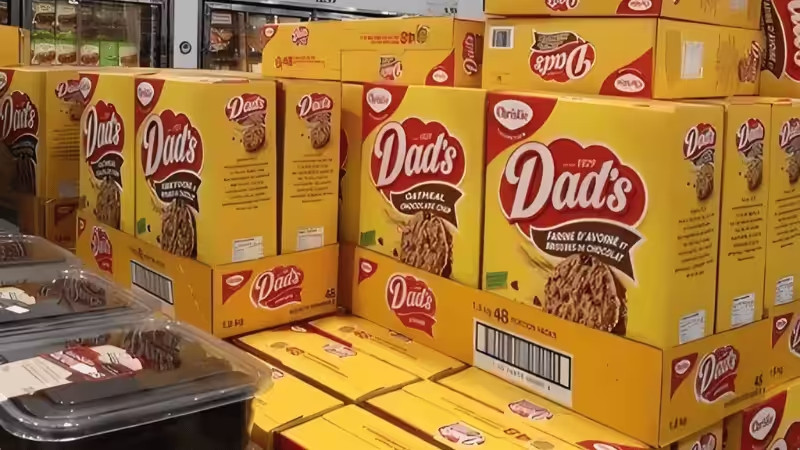
SRP continues to evolve with technology and consumer expectations.
Smart Packaging with QR/NFCTechnology
Brands are adding QR codes to SRP. A quick scan can give shoppers product info, recipes, or discounts right in the aisle.
Sustainability as a Non-Negotiable
Sustainability matters. Retailers and consumers increasingly expect brands to use recyclable materials and renewable resources. Efficient designs that use less material are also gaining popularity.
AI-Driven Shelf Optimization
Retailers are starting to analyze shopping behavior with AI to optimize store layouts. SRP designs will need to be flexible to fit these new data-driven strategies.

Frequently Asked Questions About Shelf-Ready Packaging
Q1:What is the difference between Shelf-Ready Packaging (SRP) and Retail-Ready Packaging (RRP)?
These terms are often used interchangeably, and for most purposes, they mean the same thing. RRP is a broad category for packaging that arrives ready for sale, while SRP is a subset specifically designed to function as a shelf display unit.
Essentially, all SRP is RRP, but not all RRP (like a large pallet display) is shelf-ready packaging.
Q2:Is SRP suitable for heavy or fragile products?
Absolutely. SRP can be engineered for heavy items like beverage cans or fragile products like glass jars by using high-strength corrugated board and protective internal structures.
The key is a robust structural design that prevents crushing during transit and remains stable on the shelf. Prototyping and testing are essential to ensure the packaging performs correctly for your specific product.
Q3:What’s the very first step to take when starting an SRP project?
Before any design work begins, the absolute first step is to obtain the latest packaging guidelines from your target retailer. Major chains like Walmart, Costco, and Tesco have specific, non-negotiable rules for dimensions, materials, barcode placement, and structural integrity.
Starting with these requirements in hand will save you from costly redesigns and ensure your product gets accepted.
Q4:What is the most common mistake brands make with SRP design?
The most common mistake is creating packaging that is difficult for store staff to open or for customers to shop from, violating the “Easy to Open” and “Easy to Shop” principles. This often happens when a design focuses too much on shipping protection and not enough on the in-store experience.
A professionally designed SRP balances structural strength with user-friendly features like clean perforations and clear product access.
Conclusion
Shelf-ready packaging supports faster shelf stocking, reduces waste, and strengthens brand presentation across retail formats. It’s a practical solution that improves both efficiency and in-store visibility.
As retailers move toward more sustainable and omnichannel strategies, retail-ready packaging will continue to play a critical role in meeting operational goals and shopper expectations.
Ready to Design the Shelf? Let’s Build Your SRP Solution
Shelf-ready packaging is a powerful tool to improve efficiency, strengthen your brand, and grow sales. It solves problems for both retailers and brand owners, making it a smart investment in a competitive market.
Ready to Design Shelf-Ready Packaging That Gets Noticed? Get a free, no-obligation quote and a complimentary design review from our SRP specialists. Let’s make your product the star of the shelf.