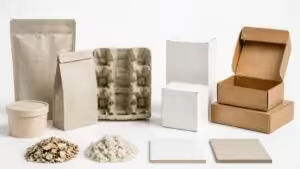
Without realizing it, magazines are a prevalent yet essential part of our lives.
Magazines inform us about various topics, including politics, style, entertainment, and news. By highlighting issues and trends, they help us understand the current state of the world.
Over 73% of respondents prefer reading magazines in quality print to reading on a mobile device. Even though digital technology has advanced significantly, those over 25 still prefer information on paper.
Continue reading for a comprehensive breakdown of the many steps of printing a magazine. We have all the knowledge you need to print your magazines, including choosing the best type of printing paper, essential factors to remember, and how to print a magazine that grabs attention quickly!
Best Paper Types for Magazine Printing
Many factors, like your marketing goals and budget, will determine the paper types you choose for your magazine. What kind of magazine are you producing, and what are your marketing goals for its publication? These factors will also clear your paper type choice regarding weight, quantity, size, and texture.
Below are some of the best types of magazine printing papers to choose from:
1. Gloss Paper

Many magazines use gloss-coated paper for printing because of its velvety smoothness and glossy sheen. Its unique coating deters ink absorption, which sharpens visuals, brings out brilliant colors, and guarantees vivid, clear images.
This high-quality color reproduction makes glossy art paper perfect for photographs, illustrations, and striking promotional materials. Because it brings images to life with a spectacular visual impact and improved aesthetic appeal, stylish periodicals, lifestyle journals, and upscale catalogs frequently use this material.
Pros
- High-Quality Visuals: Enhances vibrancy and sharpness.
- Professional Appearance: Offers a sleek, polished finish.
- Durability: Resistant to tearing and damage.
- Long-Lasting Colors: Retains color over time.
- Sharp Print Quality: The coated surface helps keep ink on the paper surface, producing sharper text and images.
Cons
- Glare Issues: This can cause reading difficulties.
- Fingerprints and Smudges: Shows marks easily.
- Recyclability: Recyclability can depend on the coating, inks, and local recycling systems.
2. Matte Paper

On the other hand, matte art paper gives off an air of subtle elegance in printing magazines. This material is perfect for publications prioritizing a refined aesthetic, thanks to its non-reflective surface that effectively avoids glare.
Publications emphasizing art, literature, or design commonly use matte art paper. The text-heavy content can be made more readable with its softer finish without sacrificing image quality.
Out of all the paper varieties for marketing materials, matte paper is the most muted. In most cases, matte paper is more readable and accessible to the eyes. Printing books and other large-scale reproductions on matte-coated paper is a common practice. Matte paper is not only simpler to write on, but it also makes text stand out more.
Pros
- Reduced Glare: Easier to read under various lighting conditions.
- Cost Considerations: Pricing varies by paper grade, weight, quantity, and supplier.
- Eco-Friendly: Easier to recycle and often more environmentally friendly.
- Tactile Feel: Offers a pleasant, non-reflective texture.
- Minimal Smudging: Less prone to showing fingerprints and smudges.
Cons
- Less Vibrant Colors: Images and colors may appear less vivid.
- Perceived Quality: Can seem less luxurious or high-end.
- Durability: More susceptible to tearing and damage.
- Ink Absorption: Higher absorption can lead to duller images.
3. Uncoated Paper

Pros
- Natural Feel: Uncoated paper offers a more organic, tactile experience.
- Eco-Friendly: Easier to recycle and often made from recycled materials.
- Cost-Effective: Typically cheaper than coated papers.
- Writeability: Easy to write on with pens and pencils.
- Non-Reflective: Reduces glare, making it easy to read.
Cons
- Perceived Quality: This may not convey a high-end look.
- Maintenance: Shows dirt and wear more readily
- Less Vibrant Colors: Images and colors appear duller.
- Lower Durability: More prone to tearing and damage.
4. Satin Paper

Paper with a satin finish or coated paper is the ideal medium between glossy and matte, allowing for rich hues and minimal reflection. This satin-coated paper is perfect for crisp photos free of distracting glare. Publishers frequently print coffee table books on satin-finished sheets.
Pros
- Balanced Finish: Combines glossy and matte, offering a subtle sheen.
- Vibrant Colors: Enhances image vibrancy without excessive glare.
- Professional Look: Satin-coated paper provides a high-quality, polished appearance.
- Fingerprint Resistance: Less prone to showing fingerprints compared to glossy paper.
- Durability: Fairly resistant to wear and tear.
Cons
- Higher Cost: More expensive than matte and uncoated paper.
- Limited Availability: Less common, which might limit options.
- Environmental Impact: It is harder to recycle due to the coating.
- Glare: It can still cause glare, though less than glossy paper.
5. Biodegradable & Recycled Paper

Beyond surface finishes, recycled and responsibly sourced paper can be a good choice for publishers with sustainability goals. Recycled-content paper can contain different percentages of recovered fiber depending on the paper grade and supplier. When selecting a sustainable option, consider recycled content, sourcing certifications, print requirements, and the end-of-life options available in your market.
To keep the regenerative cycle going, new fibers sourced from sustainably managed forests are needed as recycled paper fibers deteriorate after a while. Thus, there are cases where using virgin paper is the more environmentally friendly option.
Pros
- Eco-Friendly: Breaks down naturally, reducing environmental impact.
- Sustainable: Often made from renewable resources.
- Positive Image: Enhances the publisher’s reputation for environmental responsibility.
- Recyclable: Can often be recycled, adding to its sustainability.
- Innovative Appeal: Attracts eco-conscious readers.
Cons
- Higher Cost: Generally more expensive than standard papers.
- Availability: Less readily available, limiting options.
Magazine Paper Comparison Table
Paper Type | Best For | Image Quality | Readability | Typical Use |
Gloss | Image-heavy magazines | Excellent | Moderate due to glare | Fashion, lifestyle, product magazines |
Matte | Text and image balance | Good | Excellent | Editorial, art, and design magazines |
Satin | Premium magazines needing balanced performance | Very good | Good | Coffee-table and corporate publications |
Uncoated | Text-heavy or natural-looking publications | Moderate | Excellent | Literary and eco-focused magazines |
Recycled Paper | Sustainability-focused projects | Varies by paper grade | Good | Eco-conscious brands and publishers |
How to Choose the Right Paper for Magazine Printing

Below are some essential factors to consider when you are choosing magazine paper:
Paper Finish
The way the paper looks and feels on the surface is called its finish. As mentioned above, various finishes exist, from glossy to matte, each with its own pros and cons.
Before choosing a finish for magazine printing paper, consider the magazine’s design and tone. Glossy art paper is perfect for those who want their designs to stand out. Choose matte art paper if you’re going for a classier, more sophisticated look.
Paper Size
You can get magazines in sizes ranging from those of a little paperback book to those of a major newspaper. Standard sizes are usually the most cost-effective, while other custom sizes are still an option.
The optimal way of binding your magazine will depend on its page count. Imagine a regular office printout folded in half or doubled when considering the paper size. Printers have set up standard printing sizes to get the most out of their paper rolls.
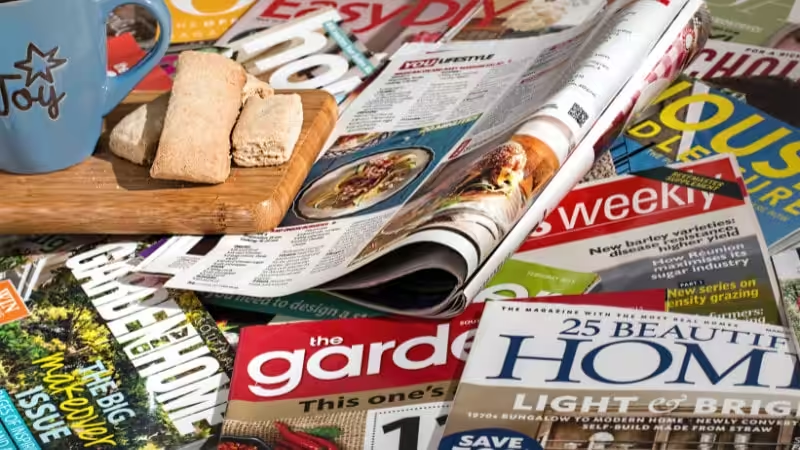
Big magazines are a great option to hand out free copies of your magazine at places like coffee shops and bookstores. For direct distribution or mailing, smaller publications are ideal.
Paper Weight
Another crucial consideration is the magazine paper’s weight. It dictates the thickness and durability of the paper. Magazines with a greater page count benefit from lighter paper weight since they are more flexible.
One common option for the inside pages of a typical magazine is 100# gloss text (150 GSM). Covers are typically made of thicker paper, ranging from 80 to 100# gloss cover (218 to 270 GSM) to provide longevity and a high-quality finish.
Magazines with fewer pages or cover pages that need extra durability can benefit from heavier-weight papers, which offer a more robust feel. Thinner paper can be used in a counter situation. When deciding on a paperweight for your magazine, keep its intended use and expected lifespan in mind.
Text Paper vs Cover Paper
Magazine interior pages and covers are usually specified differently. Interior pages commonly use text stock, which is lighter and more flexible for folding and binding. Covers usually use heavier cover stock to provide more protection and a stronger first impression.
When comparing paper weights, remember that pound weight can vary between text and cover stocks because they use different basis sizes. GSM provides a more consistent way to compare paper weight across different paper types and suppliers.
Opacity and Show-Through
Paper opacity affects how much text or images can be seen through the opposite side of a page. Thin or lightweight paper may show more print-through, especially when magazines contain large images or dark colors. If your magazine has heavy ink coverage, choose a paper stock with sufficient opacity and test a printed sample before confirming a large production run.
Your Budget

A magazine’s budget is typically a major consideration. Dealing with magazine printing paper requires striking a balance between cost and quality. Prices for different varieties and weights can vary greatly.
Decide on how much money you can spend on magazine publishing, taking magazine paper for printing costs into account. Higher-quality papers could be more costly but also last longer and look better. Choose your paper quality with your intended readers and the value you wish to convey in mind.
Page Count
Another factor to consider when selecting the paper type is the amount of magazine paper for the printer. Magazines with more pages may need lighter-weight papers to maintain an acceptable overall weight.
However, choose higher-weight papers for publications with fewer pages for a more opulent feel. While deciding on a paper for your magazine, keep its thickness and weight in mind.
Color and Ink Requirements
Many magazines rely on full color printing because photographs, illustrations, and branded graphics are important parts of the final design. Commercial printing commonly uses CMYK—Cyan, Magenta, Yellow, and Black—to reproduce full-color images. Your paper choice can also affect how colors appear, so it is a good idea to review a printed proof or sample before approving a large production run.
Durability and Intended Use
The best paper also depends on how your magazine will be used. A short-term promotional magazine may work well with lighter paper, while a coffee-table publication or frequently handled catalog may benefit from heavier and more durable stock.
If the magazine will be mailed, distributed at events, or stored for a long time, consider both paper durability and shipping weight. Choosing the right balance can help control costs without sacrificing the quality readers expect.
Magazine Formats and Binding Options
Magazines are available in a wide variety of formats. Among the most common, here are the top four:

1. Saddle Stitch
Saddle-stitched magazines are typically best suited to lower page counts. The practical page limit depends on paper thickness, paper weight, and the printer’s production requirements. Pages are usually planned in multiples of four, making saddle stitching a cost-effective option for thinner magazines, catalogs, and promotional publications.
2. Perfect Bound
Perfect-bound magazines use adhesive to attach the interior pages to the cover instead of staples. They are generally better suited to higher page counts than saddle-stitched magazines and provide a clean, professional spine. Production time may also be longer because the adhesive needs to set before the finished magazines are shipped.
3. Case Bound
Case-bound magazines take the premium feel a step further than perfect binding. The internal pages are typically sewn or glued together and then attached to a rigid, durable cardboard cover. This is highly recommended for high-end annual publications, commemorative editions, or coffee-table style magazines.
4. Spiral Bound
Spiral-bound magazines are among the most uncommon general format kinds. This is because they are more commonly seen in promotional materials for business-to-business and business-to-consumer audiences.
How Paper Choice Works With Your Printing Method
Your printing method can affect the most practical paper choices for your project. Digital printing is often suitable for shorter runs and projects that need faster turnaround, while offset printing is commonly used for larger quantities where consistent color and lower unit costs become more important.
Not every paper stock performs the same way on every printing system. Before production, confirm that your selected paper, coating, weight, and finish are compatible with the printing method. For larger orders, reviewing a printed proof or paper sample can help avoid unexpected color or texture differences.
Preparing Your Magazine for Printing

Getting things correctly the first time is essential when you are all set for magazine printing. Preparing for a magazine’s printing is the most critical step. Here is everything you need to follow:
Confirm Your Paper and Print Specifications
Before production, confirm the magazine size, page count, paper stock, paper weight, finish, binding method, and print quantity. These specifications affect both print quality and production costs. Requesting a paper sample or printed proof can also help you check color reproduction, readability, and the overall feel before approving the full print run.

Confirm Binding and Finishing
Your binding choice should match your page count, paper thickness, and intended use. Saddle stitching is commonly used for lower page counts, while perfect binding is better suited to thicker magazines. Additional finishing options, such as lamination or specialty coatings, can also improve durability and change the final appearance of the publication.
Sustainable Magazine Paper Options
Much of the negative effects on the environment caused by magazines come from the production side of the industry. To ensure the longevity of your publications, consider the following tips:
Recycled and Responsibly Sourced Paper
Paper can be renewable and recyclable when sourced and managed responsibly. Publishers can choose recycled-content paper or paper from responsibly managed forest sources based on their print requirements. Lighter paper grades can also reduce material use and shipping weight while still providing acceptable opacity and durability.
Sustainable Printing Practices
When comparing printing suppliers, ask about paper sourcing, production waste, ink options, and recycling practices. Choosing an appropriate paper weight can also reduce unnecessary material use. The most suitable sustainable option should still meet your requirements for print quality, opacity, durability, and budget.

Frequently Asked Questions About Magazine Paper
Q1:What is the best paper for magazine printing?
The best paper depends on your magazine’s content and intended use. Gloss paper works well for image-heavy publications, while matte paper is often preferred for readability. Satin paper provides a balance between image quality and glare, while uncoated paper offers a more natural feel.
Q2:What GSM is best for magazine interior pages?
The right GSM depends on page count, opacity requirements, and the overall feel you want to create. Lighter paper can help reduce bulk and shipping weight, while heavier paper may improve durability and reduce show-through. Requesting a sample is the best way to compare options for your specific project.
Q3:What is the difference between text paper and cover paper?
Text paper is generally lighter and more flexible, making it suitable for magazine interior pages. Cover paper is heavier and more rigid, making it better suited to covers that need extra durability. Because text and cover paper use different basis weight systems, GSM is often easier to compare across paper types.
Q4:Does paper opacity affect magazine print quality?
Yes. Higher opacity can reduce show-through, especially when pages contain dark colors, large photographs, or heavy ink coverage. Paper weight alone does not determine opacity, so checking a printed sample can help you make the right choice.
Q5:Can I customize magazine paper, size, and binding?
Yes. Commercial printing projects can be customized based on paper type, weight, finish, magazine size, page count, binding method, and print quantity. Working with a printing supplier can help you select specifications that balance appearance, durability, production requirements, and budget.
Conclusion
Choosing the correct magazine printing paper should be one of your top priorities when you have limited time to do it before you begin your next campaign.
If you want your finished product to make an impression on your clients that lasts, choose the right paper type, paper quality, format, and printing process.
Choose the Right Paper for Your Magazine
Choosing the right magazine paper means balancing print quality, readability, durability, page count, and budget. Packoi can help you compare paper options, finishes, sizes, binding methods, and other production specifications for your custom printing project. Contact us to discuss your requirements and request a quote or sample.