
Shipping large items can feel overwhelming. Between high costs, bulky packaging, and the risk of damage, it’s easy to make costly mistakes. The good news is, with the right strategies, you can move oversized packages both safely and affordably.
This guide simplifies the process. We’ll show you how to ship large packages, explain the key cost factors, and share tips to help you save.
First, What Qualifies as a ‘Large’ or ‘Oversized’ Item?
Let’s start with the basics. The definition of a “large package” is set by the shipping carriers themselves.
Understanding Carrier Weight and Size Limits
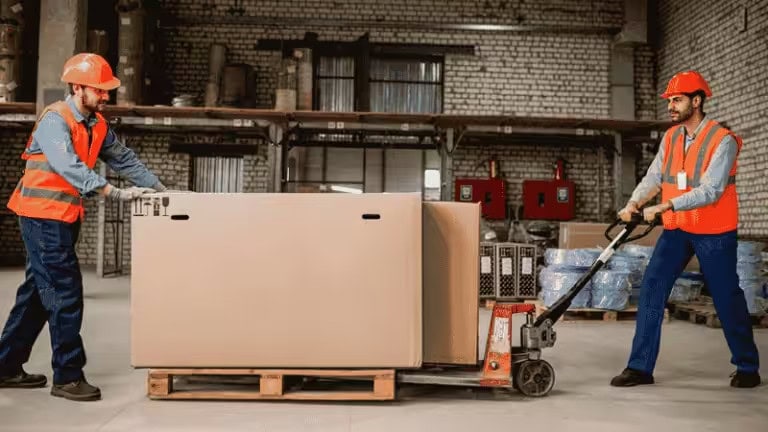
Generally, carriers consider any package over 25 kg (55 lbs) to be a large package. These shipments require a special heavyweight label. This label tells the handling team that the box is too heavy for one person to lift safely, often requiring two people or a forklift. This extra handling is why the cost to ship large items increases significantly.

If your package exceeds 70 kg (150 lbs), you will likely need to use freight shipping, which is a different service with its own pricing.
Here is a quick comparison of weight limits for popular carriers:
| Shipping Carriers | FedEx | UPS | DHL | USPC |
|---|---|---|---|---|
| Large Shipping Weight Limit | 34 kg / 75 lbs | 31.5 kg / 70 lbs; 25 kg / 55 lbs (EU) | 25 kg / 55 lbs | 18 kg / 40 lbs |
| Ground Shipping Weight Limit | 68 kg / 150 lbs | 68 kg / 150 lbs | 70 kg / 154 lbs | 70 kg / 154 lbs |
| Freight Shipping Weight Limit | 9,072 kg / 20,000 lbs | No Defined Limit | 3,000 kg / 6,600 lbs | 70 kg / 154 lbs |
The Difference Between Large, Heavy, and Oversized Packages
To make things clear, packages are often grouped into three categories:
- Large Items: These packages are bulky but not necessarily heavy. Their cost is mainly determined by size (dimensional weight). Think of furniture or large appliances.
- Heavy Items: These packages have a high actual weight compared to their size. Think of machinery or gym equipment.
- Oversized Items: These packages exceed a carrier’s standard length and girth limits, leading to extra fees.
The Core of Your Cost: Why Dimensional (DIM) Weight Matters Most
Dimensional weight is the most common reason for surprise shipping costs. Carriers use it to charge for a package’s size, not just its actual weight. You’re paying for the space your box takes up in a truck or plane.
How to Calculate DIM Weight and Why It Can Cost You More

Here’s a simple way to understand it.
First, calculate your box’s volume in inches: Length x Width x Height.
- Example: A 12x12x12 inch box has a volume of 1,728 cubic inches.
Next, divide the volume by a carrier’s “DIM divisor.” For FedEx and UPS, this is often 139 for daily rates.
- Example: 1,728 / 139 = 12.43 lbs.
This is your DIM weight. The carrier will then compare the DIM weight to the actual weight and charge you for whichever is higher. This is why a large, light box of pillows can cost more to ship than a small, heavy box of books.
H3: Length + Girth: The Limit You Can’t Ignore
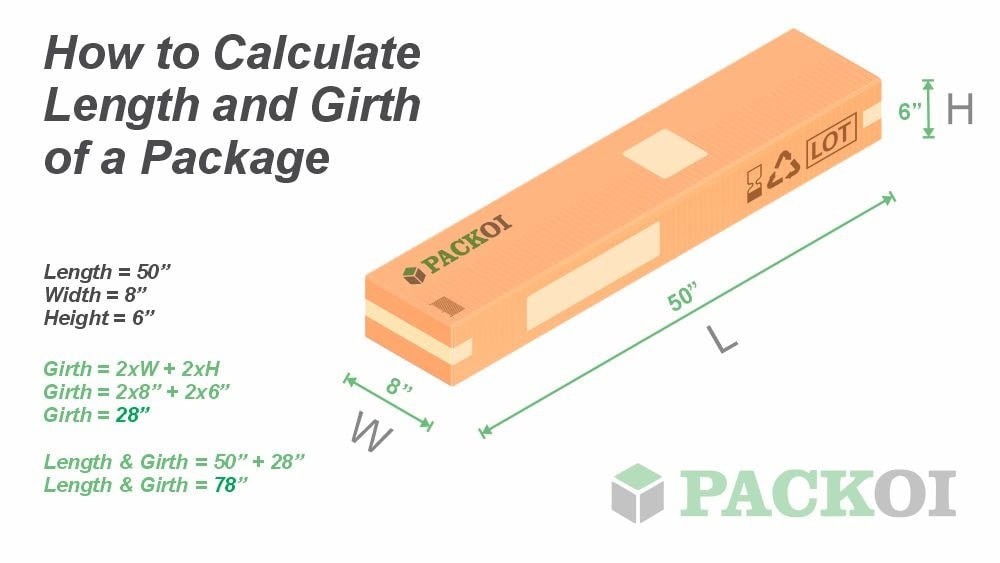
Carriers also use a measurement called “Length + Girth” to control package size.
- Girth = (2 x Width) + (2 x Height)
- Length + Girth = Length + Girth
Each carrier has a maximum limit for this measurement. If your package exceeds it, you’ll face a heavy surcharge or the carrier may refuse to ship it.
| Shipping Carriers | FedEx | UPS | DHL | USPC |
|---|---|---|---|---|
| Length Limit | 119 inches | 96 inches | 108 inches | 108 inches |
| Length + Girth Limit | 165 inches | 130 inches | 130 inches | 130 inches |
UPS, for example, has a surcharge policy for packages that exceed its limits.
The 8-Step Process for Packing and Shipping Large Items
Follow these eight steps for a smooth and safe shipping experience.
Step 1: Get Accurate Measurements & Weight
Before you do anything else, measure the length, width, and height of your item and weigh it. These numbers are essential for calculating costs and choosing the right service.
Step 2: Choose the Right Box (Custom vs. Standard)
Carriers offer predefined box sizes, like a standard set size of 18x16x16 inches. These can be good for flat-rate shipping if your items fit well. However, for large or awkwardly shaped products, a custom-sized box is better. It minimizes wasted space, which reduces your dimensional weight and lowers costs.
Step 3: Pack Your Item Securely in a Sturdy Box

Your box is the first line of defense. For heavy items, use a double-layer cardboard. This provides extra strength and prevents the box from tearing during transit. For extremely heavy items like machinery, a wooden crate is the best option.
Step 4: Use the Right Padding and Filler Material
If your item has fragile parts or empty space inside the box, you need padding. Materials like bubble wrap or custom foam inserts prevent the item from shifting and absorbing impacts.
Are you shipping any hazardous materials? Hazardous doesn’t mean illegal or dangerous. The term can be applied to any item that is acidic, flammable, poisonous, or refrigerated.
For items with potentially hazardous materials (like batteries or liquids), check the UPS guidelines to ensure you are packing them correctly and safely.

Step 5: Seal Everything with Heavy-Duty Tape
Use strong, pressure-sensitive packing tape to seal all seams. Good tape adds structural support to the box and is often tamper-evident, showing if the package has been opened. We recommend clear tape so you don’t accidentally cover shipping information.
Step 6: Measure and Weigh the Final Packed Box

Once your item is packed and sealed, measure and weigh it again. The box, tape, and filler materials all add weight and can slightly increase the dimensions. This final measurement is what the carrier will use for billing.
Step 7: Apply the Correct Shipping Labels
Clear labeling ensures your package gets where it needs to go without delays. Proper shipping labels are especially important for international shipping.
Essential Labels Checklist (Fragile, Heavyweight, This Side Up, etc.)
- Fragile Label: For glass, electronics, or delicate items.
- Heavyweight Label: For any box over 25 kg (55 lbs).
- This Side Up Label: For items that must stay upright, like those with liquids.
- Hazardous Material Label: Required for items with chemicals or flammable elements.
- International Shipping Label: Includes customs forms, barcodes, and tracking.
Step 8: Local vs International Shipping Rates

With everything set and ready to go, it’s time to go over your shipping options. For domestic shipping, you are limited to trucks, railways, or airplanes.
Railway transport is the cheapest way to move goods around the country. Here, weight doesn’t play a big role in estimating carrier rates. You can ship heavy or oversized items from one end of the country for a reasonable cost. Trucks are used for small to medium-sized items and result in short transit times.
International shipping is more complicated. Sea-based transport is the go-to shipping option. You get cheap shipping, but at the cost of time. Even with modern logistics advancements, it can take several days or even months to ship packages.
Alternatively, shipping internationally by air takes less time but costs significantly more.
Choosing the Best Carrier: UPSvs. FedEx vs. USPSvs. Freight
Choosing the right carrier depends on your package’s size, destination, and your budget.
Comparing Top Carrier Services for Large Items
USPS: Best for Affordable Domestic Shipping (Ground Advantage)
The United States Postal Service (USPS) offers the Ground Advantage service. For U.S. businesses shipping domestically under 70 lbs, this is often the most cost-effective option.
UPS& FedEx: Reliable for Speed, Tracking, and Business Needs
UPS and FedEx are excellent for business shipping. They offer detailed tracking, guaranteed delivery times, and robust services for heavy and oversized packages. They are typically more expensive but provide more reliability.
DHL: The Go-To for International Shipments
DHL specializes in international shipping. They have a strong global network and are experts at navigating customs, making them a top choice for sending large items overseas.
When Do You Need to Use Freight Shipping?
You need freight shipping when your item is too large or heavy for standard carriers. This usually applies to shipments over 150 lbs (70 kg) or items that are palletized. Freight is handled differently, often moving from hub to hub via large trucks.
Cheapest International Shipping Options (By Popular Regions)
Shipping large items internationally can be complex. For shipping to Canada, ground services from UPS or FedEx are often competitive. For destinations in Europe or Asia, air services from DHL or freight forwarders are common choices. Always compare rates, as they can vary widely.
6 Pro Tips to Ship Large Items for Less
Here are some practical ways to reduce your shipping costs.
Tip 1: Always Use Online Shipping Calculators to Compare Rates
Before you ship, use the online calculators on the UPS, FedEx, DHL, and USPS websites. Enter your package details to get instant quotes and find the best price for your route.
Here are links to UPS, DHL, FedEx, andUSPS shipping calculators.
Tip 2: LeverageFlat-Rate Boxing When Possible
If you can fit your items securely into a carrier’s flat-rate box, it can be a great way to save. You pay one price regardless of weight (up to the limit).
Tip 3: Account for the Weight of the Box Itself
A strong, double-wall box can add a pound or more to your shipment. Always factor this into your calculations to avoid unexpected weight-class jumps.
Tip 4: Disassemble Items to Reduce Dimensional Weight
If you can safely take an item apart, do it. Shipping furniture disassembled, for example, dramatically reduces its volume and, therefore, its dimensional weight and cost.
Tip 5: Consolidate Multiple Items into One Shipment
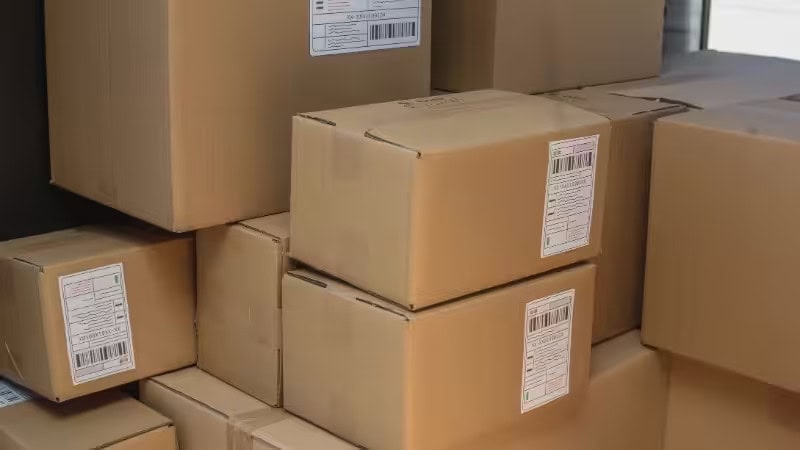
If you’re sending multiple items to the same address, it’s almost always cheaper to combine them into one large box rather than shipping several small ones.

Tip 6: Consider Slower, Hybrid Services to Maximize Savings
If your delivery isn’t urgent, look at hybrid services like FedEx SmartPost or UPS SurePost. These services use the carrier network for long-haul transport and then hand off to USPS for final delivery, often at a much lower cost.
Frequently Asked Questions About Ship Large Items
Q1:What is the cheapest way to ship a single heavy item?
For a single domestic item under 70 lbs, USPS Ground Advantage is often the most affordable choice. If your item exceeds USPS limits, comparing quotes between UPS Ground and FedEx Ground using their online calculators is the best strategy. For extremely large or heavy items, freight shipping will likely be the most cost-effective, though it has a longer transit time.
Q2:Can you ship a large item without a box?
While some carriers may accept certain items like tires or luggage without a box, it is strongly discouraged for most products. Shipping without a box leaves your item unprotected, increases the risk of damage, and can void any insurance claims. A proper box provides essential structure, shields the item from impacts, and ensures shipping labels can be securely attached.
Q3:What happens if you ship a package that exceeds carrier size limits?
Shipping a package that is over a carrier’s maximum size or weight limits will result in significant surcharges and penalty fees. The carrier may refuse to accept the package, return it to the sender at your expense, or hold it at a facility. It is crucial to confirm your final packed dimensions and weight are within your chosen carrier’s guidelines to avoid these costly issues. costs.
Q4:How do you find a box for a large, awkwardly shaped item?
Finding a standard box for an irregularly shaped item is difficult and can lead to wasted space and potential damage from shifting. While you can try to combine multiple boxes, this compromises the package’s strength and integrity. The best solution is to invest in a custom-sized box that provides a snug, secure fit, offering superior protection while minimizing dimensional weight costs.
Key Takeaways for Your Next Big Shipment
Shipping large items doesn’t have to be a headache.
First, measure and weigh your package accurately.
Next, pack it securely in the right-sized box.
Then, compare costs between carriers to find the best deal.
Finally, use smart strategies like disassembling items to save money.
Get Reliable and Resilient Custom Packaging from Packoi!
Packoi is a custom packaging solutions provider with extensive experience in printed products. We offer high-quality shipping boxes designed to keep your items safe on their long journey. You can easily customize the size, look, texture, and print of your box.
Take advantage of our design services to fully customize your boxes and improve brand recognition. Contact us now!