Over the years working with brands and procurement teams shipping into the US and EU, I’ve seen the same small sizing and material decisions quietly eat into margins. This guide is built to prevent that. We’ll walk through Manila envelope sizes, types, materials, and how they actually differ from Kraft — then move into custom and wholesale ordering, so you can brief a supplier with confidence instead of guesswork.
Whether you’re a startup ordering your first few thousand or a retailer buying in bulk, the goal is simple: match the right envelope to your documents and your shipping reality.
What Is a Manila Envelope?
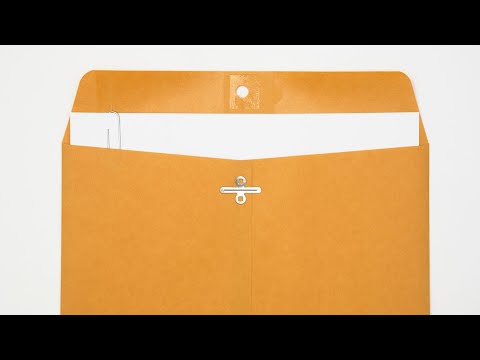
A Manila envelope is that familiar buff-brown paper envelope you’ve seen holding contracts, reports, and mailed documents for decades. It’s a workhorse — strong enough to protect flat contents, affordable enough to buy in volume, and neutral enough to fit almost any business context.
The name comes from Manila hemp (abacá), the fiber originally used to make the sturdy paper generations ago. Today most “Manila” envelopes are made from wood-pulp paper that mimics that same tough, slightly fibrous quality — the traditional name simply stuck.
The traditional buff color usually comes from the paper stock itself rather than from a surface coating. The exact fiber mix, pulp treatment, and manufacturing process can vary by supplier, but the result is the familiar light-brown appearance associated with Manila envelopes.

For most business buyers, that natural-looking color provides a clean, professional appearance without requiring the brighter white finish used for some premium document or presentation envelopes.
A quick note from experience — buyers sometimes assume “Manila” means one fixed material or strength. It doesn’t. The color tells you very little about durability. What actually matters is the paper weight (GSM) and the envelope construction, which we’ll get into shortly.
Manila Envelope Sizes Guide: Including 9 x 12
Size is where most ordering mistakes happen — usually because buyers match the envelope to the paper but forget about the contents inside. A single flat document needs a snug fit. A 40-page report, a booklet, or anything with a bit of thickness needs breathing room, or the flap tears the first time someone stuffs it.
Here’s a quick reference for the most common business sizes:
Common Name | Approx. Size (inches) | Approx. Size (mm) | Best For |
#10 (Business) | 4.125 × 9.5 | 105 × 241 | Letters, invoices, statements |
C4 | 9.0 × 12.80 | 229 × 324 | Unfolded A4 documents, reports |
Letter (9×12) | 9 × 12 | 229 × 305 | US letter-size documents |
Legal (10×13) | 10 × 13 | 254 × 330 | Legal documents, catalogs |
Booklet (6×9) | 6 × 9 | 152 × 229 | Brochures, small booklets |
Photo/Check (various) | 3.5 × 6+ | 89 × 152+ | Photos, checks, cards |
A simple rule I give buyers: choose an envelope with enough clearance for both the length and width of your actual contents. If you’re mailing a stack of documents, a booklet, or anything with thickness, allow additional room so the contents can slide in without forcing the flap or bending the corners.
Before placing a bulk order, test the complete document set—not just a single sheet—inside a physical sample envelope.
For international shipping, size also affects cost. Envelopes that fall just over a postal or courier weight/dimension threshold can bump you into a higher rate bracket — so it’s worth confirming the exact finished size before you commit to a large run.
Manila Envelope Types Explained: Including Catalog Envelopes
Once you’ve nailed the size, the type (how the envelope opens and closes) matters just as much for real use. Here are the five you’ll actually order:
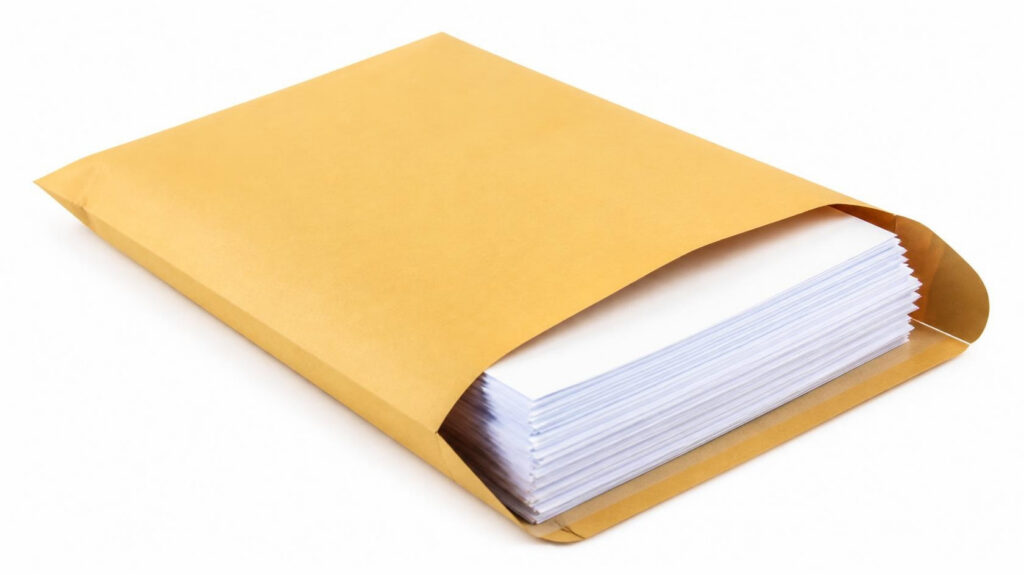
Open End — The opening is on the short side. This is the classic “catalog envelope” style, ideal for inserting thicker document stacks and feeding through machines. Great for reports and mailers.
Open Side — The opening is on the long side, like a standard letter envelope. Good for correspondence and easy hand-insertion of thinner contents.
Expansion — Built with a gusseted (expandable) side or bottom, so it grows to hold bulky contents — thick files, product samples, multiple booklets. If your contents vary in thickness, this saves you from ordering several sizes.
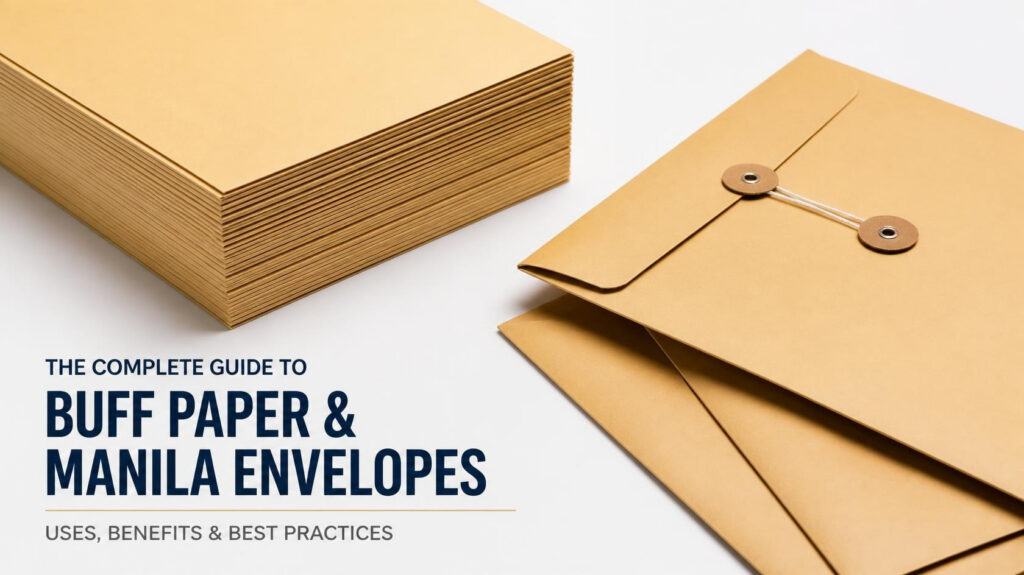
Clasp — Uses a metal clasp (and often a gummed flap too) so you can open and reseal it many times. Popular with law firms, HR teams, and anyone who reuses envelopes internally.
Self-Seal — A peel-and-stick strip means no licking, no water, no delay. For high-volume mailrooms and fulfillment teams packing hundreds of envelopes a day, self-seal quietly saves real labor time.
One practical tip from working with fulfillment-heavy brands: if your team packs in volume, self-seal or clasp almost always pays for itself in speed, even at a slightly higher unit price. But if the envelopes are for occasional document mailing, a standard gummed flap keeps cost lower and does the job fine.
Manila vs. Kraft Envelopes: What’s the Real Difference?
This comes up in almost every sourcing conversation, so let’s clear it up plainly.
Manila is a smoother, lighter-brown paper with a more finished, “office professional” look. It takes ink and printing cleanly, which is why it’s the go-to for documents, corporate mail, and anything that needs to look tidy on a desk.
Kraft refers to paper produced using the kraft pulping process and is commonly used for packaging because of its strength and natural brown appearance. It is often chosen for retail packaging, mailers, and brands that want a more natural-looking material.
Here’s how I frame the choice for buyers:
- Choose Manila if you want a clean, professional finish and crisp printing — documents, B2B correspondence, invoices, formal mailers.
- Choose Kraft if you want strength plus that natural, eco-friendly brand feel — retail packaging, subscription boxes, food and gift mailers.
Neither material is universally “stronger.” A heavier Manila envelope can outperform a lightweight Kraft envelope, depending on the paper grade and construction. GSM is one factor to consider, but tear resistance, fiber structure, paper grade, and envelope construction also affect durability — which brings us to the specifications that actually matter when choosing an envelope.
How to Choose the Right Material and GSM
GSM (grams per square meter) measures the weight of paper per unit area. Higher GSM generally means a heavier paper sheet and may provide a more substantial feel, but GSM alone does not determine thickness, tear resistance, or overall durability.
The paper grade, fiber structure, envelope construction, and shipping conditions also affect how well an envelope performs. The goal is to choose a paper weight that provides enough protection without adding unnecessary material or freight cost.
A practical starting guide:
GSM Range | Feel | Best Use |
80–100 gsm | Lightweight | Everyday documents and lightweight inserts |
100–120 gsm | Medium weight | General business mail and heavier document sets |
120–150 gsm | Substantial | Catalogs, premium mailers, and more demanding handling |
150 gsm+ | Heavyweight | Specialty mailers,photos, certificates, or premium applications |
Field Experience — GSM & long-distance shipping
For long-distance sea freight, paper weight should not be treated as the only protection factor. Humidity, carton strength, palletization, stacking pressure, and moisture control can all affect how envelopes arrive.
If the envelopes themselves need to withstand repeated handling or will be sold as retail-facing products, testing heavier paper stocks—such as 100–120 gsm or above—may be worthwhile. However, for bulk shipments, the outer carton and moisture-protection system can be just as important as the envelope GSM.
Rather than specifying one minimum GSM for every sea shipment, request samples and test the complete packaging system under conditions similar to your actual shipping route.
Two more material factors worth checking before you order:
Food contact safety. If your envelope-style packaging will come into direct contact with food, the paper, inks, adhesives, coatings, and other relevant components should be evaluated for compliance with the regulations that apply to your target market. For products sold in the United States, this may involve applicable FDA requirements for food-contact substances. In the EU, food-contact materials must comply with the applicable regulatory framework.
Confirm compliance documentation with your supplier before production rather than discovering a material gap after the goods have shipped.Coating and finish. A matte or gloss coating adds moisture resistance and print protection — genuinely useful for retail and humid-climate markets. But every added layer affects recyclability, so if you’re marketing an eco or plastic-free product for the EU, ask your supplier for a coating that keeps the paper recyclable.
For small startups, I’d keep it simple: a solid 120 gsm uncoated or lightly coated stock covers most needs affordably. For large wholesale buyers, it’s worth requesting pre-production samples in two or three GSM options so you can weigh durability against freight cost on your specific route — that comparison often saves real money at volume.
How Businesses Use Manila Envelopes and Business Envelopes
Beyond the mailroom, Manila envelopes do a lot of quiet work across different teams — and knowing the use case helps you order smarter. The right envelope type supports different handling needs, from mailing to filing and internal routing.
Office and administration. Contracts, HR files, invoices, and internal document routing. Here, clasp or reusable brown envelopes earn their place because the same envelope gets opened and refiled repeatedly for sort workflows and to store important documents.
Interoffice handling often uses reusable envelopes for routing paperwork between departments or locations.
Legal and financial firms. Legal-size (10×13) and expansion envelopes hold thick case files and statements. These buyers prioritize durability and a clean, formal look over anything decorative, and they need formats suitable for mailing important documents as well as keeping them flat.
E-commerce and fulfillment. Flat or semi-flat products — apparel, prints, accessories, documents — ship in self-seal Manila or Kraft mailers. Speed of packing and consistent sizing matter most here, and catalog envelopes or catalog business envelopes are larger than standard envelopes when the task is mailing thicker flat contents.
Retail and DTC brands. This is where custom printing comes in. A branded envelope turns basic packaging into a brand touchpoint — logo, colors, and messaging on the outside, product inside.
Food and specialty products. Envelope-style pouches for tea, snacks, or samples, where food-safe material and moisture resistance become non-negotiable.
Coin envelopes are another option for small items such as samples, coins, small parts, or other compact contents that do not require a standard document envelope.
Hotels also use manila envelopes and small office mailers to organize room keys.
The pattern is simple: the use should drive the type, size, and material — not the other way around. Ordering “a standard Manila envelope” without defining the job is exactly how buyers end up with stock that half-works for everything and perfectly for nothing.
Custom & Wholesale Manila Envelopes: What to Know Before You Order
If you’re moving past off-the-shelf stock into custom or bulk ordering, you’ll find a wide range of business envelope options, and a few things are worth locking down early — this is where costs and timelines are really decided.
Customization options usually include:
- Size (fully made-to-measure for your product)
- Material and GSM
- Custom printing (logo, brand colors, artwork)
- Closure type (self-seal, clasp, gummed)
- Coating/finish (matte, gloss, uncoated)
- Eco options (recycled content, recyclable coatings)
Choose the envelope type that matches the task, whether that’s catalog mailing, document storage, or internal office use.
MOQ (minimum order quantity). Custom-printed runs carry an MOQ because of setup and print-plate costs. Startups should ask about this upfront — sometimes a slightly higher quantity unlocks a much lower unit price, and sometimes a stock envelope with a printed label is the smarter first step.
Lead time and shipping. Production plus sea freight to the US/EU can span several weeks. Build that into your launch calendar, and confirm estimated delivery timing by month if needed — for example, whether arrival is expected in Aug. If you’re testing a new product, order a smaller first run and confirm quality before committing to a large reorder.
Quality Control Note — approve a physical sample firstThe single most valuable step in custom ordering is approving a physical pre-production sample, not just a digital proof. Screens don’t show you the true paper feel, the real printed color, how cleanly the seal grips, or whether the flap creases under a full insert. On custom runs, most avoidable complaints — color slightly off, envelope a touch tight, seal too weak for the contents — could have been caught on a sample in hand. For anything crossing the ocean, I’d also check that sample after a day in a humid environment, since that’s closer to what it’ll actually endure in transit. Sign off on the sample, and the full production run has far fewer surprises.
A practical ordering checklist:
- Defined your exact contents (size + thickness)
- Chosen GSM for your shipping route
- Confirmed compliance (food contact, if relevant)
- Locked closure type to your packing volume
- Requested and approved a physical sample
- Confirmed MOQ, lead time, and total landed cost
High-volume buyers often start with a best seller spec as a benchmark, then adjust size, material, or closure to fit their own use case.
Frequently Asked Questions About Manila Envelopes
Q1: What size Manila envelope do I need for a 9×12 document or unfolded A4?
For US letter-size documents, a 9×12 Manila envelope works well and lets pages slide in flat without folding. For unfolded A4 documents or reports, a C4 envelope (approx. 229 × 324 mm) is the right fit. As a general rule, choose an envelope with enough clearance for both the length and width of your contents — and if you’re mailing thicker stacks or booklets, allow extra room so the flap doesn’t tear. Always test your complete document set inside a physical sample before placing a bulk order.
Q2: What’s the difference between Manila and Kraft envelopes?
Manila is a smoother, lighter-brown paper with a clean, “office professional” look that takes ink and printing well — ideal for documents, invoices, and B2B mail. Kraft paper is made through the kraft pulping process and has a more natural brown appearance, often chosen for retail packaging and eco-conscious brands. Neither is universally stronger; a heavier Manila envelope can outperform a lightweight Kraft one. Durability depends on paper grade, GSM, fiber structure, and construction — not the material name alone.
Q3: What GSM should I choose for Manila envelopes?
It depends on your contents and handling needs. As a starting guide: 80–100 gsm suits everyday documents, 100–120 gsm handles general business mail and heavier document sets, 120–150 gsm works for catalogs and premium mailers, and 150 gsm+ suits specialty or retail-facing products. Keep in mind that GSM alone doesn’t determine durability — tear resistance, paper grade, and envelope construction also matter. For sea freight, the outer carton and moisture protection can be just as important as the envelope GSM, so request samples and test your full packaging system.
Q4: What are the main types of Manila envelopes?
There are five common types: Open End (opening on the short side, the classic “catalog envelope” for thicker document stacks); Open Side (opening on the long side, like a standard letter envelope); Expansion (with a gusseted side or bottom to hold bulky contents); Clasp (a metal clasp for repeated reopening and resealing); and Self-Seal (a peel-and-stick strip for fast, high-volume packing). If your team packs in volume, self-seal or clasp often pays for itself in labor savings, even at a slightly higher unit price.
Q5: What should I check before placing a custom or wholesale Manila envelope order?
Lock down these essentials early: your exact contents (size plus thickness), the right GSM for your shipping route, compliance documentation if food contact is involved, closure type matched to your packing volume, and — most importantly — approve a physical pre-production sample, not just a digital proof. A sample in hand reveals the true paper feel, printed color, and seal strength that screens can’t show. Also confirm MOQ, lead time (production plus sea freight can span several weeks), and total landed cost before committing to a full run.
Get the Right Manila Envelopes for Your Business
The right Manila envelope isn’t about picking a “good” one — it’s about matching size, type, and GSM to your specific documents, brand, and shipping route. Get those three right, and you avoid the two most common outcomes: damaged deliveries and money wasted on the wrong spec.
If you’re planning a custom or wholesale order and want a second set of eyes on your specs, Packoi can help you compare GSM options, review closure and coating choices for your market, and send physical pre-production samples before you commit to a full run.
Contact us for a quote or request a sample pack to see the paper feel and print quality for yourself — and order with confidence, not guesswork.