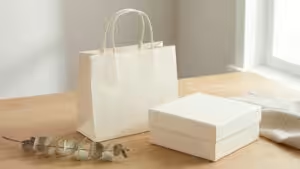
Folding cartons provide excellent packaging solutions for a variety of goods. However, there are several types available in the market, and knowing which one is best suited to package a specific item can be a hassle.
This article covers the most commonly used folding carton styles, their applications, material choices, and customization options.
What is Folding Carton Packaging?
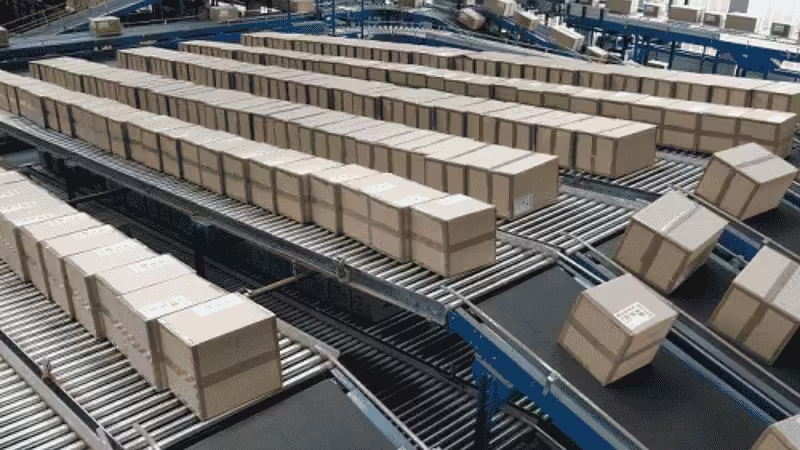
Folding cartons are the most popular way of packaging goods. They’re present in almost every retail shop, manufacturing facility, corporate office,e or hospital.
These cartons can be customized to store a variety of goods, like heavy items in thick boxes or perishable items like food or medicine in laminated boxes.
Either single-ply paperboard or corrugated cardboard is used to make these folding cartons, and they are now manufactured using precise cutting machines to produce the desired size and shape of the carton.
Recently, there has been an increasing concern about the environmental impacts of plastic waste due to dependence on plastic packaging, and this has resulted in the increased demand for a more eco-friendly material that is either recyclable or biodegradable to minimize the carbon footprint on product packaging.
Folding cartons are a lightweight and cost-effective packaging option. They also come in custom shapes, sizes, colors, textures, and materials to be used for specific occasions.
Materials Used in Folding Carton Packaging
The materials used in folding cartons play an important role in shaping their functionality. Here are the three most commonly used materials for folding cartons:
1. Paperboard Boxes
Paperboard is the primary material used for folding cartons, available in various grades, which include Solid Bleached Sulfate (SBS), Recycled Board, Folding Box Board (FBB), and Uncoated Recycled Board (URB), to suit different packaging needs.
2. Polyethylene Layer
For applications such as gable top cartons, which are used to hold liquids, a polyethylene layer is applied to the carton to provide moisture resistance and prevent contamination. It also increases the carton’s durability, making it suitable for holding beverages.
3. Compostable Materials
Some carton producers are now using materials like PLA (polylactic acid), made from renewable resources, like corn starch, to create compostable packaging that breaks down naturally.
4. Bagasse
Another sustainable packaging material is bagasse, which is a by-product of processing sugarcane. It is biodegradable and is an excellent alternative to plastic packaging for companies that are focused on eco-friendly packaging.
7 Types of Folding Carton Packaging to Boost Your Sales
The reason for the popularity of folding cartons is because of their customizability and different types of folding styles. Following are the 7 most common folding carton styles in the packaging industry:
1. Straight Tuck End (STE)
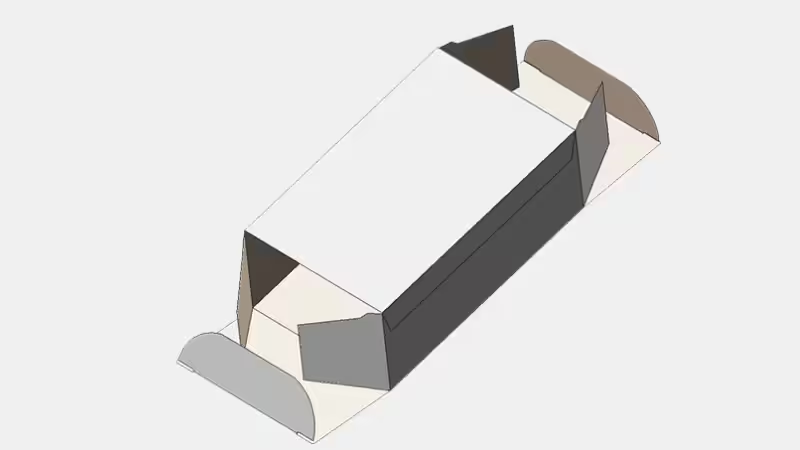
Straight Tuck End (STE) cartons are straightforward and easy to assemble.
The design uses closure panels on a rectangular box, with flaps attached to the same side of the top and bottom.
These flaps tuck inside the carton for a clean, professional look.
- Assembly Speed: Medium
- Production Efficiency: Standard
- Weight Capacity: Light–medium (under 500g)
This style is easy to assemble, produce, and store.
It saves space by staying flat until use, making it ideal for retail and shipping with limited storage.
Cartons can be printed with logos and bright colors while flat, supporting strong branding.
Applications
- Pharmaceuticals
- Food Delivery Items
- Cosmetics
- Consumer Goods
2. Reverse Tuck End (RTE)
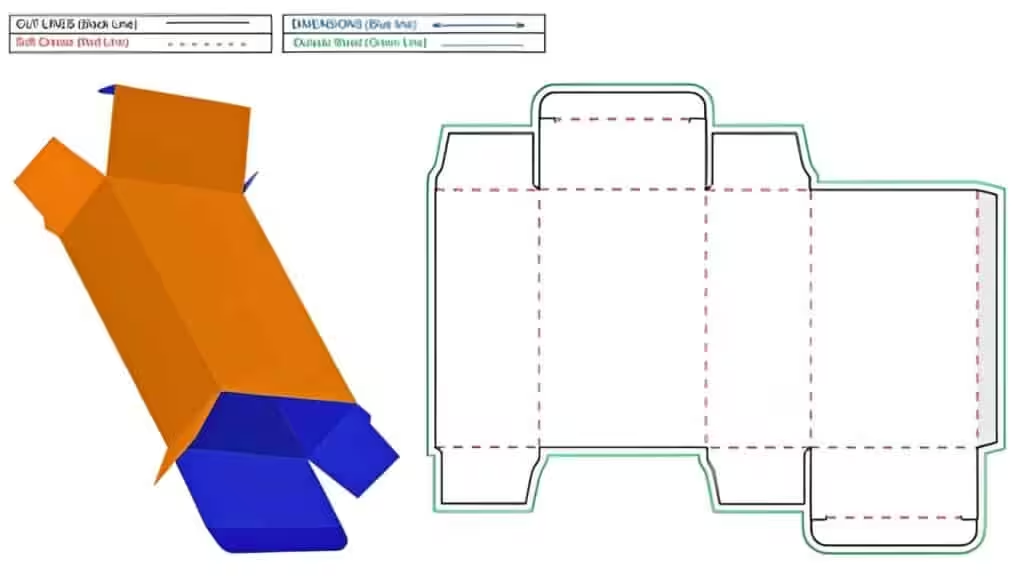
Reverse Tuck End (RTE) cartons are a type of folding carton that’s known for their easy flap design, where the top and bottom flaps open from opposite directions.
Unlike straight-tuck boxes, the top closure folds from back to front, and the bottom from front to back.
- Assembly Speed: Medium
- Production Efficiency: Higher than STE
- Weight Capacity: Light–medium
This design offers better protection for light to medium-weight items.
The production efficiency is similar to STE, and it can also be fully customized with printing.
Applications
- Pharmaceuticals
- Jewelry
- Small Electronics Equipment
- Makeup Items
3. Crash Bottom (Auto-Lock Bottom Boxes)
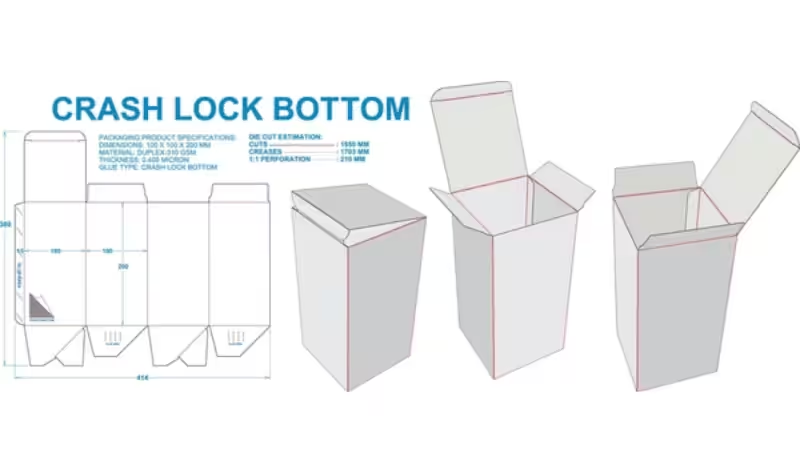
Crash bottom, or auto-lock bottom boxes, feature a snap-lock base that automatically locks when folded.
No tape or glue is needed to secure the bottom.
- Assembly Speed: 1 second (fastest)
- Production Efficiency: Efficient
- Weight Capacity: Medium–heavy (bottles, candles, jars)
This quick assembly makes them perfect for e-commerce and busy retail environments.
They are typically made from corrugated or solid board for high crush resistance during shipping.
The auto-lock design is especially efficient in the food industry, such as bakeries and food stalls, during peak hours.
Applications
- Liquor Bottles
- Food Items
- Cosmetics
- E-commerce
4. Seal End Carton
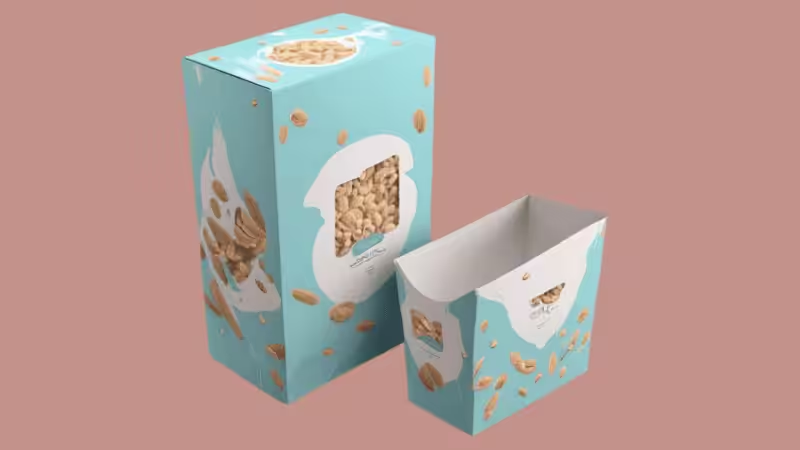
Seal end cartons are defined by their permanent, glued bottom closure.
The key benefit is preventing unauthorized access and cross-contamination.
They include double overlapping panels and dust flaps for tamper-proof storage.
Once sealed, they cannot be opened without visible tearing.
- Assembly Speed: Fast (automated lines)
- Production Efficiency: Efficient
- Weight Capacity: Medium
This style is ideal for moisture-sensitive products.
It also works well on automated packaging lines for fast filling and sealing.
Applications
- Breakfast Cereal
- Medicines
- Small Electronics
- Beauty Products
5. Sleeve Cartons
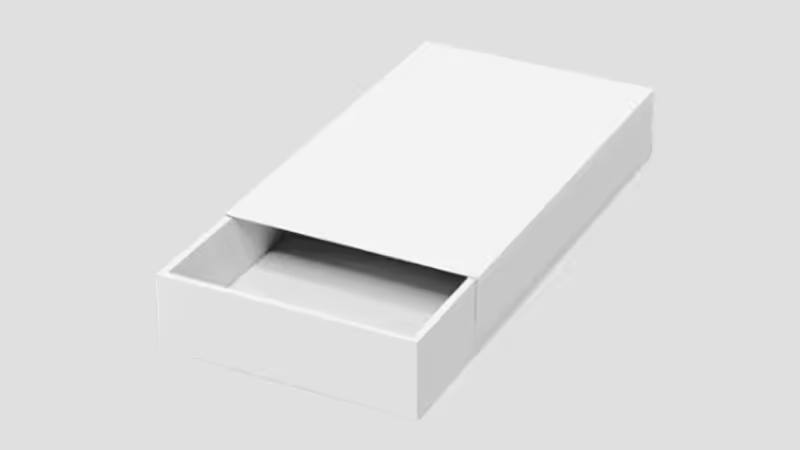
Sleeve cartons have a simple two-piece design: a sleeve wraps around an inner tuck box or tray.
They provide minimal security but maximum aesthetic appeal.
- Assembly Speed: Medium
- Production Efficiency: Very Efficient
- Weight Capacity: Medium
They are efficient to produce, supporting streamlined packaging workflows while maintaining quality.
The large, smooth surface is perfect for eye-catching graphics and strong branding.
They are widely used for medium-weight products like pastries, perfumes, candles, and gifts.
Applications
- Gift Boxes
- Food and Beverages
- Cosmetics and Soaps
- Jewelry Boxes
6. Windowed Folding Carton
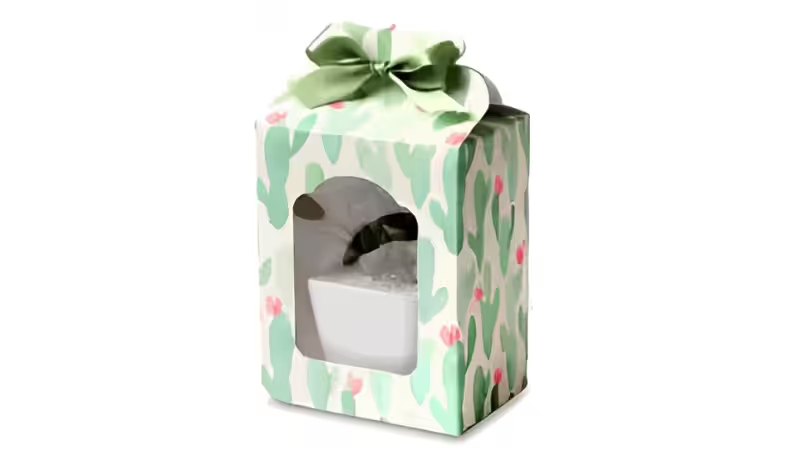
Windowed Folding Cartons feature a transparent window, allowing customers to see the product inside without opening the package. This boosts trust and visibility for food, cosmetics, and retail items.
- Assembly Speed: Same as STE/RTE
- Production Efficiency: Standard
- Weight Capacity: Light–medium
The window is strong enough to protect against contamination and breakage.
It can be customized to fit any product size or shape.
Attractive designs help these cartons stand out on retail shelves.
Applications
- Food and Beverage Items
- Cosmetics
- Gift Boxes
- Jewelry
7. Gable Top Cartons
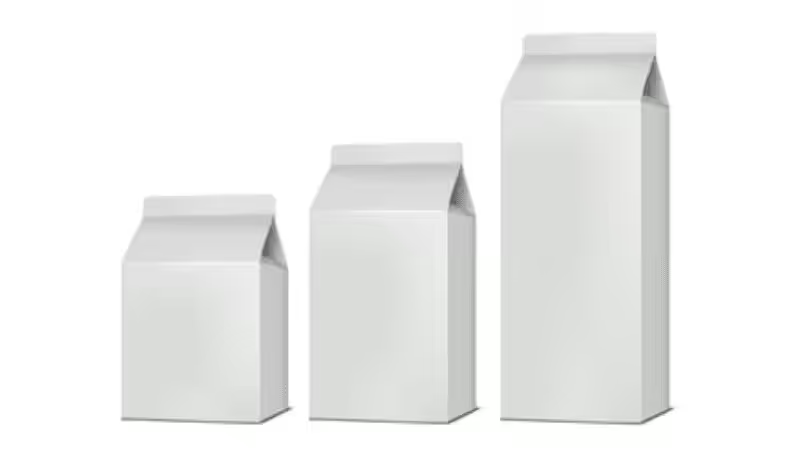
Gable top cartons feature a sloped roof shape, similar to a house rooftop. They are mainly used for liquids like milk, juice, and other beverages.
- Assembly Speed: Fast (automated filling)
- Production Efficiency: Standard
- Weight Capacity: Liquid-friendly light–medium
To protect perishables, these cartons use cardboard with a thermoplastic coating. This keeps contents fresh during refrigeration and blocks external moisture.
They are designed for easy pouring, either by cutting the corner or using a pre-installed cap. The large surface area supports strong branding and clear nutrition labeling.
Applications
- Beverages
- Dairy Products
- Gifts
4 Major Benefits of Using Folding Carton for Packaging
The following advantages make folding cartons the most widely used packaging solution in the world:
1. Cost-effectiveness
The materials used in making cartons, which are typically paperboard or cardboard, are usually inexpensive, and the production process is very efficient. This allows companies to quickly make folding cartons in bulk at low costs.
2. Customizability
Folding cartons can be customized in shape, size, color, and finish. This allows better advertising of products being sold in the different box types. It allows businesses to create unique packaging that stands out on retail shelves and attracts consumers’ attention.
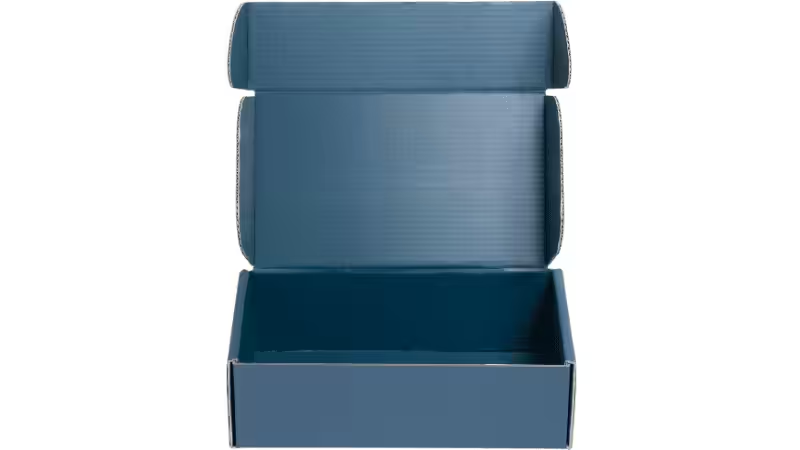
3. Lightweight and Durable
As cartons are made from lightweight materials, they’re easy to handle, and the flat design, like the one in a straight or reverse tuck box, uses less space when not being used, contributing to low transportation costs. The structure is durable enough to protect fragile products, like consumables and glassware.
4. Diverse Application Range
Folding cartons are specially designed to package almost anything due to their customizability and structural design. This diverse application range highlights the adaptability of folding cartons to meet specific industry needs. You can check out more information about carton usage in a separate section below.
5 Prime Industries That Use Folding Carton for General Packaging
Folding cartons are the most widely used packaging solution for several industries across the world due to their customizable designs, sustainability, and cost-effectiveness. The following are the five biggest industries that use folding cartons for packaging their products:
1. Food & Beverages
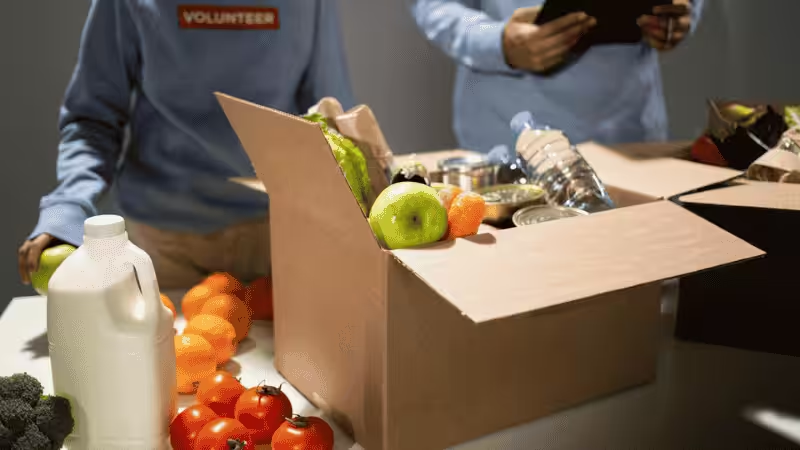
The food and beverages industry is the largest user of cartons. Designs, like the auto lock bottom, help maintain the freshness of consumable products and elongate their shelf life by preventing any exposure to moisture in the air.
2. Cosmetics
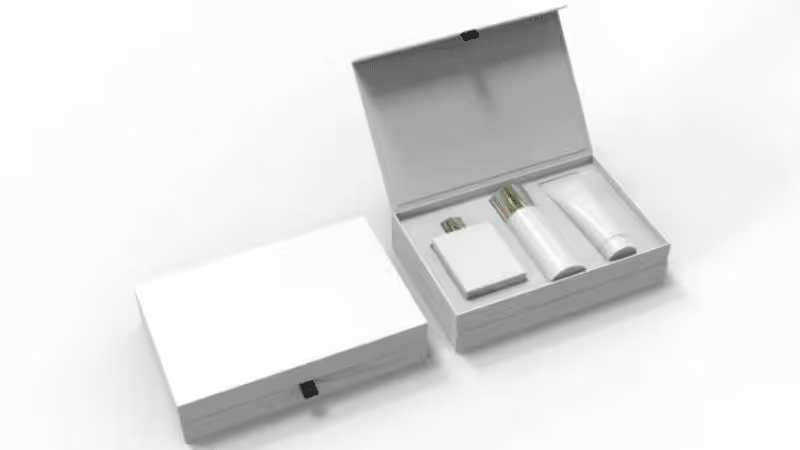
When packaging cosmetics, two-piece boxes are used to protect makeup and body care products during transportation and long-term storage. The customization options allow companies to make their packaging visually appealing to the target audience.
3. Pharmaceuticals

Folding cartons are used for packaging medical supplies and pharmaceutical drugs due to their robust designs to ensure product integrity and safety for consumers.
These cartons are designed to adhere to strict packaging standards with necessary labeling regarding the medicines printed on them.
4. Electronics
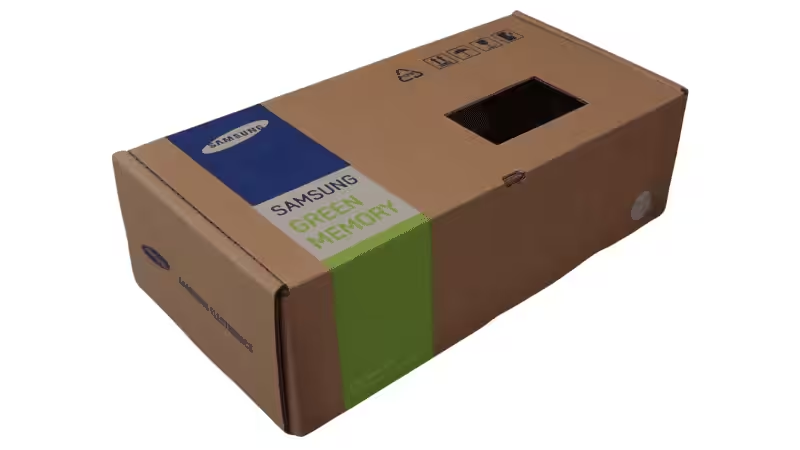
Lightweight products, like electrical equipment, must be kept in dry environments, and folding cartons do an excellent job of that. The design of these cartons makes sure that the fragile electrical items remain safe during storage and transportation.
5. Retail & E-commerce
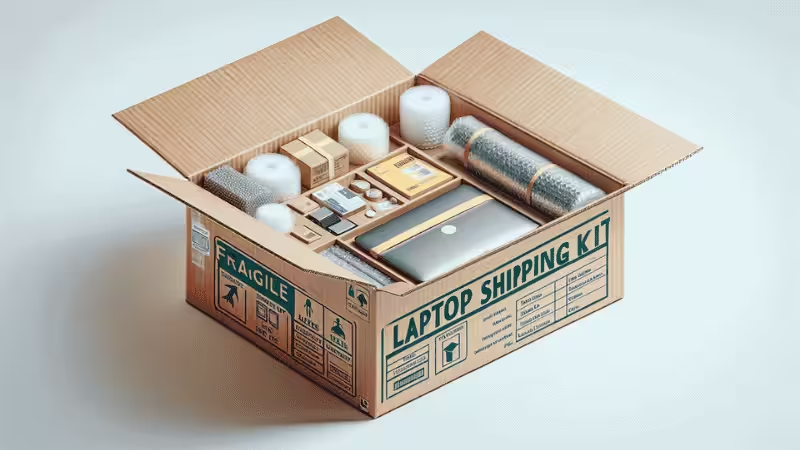
In the retail and e-commerce sectors, folding cartons are commonly used to help in product shipping and displays. The rise in e-commerce has led to the innovation in carton styles to better suit specific needs regarding branding, overseas shipping, storage, and product safety.
Customization Tips to Improve Folding Carton Designs for Specific Occasions
Here are some diverse customization options available for folding cartons that can be personalized for specific occasions or uses:
1. Design Enhancements
Techniques such as embossing and debossing for making brand names stand out and foil stamping on specific areas of the box to attract attention on retail shelves. UV coating can add visual appeal and improve the durability of folding cartons.
2. Printing Options
Using the right printing option can enhance the quality of the branding designs of folding cartons. Digital printing is used for small batches or customized orders since it eliminates the need for printing plates.
Offset printing is suitable for larger production to maintain consistency. Flexographic Printing uses flexible relief plates to print on different surfaces quickly, usually used for large orders.
3. Custom Inserts
Custom cutouts or inserts, like cardboard and double walls, can be added to folding cartons to provide extra protection or better organization within the packaging itself. This is done, especially for fragile goods like glassware, to prevent them from banging with one another during transit.
4. Printing Interactive Features
Adding QR codes on the carton surface can direct customers towards online content, such as product tutorials, promotional offers, or brand stories relating to the packaged product. Printing promotional messaging on the carton can also highlight unique selling points.
Common Eco-Friendly Carton Options for Reduced Carbon Footprint
As the threat of climate change increases, companies are now preferring sustainable materials for packaging their products. The three most used sustainable materials are:
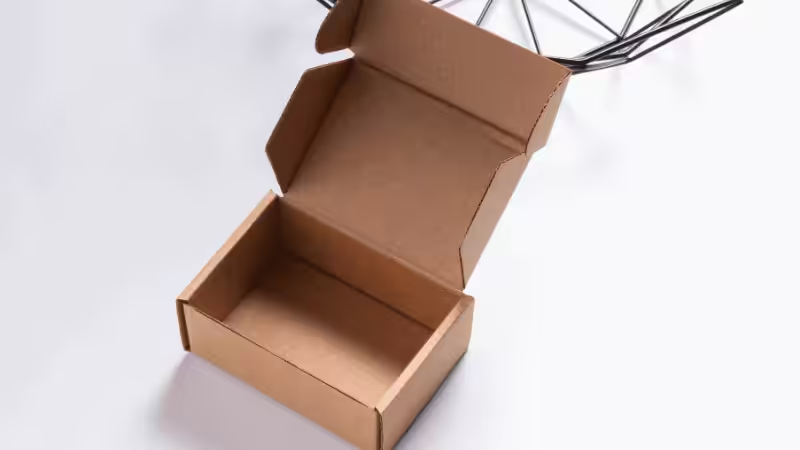
1. Recycled Paperboard Cartons
These cartons are made from 100% post-consumer recycled content, where the materials are reused and repurposed rather than discarded. Recycled cartons help reduce the usage of raw materials and, as a result, conserve natural resources by using less paper.
2. Biodegradable Coatings
The typical usage of plastic coating hinders the recyclability of cartons, so biodegradable coatings are used instead, that are made from sustainable plant-based materials. These coatings break down naturally over time, which reduces impact on the environment and minimizes plastic waste.
3. Implementing Energy-Efficient Practices
Companies can minimize their carbon footprint by adopting eco-friendly practices throughout their manufacturing processes of folding cartons. For example, the use of digital printing can decrease waste produced by traditional printing methods. They can also source local raw materials to reduce transport emissions.
Key Terms for Making a Folding Carton
When communicating with a folding carton manufacturer, mastering these professional terms helps you avoid misunderstandings and ensures your design is executed precisely. Here are the four most commonly used terms when customizing folding carton boxes:
Dielines
A dieline is a vector file provided by packaging designers to suppliers, accurately indicating cut lines, fold lines, and glue areas. Without an accurate dieline, your custom packaging may face size deviations, folding issues, or even structural failure. Essential for custom printing.
Scoring & Creasing
Scoring and creasing are processes that press grooves into the paperboard, allowing the carton to fold cleanly along predetermined lines without damaging the paper surface or causing printed graphics to crack. High-quality scoring is the foundation of carton structural integrity and directly impacts the unboxing experience.
Shipped Flat
Folding carton boxes are typically delivered in a flattened state, a design that saves up to 80% on shipping and storage space. For e-commerce brands and businesses with limited warehouse capacity, flat shipping not only significantly reduces logistics costs but also makes inventory management more efficient. Brands using eco-friendly materials can also reduce their carbon footprint and achieve sustainability goals.
Gluing
Gluing refers to the placement of adhesive points used to secure the structure during carton assembly. Precise glue points ensure carton durability and increase assembly line speed. When customizing packaging, confirming the gluing plan with your supplier helps avoid structural failure during transit.
ProTip: If you’re unsure whether your design meets production standards, consult a professional packaging team. They’ll review your dielines, confirm scoring specifications, and ensure your packaging is both beautiful and durable.
FAQs
What’s the difference between straight tuck and reverse tuck cartons?
The main difference is the direction in which the flaps push open and close. In a straight tuck, both flaps open towards the same side of the carton, and in a reverse tuck, the flaps open on opposite sides of each other.
Are folding cartons suitable for heavy products?
Yes, thicker cardboard can be used to store medium-weight products. However, corrugated boxes should be used to store heavier objects to minimize the chances of impact.
Can folding cartons be recycled?
Yes, folding cartons can be recycled without any restrictions and can be reused multiple times if handled appropriately. These are a sustainable packaging option for a variety of objects.
How long do Folding cartons last?
If stored and handled with care, folding cartons can maintain their structural integrity for many years. Replace the carton when there are signs of deterioration, fluid damage, or tear.
Conclusion
Folding cartons are a versatile and cost-effective solution for product packaging. Whether it’s a liquid item, medicine, or a gift, you should know what carton type suits them best. Clear and vibrant printing on the carton is essential to attract consumers towards your product.
The choice of materials affects both the durability and sustainability of a folding carton. Recycled paperboard or bagasse can enhance eco-friendliness, while polyethylene coatings can provide moisture resistance for liquid products.
Elevate Your Brand with Packoi’s Custom Packaging and Printing Solutions!
As your one-stop shop, Packoi offers fully customizable designs for different types of folding cartons, like straight tuck boxes, reverse tuck boxes, or auto-lock bottom boxes.
Enjoy fast turnaround times, low minimum order quantities, and exceptional quality, all produced in our state-of-the-art facilities. Join hundreds of satisfied customers who trust us to bring their vision to life. Contact us today to start your packaging journey and stand out in the market!