
This article will look at corrugated paper and its different types, testing methods, application, eco-friendliness, and guiding tips for choosing corrugated paper.
What Is Corrugated Paper?
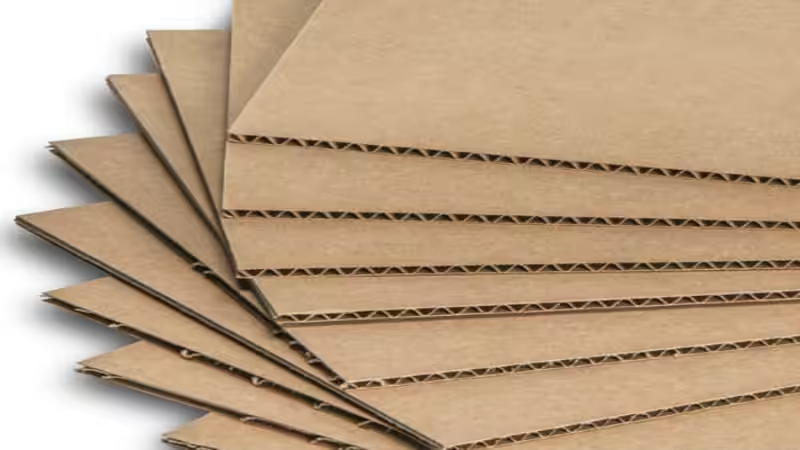
Also known as corrugated cardboard, it is a strong three-layered packaging material mainly used to make corrugated shipping boxes.
It comprises different layers, typically three: a central layer of corrugated medium glued between two layers of liners. The grade of paper used significantly affects strength. Kraft paper is manufactured from softwood trees and is the strongest type of paper used for standard outer liners. For the inside liner, test paper (a double-layered recycled paper) is commonly used.
The wavy fluting paper is sandwiched in between, providing cushioning support for the primary product. This fluted medium is created through a specific pulping process and acts as the crucial inner packaging components. It can be made from waste based fluting or semi chem fluting. Semi-chemical fluting paper is made of 80% hardwood virgin fibres and 20% softwood trees fibres, offering high performance and excellent runnability.
Meanwhile, recycled fluting paper is produced from 100% selected recycled fibres and is used for various food packaging types.
Four Types of Corrugated Paper
As we know, the flute gives strength to the corrugated board; it is also important to note that it can be done at different levels to give types of corrugated papers with different strengths.
Single Face Corrugated Cardboard
Before looking at standard boxes, we must mention Single Face corrugated cardboard. It consists of just one linerboard and one fluted medium. This basic layer is used primarily for wrapping irregular items, providing padding, or filling up empty spaces inside an outer case.
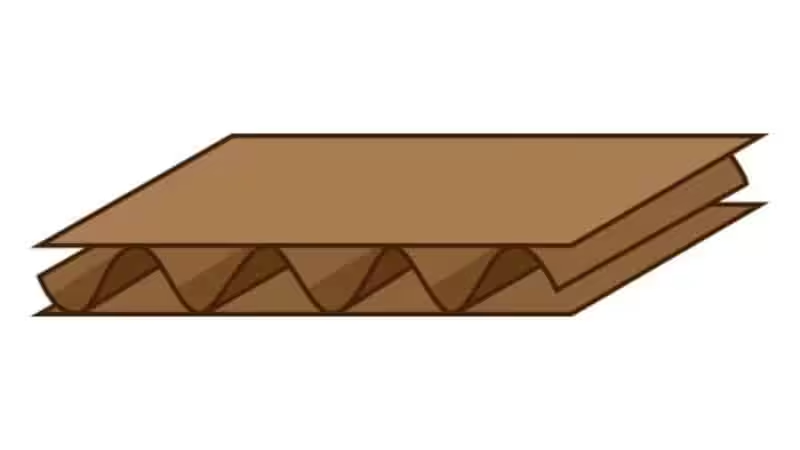
Single Wall Corrugated Paper
This basic corrugated board comprises two sheets of kraft paper or liner board with a corrugated material in between. This is what we call a “single-wall board,” and it is the most common in the retail market.
Single-wall corrugated paper is commonly used for retail displays and constructing packaging boxes. This is the most popular among people whenever they think about corrugated boxes.
Double Wall Corrugated Paper
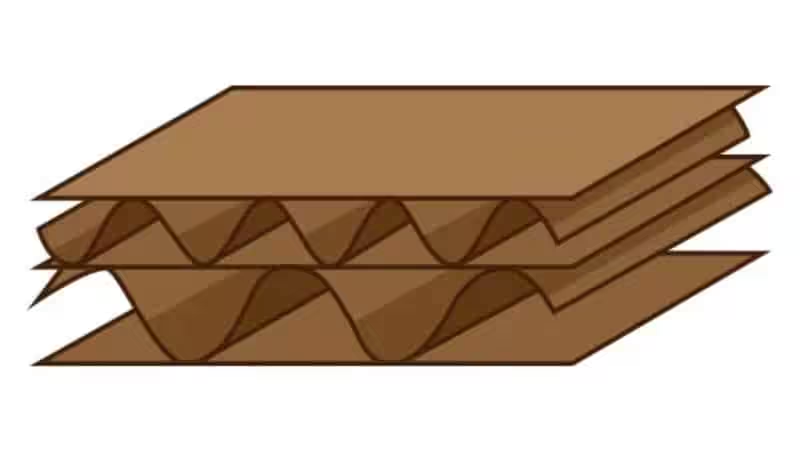
Suppose you attach a fluted sheet and an additional outer layer of liner or kraft paper in this order: liner-fluting-liner-fluting-liner. In that case, we end up having double-wall corrugated cardboard.
The double-wall material adds an additional fluting section and liner, providing extra rigidity and high-level transit protection for packaging heavier items. A double wall board is essentially a combination of different flutes. For example, the BC flute is a widely used double-wall combination for shipping heavy or large items safely.
Triple Wall Corrugated Paper
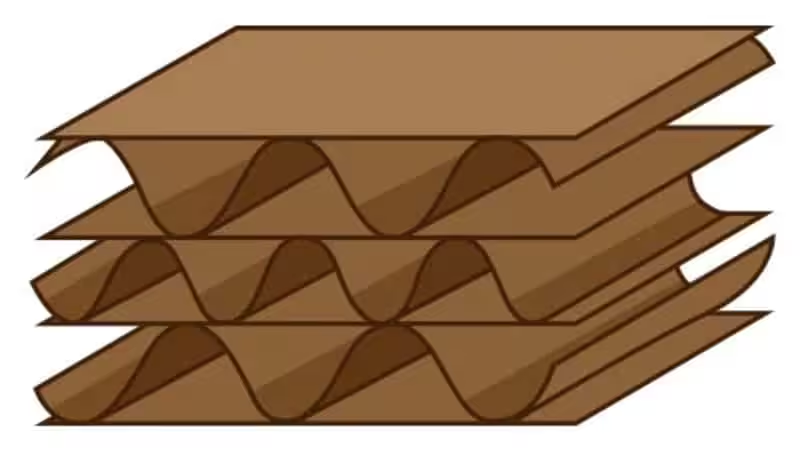
If you are dealing with large and heavy items like auto parts, you need packages made of triple wall board. This comprises three stacked corrugated sheets and four liner board facings: liner-fluting-liner-fluting-liner-fluting-liner.
This is the strongest corrugated cardboard you can use to construct a corrugated box for shipping those heavy auto parts or industrial equipment.
Corrugated Fiberboard Boxes
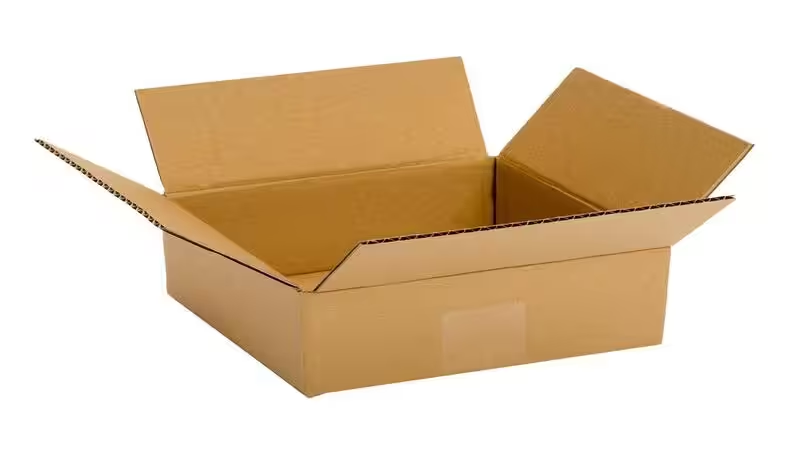
Well, these are the packaging boxes constructed from corrugated fiberboards. Sheets of corrugated cardboard are joined with either glue or any joining component. You end up with a corrugated fiberboard box or a corrugated box in simpler terms.
These are the common boxes you see in retail shipping, and most probably, you recently received a product in a corrugated fiberboard box. Their main purpose is to protect items in retail packaging, securing them against physical damage during shipment.
What Is Corrugated Paper Flutes?
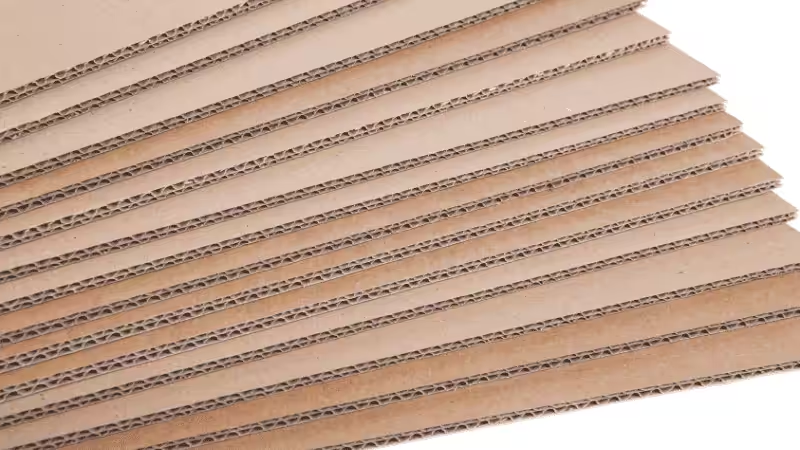
Flutes in corrugated papers refer to the c-shaped (or sometimes referred to as s-shaped) patterns forming the wavy layer in the corrugated board. The flute size influences the corrugated boxes’ rigidity, thickness, and stacking strength.
Flutes in corrugated paper are designated by letters (A, B, C, E, F) based on their order of invention, rather than their size. You can easily refer to a corrugated flute chart to compare their structural differences. In corrugation, we have these common flute profiles:
- A Flute: A flute is the thickest of all corrugated flutes, with a thickness of about 5 millimeters. It has 33 flutes per linear foot. A-Flute is the largest flute size, providing excellent cushioning and stacking strength.
- B Flute: A 1/8″ thick flute with 47 flutes per linear foot. The B-flute types are also thinner than the A-flute profile.
- C Flute: C-Flute is the most common flute size, balancing crush resistance and printing capabilities.
- E Flute: E-Flute is a very thin flute used for high-quality printing, often for retail packaging. It measures just 1/16″.
- F Flute: F flute is the thinnest of all corrugated flutes, with a thickness of approximately 0.8 millimeters.
Applications of Each Type of Flute:
- A Flute: Since this is the biggest and thickest flute type of fluted paper, it is mostly preferred to offer extra protection for fragile items.
- B Flute: B flute is one of the most commonly used types of cardboard for general packaging applications, offering good all-round performance. Thanks to its surprising strength and versatility, it is common for canned food items, pizza boxes, and counter displays.
- C Flute: It offers effective stacking strength and resistance to crushing and can be used for shipping boxes and packaging items like glass, dairy, and furniture products.
- E Flute: Not good for shipping purposes. As one of the thinner flute profiles, E-flute is sometimes a preferable option for making folding cartons instead of cardboard. Although it is thinner, the E-flute has excellent compression strength and crush resistance, and it can be used for cosmetic products, ceramics, and other lightweight delicate items. Due to its flat smooth surface, the E-flute offers high-quality printing applications.
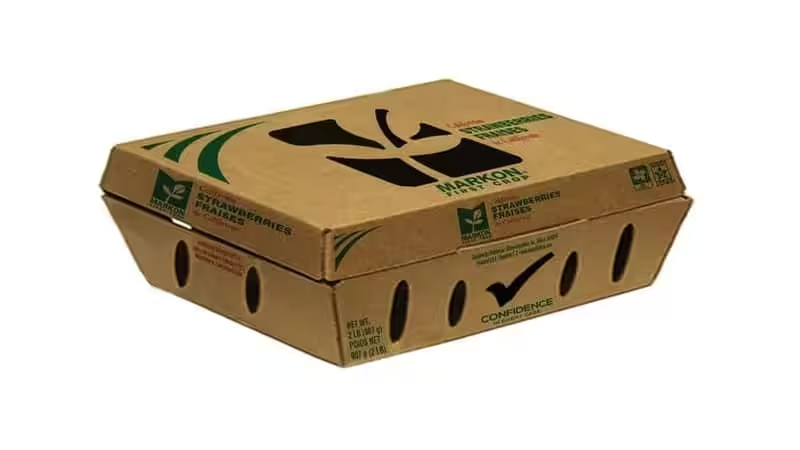
- F Flute: Commonly applicable for clamshell boxes in the food industry. Being extremely thin, it is ideal for packaging that requires stiffness for certain consumer goods. Also, its smooth surface allows for printing applications vital in food packaging, making it excellent for high-end retail packaging components that require a white top liner type or detailed graphic prints.
What Are the Testing Methods for Corrugated Paper?
Now that you know what fluting, different flute profiles, and the wall types in corrugated cardboard, you also need some confidence that the box with your chosen flute grade and wall type can offer the required stacking strength and puncture resistance and, in the end, safeguard your products.
Depending on the retailer’s needs, corrugated boxes may be tested thoroughly. Let us look at the main testing methods for corrugated boxes:
Edge Crush Test (ECT)
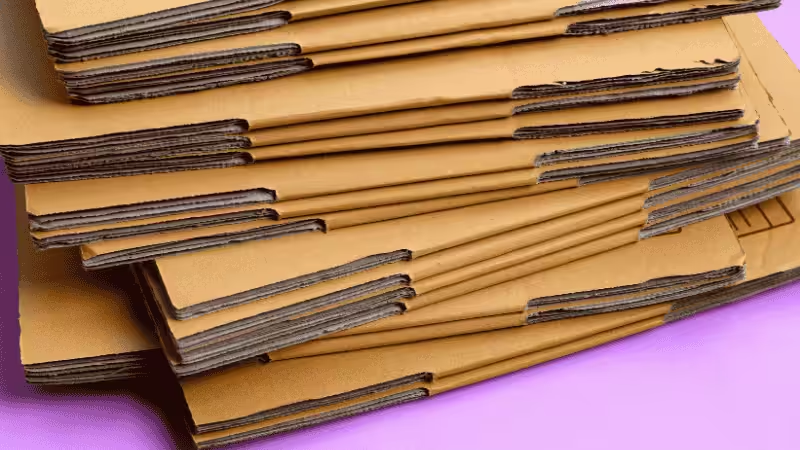
Edge Crush Test (ECT) is a testing method for calculating the maximum compression force of a box, i.e., the amount of pressure a corrugated box can withstand before crushing. It involves the compression of the edges of the test paper between two plates. Edge Crush Test is expressed in pounds per linear inch.
Flat Crush Test (FCT)
The Flat Crush Test is a testing method used to assess the resistance of corrugated cardboard to the crushing of corrugated flutes. This test method loads a single corrugated wall board specimen perpendicular to its surface. The resistance to crushing presented by the corrugated board indicates its strength and how it will behave during packaging. It also helps determine the pressure that can be applied to the box process during printing application.
Minimum Puncture Test (MPT)
Also known as the Puncture Test, is a method used to measure the minimum pressure or energy required to puncture a corrugated board. In this test, with the help of a triangular or pyramid-shaped weight, the material is loaded in all spatial directions where a combination of compression, tension, flexural and shear forces take place.
Mullen Burst Test
Compression strength is often measured by the Edge Crush Test (ECT), while puncture resistance is measured by the Mullen Burst Test. This test is a method for assessing the bursting strength of corrugated boxes before selecting them for packaging.
Bursting factor = Bursting strength (kg/cm^2) X 1000/grammage (gm/m^2)
Applications of Corrugated Paper
The corrugated board has many applications and is found in almost all industries. Corrugated paper is common because of its strength, effectiveness in safeguarding items, durability, recyclability, and environmental friendliness. Here are some of the key applications of corrugated paper:
Shipping Boxes
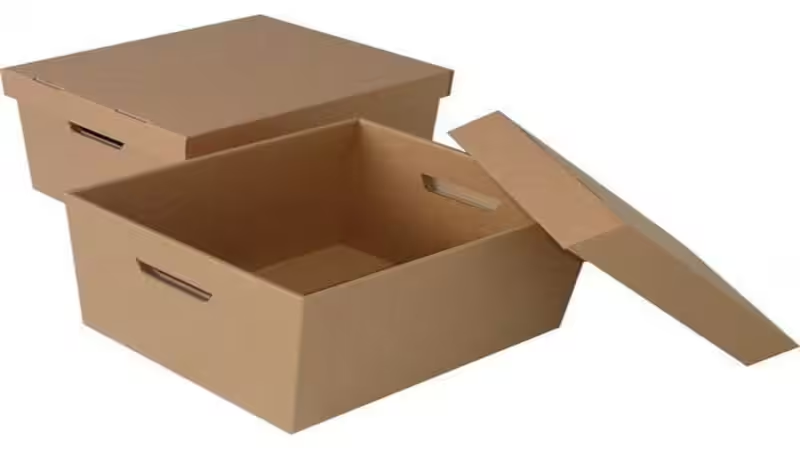
If you are considering shipping out items, you probably need corrugated shipping boxes. Corrugated boxes are approved for shipping because they offer great strength for accommodating items of varying weights. Every box has a specific quality and strength stamped on the surface.
Retail Packaging
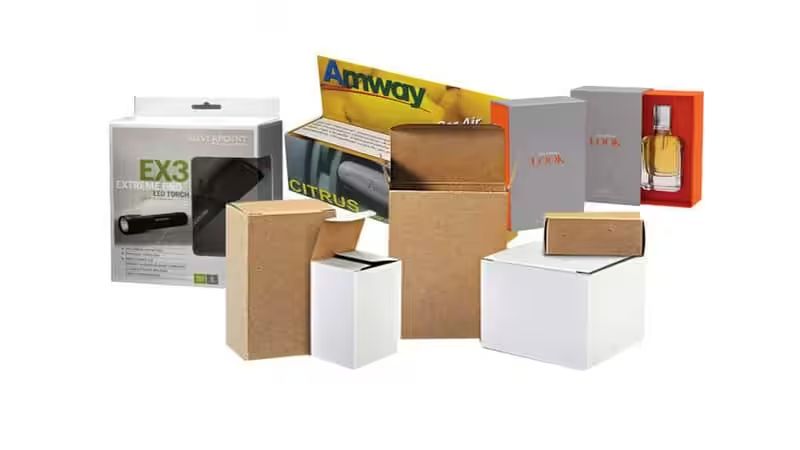
Corrugated retail packaging is widely available in almost all retail outlets. Corrugated cardboard has proven to offer varying stacking strengths and can safeguard products. Retail corrugated packaging usually requires quality printing to display product features. Corrugated boards with E-flute have a smooth surface for high-quality printing, which serves well in retailing products.
Clamshell Packaging
Clamshell boxes made from corrugated cardboard and kraft paper are the ideal packaging for most takeaway and restaurant use. The corrugated material for this packaging is heat resistant; therefore, suitable and safe for microwave use for reheating food products.
The material is flat and smooth for printing applications, and you can leverage this with Packoi, which offers high-quality custom printing on your clamshell boxes.

Retail Point of Purchase Display
Retail display is like a store within a major store that allows your products to grab attention and stand out amongst competitors. The displays can be customized to fit your permanent or temporary needs.
Because of the fluted layer, the corrugated board offers excellent strength and can be customized into a display material with quality prints to drive sales. Some of the reasons why a sheet of corrugated cardboard is suitable for retail displays include its versatility, affordability, and adaptability.
Additional Packing Material
Bubble Wrap
Bubble wrap is made from 100 percent recycled corrugated board. It can be used as wrapping material for protecting items or as a filling material to cushion products from physical impact.
Foam Cushioning
A packing material that is made from a corrugated fiberboard material. The corrugated medium gives strength for cushioning and padding, while the smooth surface of the material protects items with delicate surfaces from scratching.
Packing Peanuts
The purpose of packing peanuts is to fill up void spaces, offer a cushioning effect, and safeguard items in shipping boxes from shock. More environmentally friendly packing peanuts made from biodegradable corrugated medium have been introduced recently as alternatives to the most common styrofoam packing peanuts.
Factors to Consider When Choosing Corrugated Paper
Packaging complements your products. As you consider the best material for your packaging solution, you probably desire material that subscribes to social responsibility in promoting sustainability, economics, and attractiveness. All these qualities can be found in corrugated materials.
Users are often looking for guidance on how to choose the right type of corrugated paper for their specific packaging requirements, including considerations for weight, fragility, and printing needs.
Therefore, here are factors of corrugated paper to consider when choosing one:
Stacking Strength
Stacking strength helps determine how much load a corrugated packaging can bear over shipping. Because of the varied fluting of the fluted material, corrugated cardboard comes in different stacking strengths. Therefore, choose a corrugated paper that offers the required stacking strength for your products.
Crush Resistance
This is the ability of corrugated paper to resist crushing when loaded. It is measured by loading the packaging box perpendicularly to its surface and indicates flute rigidity.
Since flutes have varied strengths to resist crushing due to different flute grades, choose a corrugated paper with the suitable ability to resist crushing to avoid crushing when items are loaded in the packaging.
Puncture Resistance
It refers to the ability of corrugated material to withstand internal and external forces to puncture. Your corrugated material should be able to withstand the compression, tension, and all forces when loaded and resist puncturing.
Flute Size
Flutes have different sizes (thickness), ranging from 5 mm to 0.8 mm. Choose corrugated cardboard with the ideal flute size depending on the weight and fragility of your items. Flute sizes include A-flute – 5 mm, B-flute – 3 mm, C-flute – 4 mm, E-flute – 1.5 mm, and more.
The most common flute size is C-flute, which is common in Regular slotted Containers like the half-slotted container. It offers excellent stacking strength, crush resistance, and durability.
Flute Grade
The grade of a fluted corrugated paper is determined by its grams per square meter (GSM) of kraft paper liner. The most common grades used include 115/125 gsm, 140/150 gsm, 185/200 gsm, 250 gsm, and 300 gsm. However, there is a wide variety of grades available.
Drawbacks of Corrugated Packaging
While corrugated board is highly versatile, it has a few limitations. One drawback of corrugated packaging is that it may not be suitable for all products, especially those requiring maximum waterproof levels of protection in extreme weather. Additionally, while standard boxes are cheap, the cost of highly customized corrugated packaging (with specialized finishes or rare linerboard grades) can be a drawback for companies with lower budgets.
Is Corrugated Paper Sustainable Packaging?
Corrugated paper is the most common material for any packaging box manufacturer out there. Corrugated fiberboard is one ofthe most eco-friendly packaging materials available. Packaging of corrugated paper can easily be recycled into something useful in the shipping line as well.
It can be recycled and used to make bubble wraps, packing peanuts, and cushioning foam in shipping boxes. Recycling and reusing corrugated paper can greatly help in reducing waste.
Conclusion
Corrugated packaging is the most common in every industry. This is because corrugated paper is versatile, cost-effective, strong, recyclable, and reusable. It can be used to make almost all types of boxes common in the market; regular slotted containers, folding boxes, or five panel folders, and more.

Most packaging and shipping boxes are made of corrugated material of different strengths. The corrugated material has proven to protect products and their quality well, cushioning the items from shocks during shipment.
Frequently Asked Questions About Corrugated Paper
Q1:What is the difference between standard cardboard and corrugated packaging?
Standard cardboard is a single sheet of thick paper pulp, commonly used for folding cartons or cereal boxes. Corrugated packaging features a wavy fluted layer sandwiched between flat outer liners. This multi-layered design provides the heavy-duty strength, rigidity, and impact resistance needed for shipping.
Q2:Is corrugated paper waterproof?
Standard corrugated paper is not completely waterproof, though thick kraft liners offer mild moisture resistance. If exposed to heavy rain, untreated corrugated boxes will absorb water and lose their stacking strength. However, special coatings, varnishes, or laminations can be added during manufacturing to make them fully water-resistant.
Q3:How much weight can a standard corrugated shipping box hold?
Weight capacity depends directly on the box’s wall construction and Edge Crush Test (ECT) rating. A standard single-wall corrugated box (32 ECT) safely holds up to 40 pounds. For heavier items, double-wall or triple-wall boxes can securely support loads well over 100 pounds.
Q4:Can I print my brand logo directly on corrugated shipping boxes?
Yes, corrugated paper is an excellent canvas for custom branding and high-resolution graphics. Thinner flutes, like E-flute and F-flute, provide the smoothest surfaces for vibrant colors and sharp logo printing. If you want premium, custom-printed packaging to elevate your brand, our experts can help you design the perfect customized solution.
Discover the Perfect Solution for Your Business with Packoi
Packoi is a socially responsible company, and in their call for the use of sustainable products, we advocate for corrugated packaging while helping businesses with custom packaging and printing designs that promote brand visibility without sacrificing the quality of the product. You can order custom printing applications for your corrugated packaging by contacting us here.