At the same time, food brands are facing new challenges. Consumers expect more sustainable packaging, retailers want products that stand out on the shelf, and buyers need solutions that balance performance with cost.
That’s why paper-based food packaging has become increasingly popular. Today’s paper packaging isn’t just recyclable—it can also provide excellent print quality, reliable barrier performance, and flexible customization for a wide range of food products.
In this guide, we’ll explain how to choose safe, printable wholesale food packaging, compare common paper packaging options, and share practical tips that can help you make better purchasing decisions.
What Is Foodstuff Packaging?
Foodstuff packaging refers to any packaging solution designed to protect, store, transport, and present food products throughout the supply chain.
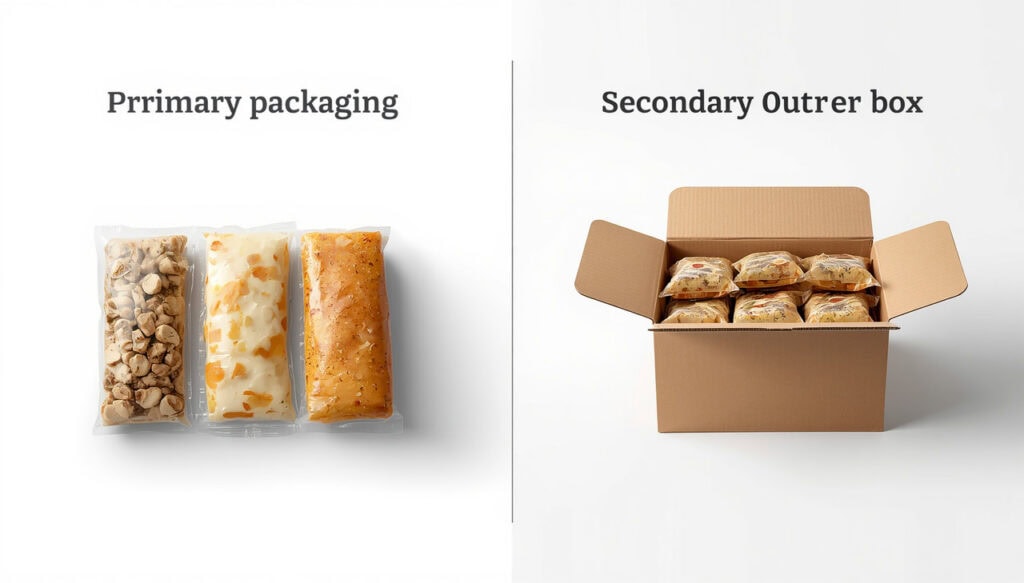
It includes primary packaging that directly contacts food, such as pouches, bags, and wrappers, as well as secondary packaging used for transportation and retail display, such as cartons and paper boxes.
Its job isn’t just to hold food. Good packaging helps keep products fresh, protects them during transportation, provides space for branding, and ensures the product reaches customers in the best possible condition.
For wholesale buyers, choosing packaging usually means balancing four factors:
- Food safety
- Product protection
- Brand presentation
- Cost efficiency
The ideal solution isn’t always the most expensive one. What matters most is whether it fits your product and supply chain.
Packoi Expert Tip:
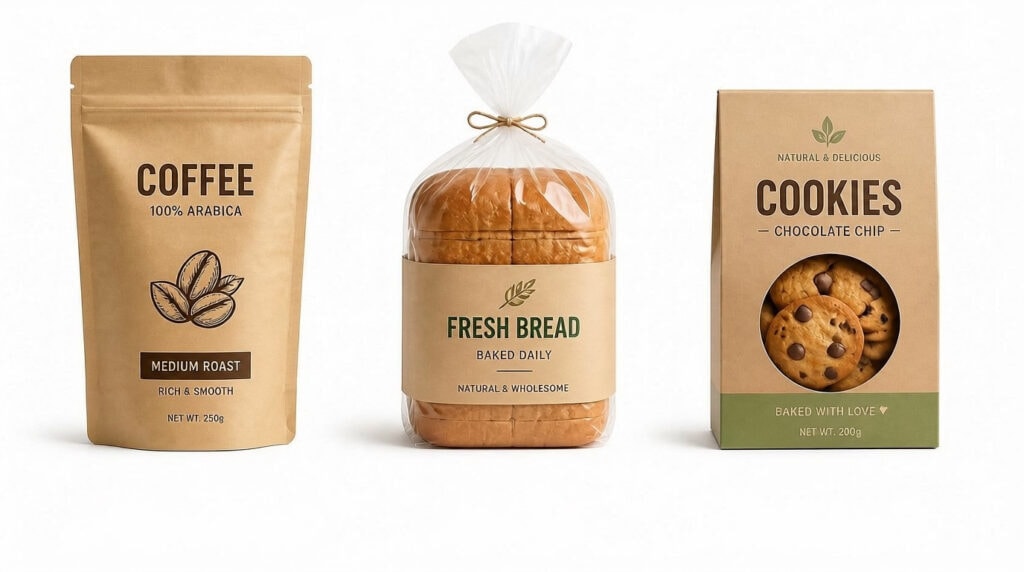
Before comparing packaging styles or prices, identify what your product actually needs. A coffee pouch, a bread bag, and a cookie box may all look similar, but they’re designed to solve very different packaging challenges.
Primary vs. Secondary Packaging
Food packaging is generally divided into two categories.
Understanding the difference between primary and secondary packaging helps brands choose the right structure for both food safety and logistics requirements.
Primary Packaging
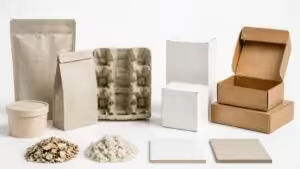
Primary packaging comes into direct contact with food. Examples include paper pouches, bread bags, takeaway containers, and food wrapping paper.
Because it touches the product directly, it should be made from food-grade materials that comply with the regulations of the destination market.
Secondary Packaging
Secondary packaging protects products during storage and transportation.
Shipping cartons, display boxes, and retail-ready cases all fall into this category. Although they don’t usually touch food, they help prevent damage throughout the supply chain.
Why Food Packaging Matters
Good food packaging should do more than simply contain a product; it is essential for protecting food throughout its lifecycle.
It should:
- Protect food from moisture, oxygen, grease, and contamination.
- Maintain freshness throughout the intended shelf life.
- Reduce damage during shipping, handling, and distribution.
- Help products stand out on retail shelves.
- Support food safety and labeling requirements.
Different foods require different levels of protection, so different types of packaging are needed for different products. Take roasted coffee and fresh bread as two typical examples. Coffee packaging must block oxygen well to lock in its unique flavor and scent.
Bread packaging needs to let air pass through, so too much dampness won’t ruin the bread texture.
That’s why successful food brands usually start with the product—not, not the package.
Common Foodstuff Packaging Materials
There are several materials used in food packaging, and each has its own strengths.
Material | Best For | Main Advantage |
Paper | Bakery, coffee, tea, snacks, takeaway food | Sustainable, printable, versatile |
Plastic | Frozen food, liquids, products requiring long shelf life | Excellent barrier protection |
Aluminum Foil | Coffee, powders, sensitive foods | Outstanding moisture and oxygen barrier |
Composite Materials | Products with specific preservation needs | Combines multiple performance benefits |
Lots of today’s food packaging mixes two or more materials. This way brands can strike a good balance between protection, looks and price.
If you use paper packaging, you can add barrier coatings or laminated layers. These upgrades greatly block moisture and oxygen, while keeping the package’s original style.
Why Paper Packaging Is Becoming the Preferred Choice
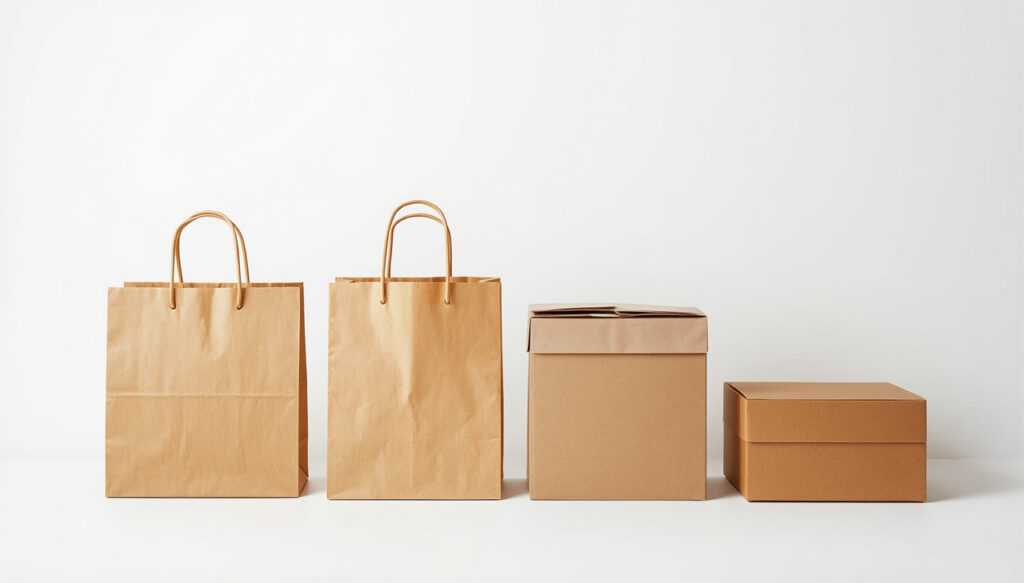
Paper packaging has become a popular choice for many food brands because it balances sustainability, branding opportunities, and functional performance.
One major advantage is its recyclability. As retailers and consumers continue to pay more attention to environmental impact, paper-based solutions provide brands with an alternative to traditional plastic-heavy packaging.
Beyond sustainability, paper packaging also offers excellent printing performance. Brands can customize bags, boxes, and pouches with logos, product information, and finishing options such as embossing or foil stamping.
However, paper packaging should not be selected only because it looks eco-friendly. The right choice depends on the product’s barrier requirements, shelf life, storage conditions, and transportation environment.
Packoi Expert Tip:
Don’t choose paper packaging simply because it’s sustainable. Start by evaluating your product’s barrier requirements, expected shelf life, and transportation conditions. Once those factors are clear, it’s much easier to select the right paper packaging solution.
Types of Paper Foodstuff Packaging
There’s no single paper package that works for every food product. The right choice depends on what you’re packaging, how long it needs to stay fresh, where it will be sold, and which food packaging options best match the product’s needs for efficient performance.
For example, a bakery bag is designed to allow airflow, while a coffee pouch is built to block oxygen and moisture. Although both are paper-based, they serve completely different purposes.
Below are the five paper packaging types most commonly used by wholesale food brands.
Kraft Paper Bags
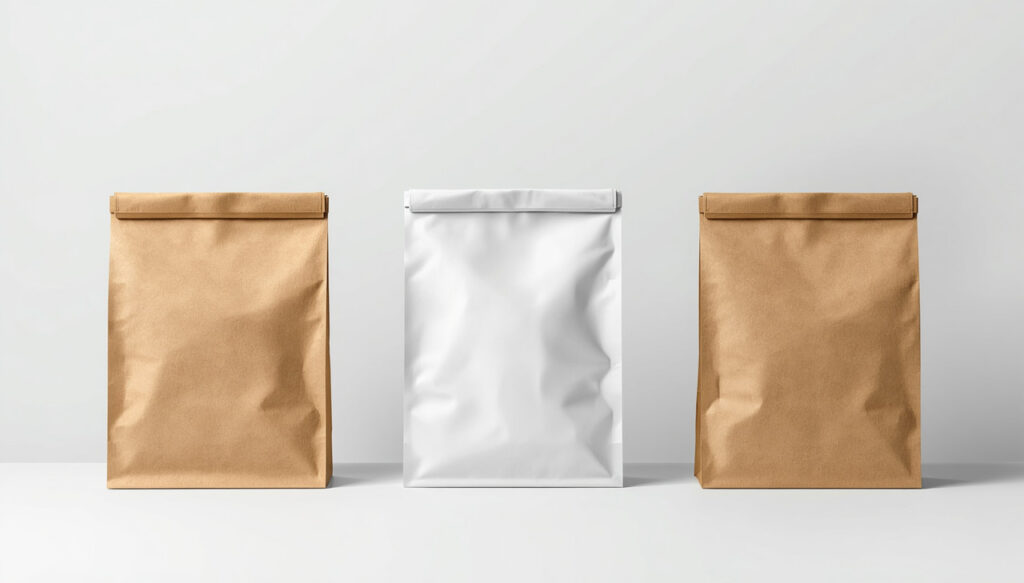
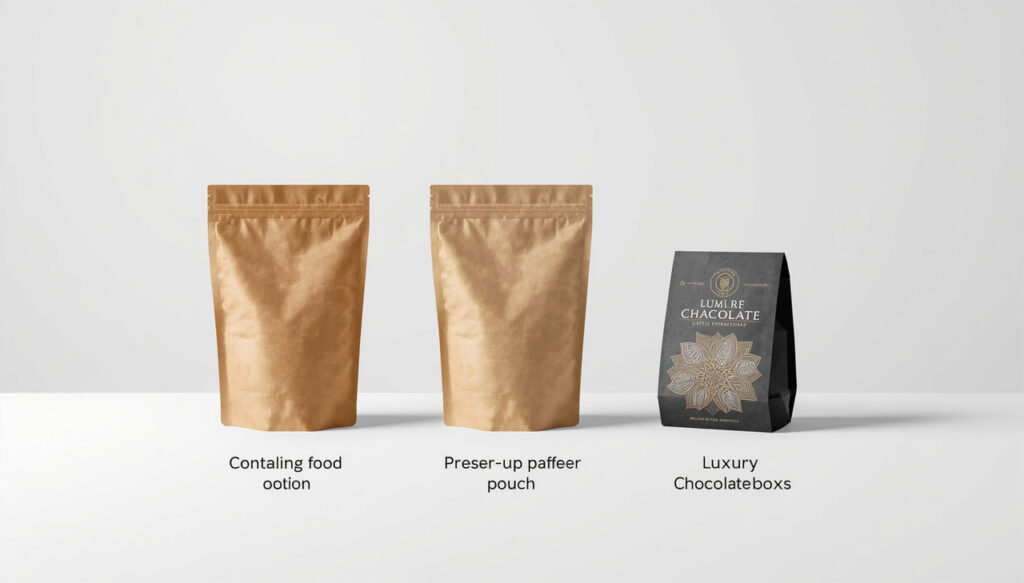
Kraft bags stay highly popular for dry food packaging, as they feature a natural look, sturdy build and affordable cost.
They’re commonly used for:
- Coffee beans
- Tea
- Rice and grains
- Nuts
- Dried fruits
If your products need to stay fresh much longer, you can add food-safe barrier layers inside kraft bags.This upgrade blocks moisture and oxygen far better, and the bags still keep their eco-friendly natural style.
Best suited for:
- Dry foods
- Organic brands
- Bulk wholesale packaging
Paper Stand-Up Pouches
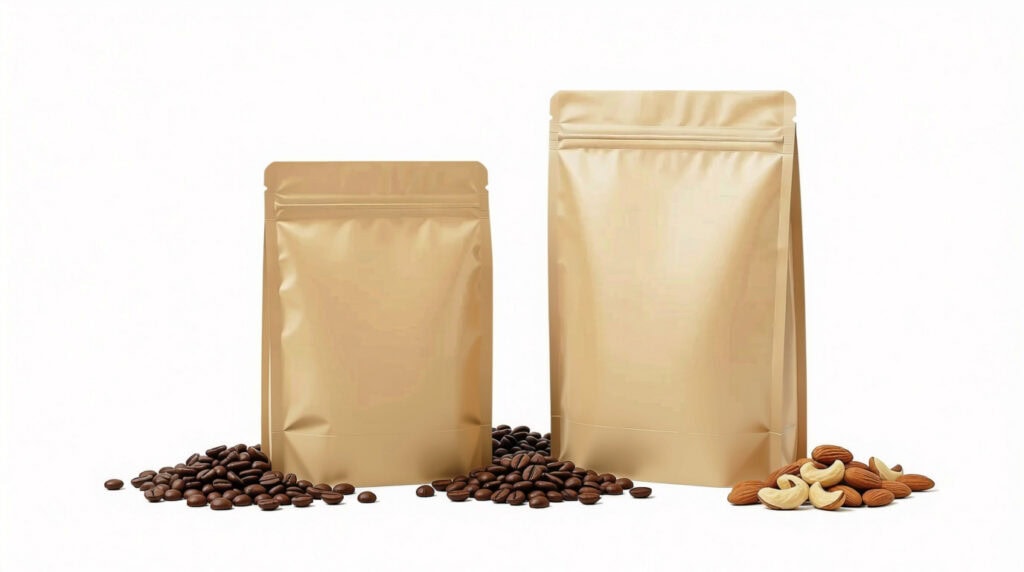
Stand-up pouches combine functionality with strong shelf appeal.
These packages can stand on their own, so shops can put them on shelves easily. They also have plenty of room to show brand logos, product introductions and advertising words.
They’re widely used for:
- Snacks
- Candy
- Granola
- Protein powder
- Pet treats
Many brands add handy extras like zip locks that can be sealed again, easy tear lines and clear windows, making the bags much easier for buyers to use.
If your product competes on retail shelves, stand-up pouches are often one of the most effective options.
Flat Paper Bags
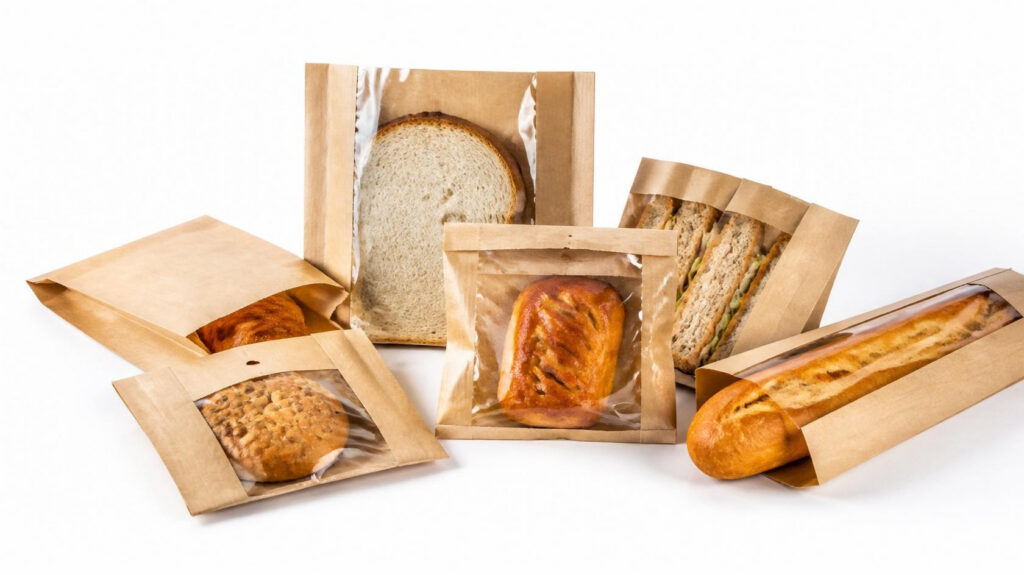
Flat paper bags are a simple solution for products with a short consumption cycle.
They’re commonly used for:
- Bread
- Pastries
- Sandwiches
- Fresh bakery products
Unlike coffee or snack packaging, bakery products usually don’t require a high oxygen barrier. In fact, allowing a small amount of airflow helps maintain product texture and reduces condensation.
Flat paper bags are also inexpensive to produce, making them a practical choice for bakeries, cafés, and food service businesses.
Paper Boxes
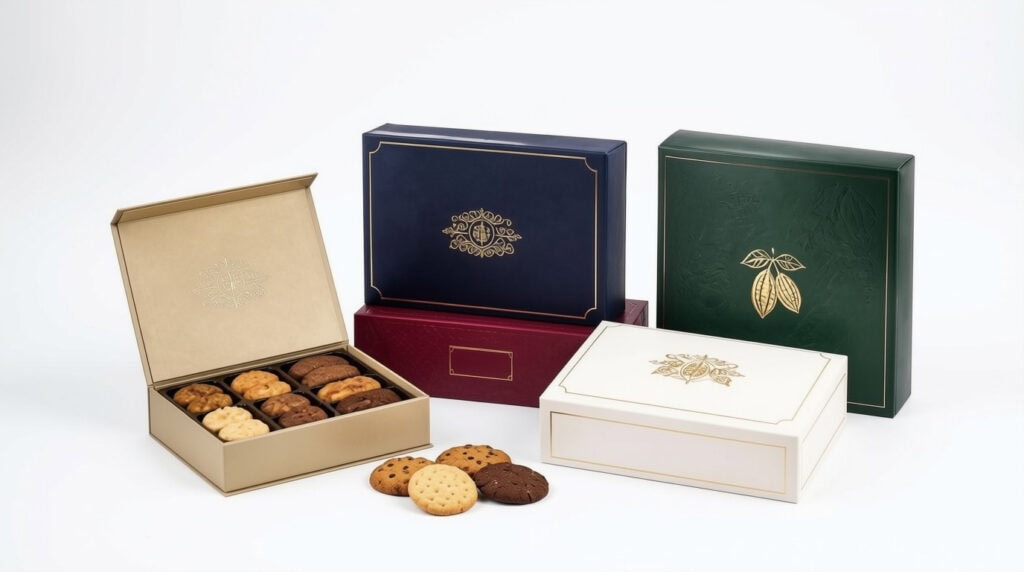
Paper boxes offer more structural support than flexible packaging and create a more premium presentation.
They’re frequently used for:
- Cookies
- Chocolate
- Gift foods
- Frozen meals
- Premium confectionery
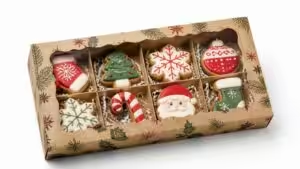
Compared with bags or pouches, paper boxes provide greater flexibility for structural design and decorative finishes such as embossing or foil stamping.
If presentation is an important part of your brand strategy, paper boxes are often worth the additional investment.
Paper Takeaway Packaging
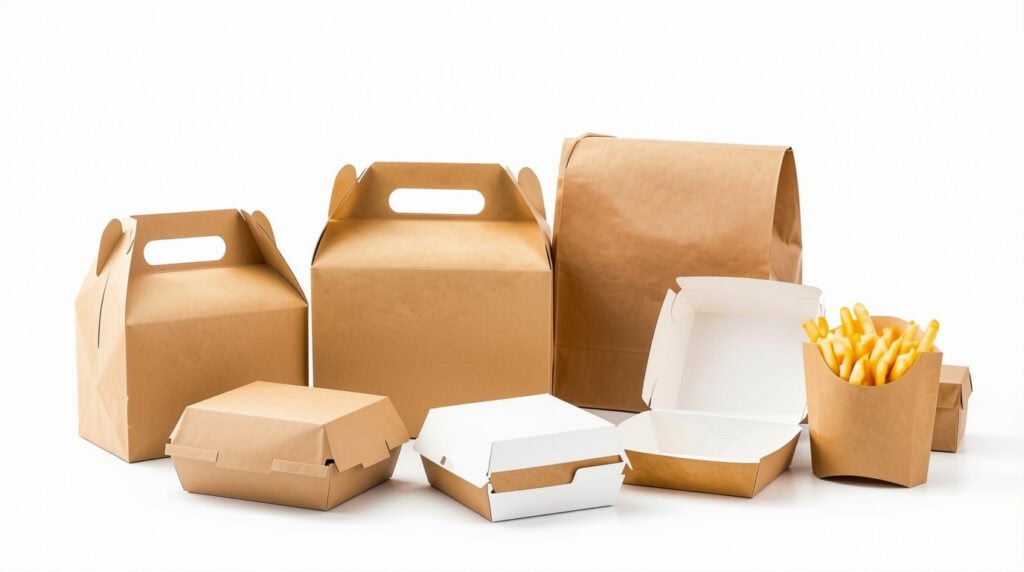
As takeaway and food delivery continue to grow, paper takeaway packaging has become increasingly popular.
Typical products include:
- Meal boxes
- Paper bowls
- Burger boxes
- French fry containers
These packages are often treated with food-safe grease-resistant or moisture-resistant coatings to improve performance while reducing the use of traditional plastic packaging.
Packoi Expert Tip:
Start with your product—not, not the packaging style. Figure out how you need to store your food, how long you want it to stay fresh, and what you need for shipping. Then picking the right packaging will be straightforward.
Food Packaging Trends Brands Should Know
Food packaging is changing quickly as brands face new demands from consumers, retailers, and regulations. Sustainability is one of the biggest trends, with more companies looking for recyclable paper solutions and reduced plastic usage.
Another important trend is packaging customization. Brands are using unique structures, premium printing, and personalized designs to improve shelf presence and create stronger customer experiences.
At the same time, packaging performance remains a priority. Modern food packaging solutions increasingly combine paper materials with barrier coatings or functional layers to improve moisture resistance, grease protection, and product freshness.
How to Choose the Right Packaging for Different Foods
Picking the right food packaging means first knowing your product well, instead of just picking a random package style.
Different foods need different storage methods and shelf life lengths. They also react differently to moisture, air, oil, and temperature changes. A packaging solution that works for dry snacks may not suit frozen meals or fresh produce.
Paper packaging is versatile, but no single structure fits every product. The best choice depends on how your product is processed, transported, displayed, and consumed.
Match your packaging materials and barrier functions to your food’s properties. This helps brands keep products fresh and intact, cut material and food waste, and give buyers the same reliable experience every time.
The examples below show the most suitable paper packaging for several common food categories.
Food Category | Recommended Paper Packaging | Key Packaging Considerations |
Dry Foods | Kraft paper bags, stand-up pouches | Moisture resistance, durability, and cost efficiency for products such as rice, beans, grains, and nuts. |
Frozen Foods | Coated paper pouches, paper boxes | Moisture-resistant coatings and strong seals help withstand freezing temperatures and condensation. |
Fresh Produce | Breathable paper bags, paper trays | Good airflow helps reduce moisture buildup while protecting fruits and vegetables during transport and display. |
Bakery Products | Flat paper bags, bakery boxes | Breathability helps maintain freshness, while boxes protect delicate cakes and pastries from damage. |
Snacks & Confectionery | Stand-up pouches, custom printed paper bags | Moisture and oxygen barriers preserve texture and flavor, while resealable features improve convenience. |
Liquids & Beverages | Paper cups, beverage cartons, coated paper containers | Leak-resistant structures and food-grade barrier layers ensure product safety and structural stability. |
Ready-to-Eat Meals | Paper takeaway boxes, bowls, meal containers | Grease-resistant and heat-resistant coatings help maintain food quality during takeaway and delivery. |
Packoi Expert Tip:
Don’t choose packaging based only on the type of food. Products in the same category can have very different packaging needs.
Take roasted coffee and flour as an example. Both are dry goods, but coffee needs far stronger oxygen blocking to lock in its flavor and stay fresh.
Before you pick your packaging, think about your product ingredients, desired shelf life, storage environment, and delivery methods. This makes sure the packaging works perfectly for your goods.
How to Order Custom Food Packaging: A Step-by-Step Guide
Ordering custom food packaging requires careful planning before production begins. A clear process helps brands avoid costly mistakes and ensures the final packaging meets product requirements.
Define your product requirements
Start by identifying your food type, shelf life expectations, storage conditions, and transportation environment. Different products require different levels of moisture, oxygen, or grease protection.
Choose the right material structure
Select packaging materials based on performance needs rather than appearance alone. Paper type, coatings, barrier layers, and structural design all affect packaging performance.
Confirm size, design, and printing details
Before production, finalize packaging dimensions, artwork, printing methods, and finishing options. A physical sample or proof can help identify issues before mass production.
Test samples before full production
Sampling allows brands to check product fit, durability, print quality, and overall performance. This small step can prevent expensive problems after large-scale production.
Common Mistakes Buyers Make When Ordering Foodstuff Packaging
Even experienced buyers can overlook important details during the purchasing process. Fortunately, most packaging problems can be prevented with better planning.
Here are six mistakes we see most often.
Choosing Price Over Performance
The lowest quotation isn’t always the lowest overall cost.
A cheaper material may provide insufficient barrier protection or reduced durability, leading to product loss, customer complaints, or costly redesigns.
Always compare value—not just price.
Ignoring Food Safety Requirements
Never assume every paper package is suitable for direct food contact.
Always verify certifications and request supporting documentation before placing an order.
Selecting the Wrong Barrier Structure
Packaging should be designed around the product.
Coffee, snacks, bakery products, frozen foods, and pet treats all require different barrier properties.
Choosing a standard bag without considering shelf-life requirements often leads to avoidable problems.
Focusing Only on Digital Artwork
Colors on a computer monitor rarely look identical on printed packaging—especially on natural kraft paper.
Always approve a physical production proof before mass printing.
Forgetting Transportation Conditions
Packaging should protect products throughout the entire supply chain, from the end of food production through storage and transport.
If your products will be exported, discuss shipping time, humidity, stacking pressure, and storage conditions, including low temperatures for cold-chain items, with your supplier during the design stage. Meat and other perishable products need packaging that performs reliably during distribution.
Skipping Sample Testing
A sample order is one of the smallest investments you can make—and one of the most valuable.
Testing helps verify:
- Product compatibility
- Seal quality
- Filling equipment performance
- Transportation durability
- Print quality
Finding a problem during sampling is far less expensive than discovering it after thousands of packages have been produced.
Frequently Asked Questions about Foodstuff Packaging
Q1:Is paper food packaging safe for direct food contact?
Yes, paper food packaging can be safe for direct food contact when it is manufactured with food-grade materials that meet the requirements of the target market.
Brands should always confirm material specifications, coatings, and compliance documents with their packaging supplier before production.
Q2:What type of food packaging is best for small businesses?
The best food packaging depends on the product type, storage conditions, and budget. Small businesses often choose flexible options such as paper bags, pouches, or folding boxes because they offer customization options without requiring complex packaging structures.
Q3:Can paper food packaging be custom printed?
Absolutely. Paper packaging supports flexographic, digital, and offset printing, along with various finishing options such as matte, gloss, embossing, and foil stamping.
Q4:How do I choose the right food packaging supplier?
A reliable food packaging supplier should provide more than competitive pricing. Buyers should evaluate the supplier’s experience with food-grade materials, customization capabilities, quality control process, production capacity, and ability to recommend suitable packaging structures.
A good supplier should help solve packaging challenges instead of simply selling standard products.
Q5:What is the typical MOQ for custom food packaging?
Minimum order quantities vary depending on the packaging structure, material, and printing method. Digital printing generally supports smaller orders, while flexographic printing is more economical for large production runs.
Q6:How much does custom food packaging cost?
The cost of custom food packaging depends on several factors, including material, size, printing method, finishing options, order quantity, and packaging structure.
Larger production volumes usually reduce the unit cost, while options such as specialty coatings, embossing, or foil stamping may increase the final price. Requesting samples before mass production helps brands balance quality and budget.
Conclusion
Choosing the right foodstuff packaging isn’t about finding the cheapest bag or the most attractive design. It’s about selecting a solution that protects your product, supports your brand, and performs reliably throughout the supply chain.
Start with your product’s real requirements—shelf life, barrier needs, storage, and transportation. Then match materials and structures to those needs, rather than relying on appearance alone. And before full production, always verify food safety documentation, approve print proofs, and test samples. These small steps upfront can save significant costs later.
Find the Right Paper Food Packaging Partner with Packoi
Sourcing food packaging is a big decision. If you’re looking for a reliable partner who understands food safety, barrier performance, and standout branding, you’re in the right place. At Packoi, we help food brands, wholesalers, and manufacturers create custom paper packaging tailored to different products, shelf-life requirements, and branding goals.
Contact us today. Our experts can review your product needs for free, recommend the most suitable and cost-effective packaging structure, and provide samples before mass production.
Get Your Instant Quote & Free Samples Now!