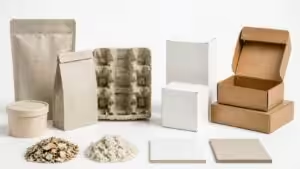
Here’s the tricky part: even experienced buyers sometimes request the wrong material. Someone asks for a “cardboard box” when they actually need corrugated protection for shipping, or picks a heavy shipping box for a product that only needs a slim retail carton.
We work with brands every day who face this exact decision, so we’ve seen where the confusion comes from—and how much it can cost when the choice goes wrong.
In this guide, you’ll learn the real difference between corrugated and cardboard, how they compare on strength, cost, printing, and sustainability, and—most importantly—which one is right for your specific product. Let’s start with a quick answer so you can decide fast.
Quick Answer: Corrugated Box vs Cardboard Box
If you’re short on time, here’s the simple answer:
Although many people casually refer to all paper packaging as “cardboard,” corrugated boxes and cardboard boxes are not the same material in the packaging industry.
- Corrugated boxes are made from multiple layers of paper with a fluted inner layer that provides cushioning and strength. They’re primarily used for shipping, storage, and protecting products during transportation.
- Cardboard boxes (more accurately called paperboard cartons) are made from a single, solid sheet of paperboard. They’re commonly used for retail packaging, cosmetic boxes, cereal boxes, and other lightweight consumer products where appearance matters more than structural strength.
Here’s a quick comparison:
Feature | Corrugated Box | Cardboard (Paperboard) Box |
Material Structure | Three or more layers with a fluted core | Single-layer solid paperboard |
Strength | Excellent | Moderate |
Cushioning | High | Low |
Best For | Shipping & transportation | Retail packaging & display |
Printing Quality | Good | Excellent |
Product Weight | Medium to heavy products | Light products |
Cost | Usually higher | Usually lower |
Recyclability | Yes | Yes |
So, which one should you choose?
- Choose corrugated boxes if your products need protection during shipping or long-distance transportation.
- Choose cardboard (paperboard) boxes if your priority is attractive shelf presentation, premium printing, and lightweight retail packaging.
If you’re still unsure, don’t worry. The following sections will explain exactly how each material works and when it’s the better choice.
Packoi Expert Tip
One thing we’ve learned after packaging thousands of orders: when a customer tells us “I need cardboard boxes,” they often actually need corrugated ones.
It’s an easy mix-up. In everyday conversation, people call almost any paper box “cardboard.” But in packaging, cardboard and corrugated are two very different materials—and picking the wrong one usually means either shipping damage or paying for protection you don’t need.
So before choosing a box, we always ask three simple questions: How heavy is the product? How fragile is it? How far is it shipping? The answers point to the right material almost every time.
What Is a Cardboard Box?
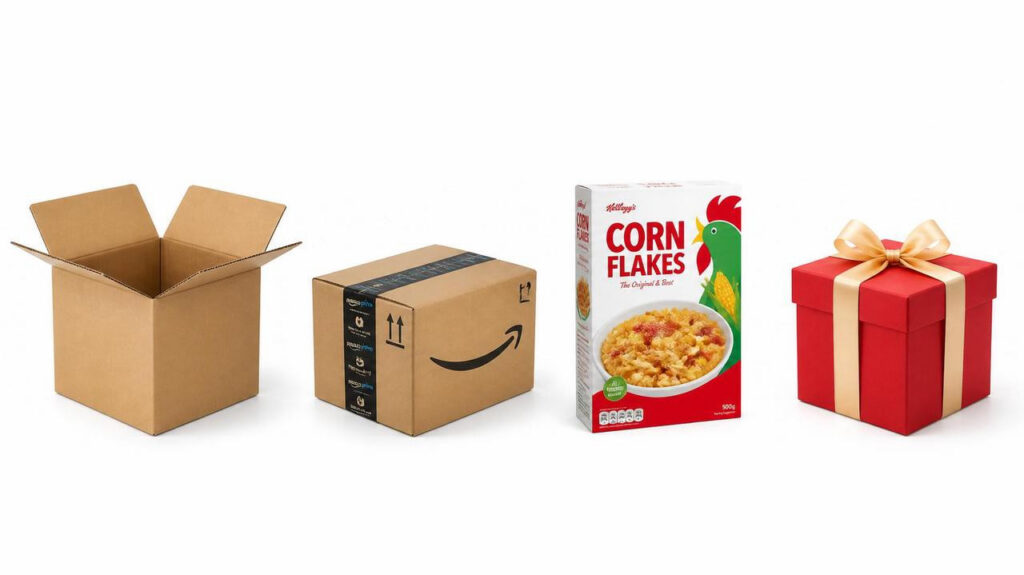
Before comparing corrugated vs cardboard boxes, it helps to clear up what “cardboard” actually means—because this is where most of the confusion starts.
In everyday talk, people call almost any paper box “cardboard.” An Amazon box, a cereal box, a gift box—all “cardboard.” But in the packaging world, the term is more specific.
What most people call a cardboard box is usually paperboard: a single, solid layer of paper that’s thinner, smoother, and easier to print than corrugated. There’s no fluted middle layer, so it’s lighter and better suited to products that need to look good rather than survive rough shipping.
That difference matters. Pick the wrong material and it affects not just product safety, but your printing quality, packaging cost, and how customers see your brand.
Why “Cardboard” Causes So Much Confusion
The word simply means different things to different people:
- Consumers use “cardboard” for almost any paper box.
- Retailers use it loosely in day-to-day conversation.
- Packaging manufacturers separate corrugated fiberboard from solid paperboard, because each does a different job.
If you’re sourcing from a manufacturer, knowing this difference helps you avoid mix-ups and get the right box the first time.
What Is a Corrugated Box?
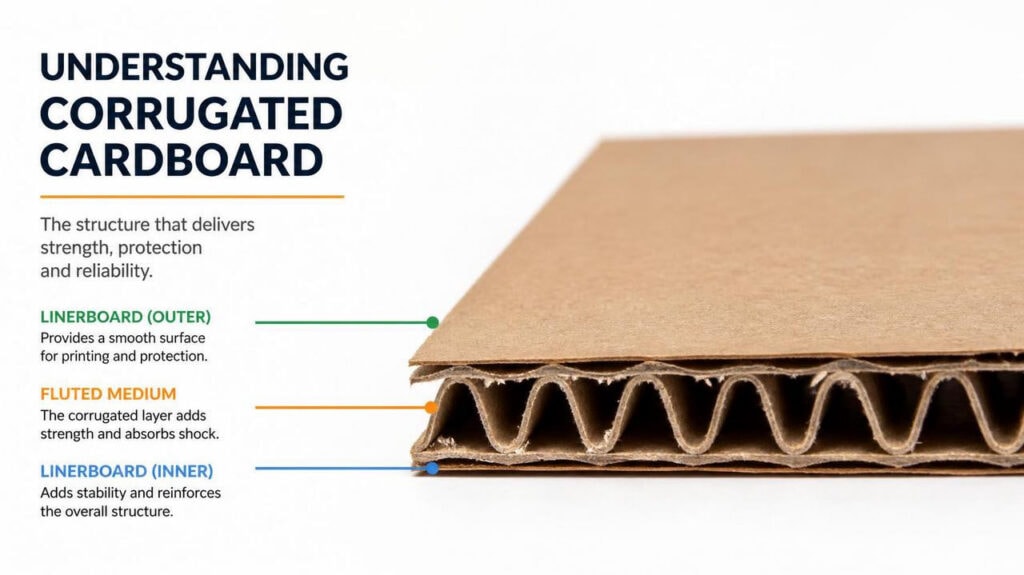
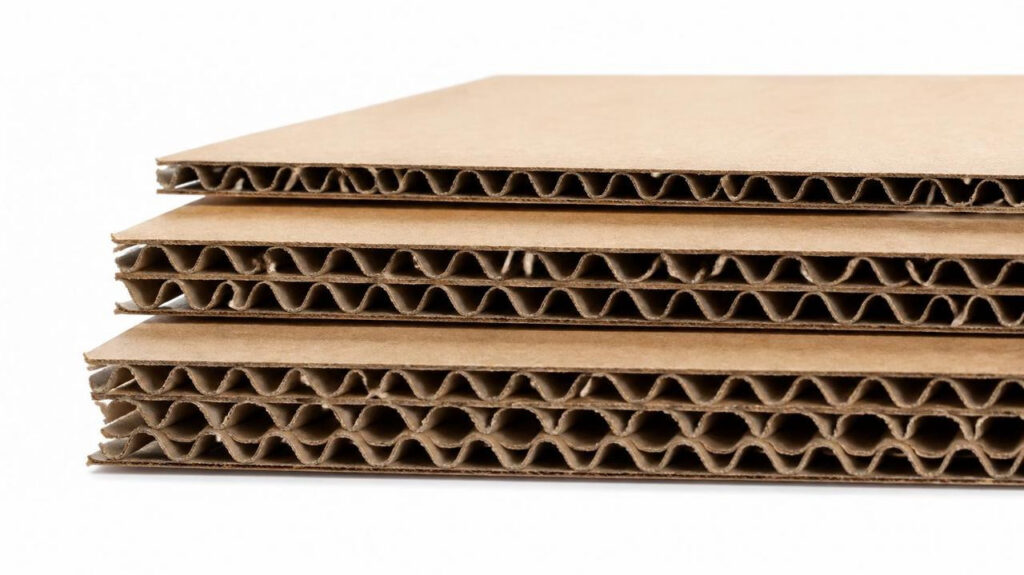
A corrugated box is made from corrugated board—three or more layers of paper working together. The flat outer and inner sheets are called linerboard, and the wavy layer sandwiched between them is the medium.
That wavy layer is where the strength comes from. Its little arches resist crushing and soak up impact—which is exactly why corrugated is the standard for shipping and heavy-duty packaging.
Types of Corrugated Board
The wall thickness depends on how much protection you need:
- Single-wall – One fluted layer between two liners. The most common type, used for most shipping boxes.
- Double-wall – Two fluted layers, for heavier or fragile products.
- Triple-wall – Seriously strong; used for industrial and bulk shipping.
Common Types of Cardboard (Paperboard) Packaging
Paperboard is popular for consumer products because it looks clean, prints beautifully, and holds its shape for lightweight items. The most common uses include:
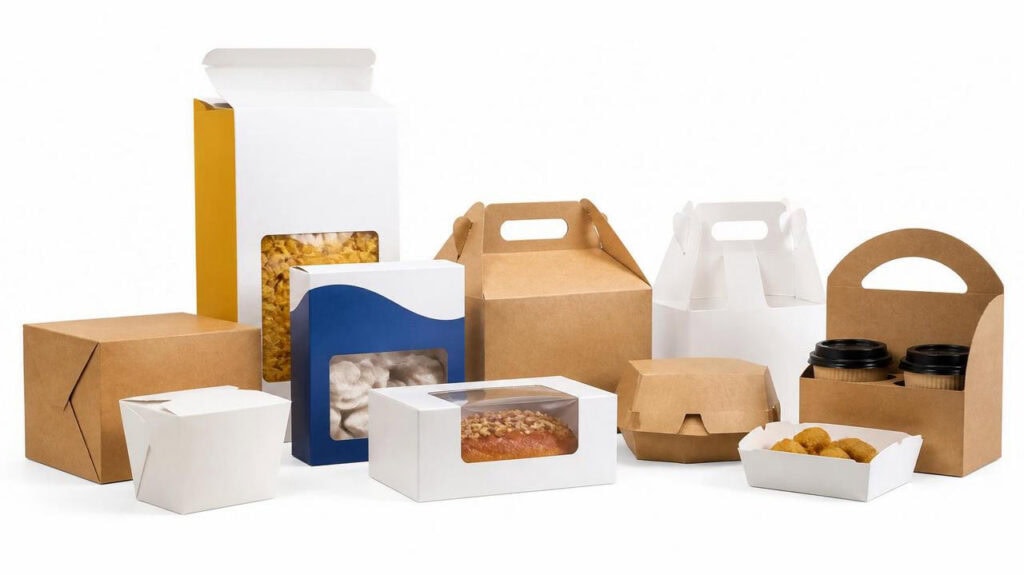
Folding cartons – One of the most widely used paperboard formats. Great for cosmetics, skincare, pharmaceuticals, tea and coffee, and dry foods. They ship and store flat, which keeps costs down.
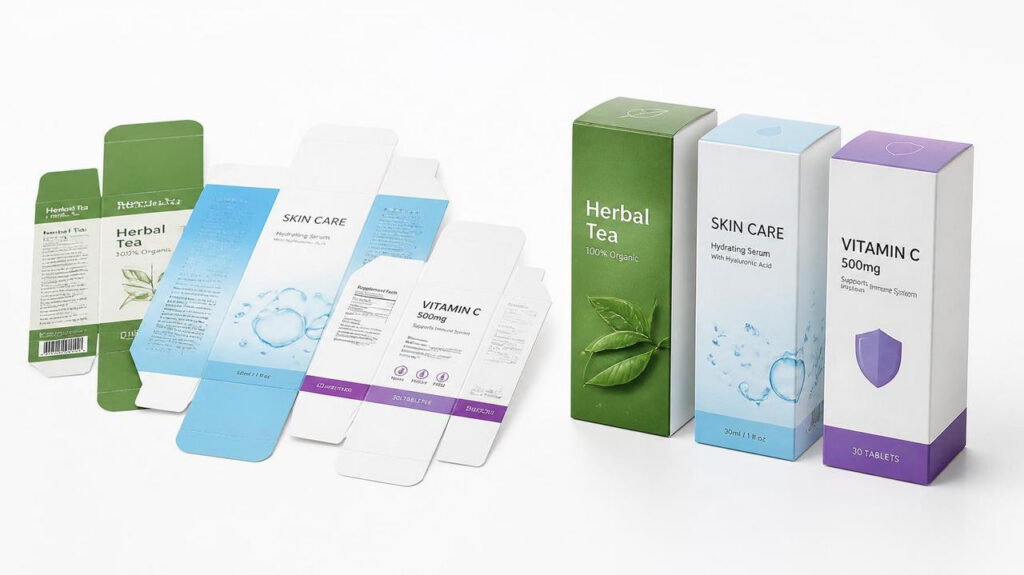
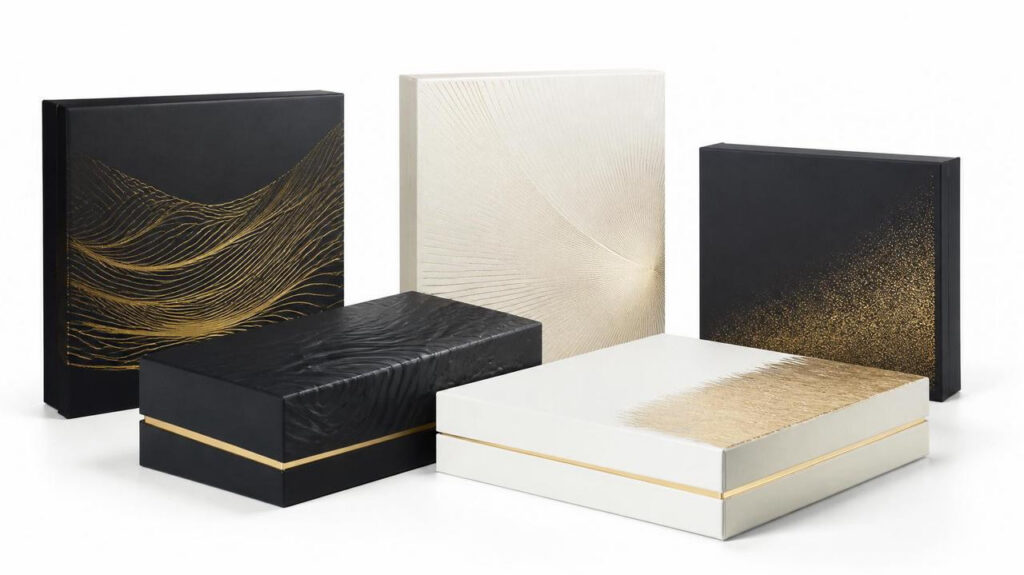
Gift boxes – Often use thicker paperboard plus premium finishes like foil stamping, embossing, spot UV, or soft-touch lamination to create a more luxurious unboxing feel.
Food cartons – Used for cereal, frozen and bakery items, and beverage carriers. Many add food-safe coatings for moisture or grease resistance.
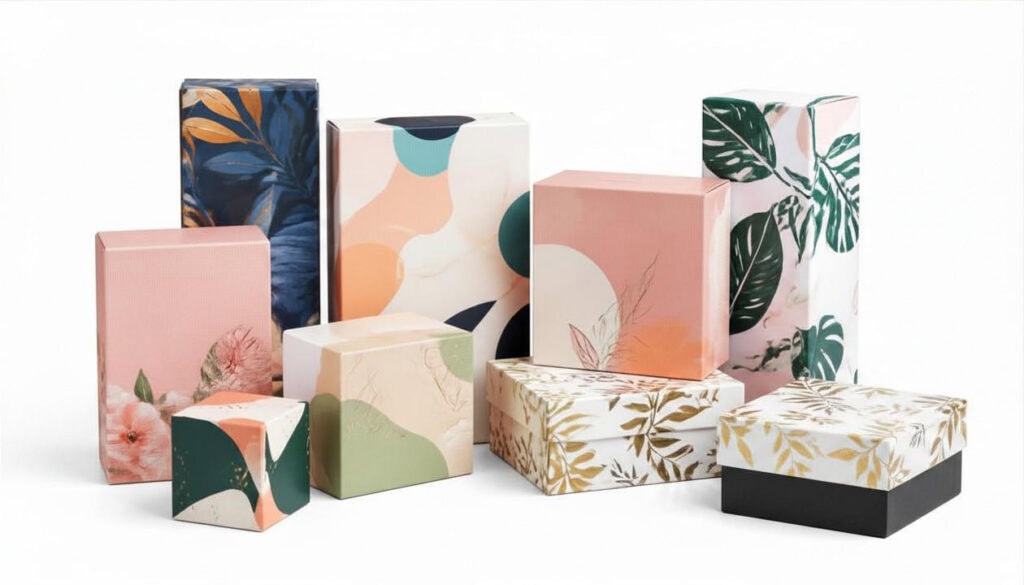
Cosmetic & retail packaging – Where shelf appeal matters as much as protection. Paperboard’s smooth surface reproduces vibrant color and fine detail, which is why so many consumer brands choose it.
Corrugated Box vs Cardboard Box: Key Differences
Now that we’ve defined both materials, let’s compare them side by side.
Feature | Corrugated Box | Cardboard (Paperboard) Box |
Material Structure | Multiple layers with a fluted core | Single-layer solid paperboard |
Thickness | Thicker | Thinner |
Strength | Excellent compression and impact resistance | Suitable for lightweight products |
Cushioning | Built-in shock absorption | Minimal cushioning |
Weight | Slightly heavier | Lightweight |
Printing Quality | Good | Excellent |
Shelf Appearance | Functional | Premium retail presentation |
Shipping Performance | Excellent | Limited |
Customization | Wide range of box styles and inserts | Excellent for decorative finishes |
Cost | Higher material cost but greater protection | Lower material cost for lightweight packaging |
Recyclability | Fully recyclable | Fully recyclable |
Corrugated Box vs Cardboard Box: Advantages and Limitations
Choosing between corrugated and cardboard boxes depends on what your packaging needs to achieve. Each material has clear advantages and limitations.
Corrugated Box Advantages
Corrugated boxes are designed for protection. Their fluted structure helps absorb shocks, resist crushing, and support stacking during transportation.
They are ideal for:
- Shipping and fulfillment
- Heavy or fragile products
- Long-distance transportation
- Warehouse storage
Corrugated Box Limitations
The main drawback is appearance. Standard corrugated boxes usually cannot match paperboard cartons for premium printing and luxury presentation.
They may also require more material, which can increase shipping weight compared with lightweight paperboard packaging.
Cardboard (Paperboard) Box Advantages
Paperboard boxes offer excellent print quality and a smooth surface for branding. They are commonly used for cosmetics, food products, retail packaging, and gift boxes.
Cardboard Box Limitations
Paperboard lacks the cushioning structure needed for rough transportation. For fragile products or long-distance shipping, it usually needs additional protection from a corrugated outer box.
Corrugated vs Cardboard Box Cost Factors
The price difference between corrugated and cardboard boxes depends on more than the material itself.
Several factors influence the final packaging cost:
- Material thickness: Heavier board grades provide more protection but increase material costs.
- Box size: Larger boxes require more material and may increase shipping expenses.
- Printing and finishing: Custom colors, coatings, embossing, or special finishes affect the total price.
- Order quantity: Larger production runs usually reduce the cost per unit.
- Protection requirements: Choosing stronger packaging can reduce replacement and return costs caused by product damage.
For businesses, the lowest unit price is not always the lowest overall cost. The better choice is the box that balances protection, appearance, and shipping efficiency.
Corrugated Box vs Cardboard Box: Detailed Comparison of Key Differences
Strength and Cushioning: Protection vs. Presentation
Corrugated boxes are built to survive the trip. That fluted core absorbs shocks, resists crushing, and stacks without collapsing—exactly what shipping demands.
Paperboard is built to look good, not take a beating. It holds its shape on a shelf, but it won’t protect a product through a rough delivery.
Printing: Where Cardboard Wins
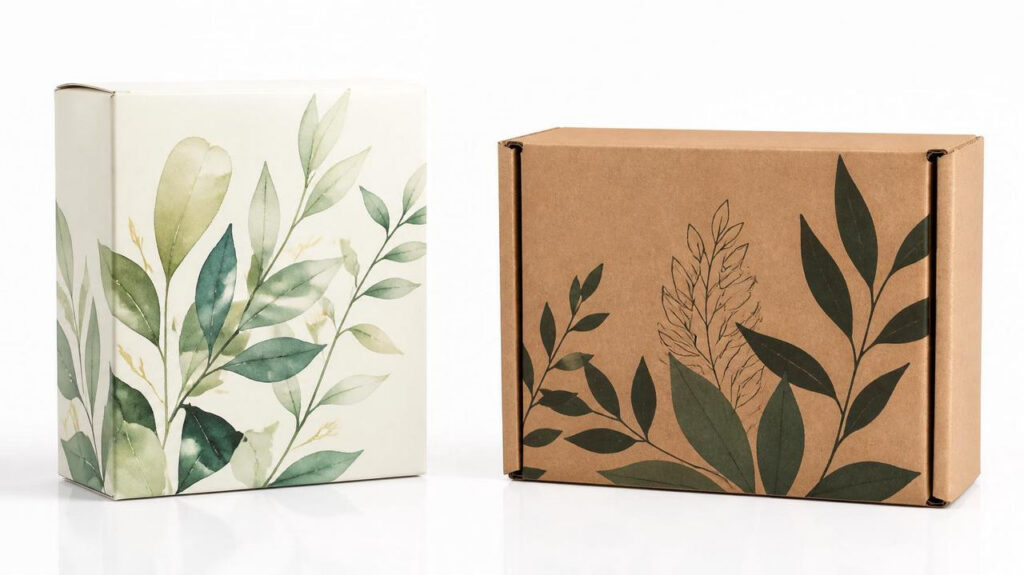
If your box is headed straight to a shelf or into a gift set, print quality matters—and paperboard’s smooth surface delivers sharp color and fine detail.
Corrugated prints well too, and modern digital and litho-lamination have narrowed the gap. But for premium, high-resolution branding, paperboard still has the edge.
Cost: Look Beyond the Unit Price
Paperboard usually costs less per box. Cheaper material, though, doesn’t always mean cheaper in the end.
Ship products in packaging that’s too weak, and damage and replacement costs add up fast. The number that actually matters is total landed cost—protection, shipping weight, and returns included.
Sustainability: Both Recyclable, With a Twist
Both materials recycle easily. Corrugated is one of the most recycled packaging materials in the world and often carries a high share of recycled fiber.
Paperboard is lighter, which can trim transport emissions a little. If sustainability drives your decision, either works—the right pick usually comes down to your product, not the material’s eco-profile alone.
Corrugated Box vs Cardboard Box: Which One Should You Choose?
By now, you’ve learned that both corrugated boxes and cardboard (paperboard) boxes have unique strengths. But knowing the differences is only half the equation—the real question is which one is right for your business.
The answer depends less on the material itself and more on how your products are stored, transported, displayed, and experienced by customers.
Below are some of the most common packaging scenarios and the material that’s typically the better choice.
Choose Corrugated for Shipping, Heavy, or Fragile Products
If your product travels through couriers, warehouses, or freight, corrugated is almost always the safer bet. Along the way, packages get stacked, dropped, and shaken—and the fluted core is built for exactly that.
It’s the go-to for:
- eCommerce and subscription orders
- Electronics and household goods
- Glass, wine, and ceramics
- Kitchen appliances and power tools
- Automotive and industrial parts
For heavier or more fragile items, you can step up from single-wall to double- or triple-wall board. And here’s the key: matching the right board grade matters far more than just picking the thickest option.
Best choice: Corrugated
Choose Paperboard for Retail and Premium Presentation
If your packaging sits on a shelf or inside a gift set, paperboard usually delivers the better experience. Its smooth surface prints in sharp color and detail, and takes premium finishes like embossing, foil stamping, and soft-touch lamination.
You’ll see it on:
- Cosmetics, skincare, and perfume
- Chocolate, tea, and supplements
- Jewelry and beauty products
- Boutique and seasonal retail items
Luxury packaging isn’t about maximum protection—it’s about a memorable first impression. That’s paperboard’s strength. Many brands then drop these boxes inside a corrugated shipping carton, combining branding with durability.
Best choice: Paperboard
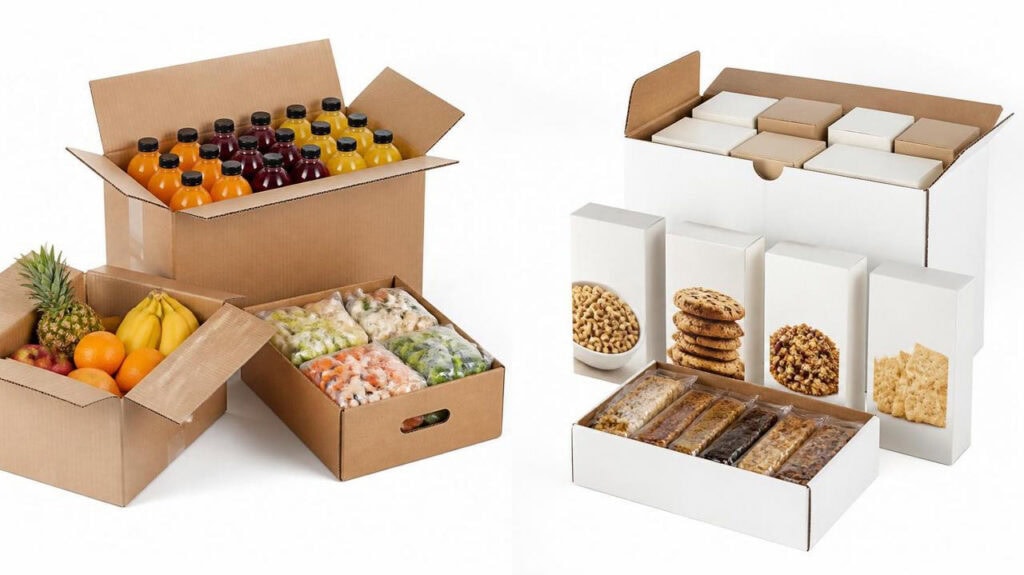
Food Packaging: It Depends on the Stage
Food is one of the few areas where both materials work—just for different jobs.
- Corrugated handles produce, beverage cases, bulk shipments, and frozen logistics.
- Paperboard handles cereals, snacks, bakery items, and dry-food cartons.
The right pick comes down to product weight, moisture exposure, food-safety rules, and your supply chain. Often the answer is both: paperboard for the retail box, corrugated for the shipping carton.
Best choice: Depends on the packaging stage
For eCommerce: Often Both
Online brands need a balance of protection, branding, and cost. That’s why corrugated mailer boxes are so popular—they protect the product, print beautifully, skip the need for an extra outer carton, and lift the unboxing experience.
For lightweight premium products, many brands pair a printed paperboard product box with a custom corrugated mailer—shelf appeal on the inside, shipping protection on the outside.
Best choice: Corrugated (often paired with paperboard)
Quick Recommendation by Product Type
Product Type | Recommended Material | Why |
Electronics | Corrugated | Better impact protection in transit |
Cosmetics | Paperboard | Premium look and high-quality printing |
Jewelry | Paperboard | Luxury presentation and finishes |
Glass Bottles | Corrugated | Strong cushioning and stacking |
Food & Beverage Shipping | Corrugated | Handles transport and palletizing |
Breakfast Cereals | Paperboard | Lightweight retail packaging |
Subscription Boxes | Corrugated | Durable, with room for branding |
Gifts | Paperboard | Better aesthetics and premium finishes |
Industrial Parts | Corrugated | High compression strength for heavy loads |
Packoi Expert Tip:
One thing we’ve learned from years of packaging consultations: thicker isn’t safer. It’s one of the most common assumptions we have to walk customers back from.
More than once, we’ve actually helped a client cut material—not add it—by switching to a better flute profile or board grade. The box protected the product just as well, but weighed less and shipped cheaper.
So the goal was never “use more material.” It was “use the right structure for the job.”
A Simple Rule of Thumb
Still torn between corrugated and cardboard? Use this:
Go corrugated when you’re protecting products in transit, supporting heavier loads, cutting shipping damage, or sending goods over long distances.
Go paperboard when you’re after premium presentation, high-quality printing, luxury branding, or shelf appeal for lightweight products.
For a lot of growing brands, the smartest move isn’t picking one—it’s using both. A beautifully printed paperboard box makes the unboxing memorable, while a corrugated outer carton makes sure the product actually arrives in one piece.

Common Mistakes Buyers Make
Even experienced buyers slip up when ordering packaging. Here are the mistakes we see most—and how to sidestep them.
Confusing the Two Materials
The classic one: ordering “cardboard” when the product actually needs corrugated to survive shipping. Confirm the material by its structure, not by the name people casually use.
Buying on Price Alone
The cheapest box per unit isn’t always the cheapest in the end. Under-protect a product and the damage, returns, and replacements quickly wipe out whatever you saved.
Over-Specifying the Box
The flip side: picking a box far stronger than the product needs. That just adds material cost and shipping weight for no real gain.
Ignoring Flute Type or Board Weight
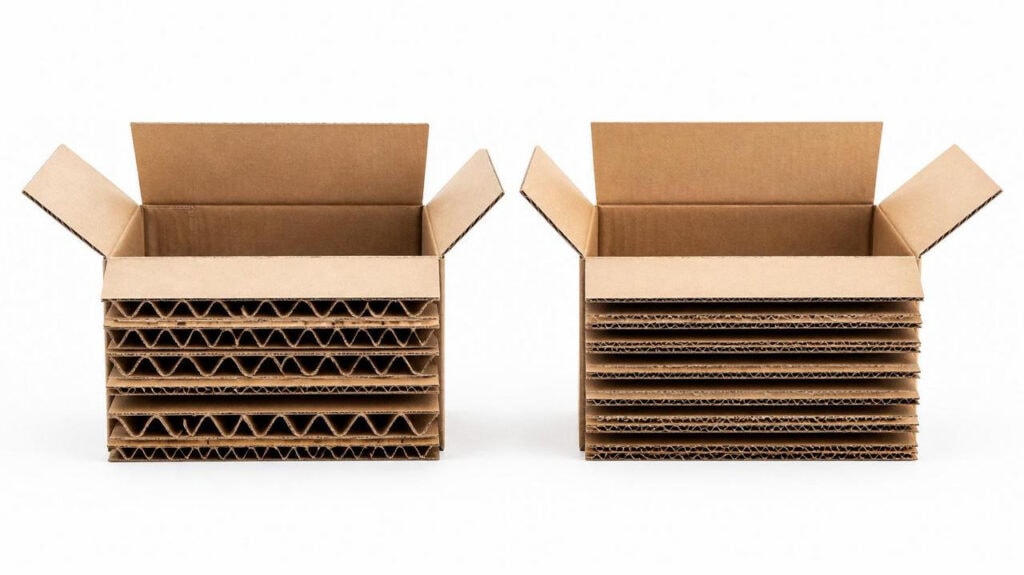
Two boxes can look identical and perform nothing alike. Skipping the details—flute type for corrugated, GSM for paperboard—is a common reason packaging underdelivers.
Forgetting About Shipping Conditions
A box that looks great in a store can still fail in transit. Factor in shipping distance, handling, and stacking before you commit.
Packoi Expert Tip:
Here’s something we’ve noticed on the QC floor: the most avoidable problems usually have nothing to do with material choice. They come from specs no one confirmed before production—flute type, board weight, or box size relative to the actual product.
A box can look perfectly “correct” on paper and still fail once it’s matched to the real product weight and shipping route. So we always push for two things before a full run: confirm the exact specs, and test a sample if you can.
A quick pre-production check costs almost nothing. Finding a fit or strength problem after thousands of boxes are printed? That’s the expensive way to learn.
Frequently Asked Questions About Corrugated Box vs Cardboard Box
Q1: Is corrugated the same as cardboard?
No. In everyday language people use the terms interchangeably, but in packaging they’re different. Corrugated has a fluted (wavy) inner layer for strength, while cardboard (paperboard) is a single solid sheet. Most “cardboard shipping boxes” are actually corrugated.
Q2:Which is stronger, corrugated or cardboard?
Corrugated is significantly stronger. Its fluted core resists crushing, cushions impact, and supports stacking, making it far better for shipping and heavy items. Paperboard is designed for presentation, not protection.
Q3:Is corrugated or cardboard better for shipping?
Corrugated is better for shipping. It protects products through handling, drops, and stacking. Paperboard should only ship inside a corrugated outer box, not on its own.
Q4:Is cardboard cheaper than corrugated?
Paperboard usually costs less per unit. However, if a product needs protection and you choose paperboard to save money, damage and returns can make it more expensive overall. Compare total landed cost, not just unit price.
Q5:Are corrugated and cardboard boxes recyclable?
Yes, both are widely recyclable. Corrugated is one of the most recycled packaging materials globally and often contains recycled content. Paperboard is also recyclable and lighter to transport.
Q6:Which material is better for retail packaging?
Paperboard is usually better for retail. Its smooth surface produces sharp, high-detail printing that looks great on a shelf—ideal for cosmetics, food cartons, and gift boxes.
Q7:Can corrugated boxes be used for retail packaging?
Yes. While corrugated boxes are mainly known for shipping, many brands now use printed corrugated mailer boxes for retail and eCommerce packaging.
They provide both product protection and branding opportunities, making them popular for subscription boxes and direct-to-consumer products.
Q8:Should brands use both cardboard and corrugated boxes?
Many brands use both. A paperboard box creates the retail experience, while a corrugated outer box protects the product during shipping.
This combination is common for cosmetics, electronics, food products, and premium consumer goods.
Conclusion: Making the Right Choice
The choice between corrugated and cardboard really comes down to one question: how is your product used, and how does it get to your customer?
If it needs to survive transit—especially if it’s heavy, fragile, or sold online—corrugated is the stronger, safer bet. If it lives on a retail shelf or needs premium, high-detail branding, paperboard is usually the better fit.
And here’s what we’ve learned: the costliest mistakes are rarely about picking the “wrong” material. They come from unconfirmed specs, buying on price alone, or over-building a box that never needed it.
Match the box to your product’s real weight, fragility, shipping method, and branding goals—that’s what gets you the right result at the right cost.
Working with a Packaging Professional
If you’d rather not guess, that’s exactly where an experienced packaging partner earns its keep.
At Packoi, we help brands land on the right material, structure, and finish—balancing protection, presentation, and cost. Whether you need durable corrugated shippers or premium printed paperboard cartons, our team can recommend the right spec and produce a sample before you commit to a full run.
Contact us or visit us at Packoi for more information.