A business card is your first handshake with opportunities.
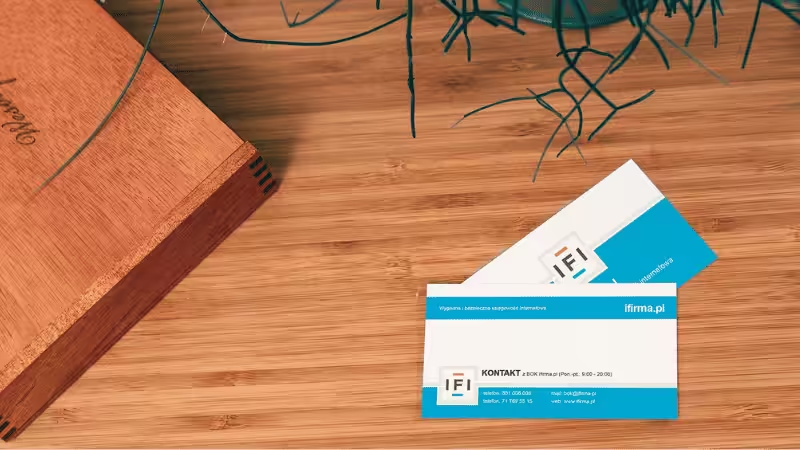
CreditDonkey shares surprising business card stats to show why great business card designs matter.
27 million business cards are printed daily, yet 88% get tossed in a week—mostly because boring designs leave no lasting impression.
Ready for impactful business card designs that boost your sales and connections? Let’s start!
6 Types of Business Card Paper
The choice of paper for your business card will determine the overall perception of your brand. Which business card will you keep? A business card printed on:
- thin and flimsy paper that can be easily damaged,
- low-quality, non-absorbent paper that may cause ink to bleed.
- high-quality paper with an elegant look and a tactile feel.
Everyone I asked picked the last option. Below is a list of papers you should consider for your business card printing:
1. Standard Cardstock
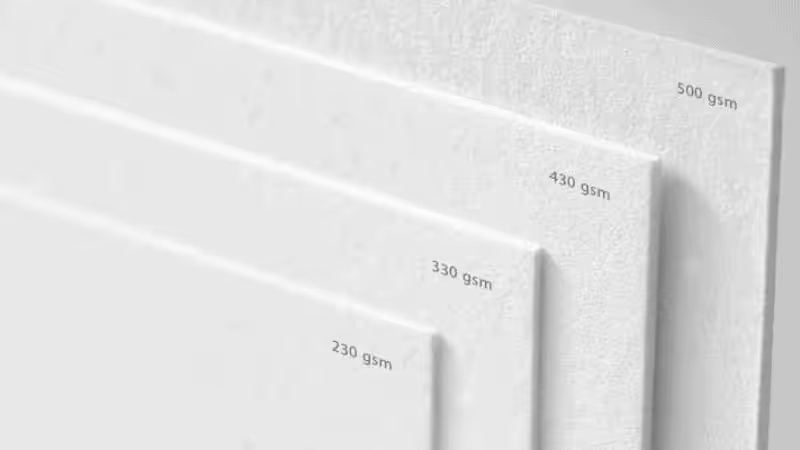
Do you want a paper stock that strikes a perfect balance between durability and quality? The answer is Standard Cardstock. If you have not heard of it, then perhaps you’ve heard of cover stock paper.
Many businesses use both names to talk about business card paper, with a weight range of 80–110 pounds per single ream of paper. Standard cardstock comes in different weights, sizes, colors, and finishes, which can help you make the best custom business cards.
This versatility makes standard cardstock an excellent foundation for most designs, allowing for vibrant colors and sharp details to truly pop. It’s often the most cost-effective choice without compromising on the professional feel, making it perfect for businesses needing a reliable, high-volume solution.
2. Matte Finish
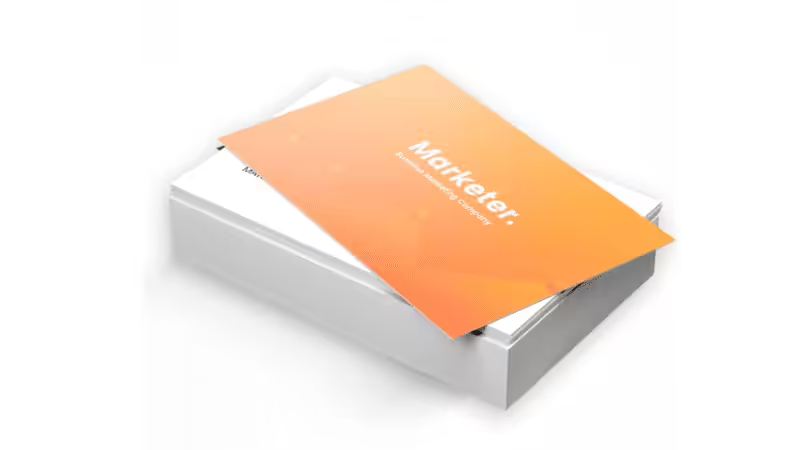
If standard cardstock paper isn’t what you need, then you may consider matte finish or matte stock paper, as others call it. These paper stocks make your card more readable and smooth. You can also write on your business card. Here is a point to note:
Don’t choose a colorful matte stock. A colorful matte stock paper may result in a dull-colored card. This may not bring good results.
This finish is particularly well-suited for professional services, such as legal or consulting firms, where a sophisticated and understated look is highly valued. It’s also a smart choice for brands aiming for a classic, elegant aesthetic, as the non-reflective surface exudes a sense of premium quality and seriousness.
3. Glossy Finish
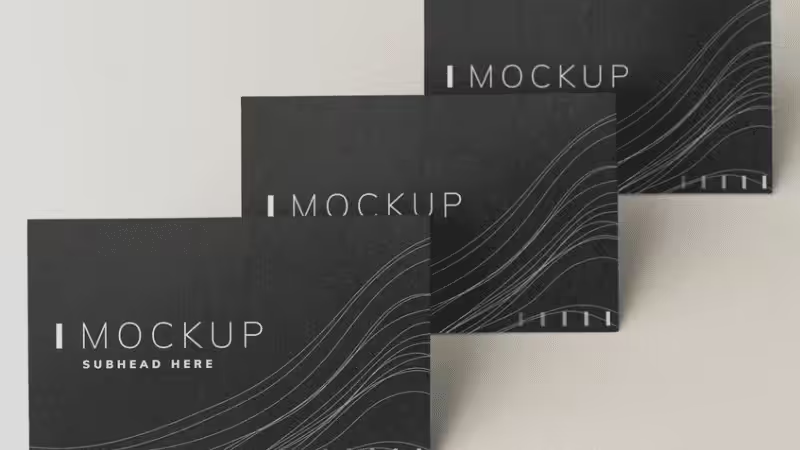
Talking about colors, a glossy finish is the opposite of a matte finish. This business card paper comes with a shiny coating that enhances your card’s color. Glossy paper is more environmentally friendly. Thanks to its quick-drying layer of water-based chemicals.
You can add graphics to your card without worrying about blurring. The glossy finish safeguards the color and prevents any blurring.
This makes it an excellent choice for businesses in creative fields, like marketing or fashion, where vibrant visuals are essential. It ensures your card pops, instantly capturing attention with its rich, bold appearance.
4. Textured Paper
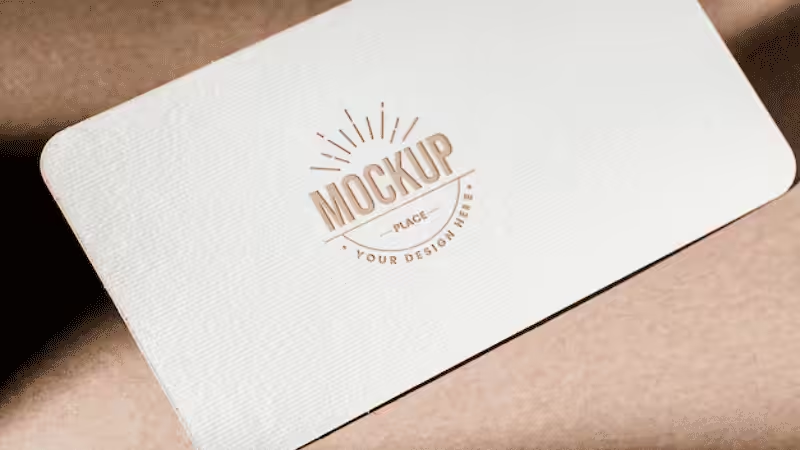
This type of paper adds a tactile edge to your business cards. Imagine your potential customers running their fingers over a business card that exudes elegance through its finely textured surface. This memorable feeling increases their odds of remembering you.
Textured paper limits printing to one side. This is if you don’t want to compromise on quality.
You have to choose between textured elegance or a dual-sided approach. Pick one that will bring your business great value.
5. Recycled Paper
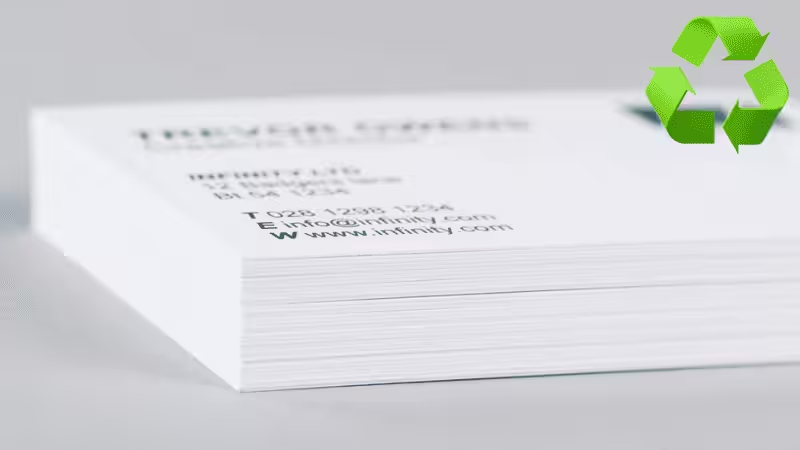
Your business can also opt for recycled paper to print business cards. Using recycled paper is like giving a second life to materials that would otherwise end up in landfills.
This not only gives your cards a distinctive, natural feel but also powerfully conveys your commitment to the planet. It’s a clear signal to environmentally conscious clients that your values align with theirs, building trust and a positive brand image.
6. Metallic Paper
Business cards made from metallic papers exude a subtle and elegant shimmer. These papers are coated with a metallic finish to give your high quality cards a lasting impression.
You can choose between silver, gold, or other metallic colors. The bottom line: metallic paper enhances the vibrancy of your design.
Matte Finish vs. Glossy Finish
A matte finish is the opposite of a glossy finish, the table below highlights the key differences between the two finishes. Take a look.
| Feature | Matte Finish | Glossy Finish |
|---|---|---|
| Appearance | Subtle, non-reflective, and smooth | Shiny, reflective, and vibrant |
| Texture | Smooth and non-reflective | Smooth and reflective |
| Professionalism | Often perceived as more professional | May be perceived as more stylish and attention-grabbing |
| Readability | Less glare, better readability | More glare, potential readability issues in certain lighting |
| Durability | Less prone to scratches and fingerprints | More prone to scratches and fingerprints |
| Printed Colors | Muted and subdued | Vibrant and saturated |
| Cost | Often more cost-effective | More expensive due to the printing process |
So, how do you design a business card?
How to Design the Right Business Cards
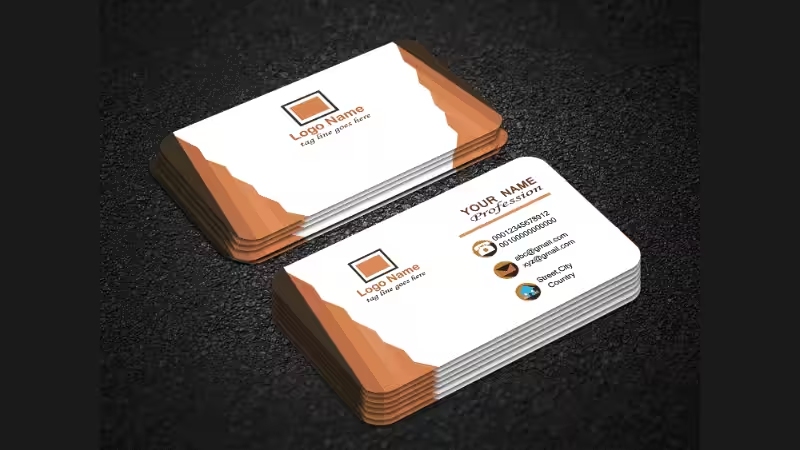
Here are the steps to help you design your business card online:
- Know your brand identity first.
- Only add essential information.
- Use a legible font.
- Add visual elements, but don’t overdo it.
- Use high-quality images.
The following factors will help you design professional business cards:
1. Shapes
You can opt for a traditional rectangle or a unique shape, but ensure that:
- Aligns with your brand personality
- Stands out without compromising on functionality.
2. Size
I find that business cards that fit into standard cardholders are the most preferred. The standard business card dimensions in North America, Europe, and Oceania are:
- North America: 3.5 × 2 in. (88.9 × 50.8 mm)
- Europe: 3.346 × 2.165 in. (85 × 55 mm)
- Oceania: 3.54 × 2.165 in. (90 × 55 mm)
Have the business card size you want, make sure it is in line with the recommended sizes, and then execute it.
3. Materials
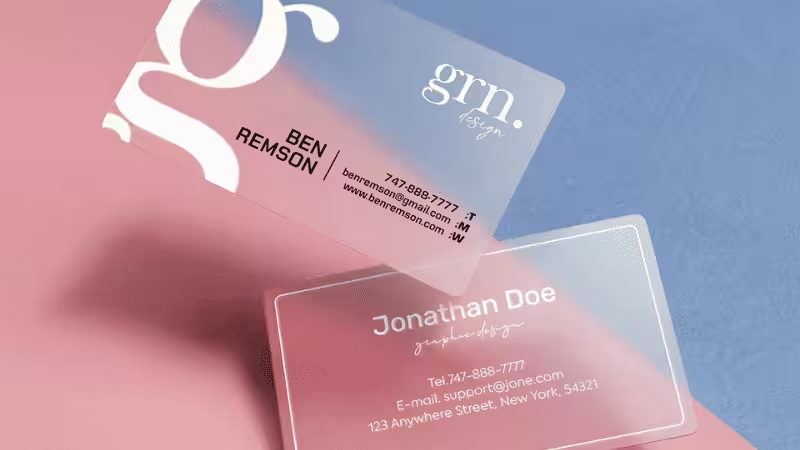
Plastic, metal, fabric, recycled materials, and even wood can make standard business cards. Not just paper. The choice of material to use depends on your brand image and budget. Go for printing services that offer affordable prices, and you’ll get your business cards within a quick turnaround time.
4. Layout
You want maximum impact for your business. Putting essential information on your business card is one way to achieve this milestone. If you are designing your cards, choose design templates that prioritize readability over any other functionality.
Consider also the strategic use of white space; it helps your information breathe and prevents clutter, making your card feel professional and easy to digest. A well-organized layout guides the eye, ensuring key details are seen first and conveying your message effectively.
Printing is the next step after designing. Choose a top printing company for your cards, and you’ll get your cards in a few business days. (This will depend on the one you choose and other conditions)
So, what are the best business card designs in 2026? Take a look. This list contains designs that I think you’ll like.
8 Best Business Card Designs in 2026
The business card design trends for 2026 showcase a blend of innovation, sustainability, and personalization. Here are some of the key trends:
1. Minimalist
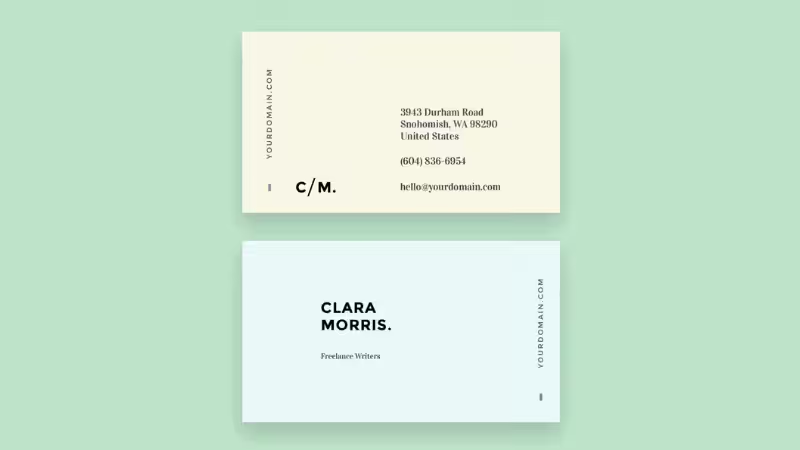
Simple designs make use of white space and a minimal color palette to give your card:
- unforgettable simplicity
- elemental elegance
- Clarity
Minimalism lets you use specialty print elements to make your business card eye-catching. (I’m talking about Coloplan paper or Spot UV gloss coating.) This way, your card will leave a strong first impression on your potential clients.
If you prefer a business card with clean lines, uncluttered layouts, and restrained color palettes that showcase your essential information without compromising visual appeal, then minimalist it is. But if you don’t, perhaps you’ll like the next one.
2. Back to Back
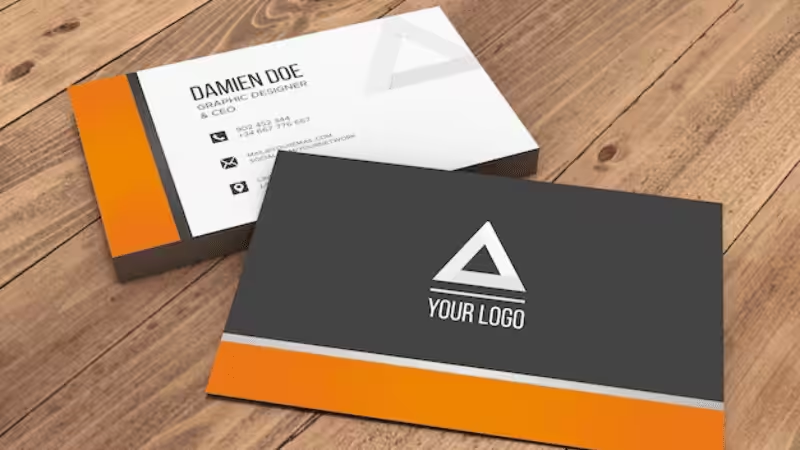
Imagine having twice the space of a one-sided card to make a lasting impression on your potential contacts. Isn’t it amazing?
Back-to-back card design ideas give you the space to easily customize your business card to meet your every need. You can add your contact details on one side and striking visuals or a memorable quote on the other side.
The contrast between the two sides makes your business card aesthetically pleasing and provides a snapshot of your business.
3. Iridescence
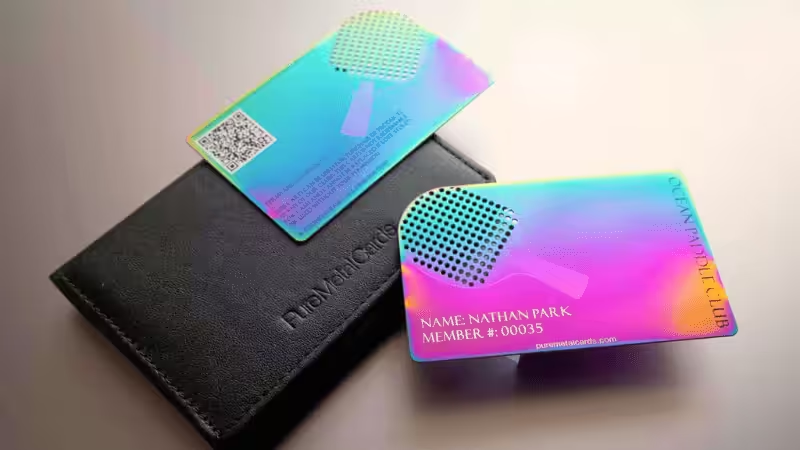
Iridescent (or holographic) business cards use color-changing elements to create a shimmering effect. This highlights your logo and contact details.
Such a striking design immediately catches the eye, making your card memorable and conveying a sense of innovation and luxury. It ensures your brand stands out in a crowded market.
I was wondering why many don’t have holographic business cards. They:
- are expensive to produce,
- may not be legible,
- have limited color options
- are industry-specific
4. Gold Foil Business Cards
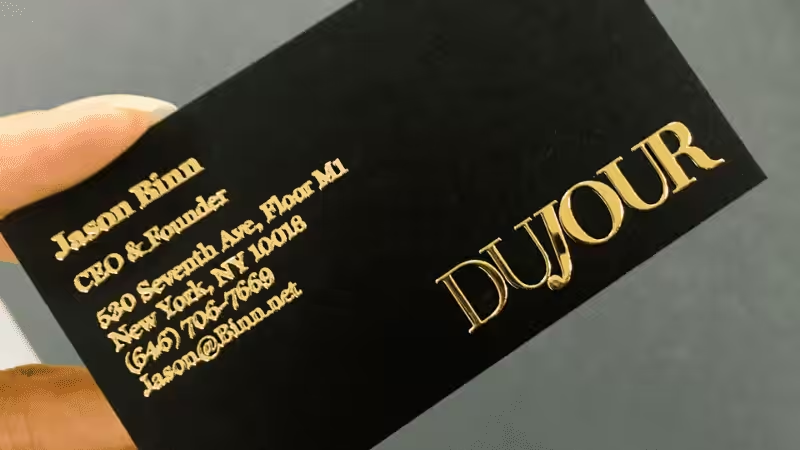
Gold foil business card design turns what would have been a simple card into a work of art.
These cards are stamped with a thin layer of metallic gold to give them a stunning visual effect that catches the eye. If you want high-end business cards, then this is the right one for you. Meanwhile, if you want to get creative with your designs, consider the next option.
5. Interactive elements
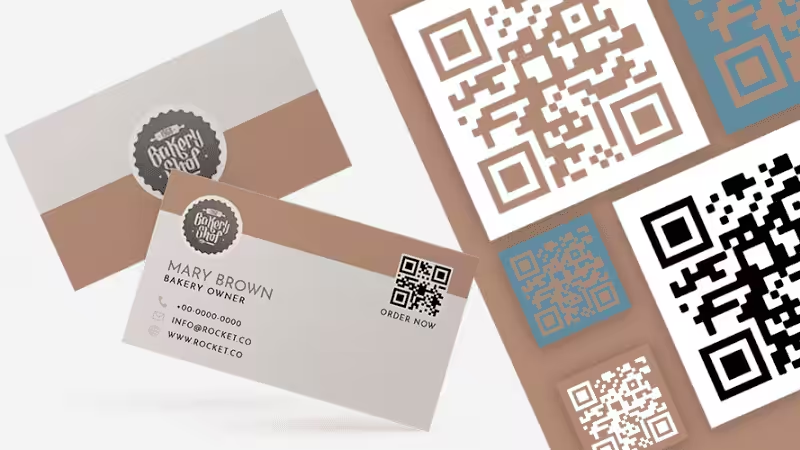
You can add a QR code for a digital connection.
In today’s connected world, QR codes have become a universally recognized shortcut, making it effortless for recipients to access your online presence instantly.
Have you seen business cards with social media profiles, product information, QR codes, or Near-Field Communication Technology (NFC)? We call them “business cards with interactive elements”. The designers use these elements to give the cards a strong visual appeal. You can do it, too. However, you have to consider what your business needs.
6. Play with Texture
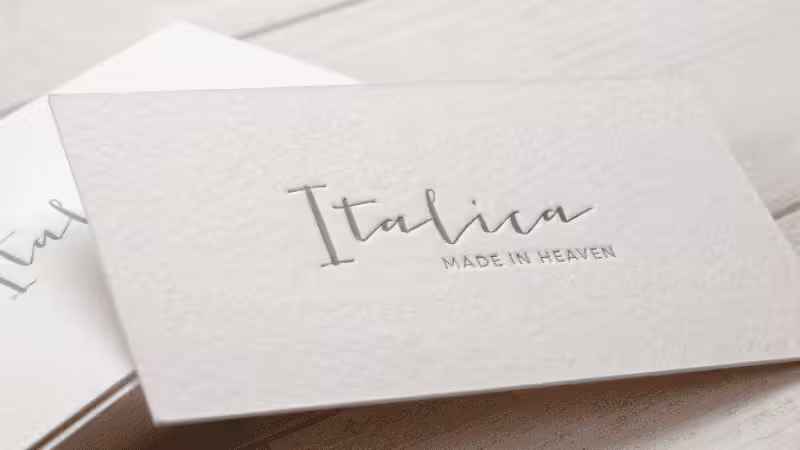
Up to this point, we have only explored business card design ideas that prioritize visual appeal. However, this is different. You personalize your business card’s feel. Here is one thing I love about this design:
People are naturally drawn to texture. Therefore, when done right, this high-end feel provides another layer of engagement for your business. It sparks curiosity and encourages recipients to spend a little more time with it.
7. Go Bold with Colors
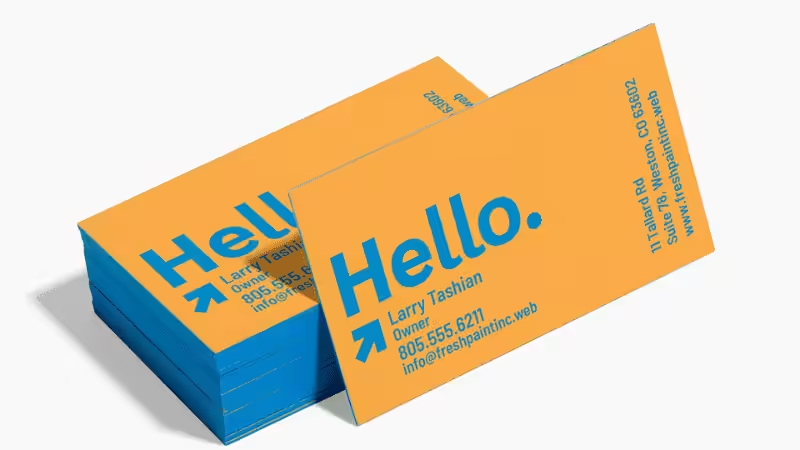
Instead of sticking to traditional tones, you can use bold colors to give your business card a strong visual impact.
This ensures your card quickly stands out and leaves a lasting impression.
But:
- Don’t overload the color
- Should align with your brand’s identity
- Consider the cultural association of the color before using it.
8. Try Unusual Shapes
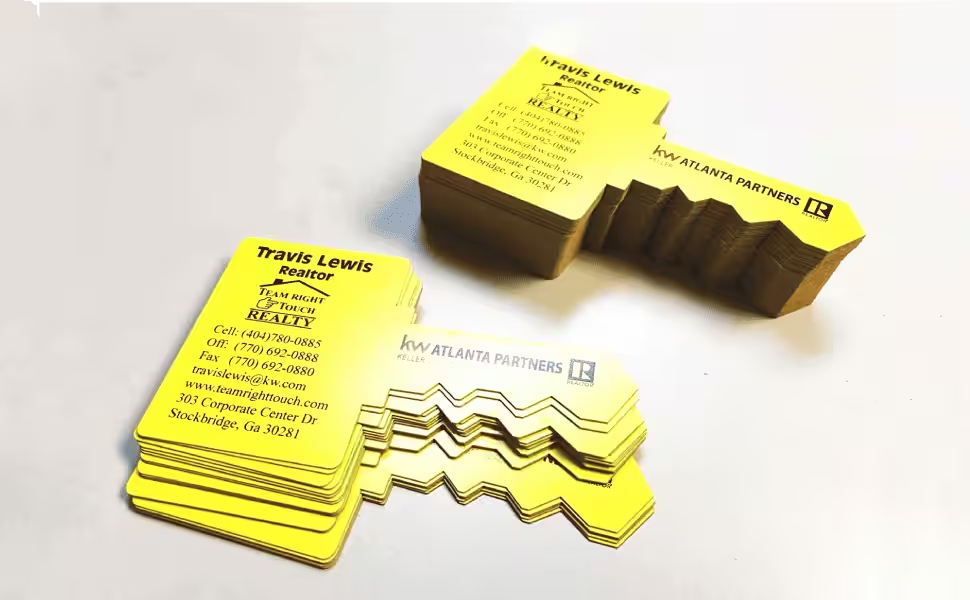
Ditch the traditional rectangular cards if they aren’t working for you. You can design your card in the shape of your business logo or your product to reflect your brand’s identity. I recommend this design but take care not to inconvenience your potential customers. This will hurt your brand image.
FAQ
How much should I budget for custom business cards?
The cost of custom business cards varies widely based on several factors. This includes the chosen paper type and finish, the complexity of design elements like foil or embossing, and the quantity ordered. Generally, investing in higher quality materials and unique finishes can increase the cost but often provides a more memorable impression. It’s best to get a personalized quote based on your specific design and volume needs.
What makes a business card durable and long-lasting?
Durability in a business card often comes from selecting a heavier cardstock weight, typically 16pt or higher. Applying a protective finish, like a matte or soft-touch lamination, can also significantly increase its resistance to wear and tear. Avoiding overly thin or delicate materials ensures your card withstands handling without easily bending, tearing, or showing scuffs.
Are business cards still effective for networking in the digital era?
Absolutely. While digital connections are common, a physical business card remains a powerful tool for making a tangible and memorable impression. It provides an immediate, professional reminder of your interaction and brand. Integrating interactive elements like QR codes also seamlessly bridges the gap between your physical card and your digital presence, offering the best of both worlds.
How can I ensure my business cards align with my overall brand identity and other marketing materials?
To maintain brand consistency, always use the same brand colors, fonts, logo, and overall visual style that appear across all your other marketing collateral. Ensure the design reflects your brand’s unique personality and message. Partnering with a comprehensive printing service can help unify these elements, extending this cohesion even to custom packaging solutions for a fully integrated brand experience.
Get Creative Custom Business Cards with Packoi!
I’ve given you the options. Now it’s your time to make a choice.
Do you want to go with a minimalist, iridescent, or gold foil business card design? You can also be creative and play with the color, texture, and shape to create a unique business card for your brand, or explore our professionally designed templates for a polished and ready-to-print solution.
Contact us at Packoi for printing business cards, our service will also give your brand identity a boost. Get a quote today!