Many brands assume premium packaging requires expensive foil stamping. But the truth is different: metallic inks deliver that luxurious sheel at a fraction of the cost—plus they handle fine lines and tiny text that foil simply can’t print. Pick the wrong technique, and your packaging could oxidize and lose its luster within three months.
This is the ultimate guide to metallic ink printing. We’ll break down exactly what it is, how it creates that elegant sheen, and provide a clear comparison against foil stamping. By the time you finish reading, you’ll know precisely which option is best for your brand, your design, and your budget, ensuring your product stands out on the shelf for all the right reasons.
What Is Metallic Ink? A Quick Introduction
Metallic ink is a special type of ink that contains real metallic particles—like aluminum, copper, or bronze—suspended in a liquid base. When printed, these tiny flakes catch and reflect light, creating a subtle shimmer and the appearance of a metallic surface. It’s an excellent way to add a touch of brilliance and visual interest to your printed materials.
See the Difference: Metallic vs. Standard Ink
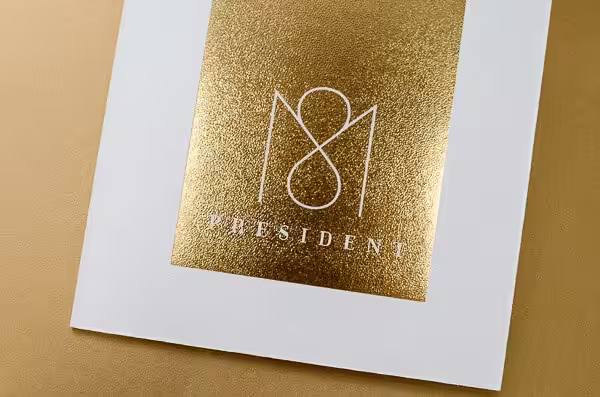
The best way to understand the impact is to see it. Imagine your logo printed in standard black ink—it’s classic but flat. Now, picture that same logo printed with silver metallic ink. It instantly gains depth, catches the light as the package moves, and communicates a higher quality.
How Is Metallic Ink Made?
Metallic ink is made of a few key components:
- Metallic Pigments: These are the finely ground particles of metal (like aluminum for silver, or bronze/copper for gold tones) that create the shimmer.
- Binder: This is the liquid base that holds the metal particles together and helps them adhere to the paper.
- Solvents: These control the ink’s thickness and help it dry properly after printing.
What Types of Metallic Inks Are There?
While there are many specialty types, the most common ones used in packaging are leafing and non-leafing inks. Leafing inks have pigments that rise to the surface for a brighter sheen, while non-leafing inks keep particles suspended for a more uniform, subtle finish.
Depending on the use, metallic inks can be ideal for specific printing projects. Instead of using standard inks, metallic inks offer a glossy effect. They can be used for diverse digital printing projects, such as screen printing, offset printing, business cards, and brochure stands. Each specific ink type has specific uses that offer the best results. At Packoi, we help you select the right type for your desired effect.
Metallic Ink vs. Foil Stamping: Which Is Right for Your Brand?
This is the most common question we get. Both techniques add a metallic look, but they are very different in process, appearance, and cost. Choosing the right one depends entirely on your design goals and budget.
A Head-to-Head Comparison Table
Feature | Metallic Ink Printing | Hot Foil Stamping |
Visual Effect | Subtle, elegant shimmer. Part of the paper. | Bright, opaque, mirror-like reflection. Sits on top of the paper. |
Cost | More affordable. A single pass on the printing press. | More expensive. Requires a custom metal die and a separate machine pass. |
Detail Level | Excellent for fine lines, small text, and intricate patterns. | Not ideal for very fine details, as they can fill in. |
Texture | Smooth, no raised texture. The ink is absorbed by the paper. | A slight debossed (indented) texture where the die presses the foil. |
Best For | Sophisticated designs, detailed logos, budget-conscious luxury. | High-impact, bold statements, luxury logos, certificates. |
The Bottom Line: When to Choose Metallic Ink
Choose metallic ink when you want a refined, elegant shimmer integrated into your design, need to print fine details, and are looking for a cost-effective way to add a premium touch.
Choose foil stamping when you need a bold, mirror-like finish that makes a powerful statement and your budget allows for a more involved process.
4 Key Benefits of Using Metallic Inks on Your Products
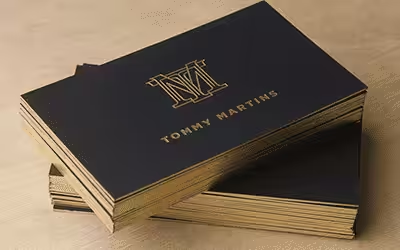
So, why should you consider metallic inks for your next project? The advantages go beyond just looking nice.
1. Elevate Your Brand’s Perceived Value
One of the primary advantages of using these inks in printing is their enhanced aesthetics. This type has an improved visual appeal. They add a touch of elegance, sophistication, and visual interest to designs. This makes them stand out and catch the viewer’s attention. The shimmering or reflective properties of metallic inks create a sense of depth and dimension. Therefore, it adds a luxurious and high-end feel to printed pieces. These inks are ideal for printing business cards, packaging, brochures, or invitation cards. Notably, they can also be used for digital printing and screen printing. Metallic inks elevate the overall look and feel, making the design more captivating and memorable.
2. Stand out in Marketing Materials:
In today’s competitive landscape, it is crucial to grab the attention of potential customers. This makes you stand out from the crowd. Pure metallic colors offer a powerful tool for achieving this goal. By incorporating metallic colors in logos, advertisements, banners, or product packaging, businesses create a lasting visual impact.
This visual impact sets them apart from their competitors. The reflective nature of metallic inks helps capture and reflect light. This gives the design elements a more eye-catching and memorable look. It enhances brand recognition and increases the chances of attracting customers’ attention.
3. Unlock Greater Design Flexibility
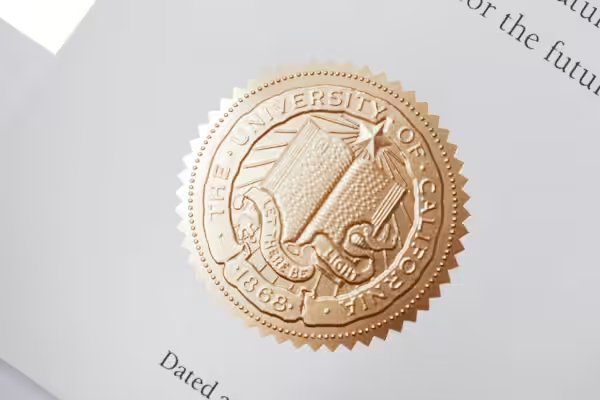
Another benefit of metallic inks is their versatility in application. They can be used on various substrates, including paper, cardboard, plastic, and fabric. The flexibility allows designers and printers to explore different creative possibilities. This expands their options when it comes to producing visually appealing printed materials.
Metallic inks are utilized in offset printing, digital printing, and screen printing. They are also applied to specialty printing techniques like foil stamping and embossing. The ability to use metallic ink on different surfaces and printing methods makes them suitable for diverse projects and industries.
4. Durability and Longevity
This ink type is also known for its durability and longevity. Therefore, it makes it ideal for applications requiring lasting prints. Using metallic ink or pigments makes the printed materials resistant to fading, providing excellent lightfastness. The printed materials using metallic inks retain their brilliance and vibrancy for a long time. Even when they are exposed to sunlight or harsh conditions, they remain intact.
The benefits of utilizing metallic inks in printing are numerous. With their shiny and glossy effect, they enhance aesthetics. Therefore, you can help your marketing materials stand out. Another benefit is that they offer versatility in application and provide durability and longevity.
Incorporating metallic inks into designs elevates the overall visual appeal. They leave a lasting impression on the audience. Whether for artistic or promotional purposes, these inks are a valuable tool for creating a captivating and memorable impact. We can all use metal ink to add the most beautiful stroke to our own work; let’s start custom metal ink printing.

A Practical Guide to Designing with Metallic Inks
To get the best results, you need to think about metallic inks during the design process. Here are a few expert tips.
Why Your Choice of Paper Matters
The paper stock you print on has a huge impact on the final look.
- Coated Paper (Gloss or Silk): This is the best choice for maximum shine. The ink sits on top of the smooth surface, allowing the metallic particles to reflect the most light.
- Uncoated Paper: On uncoated stock, the ink soaks in more. This results in a much more subtle, muted, and sophisticated metallic effect.
Design with Metallic Inks in Mind
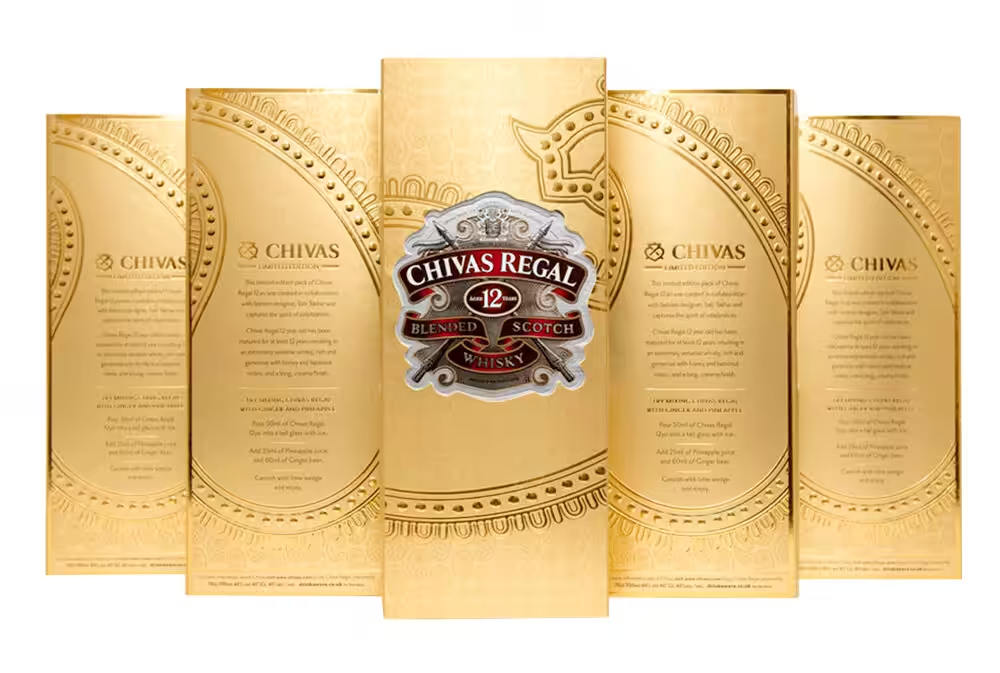
When creating your design, consider how metallic inks can be applied to improve aesthetics and visual impact. Therefore, consider the specific elements, such as logos, text, or patterns, to be printed with these inks. Notably, keep in mind that metallic inks require adjustments to the design. You might need to increase the font size or use bold shapes to ensure the readability and visibility of the metallic effects.
Consult with Your Printer or Ink Supplier
It is crucial to reach out to your printer or ink supplier to discuss your intentions. They can provide valuable insights, recommendations, and technical guidance from experience. Moreover, the guide on the appropriate printing method, substrate compatibility, and other special considerations are to be considered.
How to Set Up Your Design File (For Designers)
To ensure your design prints correctly, follow this simple rule:
Always set up your metallic ink as a spot color in your design software (like Adobe Illustrator). Use a standard color from the PANTONE Metallics library (e.g., PANTONE 877 C for silver). Place it on a separate layer. This tells your printer exactly which areas get the special ink.
Adjust the Production Process
Once satisfied with the test prints and proofs, adjust the production accordingly. This involves adjusting ink mixing ratios, printing press settings, or drying and curing processes. The goal is to optimize the ink printing application. Always ensure that the printer has the necessary expertise and equipment.
Should You Add a Protective Coating?
Yes, in most cases. We highly recommend adding a varnish or aqueous coating over your print. This clear layer provides extra protection against scuffing and fingerprints. Be aware that a matte varnish will slightly dull the metallic shine, while a gloss varnish will enhance it.
Educate Clients and End-Users
If you produce prints for clients or end-users, provide them with information on their unique characteristics and care instructions. Make sure customers understand the handling, storage, and display considerations to maintain the integrity and longevity of the metallic effects.
Inspiration Gallery: Real-World Metallic Ink Applications
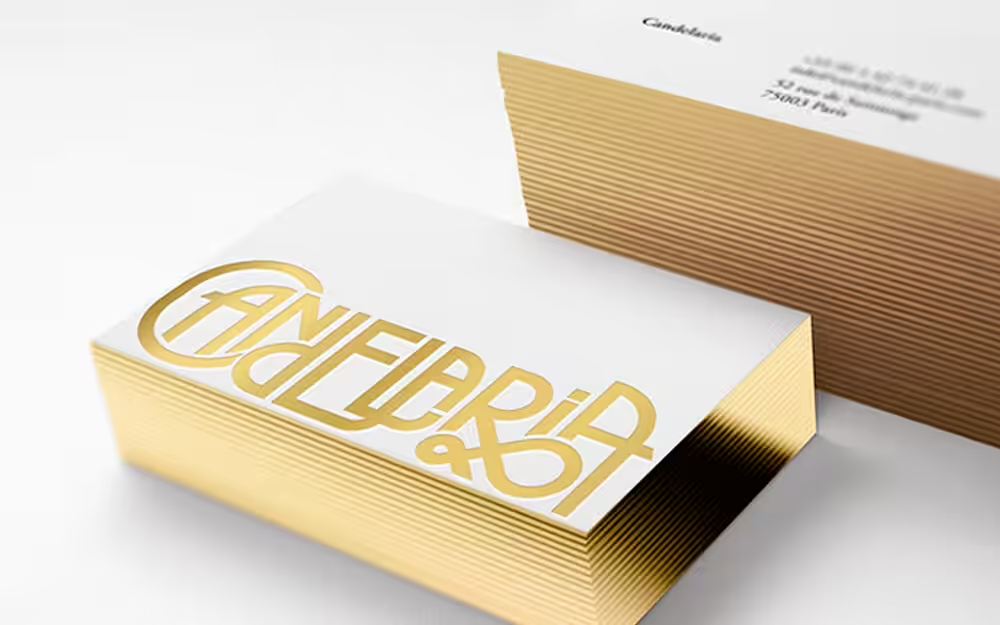
Words can only do so much. Here are a few examples of how brands use metallic inks to create stunning packaging.
Case Study: Luxury Cosmetics Box
- Goal: Create a premium, gift-worthy experience for a new skincare line.
- Solution: We printed the brand’s delicate logo in PANTONE 872 C (a rich gold) on a soft-touch, matte black box.
Case Study: Gourmet Food Label
- Goal: Help a craft chocolate bar stand out in a specialty food store.
- Solution: A copper metallic ink was used for the filigree border on an uncoated, textured paper label.
Case Study: Tech Product Sleeve
- Goal: Communicate cutting-edge technology for a new gadget.
- Solution: A cool silver metallic ink (PANTONE 877 C) was used for key specs on a smooth, silk-coated sleeve.
Frequently Asked Questions About Metallic Ink Printing
Q1:Is metallic ink waterproof?
Most standard metallic inks are not fully waterproof. While they can withstand light moisture after drying, prolonged water exposure can cause the metallic pigments to oxidize or flake off. For waterproof results, we recommend applying a protective varnish or aqueous coating over the metallic ink print.
Q2:How long does metallic ink last before fading?
High-quality metallic inks can last 5-10 years without fading under normal indoor conditions. Aluminum-based pigments (silver) offer the best lightfastness, while copper/bronze pigments (gold, copper) naturally darken over time due to oxidation. For direct sunlight exposure, use UV-protective coatings to extend lifespan beyond 10 years.
Q3:Can metallic ink be used on dark or black paper?
Yes, but the effect differs from light paper stocks. On dark paper, metallic inks appear as a subtle shimmer rather than a mirror-like finish. For best results: 1) Use high-pigment metallic inks; 2) Apply a white underprint; 3) Choose non-leafing metallic inks for more uniform coverage.
Q4:Can metallic ink be used for food packaging or children’s products?
Yes, but safety certifications are required. For food packaging, metallic inks must be FDA or EU Food Contact Material compliant, ensuring no heavy metal migration. For children’s products (toys, books), ASTM F963 or EN71-3 standards apply. Packoi‘s metallic inks are third-party safety certified. Please specify your application when ordering.
Q5:Is metallic ink more expensive than standard ink?
Yes, metallic inks typically cost 20-50% more than standard CMYK inks. The price difference comes from three factors: 1) Metallic pigments are more expensive than organic pigments; 2) Thicker ink layers are required for the shimmer effect; 3) Presses require more frequent cleaning. However, for short to medium runs, metallic ink remains far more economical than foil stamping (which costs 3-5 times more).
Conclusion
If you are considering using metallic colors for your projects, make sure that you get it right from the start. With the benefits outlined above, you can achieve outstanding results when you incorporate metallic inks. Whether you are undertaking a screen printing project, multiple business card designs, or other types of printing, this can be one of the best choices. Always outline your business goals and shop for the best printing services. When you need a gold, silver, or bronze outlook, it is always advisable to hire reliable printers.
Ready to Make Your Brand Shine with Packoi?
If you’re ready to explore how metallic inks can elevate your packaging, our team is here to help. We understand the nuances of printing with metallic colors and can guide you from design to final production.
Contact us today to request a free metallic ink sample pack. You can see and feel the difference for yourself and get a custom quote for your next project.