With brands increasingly adopting eco-friendly packaging, the beauty industry is in the midst of a green revolution. Investing in sustainable packaging not only reduces a brand’s carbon footprint but also improves brand identity and attracts eco-conscious consumers.
In this blog, we’ll explore the 10 best sustainable beauty packaging ideas and trends, along with leading beauty brands recognized for their sustainable practices. So, if you are a beauty brand considering a shift to green packaging, this blog is for you! Let’s start!
Why is Eco-friendly Beauty Product Packaging the Future?

With increasing environmental awareness among consumers, brands are rapidly transitioning toward sustainable packaging solutions. According to recent studies, 47% of customers are willing to pay a higher price for beauty products made from sustainable packaging materials.
The shift toward green packaging is reflected in the market’s rapid growth. The global eco-friendly packaging market was valued at $283.37 billion in 2024, and it is projected to reach $552.45 billion by 2033, growing at a CAGR of 7.7%.
As the cosmetics industry evolves, sustainability will continue to be a top priority. The future will be driven by brands offering biodegradable, compostable, and zero-waste beauty packaging solutions. Brands that fail to adapt risk losing relevance in the current beauty market.
Top 10 Sustainable Beauty Packaging Ideas That You Should Consider
Let’s explore some of the best sustainable packaging ideas for cosmetics, skincare, haircare, and other beauty industries, along with their pros and cons. Here is the quick breakdown:
| Packaging Material | Best Application | Cost Level | Key Benefit |
|---|---|---|---|
| 1. FSC-Certified Paper | Outer Boxes, Gift Sets, Cartons | Low - Moderate | Highly scalable & 100% recyclable |
| 2. Cornstarch (PLA) | Dry Powders, Deodorants | Moderate | Compostable bioplastic alternative |
| 3. Bamboo | Jars, Tubes, Premium Lids | High | Durable, luxury aesthetic |
| 4. Refillable | Perfumes, Lipsticks | High (Initial) | High customer retention |
| 5. PCR Plastic | Shampoo Bottles, Tubes | Low - Moderate | Reduces virgin plastic use |
| 6. Seaweed | Single-use Sachets, Wrappers | High | Edible & dissolves in water |
| 7. Metal | Balms, Sprays, Creams | Moderate | Infinitely recyclable & durable |
| 8. Glass | Serums, Face Creams | Moderate | Premium look, chemical-free |
| 9. Mushroom | Protective Shipping Inserts | Moderate | Replaces Styrofoam |
| 10. Plantable | Soap Wrappers, Box Sleeves | High | Zero waste (grows into plants) |
Now, it’s time to dive into it.
1. FSC-Certified Paper Packaging (The Most Scalable Option)
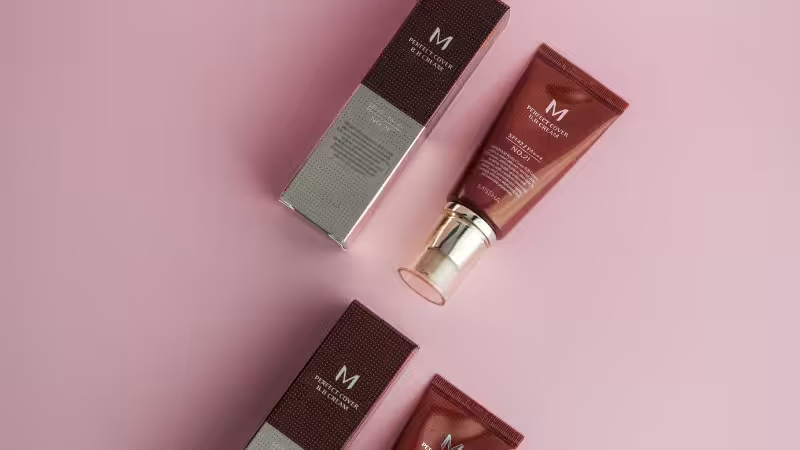
When discussing sustainable packaging, paper and cardboard remain the undisputed champions. However, not all paper is created equal. FSC (Forest Stewardship Council) certified paper ensures that the wood pulp comes from responsibly managed forests that provide environmental, social, and economic benefits.
This is the most versatile option for the beauty industry. From folding cartons for face creams to rigid gift boxes for perfume sets, paper packaging is lightweight, printable, and fully recyclable.
Pros:
- 100% Recyclable and Biodegradable
- Highly customizable with eco-friendly soy inks
- Cost-effective and lightweight (lowers shipping carbon footprint)
Cons:
- Less durable against moisture compared to plastic
- Not suitable for liquid containment without a liner
2. Cornstarch Packaging
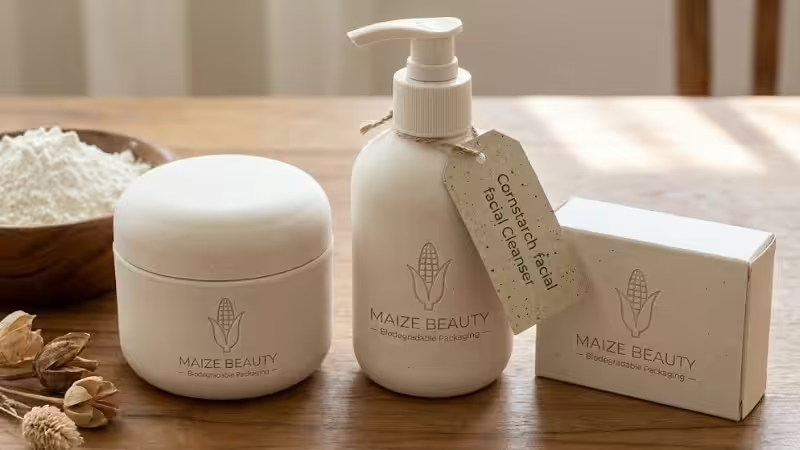
Cornstarch packaging is a bioplastic alternative for beauty product containers. It is made by extracting starch from corn grains and fermenting it into polylactic acid (PLA), a plastic-like material. PLA is then mixed with other polymers to create jars, trays, and tubes for beauty products.
As the cornstarch packaging market continues to grow in popularity, it is expected to increase from $332.36 million in 2025 to $1,429.58 million by 2034. Organic skincare companies, zero-waste beauty brands, and vegan cosmetics brands particularly favor it.
While cornstarch packaging is generally more expensive than plastic materials, it remains one of the most affordable bioplastics. It is ideal for solid beauty products like compact powders, dry powders, and deodorants, as well as skincare jars and bottles for creams and lotions.
Pros
- Biodegradable and compostable
- Non-toxic
- More affordable than other bioplastics
Cons
- Higher cost than conventional plastic
- Not good for long-term liquid storage
- Limited durability
3. Bamboo Packaging
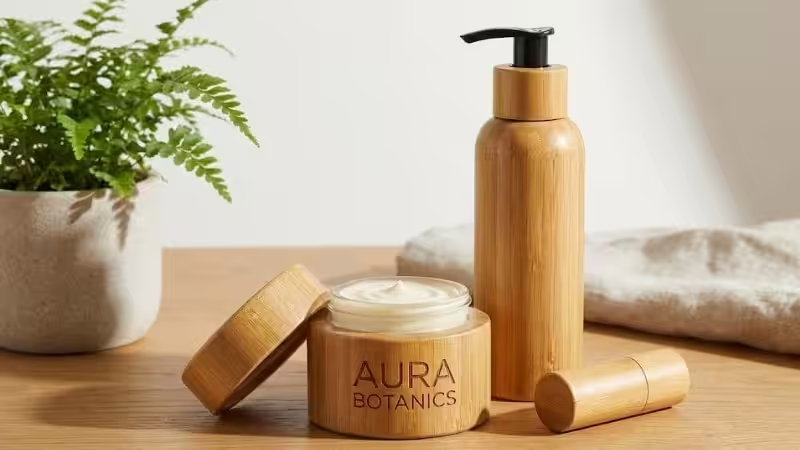
Bamboo packaging is another plant-based alternative for sustainable beauty packaging. As the name suggests, bamboo packaging is made from bamboo, which is then carved into jars, tubes, and boxes.
The global bamboo packaging market was valued at approximately $511 million in 2023 and is forecasted to reach around $950 million by 2033.
Bamboo packaging is popular among eco-friendly, organic, vegan, and luxury beauty brands due to its premium, natural aesthetic.
While bamboo packaging is more costly than cornstarch, it is well-suited for premium skincare products, personal hygiene items, and cosmetics with longer shelf lives, such as creams, balms, lipsticks, and blushes.
Pros
- Sustainable and biodegradable
- Premium aesthetic
- Durable
Cons
- More expensive than cornstarch and plastic
- Not ideal for liquid products
- Primarily sourced from Asia
4. Refillable Packaging
Refillable packaging allows consumers to reuse the same container multiple times, reducing waste and plastic consumption. It is typically made from durable materials like glass and aluminum.
The refillable packaging market size is projected to grow from $46.59 billion in 2025 to $64.25 billion by 2034. The luxury beauty, clean beauty, and zero-waste beauty industries widely embrace it.
While the initial investment for refillable packaging is higher than for single-use packaging, refillable options prove to be cost-effective over time. Refillable beauty containers are best for makeup contacts, perfume bottles, and skincare jars.
Pros
- Reusable
- Cost-effective in the long run
- Encourages customer loyalty
Cons
- Higher initial cost
- Requires consumer effort
- Potential hygiene concerns
5. Post-Consumer Recycled (PCR) Packaging
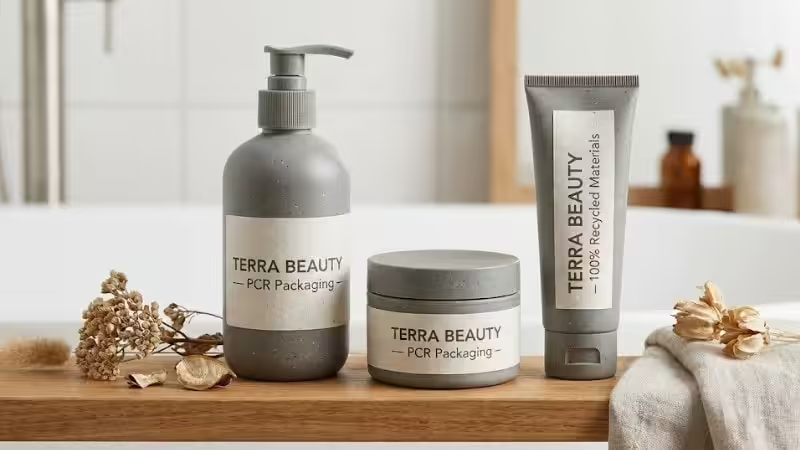
Another widely discussed type of beauty packaging today is Post Consumer Recycled (PCR) packaging. PCR packaging is made from plastic bottles, cardboard boxes, and paper.
The PCR packaging market was valued at over $50 billion in 2024 and is expected to grow with a CAGR of 6.7%. Eco-conscious and drugstore beauty brands most commonly use it.
Though more expensive than traditional plastic packaging, PCR packaging is more budget-friendly than biodegradable and refillable alternatives. It is commonly used for shampoo and conditioner bottles, lotion tubes, and deodorant containers.
Pros
- Uses less energy and resources
- Affordable
- Durable
Cons
- Color variation
- Contamination concerns
- Recycling limitations
6. Seaweed Packaging
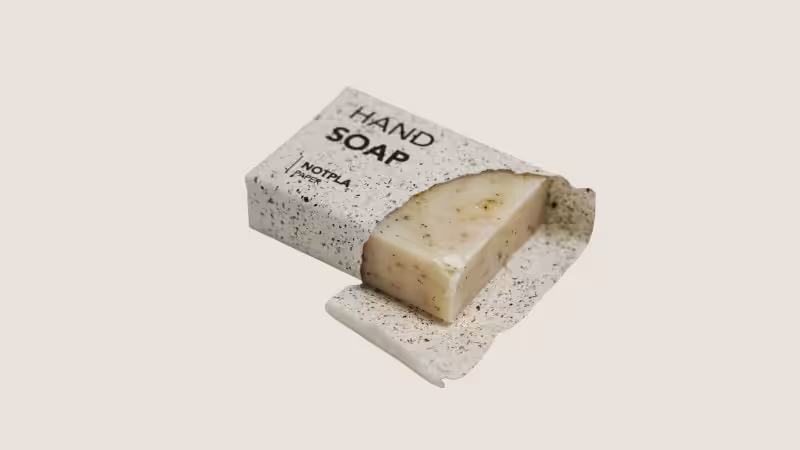
Seaweed packaging is an innovative, sustainable alternative that is edible, lightweight, biodegradable, and dissolvable. Seaweed grows in freshwater and seawater. It grows up to 60 times faster than land crops.
The seaweed packaging market was valued at around $700 million in 2023 and is anticipated to expand at a CAGR of 6.6% from 2024 to 2030. It is gaining traction in both skincare and bath and body care brands, especially for single-use, solid, and water-soluble formulas.
Although it is currently more expensive than cornstarch and PCR, it is expected to become more affordable with improved production methods. It is ideal for sheet masks, sample sachets, shampoo bars, soaps, and loose powders.
Pros
- Biodegradable and compostable
- Non-toxic
- Renewable and fast-growing
Cons
- Expensive
- Limited durability
- Sensitive to moisture and humidity
7. Metal Packaging
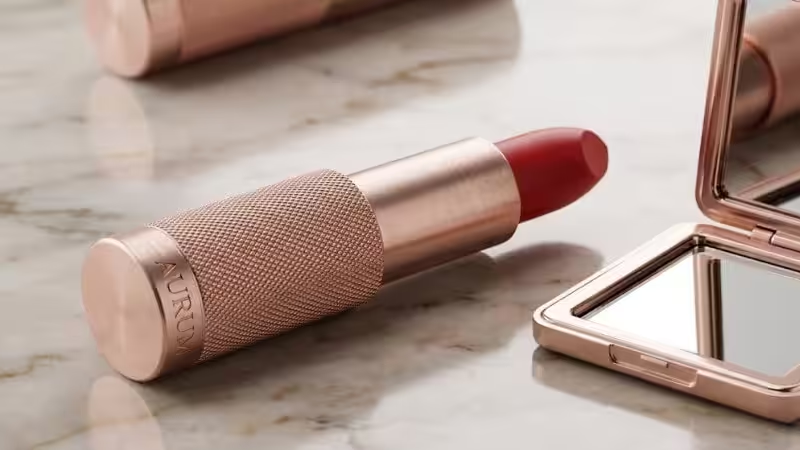
Metal tins and jars are perfect choices for eco-friendly beauty packaging. Metal packaging is typically made from aluminum, steel, or tinplate. It offers reliability, attractiveness, and conveys a sense of luxury to sustainable beauty products.
The metal packaging market is huge in comparison to other markets, as it is used to package a variety of products. In 2024, the market was valued at $150.59 billion and is estimated to grow at a CAGR of 3.26% over the next decade. High-end beauty brands, skincare, and hair care businesses commonly use it.
Though more expensive than plastic and cornstarch, metal packaging remains cost-effective in comparison to seaweed packaging. It is commonly used for creating recyclable packaging, such as lip balm containers, perfume bottles, spray bottles, body butter, refillable makeup palettes, deodorants, and hair styling products.
Pros
- Highly durable
- 100% recyclable
- Refillable and reusable
Cons
- Heavy
- Higher manufacturing costs
- Dents and scratches are visible
8. Glass Packaging
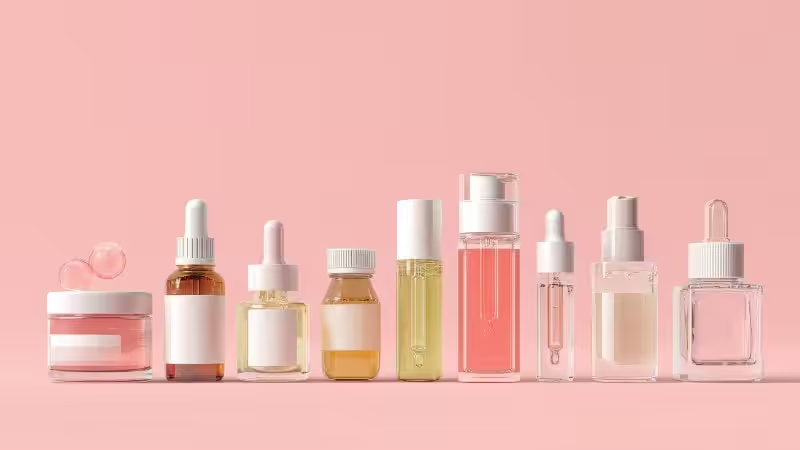
Elegant glass jars and containers have been used for eco-friendly cosmetic packaging for a long time now. Transparent glass packaging has been a cornerstone in the beauty industry due to its premium appearance and chemical-free composition.
The global glass packaging market is expected to rise from $74.64 billion in 2025 to $105.25 by 2033, with a CAGR of 4.39%. It is widely used by brands dealing with luxury beauty items, sustainable beauty products, and botanical and chemical-free formulas.
Glass packaging is usually more expensive than plastic and metal, but it is cheaper than some biodegradable alternatives. It is commonly used for packing face creams, serums, perfumes, and foundations.
Pros
- Fully recyclable
- Does not leach chemicals
- Aesthetically appealing
Cons
- Heavy
- Fragile
- Not travel-friendly
9. Mushroom Packaging
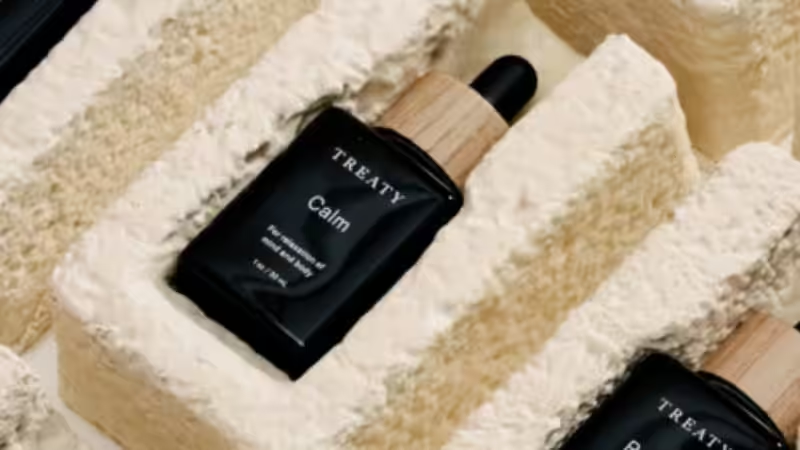
Another sustainable material that grows naturally is mushrooms. This innovative packaging is made by growing mycelium (fungi roots) around agricultural waste in molds, and then drying it to create a sturdy, biodegradable material.
The global mushroom packaging market size is projected to surpass $122 million by 2032. Although mushroom packaging is not as common as other sustainable packaging alternatives, it is slowly gaining popularity. It is mainly used by sustainable, organic, and natural beauty brands for eco-friendly outer packaging and shipping materials.
Mushroom packaging is cheaper than seaweed packaging. It is commonly used as a protective outer covering for glass perfume bottles, skincare jars, and beauty gift sets.
Pros
- Biodegradable and compostable
- Non-toxic
- Uses agricultural waste
Cons
- Not suitable for direct product containers
- Higher production costs
- Limited availability
10. Plantable Packaging
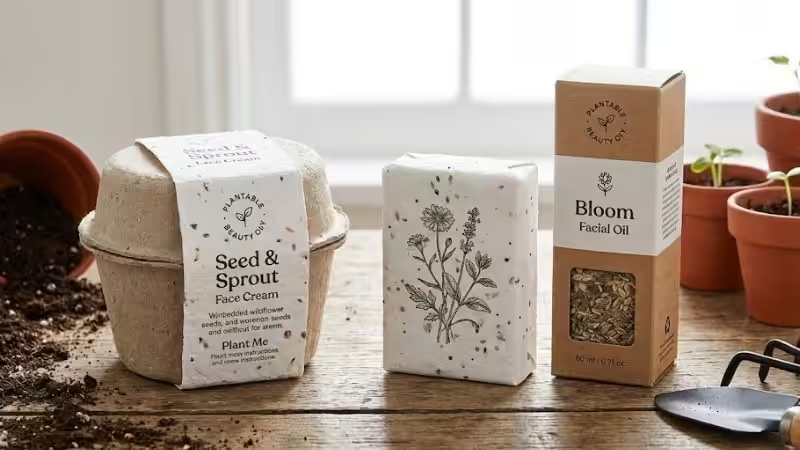
Rounding up the list, we have plantable packaging, a packaging embedded with actual seeds, allowing consumers to plant the packaging after use. It is made from paper pulp, starch, and biological seeds.
The global plantable packaging market size was estimated at around $147.12 million in 2024 and is expected to rise to $461.45 million in the next decade. It is commonly used by zero-waste beauty brands and brands dealing with organic beauty products.
Plantable packaging is more expensive than cardboard and standard paper packaging, but cheaper than plant-based alternatives like seaweed. Generally, it is used for soap wrappers and skincare packaging.
Pros
- Biodegradable and compostable
- Creative
- Best for dry products
Cons
- Sensitive to moisture
- Higher manufacturing costs
- Requires consumer effort
3 Innovative Beauty Brands Leading in Sustainable Packaging
Sustainability is no longer a trend in the beauty industry; it has now become a necessity. As consumers demand eco-friendly alternatives, brands are stepping up with packaging solutions that minimize plastic waste and carbon footprints.
Here are three popular beauty brands that stand out for their commitment to sustainable packaging.
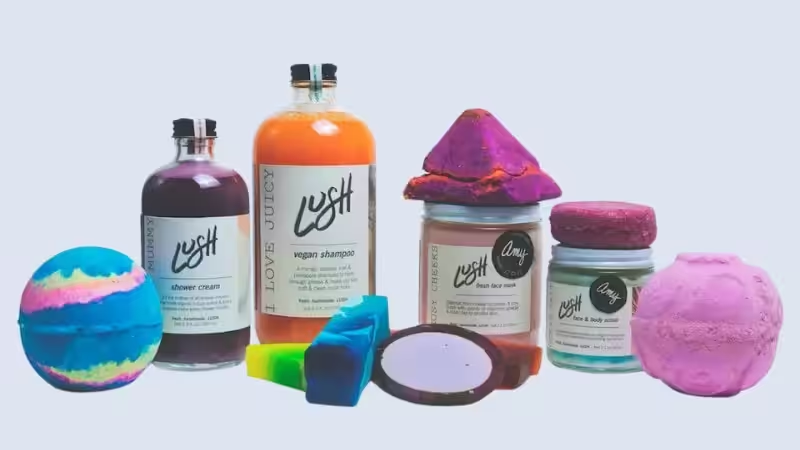
1. Lush
Lush is a cosmetics brand that is revolutionizing the beauty industry with its handmade, cruelty-free, and environmentally friendly products. The company deals with bath bombs, haircare, skincare, and perfumes. Lush uses 100% PCR packaging for its bottles and jars, saving around 65 tons of carbon dioxide and 90 tonnes of virgin plastic.
2. Aveda
Aveda is a vegan hair care brand known for its shampoos, conditioners, and other hair care products. Committed to eco-friendliness, Aveda packages its products in bottles made with at least 80% PCR materials. The brand has also pioneered the first-ever paper-based, recyclable beauty sachet.
3. Elate Beauty
Elate Beauty is a Canadian sustainable beauty brand, famous for its eco-friendly, refillable packaging. It uses FSC (Forest Stewardship Council) -certified bamboo for its compacts and palettes, and its mascara and lip gloss tubes are made from glass and aluminum.
FAQs
Q1: What is the most affordable sustainable packaging for beauty products?
FSC-certified paper and cardboard are generally the most cost-effective options. They are lightweight (reducing shipping costs), widely available, and 100% recyclable, making them perfect for secondary packaging like outer boxes.
Q2: Can sustainable packaging be customized?
Absolutely. Materials like paper, bamboo, and glass can be fully customized with eco-friendly soy-based inks, embossing, and foil stamping to maintain a premium look while being kind to the planet.
Q3: What is the difference between biodegradable and compostable?
Biodegradable means the material breaks down naturally over an undefined time. Compostable means it breaks down into non-toxic organic matter under specific conditions (home or industrial) within a set timeframe.
Q4: Can sustainable beauty packaging be customized?
Absolutely. Materials like paper, bamboo, and glass can be fully customized with eco-friendly soy-based inks, embossing, and foil stamping to maintain a premium look while being kind to the planet.
Conclusion
In this post, we discussed why sustainable packaging is the future of the beauty industry and outlined the ten best sustainable beauty packaging ideas and trends. We also explored some leading beauty brands known for their green packaging initiatives.
Now that you’re familiar with the latest trends in sustainable beauty packaging, it’s time to take action. Upgrade to high-quality, eco-friendly packaging and position your brand as a leader in sustainability.
Switch to Sustainable Beauty Packaging With Packoi
With over 25 years of industry experience, Packoi is a trusted supplier of premium custom packaging solutions. Offering fully customizable options, fast turnaround times, and low minimum order quantities, Packoi serves business ideas of all sizes worldwide.
As a specialist in sustainable beauty packaging, Packoi provides a wide range of eco-friendly material options and expert custom design services to bring your sustainability vision to life.
To get an instant quote, contact us now!