Cereal packaging has come a long way from simple cardboard boxes. Today, brands use innovative materials, smart designs, and sustainable options to protect freshness, boost shelf appeal, and reduce waste.
In this article, we explore the different types of cereal packaging solutions and compare their advantages over one another.
Importance of Quality Cereal Packaging
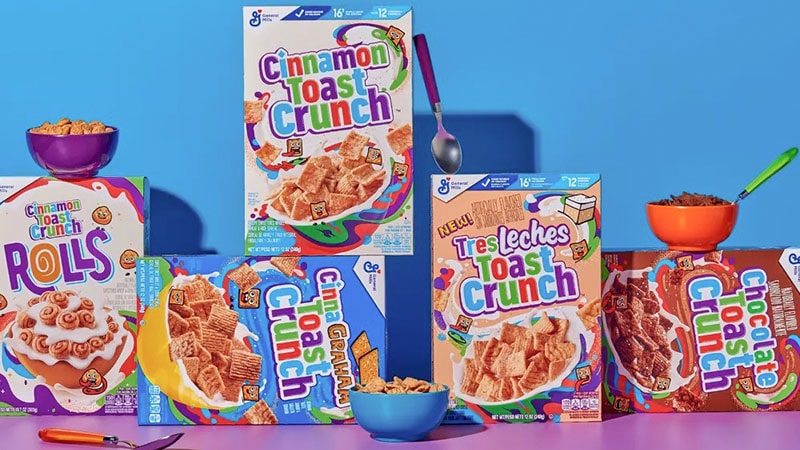
Packaging refers to the materials and design used to contain, protect, and present breakfast cereals. A standard cereal box design features an inner plastic bag for moisture protection and an outer cardboard box for branding and nutritional information.
Modern cereal packaging serves several important functions, keeping our food safe and ensuring freshness.
- Environmental Protection: Good cereal packaging will protect the food from physical damage, moisture, pests, and outside contamination.
- Food Freshness: The inner cereal packaging is airtight. It prevents exposure to outside air and traps the aroma inside, keeping your cereal fresh and crunchy.
- Easy Transportation: Cereal boxes are lightweight and stackable, resulting in easy storage and efficient transportation.
- Effective Communication: The US FDA legally requires food packaging to display a nutrition facts label. Cereal boxes have lots of space to display ingredients and nutritional facts.
- Product Branding: Your cereal box design, colors, graphics, and text font increase the packaging’s visual appeal and influence customer buying decisions.
- Sustainability: Using recycled or recyclable packaging materials is a great way to establish your eco-friendly brand identity.
Your business benefits from high-quality cereal packaging. Your cereal taste and quality are only one aspect of a successful business. You need attractive cereal boxes to gain customers’ interest and generate more sales.
Types of Cereal Packaging You Need to Know
Cereal boxes aren’t the only way to package your cornflakes. Recent years have seen significant improvement in the packaging production process. Today, we have several unique ways of packaging cereal. Here is a table for you to have a quick look:
| Type | Material | Structure | Biggest Advantage | Biggest Drawback |
|---|---|---|---|---|
| Cereal Boxes | Paperboard & HDPE Plastic | Rigid Box | Excellent Shelf Presence | Two-Step Packaging |
| Flexible Packaging | PP or PE Plastic | Flexible Pouch | Lowest Production Cost | Perceived as Low-End |
| Upright Pouches | Multi-Layer Plastic | Semi Rigid Pouch | Combines Flexibility with Aesthetics | Complex Manufacturing Process |
| Cereal Cups | Plastic Coated Paper | Rigid Cup | On-the-Go Convenience | Lower Product Quantity |
Now, let’s dive into the most popular cereal packaging solutions on the market.
1. Classic Cereal Boxes
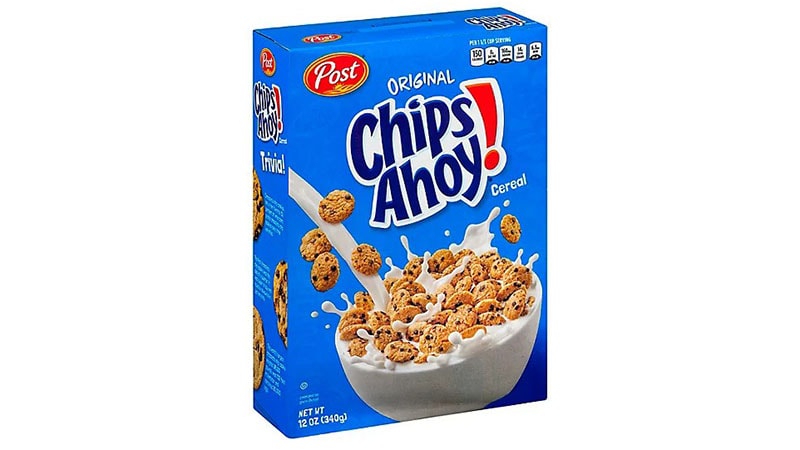
Cereal boxes are a classic packaging design and still one of the most popular options today. They combine high-quality printing with durable paperboard for a visually appealing and functional packaging.
The outer cereal box is made from a flexible paperboard (or kraft paper) that is folded to form a rigid box. Inside, you will find an HDPE (high-density polyethylene) plastic bag, which makes direct contact with the cereal.
Both the inside bag and the outside cardboard box are recyclable, increasing their sustainability appeal. Many cereal manufacturers, like Kellogg’s, are using recycled packaging materials for their cereal boxes.
Cereal boxes are a tried and true packaging solution. It ensures food safety, shelf appeal, and transport protection. Additionally, the cost per box decreases with market volume. As you sell more boxes, your packaging cost per box decreases.
Benefits
- Affordable
- Lightweight
- Insanely Customizable
- Stackable
- Good Shelf Display
2. Plastic/Flexible Packaging
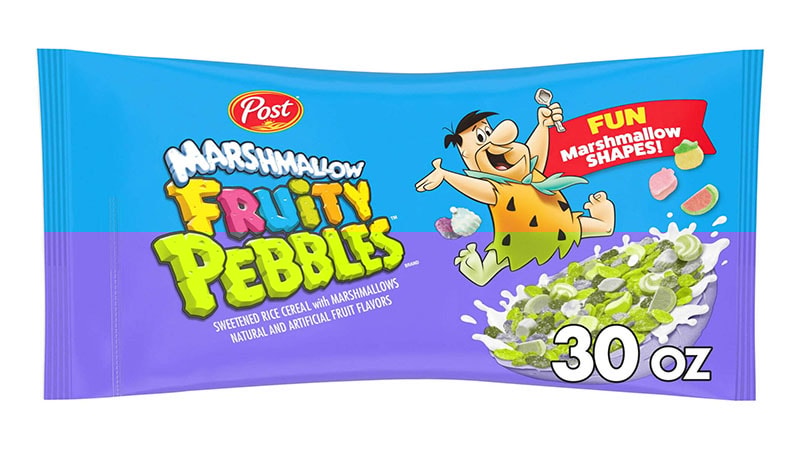
Flexible packaging refers to the use of various plastic bags and pouches to contain cereal. It’s a more compact and efficient way to package loose grain-like foods. Most flexible packaging is made from plastics, either Polypropylene (PP) or Polyethylene (PE).
Cereal boxes with their internal bags require two-step packaging. They are incompatible with modern packaging goals that prioritize faster and more efficient production.
Plastic cereal packaging is both time and cost-efficient. This results in lower operating costs for the business and lower product prices for the customer. It also results in a smaller packaging footprint, which makes shipping and distribution less costly. Smaller cereal packets mean easier storage at home.
Today, single-serving cereal snack packs are only possible because of flexible packaging.
Benefits
- Cost Efficient
- Lightweight
- Customizable
- Flexible Design
- Smaller Packaging
3. Upright Cereal Pouches
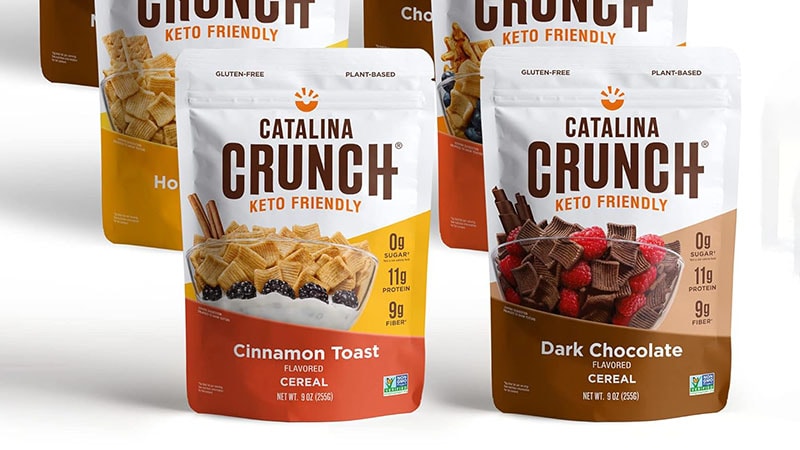
Upright cereal packaging combines the functionality of boxes with the cost-effectiveness of flexible plastic. It uses heat-cured plastic edges to give the packaging a three-dimensional structure, enabling it to stand upright on store shelves.
Cereal boxes are too bulky, and flexible pouches are unappealing. Luckily, you have several hybrid packaging solutions.
- Stand-up Pouches: They use stiff plastic edges that form a flat circular base for the cereal pouch.
- Quad Seal Pouches: These pouches have four separately sealed corners that result in a more stable pouch design.
- Flat Bottom Pouches: Pouches with a prism-like design and a flat square base that helps them stand upright.
Upright cereal pouches often come with a resealable top, making it a better choice for some customers. Although it adds to the production cost, it also improves consumers’ perception of your brand.
Benefits
- Lightweight
- Customizable
- Flexible & Stable Design
- Better Store Display
4. Cereal Cups & Bowls
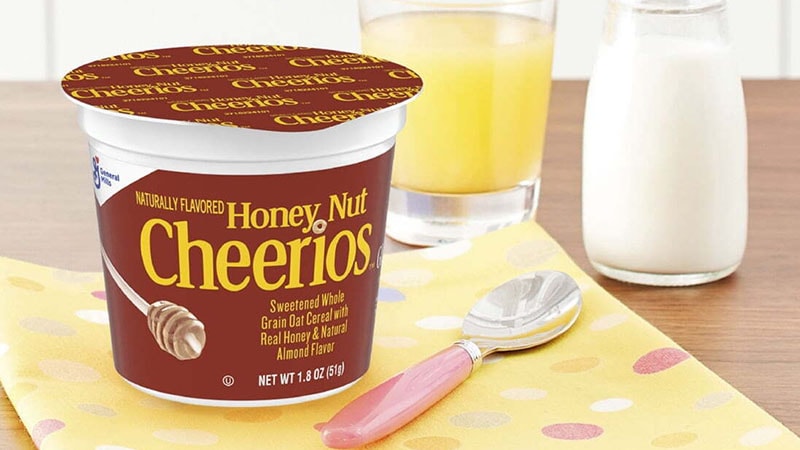
Cereal cups and bowls are the latest innovation in the cereal market. It takes inspiration from cup noodles and offers a convenient single serving of breakfast cereal. Just like cup noodles, you peel off the top layer and pour milk into the cup.
The target audience for this type is older adults who occasionally consume cereal. We firmly believe that “cereal products can be eaten at any time of the day“. And these cereal cups are an excellent midnight snack.
Regardless of your cereal preferences, it’s clear that cereal cups are a hit with customers. While their value proposition isn’t great, the novelty makes it worth a try.
Benefits
- Novel Design
- Customizable
- Built-in Cereal Bowl
- Consumer Convenience
Cereal Packaging Materials: Choosing the Right Fit
We have hinted at the packaging material choices for your cereal products. Now, it’s time to dive deep into the topic. Here are some common cereal packaging materials on the market:
| Material | Durability | Sustainability | Cost | Customer Appeal |
|---|---|---|---|---|
| Paperboard | Medium | High | Low–Medium | High |
| Cardboard | High | High | Medium | Medium |
| Plastic Packets | Medium | Low | Low | Low |
| Aluminum Foil | High | Medium | Medium–High | Medium |
Different packaging materials create unique experiences for consumers, both visually and functionally. Now let’s find which packaging material is actually better for your brand identity.
1. Cardboard
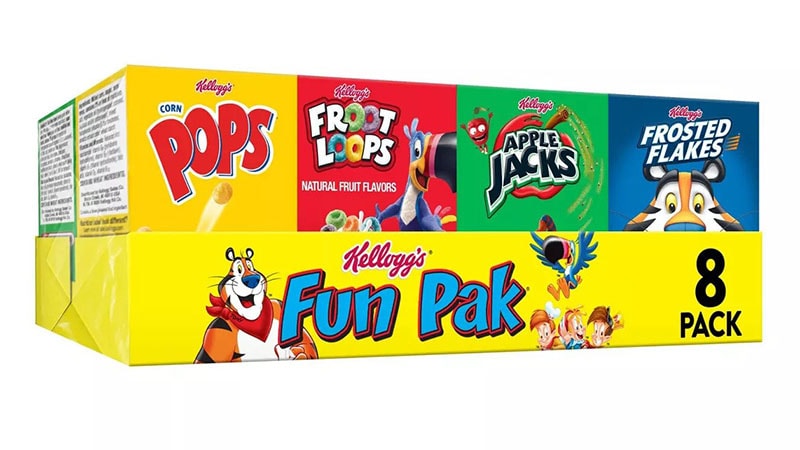
Cardboard boxes are not suitable for direct contact packaging. A cardboard is a corrugated material, meaning it has a fluted paper layer sandwiched between two flat paper layers. While this material offers good durability and insulation, it’s also thick and bulky. The average cardboard starts at a thickness of 5mm.
However, that doesn’t mean cardboard isn’t useful for cereal packaging. It’s an excellent choice for secondary packaging. Many cereal brands today sell a multi-pack (or a variety pack). It features three or more cereal flavours bundled together in a cardboard container.
2. Paperboard
Paperboard is a thin yet durable material with a thickness between 0.35mm and 0.7mm. It is flexible enough to bend and fold. Yet soft enough to tear or cut open.
It is the most common cereal box material and offers excellent customization options. The outside features colorful digital prints with a protective coating. An aqueous coating is recommended for cereal boxes due to its cost-effectiveness.
You may have noticed that some paperboard boxes are glossy on the inside. That’s because some box designs coat the inside in a thin plastic layer for a smoother finish and better moisture protection.
3. Plastic Packets
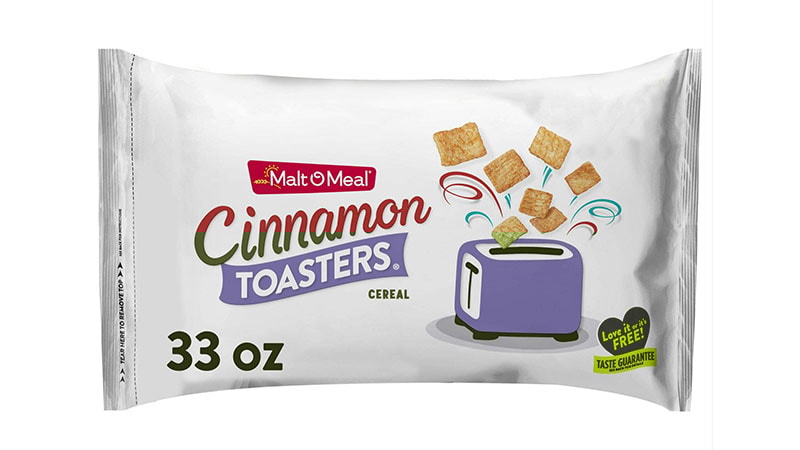
Plastic is an affordable and versatile packaging material. It’s great for packaging small, loose pebble-like items, especially cereals. The simple design makes it easy to scale the packaging to different portion sizes.
From a practical point of view, plastic is the perfect solution for your cereal packaging. However, it’s not as appealing to customers. It makes your products look like a budget item. Which is great if you’re placing yourself as a budget-friendly brand like Kirkland, Costco’s private label.
4. Aluminum Foil Packaging
You may not have realized, but many plastic packaging contain a layer of aluminium foil. Direct exposure to light can spoil, discolor, and damage packaged food. A thin layer of aluminum creates a barrier for moisture and light and keeps your food fresh. Cereal is safe from light.
Aluminum foils play a vital role in modern packaging. All flexible cereal packaging uses some form of foil or metallized PET film for added protection.
5. Sustainable Cereal Packaging
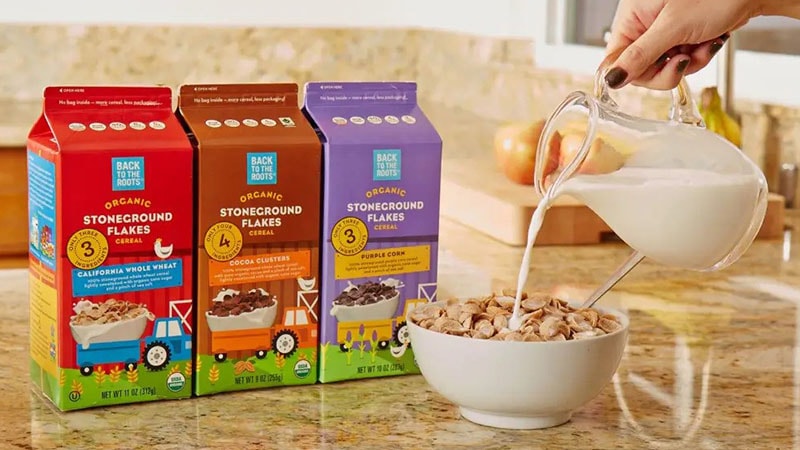
Concerns around plastic pollution have increased. More and more customers are looking at products that use other materials. While other products can switch to glass jars or metal containers, the same isn’t true for cereal.
Plastic is unavoidable in part of modern cereal packaging. So, the best option is to use recycled or recyclable polymers. PET, PP, and HDPE are all recyclable and eco-friendly material choices.
Additionally, you can use ethically sourced or recycled paperboard for your cereal boxes.
3 Creative Cereal Packaging Design Ideas with Real-Life Examples
Cereal boxes don’t have to be boring. Using innovative designs and creative marketing, you can transform breakfast into something enjoyable.
1. Add a Brand Mascot to Your Cereal Flavor
Brand mascots are the biggest attraction for new customers. Children like bright colors and talking animals. So it should come as no shock that almost every successful cereal brand uses cartoon characters for marketing and branding.
The idea is to make breakfast cereal exciting. Kids should enjoy their morning meal rather than avoiding it. Give your mascots a name and make them child-friendly.
Example: Kellogg’s Froot Loops has the fun and exciting Toucan Sam, and their Frosted Flakes has the always reliable Tony the Tiger.
2. Advertise Your Healthy Cereal Options
Cereal is one of those food items that looks and tastes great. However, it comes with a lot of added sugar. This doesn’t matter much when you’re young, but for older consumers, the extra sugar and lack of fiber are concerning.
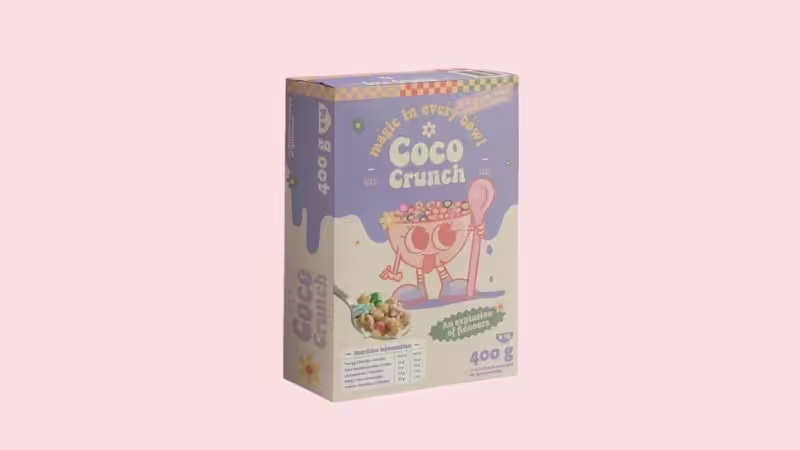
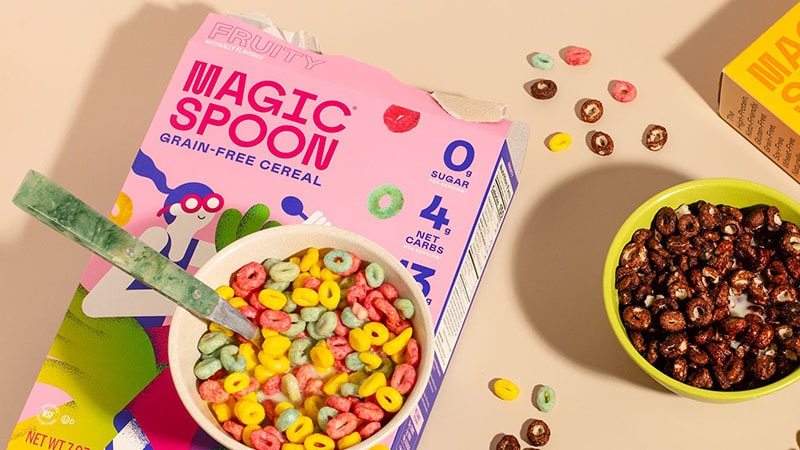
Add clear text boxes to your custom cereal boxes, advertising the health benefits of your products. Use muted colors to show simplicity and natural flavours, and large text with bold fonts to emphasize the point. Let the customers know that your cereal is low-sugar, safe, gluten-free, and rich in fiber.
Example: The front of every Magic Spoon cereal box shows zero sugars and protein count.
3. Functional & Convenient Formats
Create cereal boxes that prioritize customer convenience. More and more businesses are switching to custom cereal box designs that have a unique shape.
Snack-sized packaging is an innovative idea that’s taken the cereal market by storm. Now you can get small single-serving packets or cups of cereal. Larger cereal boxes can often lead to food waste. With these packaging designs, you only buy what you want to eat.
Example: General Mills’ Cereal Cups are small, pre-portioned containers that only need you to add milk. It’s a novel and practical design.
FAQs
Q1: What is the best material for cereal packaging?
Cardboard boxes with HDPE inner bags are the best materials for cereal packaging. They are recyclable and offer excellent store shelf presentation.
Q2: How does cereal packaging maintain freshness?
Cereal packaging blocks light, water, and air, which results in stale or even spoiled food.
Q3: Can cereal packaging be recycled?
Yes, the outer paper box and inner plastic bag of most cereal brands are made from recycled-friendly materials.
Q4: What are the most popular cereal packaging types?
The humble cereal box is still the most popular option out of all cereal packaging types.
Q5: How much does custom cereal packaging cost?
The cost of custom cereal boxes depends on size, thickness, print quality, and surface finish.
Conclusion
Cereal packaging is an important part of your brand. Quality packaging, attractive design, and transparent information help establish trust with your customers. The best packaging is one that directly relates to its target audience. Use the information and tips from this article to design your next cereal packaging.
Get Customized Cereal Boxes from Packoi!
Packoi is the leading manufacturer of product packaging and marketing materials. We specialize in fully customizable cereal boxes that fit your brand’s aesthetics. You can also check out our display boxes and folding cartons for a complete branding revamp.
Outside of packaging, we offer in-house graphic design services. Whether you need help realizing your ideas or just technical support, our team is always happy to help. Contact us now!