In this article, we will cover in detail the printing techniques, traditional and modern, while detailing their relevant applications and advantages of each. Also, we will describe some recommendations you can consider when selecting a printing method for your project.
Printing Methods
Printmaking is an umbrella term covering various printmaking techniques. Since the early days of woodblock printing, where an artist carves an original design into wood, it has evolved a lot, and you can choose from a wide range of technological options, intensified by the increasing demand for print media. Each method is specifically designed to suit particular printing requirements. With many options available, businesses can choose the one or a combination that best serves their needs.
Different Printing Methods
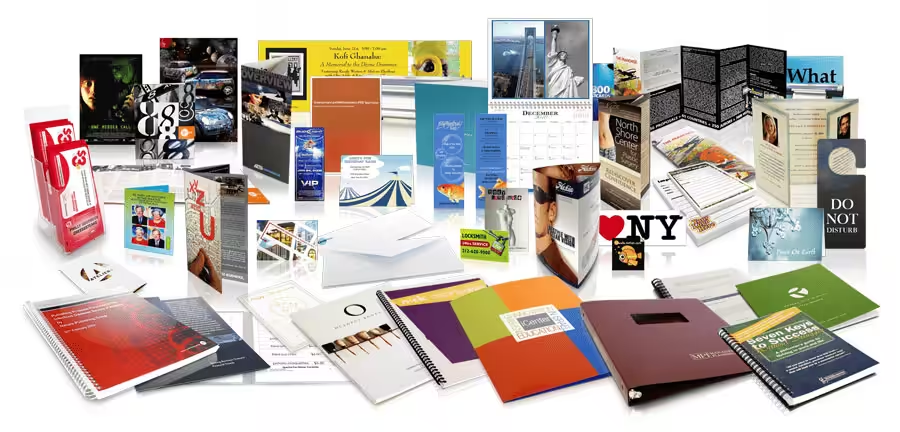
The different printing techniques can be classified into two main categories; traditional and modern methods. The main distinction between the two categories is the technology used in producing prints; conventional methods require an inked plate on a printing press, while digital methods have digitized mechanisms to command printers to execute tasks. In these two categories, there are six well-known techniques:
Traditional techniques: letterpress printing, offset printing, and gravure printing. These methods have been around for several years and are deep-rooted in the industry. This is because the techniques have been conveniently used for large-scale printing in commercial settings.
Modern techniques: digital printing, screen printing, and inkjet printing. These are more efficient and technologically advanced techniques that offer better printing results. Modern printing techniques allow individuals and businesses to design and produce more interactive texts and images.
How Different Printing Methods Impact the Final Printed Output
Various printing methods have transformed how people transfer and distribute ideas for many years. All the printing techniques work to accomplish the same purpose: communicating ideas. But how each method accomplishes that task varies tremendously, each having pros and cons. While some conventional printing techniques give printed output that fades off after some time, modern methods produce high-quality prints on printed materials.
Traditional Printing Techniques
There are three traditional printing technologies, each of which has its own advantages, and we will introduce their characteristics for you to understand, so as to choose a more suitable printing technology for you.
Letterpress Printing
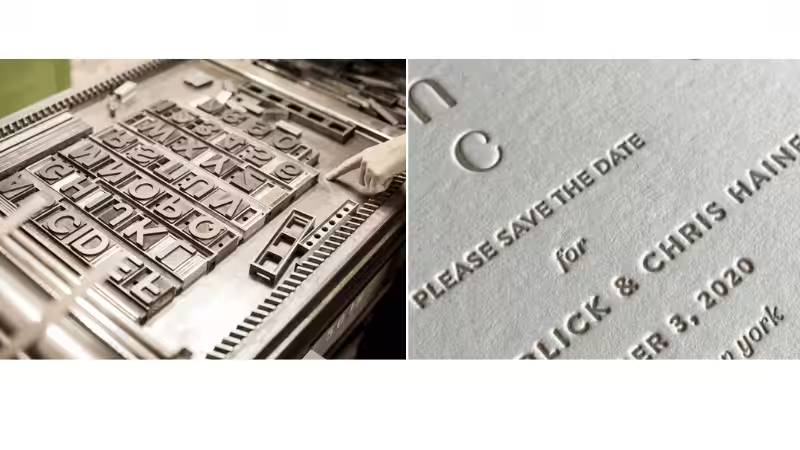
As a classic form of relief printing, it involves elements on a raised surface instead of a flat plate. These elements are coated with printing ink or dye and pressed against the substrate or paper, while the non-printing elements remain ink free and recessed. It is used for posters, invitation cards, business cards, book covers, and greeting cards.
This is one of the methods that dominated the industry up to the twentieth century when more advanced technology took over, but it is still popular in artistry. Today, this method is reserved for high-end artistic applications by adding a tactile feel to it.
It is a good technique for short print runs, producing a unique print appearance. The downside of it is that it is a slow process, uses limited print material and colors, and it is difficult to produce images using this method.
Offset Printing (Offset Lithography)
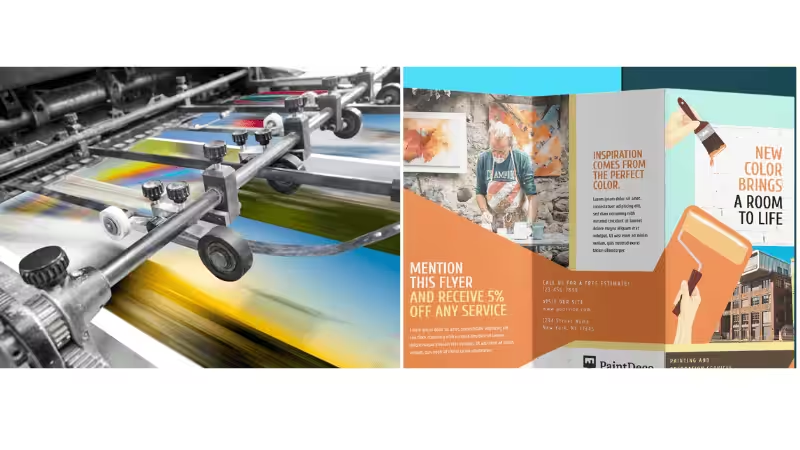
Evolving from the early use of a flat stone, modern lithographic printing (or offset printing) is a popular method that involves transferring inked images from a metal plate to a rubber blanket and then to the printing surface. The rubber blankets or rollers onto which inked images are transferred are wrapped around cylinders where the substrates are passed through them continuously. It is called “offset” because it is first transferred to the blanket instead of directly transferring the ink to the paper.
It strictly relies on the chemical principle that water and oil do not mix, making it the global standard for achieving exact color accuracy using the Pantone Matching System (PMS).
This method is commonly used to print brochures, magazines, books, and catalogs.
Advantages
- This process is versatile and can be used with various print materials such as paper, cardboard, and metal.
- It is convenient for small- and large-scale production.
- Produces high-quality prints.
- It works well on both smooth and uneven surfaces. It is highly cost-effective for generating multiple copies for traditional advertising and printing newspapers.
Gravure Printing
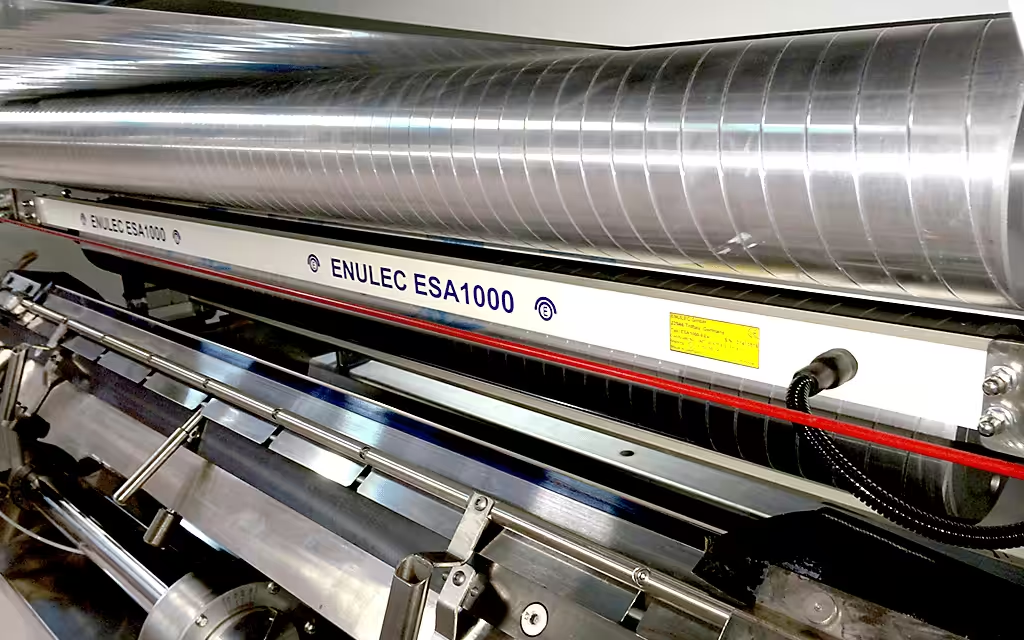
Also called rotogravure, this is a form of intaglio printing for producing fine, detailed images. Gravure printing involves engraving an image onto a rotary copper cylinder with cells for retaining ink, the size, and the pattern of the intended image. The ink is then forced onto the substrate through pressure and the adhesive force between the ink and the paper.
This method suits fast, long-run, high-volume packaging printing, gift wrap, magazine, and vinyl banner wallpaper. Also, it can work with a wide range of materials like carton boards, aluminum foil, paper, synthetic fiber, and wood-pulp fiber. This technique is also good for large format printing like murals and floor graphics laminating with a maximum print roll width of up to 12 ft.
The gravure printing technique is used in the production of intaglio art.
Flexographic Printing
As an essential part of the packaging industry, flexographic printing uses flexible polymer plates wrapped around rotating cylinders. It is highly adaptable and can operate seamlessly with water based inks and oil based inks. This process is the top choice for printing on cardboard, plastic labels, and metallic film.
Modern Printing Techniques
With the continuous progress of science and technology, printing technology is also constantly updated and improved, let’s take a look at modern printing technology, what are the advantages and different places?
Screen Printing
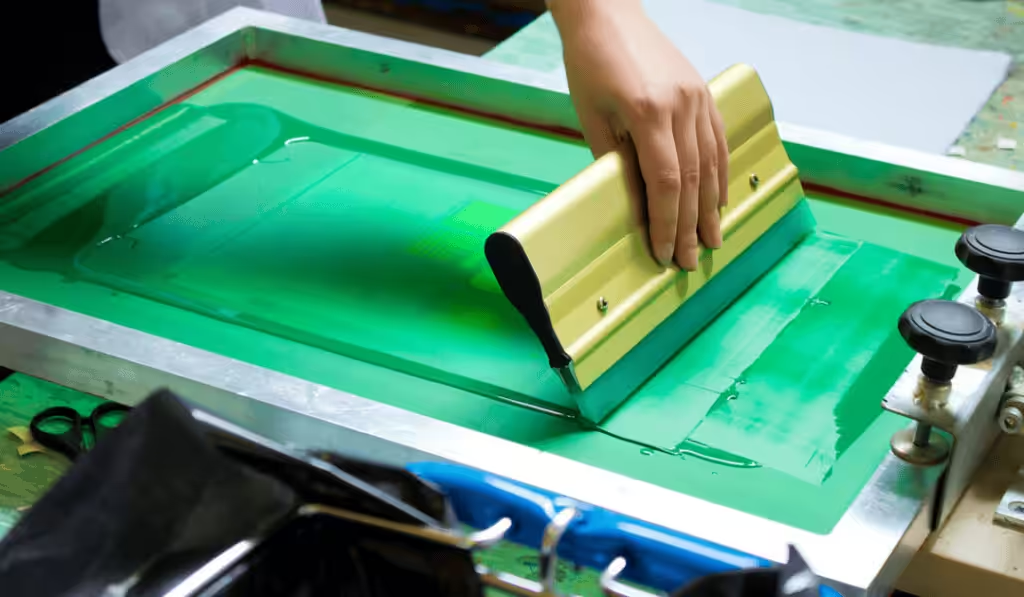
This is a common technique that has been around for over a century now. Screen printing is commonly used to print graphics on textile fabric with semi-liquid inks.
It involves pushing the fast-drying inks through fine mesh or mesh screen openings onto the printing surface. The image is transferred to a mesh with blank areas covered by the material substrate. Compared to offset printing and screen printing, screen printing can provide more high-quality prints.
Screen printing is versatile and can work with various materials like paper, fabric, wooden surfaces, and metal. You can use this technique for various applications, the common one being printing logos and graphics on t-shirts.
Other uses include fabric banners, signage labels, and posters.
Digital Printing
Unlike other methods in the traditional class, the digital method uses digital technology rather than printing plates. It involves the production of digital images or text onto physical surfaces. Digital printing requires a PC to send digital files as a command to the printer. The image to be printed is converted into digital information understandable to the printer, and it controls the ink, toner, or exposure deposition.
Advantages
- Time and cost-efficient printing technique
- This technique offers amazing customization capabilities
- Some modern version techniques are great for producing large print media and floor graphics
- This method offers a quick turnaround and is suitable for high-volume jobs. But since there are no setup costs, it operates at a low cost for small-run jobs, whether you need just one print, two prints, or thousands of individual sheets.
- It can work for variable data, images, graphics, and texts.
Inkjet Printing
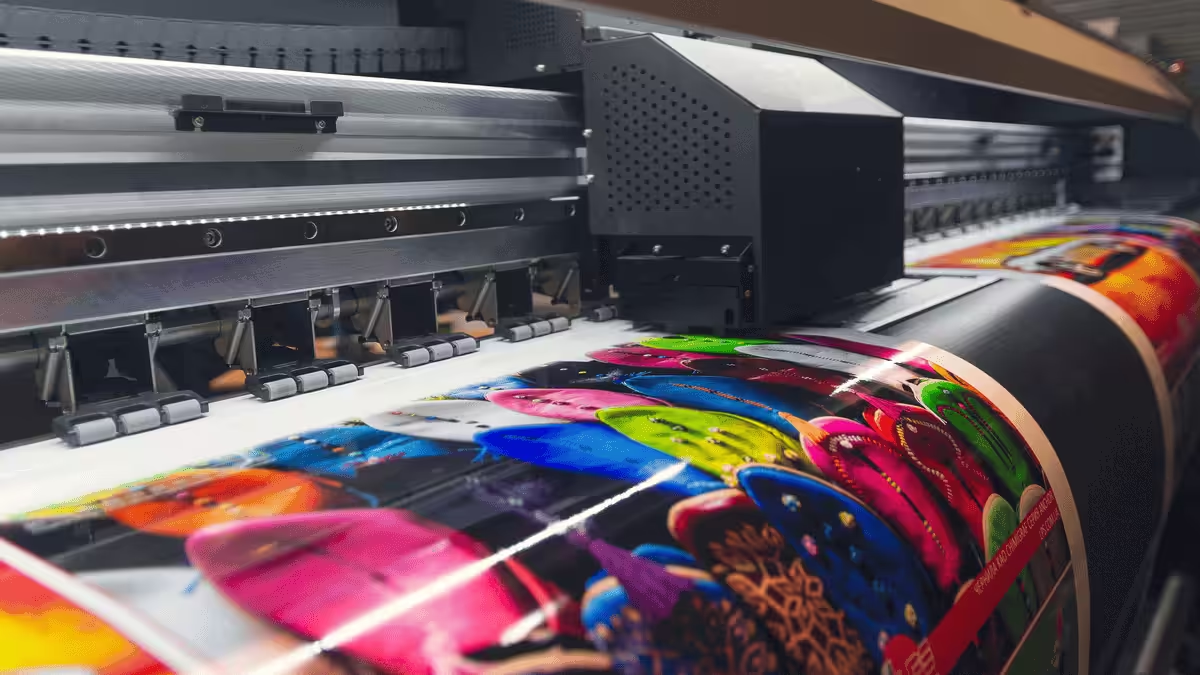
Inkjet printing is a form of digital printing that sprays ink on paper to produce an image. This modern method involves ink cartridges with CMYK (cyan, magenta, yellow, and black) color and print head nozzles which transfer ink and create an image onto the printing surface. Inkjet printers are common with design services producing high-quality print media.
This printing method can print on many materials like paper, plastic, and textile fabric. It is suitable for both small and large-scale print runs. Also, the inkjet process uses multiple colors (CMYK) to produce quality images.
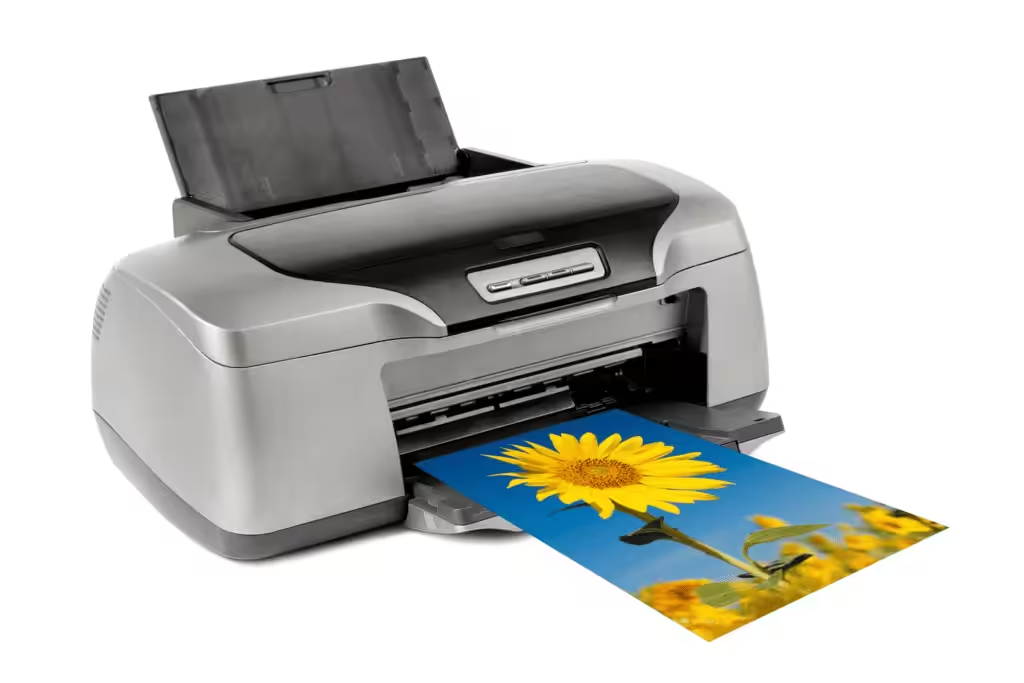
Inkjet printers are normally small in size and suitable for a personal office or home printing needs. This printing technique is ideal for photo printing, posters, business cards, and brochures where high-resolution images or texts are needed.
Other Printing Methods
To meet diverse market demands, other printing techniques have emerged. Sublimation printing is widely used for apparel, where a printer creates a mirror image that is heat-transferred onto a substrate. Meanwhile, UV printing and LED UV printing use specialized inks cured instantly by UV light. LED technology is especially favored because it requires less power while maintaining extreme precision.
Specialized Printing Techniques for Security Products
Beyond commercial applications, printing techniques for security products (like passports or authenticated packaging) integrate multiple methods. To prevent forgery, these high-security items combine micro-text, specialized holographic foil, and distinct intaglio textures that can be easily authenticated.
Factors to Consider When Selecting a Printing Method for Specific Projects
Understanding The Capabilities, Limitations, And Cost-Effectiveness
With many printing techniques, choosing the right one for your project is difficult. Different techniques have different capabilities and limitations.
Understanding how the techniques work and their basic technologies in executing tasks is important for a successful project. Conventional types of printing, like offset lithography, require printing plates on a flat surface, while digital printing does not require printing plates.
Although traditional methods like offset printing use metal plates, they are convenient for fine art prints.
The conventional options are often time consuming due to setup and drying phases, making them less cost-effective for short runs. Also, screen printing, letterpress, offset printing, and gravure printing work with a limited range of materials.
On the other hand, digital printing is a cost-effective method that deals with high-volume jobs and can print on a wide range of materials with quick turnaround since the process is digital.
Collaboration With Professional Printers
It is crucial to get information from expert printers. Since you are just starting, perhaps you need adequate information regarding the various techniques you can use to print your project.
Professionals normally have rich information regarding the subject matter; an expert print is as important.
With your project requirements, particular interest in the desired output, and budget, the expert will help you choose the best technique carefully.
Frequently Asked Questions About Printing Techniques
Q1:Which printing method is the most cost-effective for short print runs?
For low-volume orders, digital printing is typically the most budget-friendly option because it requires no printing plates or initial setup fees. However, if you need thousands of identical copies, offset printing becomes much more affordable on a per-unit basis. Finding the best price ultimately depends on balancing your specific order quantity with your required turnaround time.
Q2:Can all printing techniques be used on any type of material?
No, the type of substrate you choose heavily dictates which printing process can be applied successfully. While digital and offset methods are perfect for flat paper, cardstock, and corrugated board, screen printing or flexography is often required for plastics, textiles, and uneven surfaces. Always confirm material compatibility with your printing partner to guarantee vibrant colors and prevent ink smudging.
Q3:What are the most eco-friendly printing processes available today?
Modern digital printing is highly sustainable because it eliminates the physical waste associated with creating traditional metal plates and chemical developers. Furthermore, the printing industry is shifting toward soy-based and water-based inks instead of harsh petroleum-based alternatives. Pairing these environmentally conscious methods with recyclable materials can drastically reduce your specific project’s carbon footprint.
Q4:Which printing technique is best for custom product packaging?
Premium custom packaging traditionally relies on offset printing to deliver flawless brand color accuracy and crisp, high-resolution graphics on folding cartons. Meanwhile, small-batch or personalized packaging often utilizes modern digital printing to achieve fast, flexible results without massive minimum order restrictions. To determine the most stunning and cost-effective approach for your brand’s unique boxes, evaluating your designs with a specialized custom packaging provider is the best next step.
Conclusion
There are various printing types available to graphic designers and other printers today. Each type is suited to a specific project, but the end result is aimed at speaking out ideas through prints. Choosing the right technique for your project requires understanding each method’s different technology, limitations, and costs. You can get the most affordable and effective solution by considering all available options.
Get Your Best Print with Packoi Printing Solutions
At Packoi, we are committed to delivering the best packaging solutions for our clients. We offer quality designing and printing services on packaging like gift wrap that exceeds your expectations. Contact us today for inquiries, or click the button below to learn more about the design.